

Wanting Children Is Not the Problem. Abandoning Parents Is.

Trott Bailey Family Civilization
Wanting Children Is Not the Problem. Abandoning Parents Is.
People still want children because parenthood is tied to love, biology, future, memory, grandchildren, companionship, courage, and civilization. The problem is not that people desire family. The problem is that the old world has made family life harder than it needed to be, then shamed parents for finally telling the truth.
There is a shallow argument people throw at parents when parents speak honestly about exhaustion.
They say:
“Well, if parenting is so hard, then just do not have kids.”
They say it as if they have discovered wisdom. They say it as if the difficulty of a thing automatically proves the thing should not be desired.
But these are often the same people who would hear a medical student cry from exhaustion and say, “Do not give up. Becoming a surgeon is worth it.” They would hear an athlete talk about pain and discipline and say, “Keep going. The struggle is part of the journey.” They would hear someone complain about how hard love is and still encourage them to believe in love.
But when parents speak honestly about sleep deprivation, money pressure, childcare pressure, isolation, time pressure, and the lack of support around family life, suddenly the answer becomes: “Then why did you have kids?”
That is not wisdom.
That is society refusing to examine what it has done to parenting.
Difficulty Does Not Erase Desire
People still want children even when the world has made parenting difficult.
That should not be confusing.
People still want love even though love can break their hearts. People still want marriage even though marriage requires patience, forgiveness, growth, and responsibility. People still want education even though studying can be exhausting. People still want health even though exercise is hard. People still want to build businesses, art, homes, communities, gardens, songs, books, and futures even though all of those things demand sacrifice.
So why is parenting singled out?
Why is the parent the one told that hardship cancels desire?
If a person says, “I want love, but dating is cruel and confusing,” most people do not say, “Then just never love.”
If a person says, “I want to be healthy, but exercise is hard,” most people do not say, “Then just stay unhealthy.”
If a person says, “I want to become a doctor, but medical school is destroying me,” most people do not say, “Then just give up and never heal anyone.”
But if a mother or father says, “I love my children, but parenting in this world is crushing,” the old world loves to answer, “Then you should not have had children.”
That answer is shallow because it does not solve anything. It only shames the person who dared to tell the truth.
Parents Are Venting About Pressure, Not Regretting Their Children
One of the most dishonest things the old world does is confuse parental honesty with parental regret.
When parents say parenting is hard, they are often not saying, “I wish my child did not exist.” They are saying, “There are pressures around parenting that were never honestly discussed, never properly supported, and never brought out into the open.”
Parenting often feels hardest because of unexpected external pressures that previous parents were cowed into silence about: housing pressure, money pressure, time pressure, work pressure, childcare pressure, medical pressure, family pressure, lack of community support, lack of sleep, and the expectation that parents should absorb every difficulty without complaint.
The silence itself became part of the burden.
Because previous parents were shamed into pretending everything was fine, new parents often enter parenthood unprepared for the intensity of the first stage. Then when they finally speak openly, shallow people answer with, “Well, then do not have kids.”
That response misses the truth.
The part that gets complained about most is often the first three years, when the baby or toddler needs constant attention, physical presence, feeding, holding, watching, washing, changing, soothing, and protection. This stage can bring severe sleep deprivation. It can strain marriages. It can overwhelm mothers. It can put fathers under heavy pressure. It can make time feel like it has disappeared.
But that first rough stage is not the whole story of parenthood.
After that early intensity, the joys begin multiplying in visible ways. The child starts speaking more clearly. The child begins understanding. The child shows affection. The child remembers. The child laughs with you. The child learns from you. The child surprises you. The child begins to reveal their personality, their humor, their gifts, their tenderness, their intelligence, and their little way of seeing the world.
There is deep joy in watching your child grow in understanding.
There is joy in seeing a baby become a child, a child become a young person, and a young person become a grown human being with memory, character, affection, strength, and purpose.
When a sound, healthy parent thinks of their child ten or twenty years into the future, that thought can bring some of the sweetest joy in life. Parenthood can improve a person’s mood, outlook, hopefulness, courage, discipline, and determination. It can make a mother or father want to build better, live better, choose better, and fight harder for a more decent society.
So parents need some grace to vent.
They need room to say, “This stage is hard,” while still meaning, “My child is precious.”
They need a society mature enough to hear the difference between exhaustion and regret.
The joys of parenthood can outweigh the hardships. But parents should not have to pretend the hardships are not real in order to prove that they love their children.
Parents Venting Should Be Treated as Information, Not Disrespect
One thing I have often found is that after going through the rough first years with each baby, the bond becomes deeper.
The beginning can feel frightening because so much is new. With the first child especially, a parent may panic over everything: feeding, sleeping, crying, sickness, schedules, milestones, safety, routines, mistakes, and whether they are doing enough. The fear is not always because the parent is weak. Often it is because the parent was not properly prepared.
But with time, knowledge increases.
You learn what different cries can mean. You learn what helps your baby settle. You learn what is normal, what is urgent, what can wait, what needs help, what was only fear, and what truly matters. You learn the rhythm of bathing, feeding, resting, cleaning, soothing, watching, and recovering. You become less panicked because experience gives you understanding.
That proves something important.
Parenting can be trained for.
Just like any serious job, parenting has skills. It has stages. It has patterns. It has dangers to prepare for, pressures to anticipate, techniques to teach, emotional realities to name, and practical systems to build around the parent before the parent is drowning.
So when parents vent, civilization should not hear only complaint.
Civilization should hear information.
A parent saying, “I was exhausted,” is giving information about sleep support.
A parent saying, “I felt alone,” is giving information about community design.
A parent saying, “I did not know what to do,” is giving information about training gaps.
A parent saying, “I panicked over every little thing,” is giving information about preparation failures.
A parent saying, “The first three years almost broke me,” is giving information about where early-life support must be strongest.
This is why parents need grace to speak.
Their venting can become information mining. Their stories can become aha moments for future parents. Their honest words can reveal, “I never thought about it from that perspective.” Their exhaustion can show where the system failed to prepare them. Their survival can become training for the next family.
A serious civilization should collect parental wisdom instead of shaming it.
It should ask: What did parents not know before the baby came? What shocked them? What scared them? What helped? What made things worse? What support would have changed the first three years? What should future mothers and fathers be trained for before they enter that stage?
That is how venting becomes design.
That is how pressure becomes preparation.
That is how one generation’s hidden hardship becomes the next generation’s guidance.
Parents should not be cowed into silence. They should be listened to carefully, because inside their complaints are the blueprints for better family civilization.
The Desire for Children Is Not Random
People do not desire children only because society told them to.
Yes, culture can influence how people think about marriage, fertility, motherhood, fatherhood, status, inheritance, duty, timing, and family size. But the desire for children is deeper than social pressure alone.
Human beings are biological creatures. We are not machines floating above nature. We have bodies, hormones, instincts, affections, fears, longings, attachments, memories, and imaginations.
Many people feel a real pull toward children. Some feel it early. Some feel it later. Some feel it only when they meet the right person. Some feel it when they imagine a future home. Some feel it when they see a baby and something in them softens. Some feel it when they picture a child with their husband or wife. Some feel it as a grief when they imagine never becoming a parent.
That does not mean every person must want children. It does not mean every person feels the same intensity. It does not mean childbearing desire is simple, automatic, or identical in everyone.
But it does mean the desire for children cannot be brushed away as foolishness.
For many people, the desire to have children comes from a deep human place: the body’s reproductive design, the heart’s desire to love and protect, the mind’s vision of future, the soul’s longing for family, and the civilization-level need to continue life.
The Body Knows Something
There is a reason babies pull attention out of adults.
The round face, the smallness, the vulnerability, the cry, the reach, the softness, the dependence — these things are not meaningless. Human beings are wired to notice the helpless young. Infants are born needing care, and adults are built with systems that can respond to that need.
This is not only romance. It is not only culture. It is not only a social script.
There are biological and emotional systems involved in reproduction, caregiving, attachment, and parent-child bonding. Human beings have a sex drive connected to reproduction. Many people also have bonding desires, nurturing responses, family imagination, and a longing to raise someone who belongs to them in love.
Again, this does not mean every human being experiences a burning urge to have children. It means the human species carries real machinery for reproduction and care.
Humanity did not continue because every generation made a cold spreadsheet decision. Humanity continued because desire, bonding, sex, love, caregiving, family, culture, and responsibility all worked together across time.
The body knows something.
The heart knows something.
The future is not an abstract idea. The future arrives in a small body that must be fed, held, taught, protected, corrected, loved, and guided.
People Remember the Pure Love They Felt as Children
Another reason people want children is because they have already experienced, from the child’s side, how pure parent-child love can feel.
Many people remember what it felt like to love their mother. They remember what it felt like to love their father. They remember wanting to be near them, wanting their attention, wanting their approval, wanting to be held, wanting to be seen, wanting to make them proud, wanting to belong to them.
Even people who had imperfect parents may still remember moments of pure attachment: a hand held, a meal made, a voice recognized, a lap climbed into, a parent coming home, a parent laughing, a parent protecting them, a parent becoming the center of safety in the child’s world.
That kind of love leaves a mark.
So when people grow older, they may not only want a baby in a biological sense. They may want to enter that sacred exchange from the other side. They remember what it felt like to love upward as a child, and they want to love downward as a parent. They want to give protection, receive affection, build trust, become someone’s safe place, and experience that pure parent-child bond in a new direction.
They know how sweet it felt to run toward a parent.
They know how deep it felt to need a parent.
They know how powerful it felt when a parent’s love made the world feel less frightening.
And somewhere inside them, they may want to give that back to someone else.
They may want to become the arms, the voice, the home, the memory, the shelter, the correction, the laughter, and the love that a child carries for life.
This is one of the most human reasons people still want children.
They are not just chasing hardship. They are not just following social pressure. They are responding to the memory of love itself.
They have known the parent-child bond from one side, and they want to complete the circle by giving that kind of love from the other side.
World Ruler Sher: My Children Give My Life Weight, Rhythm, and Courage
I will not write about parenthood as if it is only an abstract social issue.
My children give me deep motivation to grow, to learn, to think more carefully, and to gather new perspectives so I can teach them more than I knew yesterday. They make me want to become sharper, wiser, stronger, funnier, more patient, more creative, and more prepared.
They are not just mouths to feed. They are minds unfolding in front of me.
They have their own unique points of view, and those points of view often surprise me. Sometimes they are unexpected. Sometimes they are funny. Sometimes they are sweet. Sometimes they say something so simple and strange that it opens a new little window in my own mind.
They give me something meaningful to do with my days.
They help me pass these long years on earth with purpose. They keep me away from emptiness, idleness, vices, and cold wandering. They make my days matter because my love has somewhere to go. My attention has someone to protect. My learning has someone to feed. My strength has someone to shelter.
They are beautiful to look at, and their beauty brings me joy.
I will not pretend that does not matter. A parent knows the joy of looking at their child and feeling wonder. Their faces, their expressions, their laughter, their little ways, their growing bodies, their bright eyes, their beauty — all of it brings sweetness into the house.
They also remind me of their father, Big King Kimroy Bailey, whom I love. I am happy to have children for him. I am happy that our love has become living people. I am happy that when I look at my children, I can see traces of him, traces of me, traces of us, and something entirely new that belongs to each child alone.
And when they all run out happily together shouting, “Mommy!” I feel loved. I feel wanted. I feel seen.
Do not undervalue that.
The world is cold right now. Many people do not care about each other. Many people do not have anyone who truly cares about them. Many people move through life unseen, untouched, uncalled, unmissed, and unprotected.
But inside my family, the love is intense.
The care is intense.
The bonds are intense.
We have our own little world. We have our own ties, our own memory, our own laughter, our own language, our own rhythm, our own loyalty, our own warmth. That love gives me courage to stand mighty and fearless against any force that would try to destroy my family.
Parenthood can unearth a depth of human courage and fierceness that people should not mock.
What else is going to pull that kind of power out of you like an intense love for your own helpless young?
Even a tigress loves her young.
Even nature understands that the vulnerable child awakens protection, fire, tenderness, and strength.
So when people speak lightly about children, when they act as if parenthood is only inconvenience, cost, noise, sleep loss, and limitation, they reveal how cold their understanding has become.
My children are not a burden that stole my life.
They are part of what made my life heavier with meaning.
They gave my days rhythm. They gave my love a place to land. They gave my courage a reason to rise. They gave my future faces, voices, names, laughter, and footsteps running toward me.
That is why parents deserve grace when they vent.
Because many of us are not complaining because we regret our children.
We are speaking because we know how much our children matter, and we want a world worthy of raising them in.
Parenthood Has a Long View That Few Other Pursuits Can Match
Even from a practical perspective, parenthood has long-term meaning that few other pursuits can match.
This does not mean children should be treated like retirement plans, servants, emotional property, or guaranteed caretakers. That would be a corrupt way to view the child.
But it is also dishonest to pretend parenthood has no long-term human gain.
In the average circumstance, your child outlives you. Your child carries memory beyond you. Your child may give you grandchildren. Your child may become part of your companionship in later life. Your child may support you emotionally, physically, spiritually, socially, or practically as you age. Your child may become one of the strongest reasons you remain hopeful
In the average circumstance, your child outlives you. Your child carries memory beyond you. Your child may give you grandchildren. Your child may become part of your companionship in later life. Your child may support you emotionally, physically, spiritually, socially, or practically as you age. Your child may become one of the strongest reasons you remain hopeful, connected, and rooted in the world.
That kind of life-cycle bond is rare.
Friendships can be beautiful, but many friendships change with distance, marriage, work, relocation, conflict, or life season. Employer-to-employee relationships are even more limited. They are usually built around productivity, usefulness, contracts, wages, and replacement. A workplace may praise a person for years, then discard them when they are no longer profitable.
Parenthood is different.
A healthy parent-child bond is not based on market usefulness. It is not supposed to expire when productivity drops. It is not built around quarterly results, networking convenience, or social entertainment. It is a generational bond.
The parent gives life, care, protection, teaching, memory, sacrifice, and formation. Then, over time, the child grows into a person who can love back, remember back, visit back, build forward, continue the family story, and sometimes become a source of support when the parent becomes older and weaker.
That is not a shallow benefit.
It is one of the deepest patterns of human civilization.
Parenthood stretches love across time. It turns today’s sacrifice into tomorrow’s companionship, continuity, grandchildren, memory, and hope.
So when people mock the desire for children, they are ignoring the long view. They are judging parenthood only by the most exhausted early years, while refusing to see the decades of meaning that can follow.
A baby needs you constantly for a season. But that baby can become the grown son or daughter whose existence brings sweetness to your old age, whose children call you grandparent, whose memories carry your name, and whose life proves that your love did not end with you.
Parenting Is Not Just a Private Hobby
This is where the old world becomes dishonest.
It treats parenting as a private lifestyle choice when it wants to avoid responsibility.
But it treats children as the future workforce, future taxpayers, future soldiers, future consumers, future voters, future innovators, future caregivers, and future citizens when it wants to benefit from them.
Which one is it?
If children are only a private hobby, then why does every society depend on them?
If parenting is only a personal choice, then why does every economy eventually need workers who were once babies? Why does every hospital need nurses who were once children? Why does every school need teachers who were once raised by somebody? Why does every neighborhood need adults who were once formed in childhood?
Every civilization is eventually made out of the children it raised.
That is why parenting is one of the most important human responsibilities.
It is not because parents are perfect. It is not because every family is healthy. It is not because having children automatically makes a person wise. It is because the child is the living continuation of human life, and the quality of that child’s formation matters to everyone.
Parents are not merely raising “their own kids.” They are helping form the next human beings who will inherit the earth.
The Future Does Not Raise Itself
A child does not become a stable adult by accident.
Someone has to feed the child.
Someone has to answer the crying.
Someone has to teach language, patience, kindness, restraint, courage, hygiene, discipline, order, humor, prayer, manners, work, beauty, and belonging.
Someone has to notice when the child is sick.
Someone has to correct the child without crushing them.
Someone has to protect the child from danger.
Someone has to help the child become a person who can live among other people.
That work is not small.
It is daily. It is repetitive. It is emotional. It is physical. It is spiritual. It is intellectual. It is civilizational.
The world loves to enjoy the finished adult while despising the work that formed that adult.
It celebrates talent after the child becomes profitable. It celebrates beauty after the girl becomes useful to the market. It celebrates strength after the boy becomes useful to the system. It celebrates intelligence after the student becomes credentialed. It celebrates labor after the worker becomes economically productive.
But before all of that, there was a child.
And before the child could stand in public, somebody had to carry private weight.
The future does not raise itself.
The Real Question Is Not “Why Do People Still Want Kids?”
The real question is not:
“Why do people still want children if parenting is hard?”
The real question is:
“Why has society made one of the most important human responsibilities so unsupported?”
Why is housing so unstable?
Why is food so expensive?
Why is childcare treated like a luxury?
Why are mothers expected to lose themselves?
Why are fathers reduced to pressure machines?
Why are children treated like financial liabilities?
Why are parents expected to raise the next generation while being denied time, rest, help, space, public grace, and economic breathing room?
Why are homes expected to absorb every failure of the economy, the school system, the food system, the housing market, the health system, and the work schedule?
Why does the world praise family in speeches but punish family in daily life?
The parent who complains is not always saying, “I hate my children.”
Often the parent is saying, “I love my children, but the world has made this harder than it needed to be.”
That is a legitimate complaint.
That is not weakness. That is evidence.
Wanting Children and Criticizing the System Are Not Contradictions
A person can want children and still criticize the conditions parents are forced to live under.
A mother can love her baby and still say the village disappeared.
A father can love his family and still say the provider pressure is crushing.
A couple can want a household and still say two people should not be asked to carry an entire civilization alone.
A woman can want motherhood and still reject the idea that motherhood means exhaustion without help.
A man can want fatherhood and still reject the idea that fatherhood means being used until he is silent.
There is no contradiction.
It is possible to love the child and hate the abandonment around the child.
It is possible to desire family and reject the systems that make family life feel like punishment.
It is possible to say, “Children are beautiful,” and also say, “The world has made raising children unnecessarily brutal.”
Give parents some grace to vent.
Do not force every tired parent to perform cheerfulness before they are allowed to be believed.
Do not turn every honest complaint into an accusation of regret.
Parents can love their children deeply and still need support.
The “Just Do Not Have Kids” Argument Leads Nowhere
Imagine applying that argument to every difficult thing.
Love is hard? Just do not love.
Marriage is hard? Just never marry.
Exercise is hard? Just do not care about health.
Education is hard? Just stay ignorant.
Building is hard? Just never build.
Healing people is hard? Just do not become a doctor.
Growing food is hard? Just do not farm.
Defending justice is hard? Just let injustice win.
That is not wisdom. That is surrender dressed up as logic.
The existence of difficulty does not mean the desire is wrong. Sometimes the difficulty means the surrounding system is badly designed.
When parenting becomes unbearable, the serious civilization question is not, “How do we shame parents into silence?”
The serious question is, “What must be rebuilt so family life can breathe again?”
Trott Bailey Family Civilization Begins From a Different Assumption
Trott Bailey Family Civilization does not begin by mocking the parent.
It begins by respecting the family as the core infrastructure of human life.
If the family is where children are loved, formed, fed, corrected, comforted, taught, and prepared, then civilization should not abandon the family and then blame it for struggling.
That is why Trott Bailey Family Civilization thinks in systems.
Family cannot be protected by slogans.
Family needs housing that does not terrorize the household.
Family needs food systems that do not turn feeding children into monthly panic.
Family needs Baby World and early-life support so mothers and fathers are not isolated with the youngest children.
Family needs Sabenneries so nourishment becomes abundance, not private exhaustion.
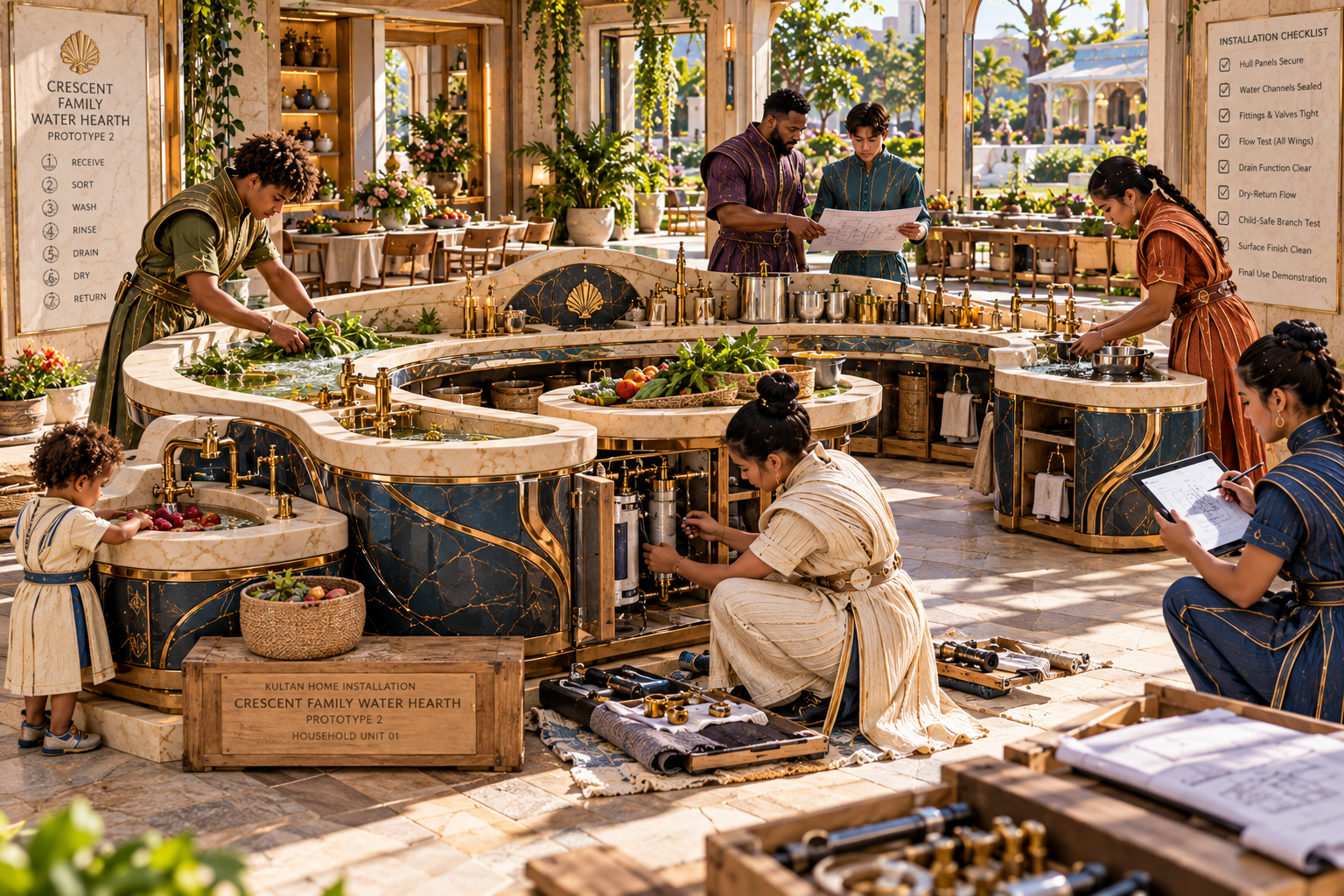
Family needs Fabric Nodes, Fabric Washers, and household support systems so the home is not swallowed by maintenance.
Family needs public life where children can exist without being treated like a nuisance.
Family needs parent training built from real parent testimony, so future mothers and fathers are not thrown into the first three years blind, ashamed, unsupported, and panicked.
Family needs father-support roles, mother-support systems, marriage-protecting spaces, youth path houses, child-safe public design, old-age companionship, grandparent belonging, and beauty woven into daily life.
Family needs civilization to stop using it while pretending not to need it.
People Still Want Children Because Life Still Wants a Future
People still want children because life still wants a future.
They want to hold someone who came from love.
They want to teach.
They want to protect.
They want to see a child become themselves.
They want birthdays, first words, family meals, silly conversations, tiny shoes, school discoveries, questions from the back seat, bedtime stories, laughter in the house, and a future that has a face.
They want continuity.
They want belonging.
They want the deep human work of raising someone.
They want to give the love they once knew as children and receive that love back from a new generation.
They want to see a child grow in understanding, then one day become a grown son or daughter whose life carries memory forward.
They want grandchildren, family stories, old-age companionship, and the sweetness of knowing that their love did not end with them.
And yes, they may also be afraid.
They may be angry that parenting has been made financially terrifying. They may be exhausted by childcare costs. They may be disgusted by housing pressure. They may be tired of being told to do everything alone. They may see the old world and wonder how a family is supposed to survive inside it.
But fear does not prove the desire is foolish.
It proves the world needs rebuilding.
The Answer Is Not Fewer Hearts. The Answer Is Better Civilization.
The shallow world says:
“If parenting is hard, then do not have kids.”
Trott Bailey Family Civilization answers:
“If parenting is one of the most important human responsibilities, then civilization must stop making parents carry it alone.”
Parents are not wrong for wanting children.
People are not foolish for wanting family.
The desire for children is not shallow. It can come from biology, love, faith, hope, imagination, marriage, legacy, memory, companionship, and the human need to continue life with meaning.
The problem is not that people still want children.
The problem is that the old world wants the fruit of children without building the garden that helps families raise them.
A serious civilization does not shame parents for struggling.
It asks what support is missing.
It asks what systems failed.
It asks why the household was abandoned.
It asks why love was forced to survive with so little help.
It listens when parents vent, because inside those venting moments are pressure maps, training gaps, missing supports, and the blueprint for a better family civilization.
Then it builds differently.
Because the future does not raise itself.
And if family is what keeps society standing, then family must no longer be left standing alone.
Research Note
The biological and psychological discussion in this article is informed by research on fertility motivation, baby fever, infant cues, caregiving response, attachment, and early parent-infant bonding. The article does not argue that every person must want children. It argues that the desire for children is a serious human desire and should not be mocked simply because parenting requires sacrifice.