
No One Should Know Why You Went There
No One Should Know Why You Went There
Public body support should not announce private needs. The kingdom does not hide the body in shame, but it also does not put the body on display.
One of the quiet cruelties of the old world is that it makes private body needs too public.
Everyone knows where the bathroom is. Everyone sees the line. Everyone knows the function of the block, the corridor, the stall, the sink, the waiting crowd. A mother carrying a child there is exposed. A woman needing menstruation support is exposed. An elder moving slowly toward relief is exposed. A father trying to reset after sweat, sand, or work is exposed.
The body is treated as an inconvenience that must be hidden in an obvious little building.
No one should feel announced while taking care of the body.
The Old Bathroom Announces Too Much
The old public bathroom is not just a utility problem. It is a dignity problem.
The building often tells the whole story before a person even enters. The signs are blunt. The doors are obvious. The corridors are narrow. The stall lines are stressful. The sounds and smells are trapped. The function is exposed.
Even when the bathroom is clean, the social feeling can still be uncomfortable.
Trott Bailey Family Kingdom begins from a different position. Body support should be normal, available, beautiful, and private without being hidden in shame.
Privacy Is Not the Same as Shame
The old world often confuses privacy with shame. It hides body needs in ugly corners, behind harsh doors, under fluorescent light, and calls that privacy.
That is not enough.
True privacy is not only a closed door. True privacy is the ability to move through public life without having your need declared to everyone around you.
The kingdom should not make a person feel embarrassed for needing relief, menstruation support, child cleanup, grooming reset, foot rinse, or a quiet place to recover.
The kingdom does not hide the body in shame, but it also does not put the body on display.
Landscape Can Protect Dignity
A wall can block a view, but landscape can soften a whole experience.
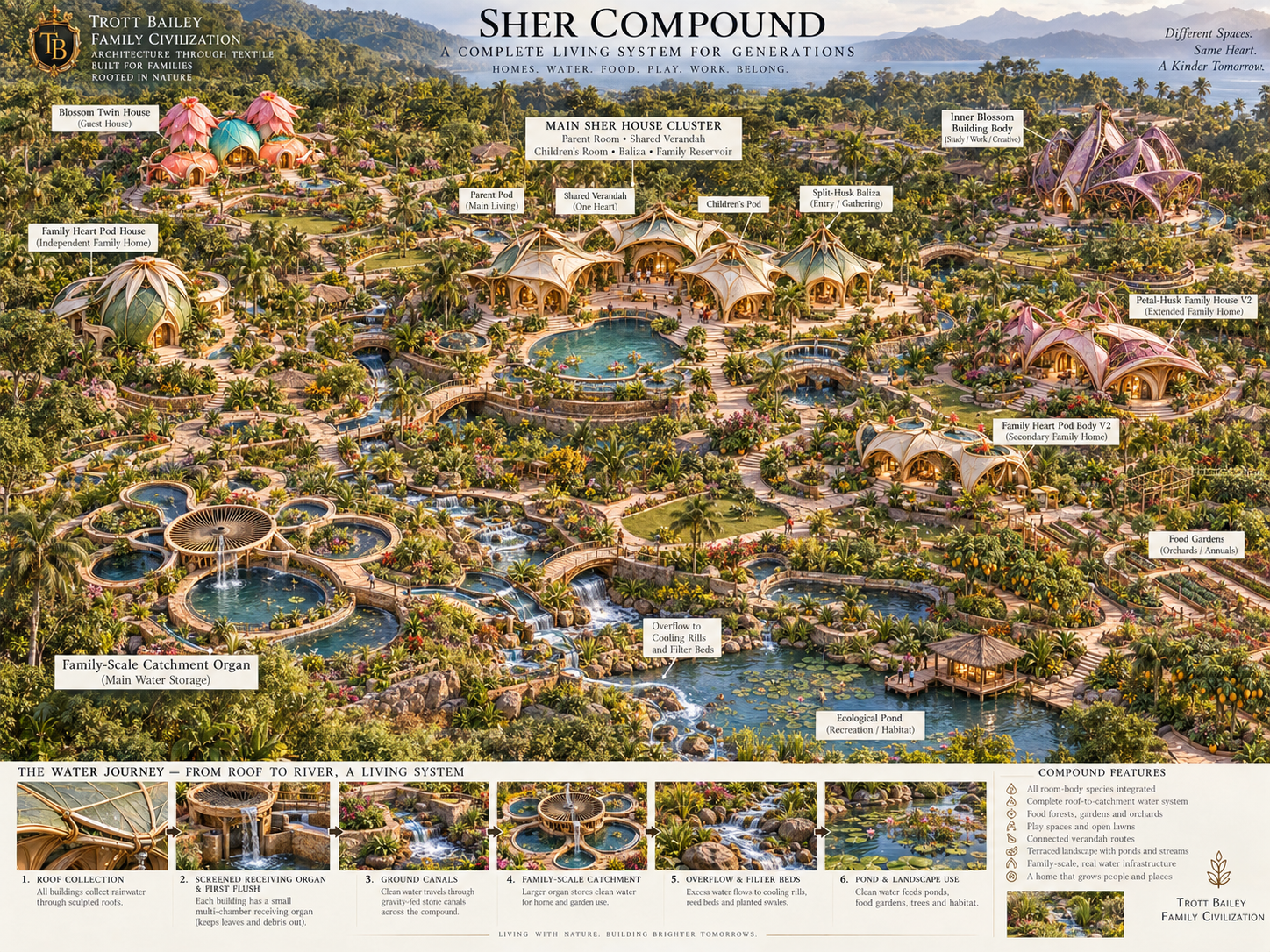
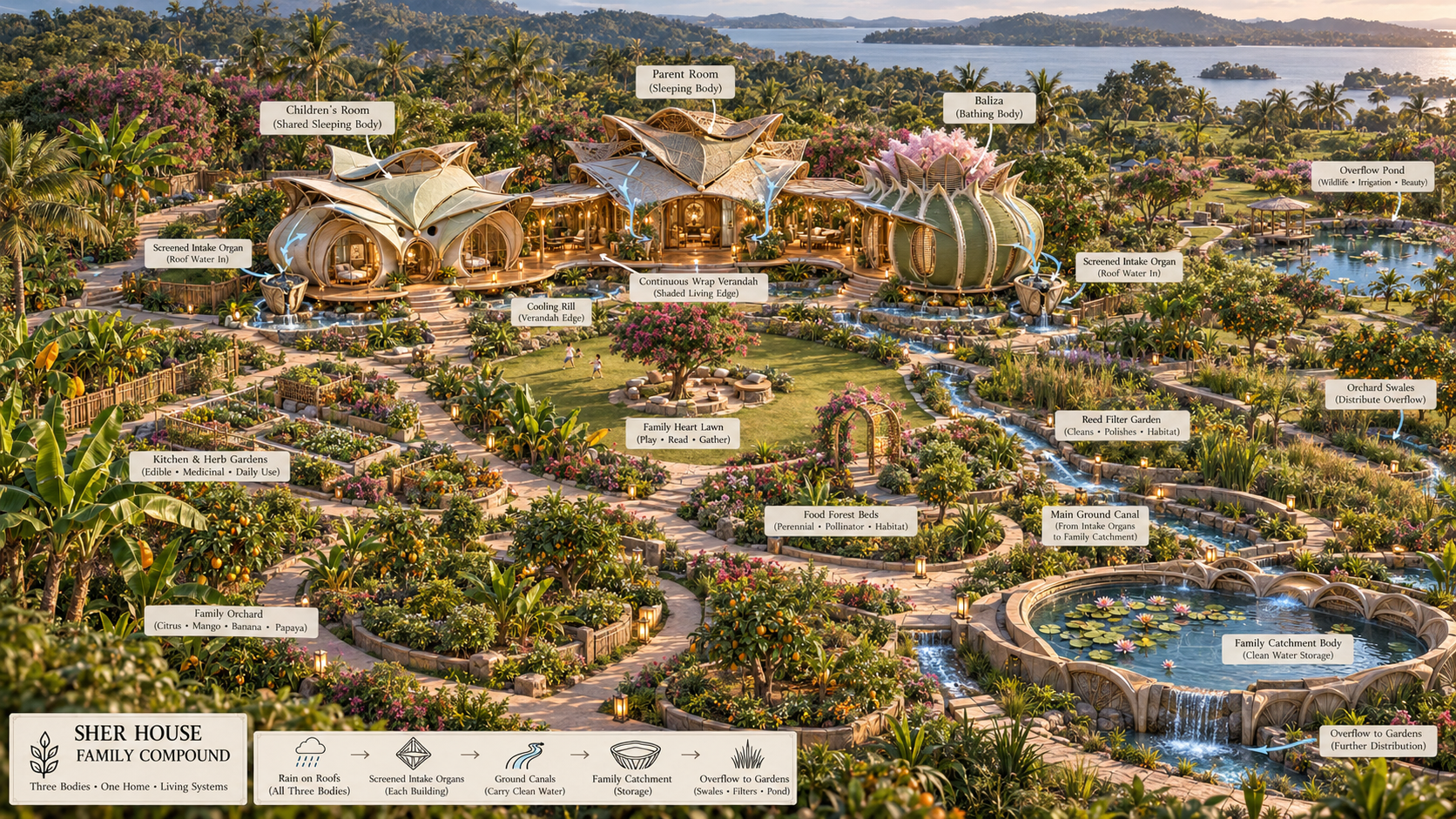
Trott Bailey washcourts work best when they are not bundled into one obvious facility block. They should be woven into an open-field orchard garden web where different body-support spaces are reached through gentle route splits, edible hedges, shaded turns, water-vein paths, and staggered pavilions.
A person should be able to drift into the support they need without feeling watched.
- Curved garden paths
- Low scalloped hedges
- Orchard pockets
- Water-vein routes
- Quiet verandah turns
- Staggered pavilions
- Soft thresholds
- Distance between functions
- Partial concealment
- Clear return paths
This creates privacy by distance, softness, and route design, not by hiding everyone in a cramped restroom corridor.
Different Needs Should Not Be Bundled Together
A child rinsing sticky hands, a woman needing body comfort, an elder needing seated relief, and a family changing a baby should not all be compressed into the same public doorway.
Bundling everyone together may look efficient on a plan, but it creates social discomfort. It makes private needs too visible. It also creates crowding.
Trott Bailey design separates body-support functions into gentle branches.
Quick Wash Points
Visible, casual places for hands, face, fruit juice, and light reset.
Child Self-Help Groves
Low, playful, parent-visible areas where children rinse without adult intervention every time.
Family Reset Courts
Stroller space, baby change, child relief, shared wash ledges, and calmer family support.
Adult Reset Wings
Male and female support wings with different architectural emphasis and private routes.
Elder Leaf-Basin Verandahs
Seated wash and rest spaces tucked into shade and garden views.
Sea/Sand Foot-Shell Courts
Distinct wet thresholds for sandy feet, sandals, salt rinse, and beach return.
Male and Female Areas Need Architectural Distinction
Trott Bailey washcourts do not need rows of small separate toilet buildings. The stronger everyday model is one shared Garden Comfort House with clearly separated Male Reset Wing and Female Reset Wing.
From far away, the building reads as one civic support body. Inside, it branches into distinct wings with separate entrances and different support emphasis.
The male wing can feel grounded, active, practical, and cooling, with stronger ribbed roof language, darker stone base, sweat-cooling channels, face wash ledges, gear hooks, and foot or sandal reset ledges.
The female wing can feel sheltered, calm, composed, and graceful, with bloom-shell roof language, layered screens, garment reset alcoves, hair and face refresh, menstruation/body comfort rooms, soft mirrors, and privacy garden pockets.
Women Should Not Have to Disappear Into a Bad Room
Menstruation and body comfort should not be treated like embarrassing emergencies. A woman should not have to enter a cramped, ugly, poorly supplied stall and pretend her body is a problem.
A proper female reset wing should offer privacy, calm, clean surfaces, fresh supplies, washing access, garment reset space, seated support, and a way back into public life without stress.
The architecture should communicate care without announcing the reason she came.
Mothers Need Privacy Without Isolation
A mother dealing with a baby, a toddler accident, sticky clothes, or child cleanup should not be thrown into the most crowded part of a public restroom.
But she also should not be isolated far away from help.
The Family Reset Court should be close enough to public routes to feel safe, but separated enough to feel peaceful. It should include stroller turning space, baby change ledges, washable benches, child-height wash points, cloth basket niches, and easy exits.
The goal is not to hide mothers. The goal is to stop making mothering feel exposed and rushed.
Elders Need Slow Dignity
Elders should not be forced to move through the same fast, narrow, crowded bathroom logic as everyone else.
An elder may need a place to sit, rinse hands or feet, recover balance, drink water, rest in shade, and move slowly without feeling like a burden.
The Elder Leaf-Basin Verandah should feel like a quiet garden porch, not a medical waiting area. Handrails, seated basins, low-glare lighting, gentle airflow, and nearby relief access should be integrated beautifully.
Children Need Self-Help Without Exposure
Children need independence, but they also need soft boundaries. A child should be able to rinse sticky hands, sandy feet, or small food mess without every adult staring at them.
The Child Self-Help Rinse Grove should be visible enough for parents to supervise, but separate enough that the child has their own little world.
Large soft-press buttons, easy-turn flower knobs, picture-symbol instructions, foot-rinse petals, and low airflow arches allow children to help themselves while the environment remains safe and orderly.
Children belong in public life, but they do not need to be managed in public every second.
The Best Support Is Often Quiet
Not every support feature needs to announce itself. The best systems often feel gentle because they are quietly present before the crisis arrives.
A person should not have to search in panic. The support should be near, legible, and softly tucked into the environment.
- A small rinse flower near fruit routes
- A shaded elder basin near a garden turn
- A Doon cloth basket near a food court
- A foot-shell runnel near the sea path
- A family reset porch near stroller routes
- A garment refresh alcove near ceremony paths
- A hydration niche on a warm route
- A calm return path after private support
When support is everywhere, a person does not have to make a dramatic trip to receive help.
The Trott Bailey Correction
Old Public Bathroom Logic
One obvious building, blunt signs, cramped corridors, exposed lines, hurried bodies, hidden shame, and everyone knowing why you went there.
Trott Bailey Body-Support Logic
A garden web of washcourts, comfort wings, child groves, family courts, elder verandahs, and foot-shell thresholds woven into public life.
The kingdom should not make body care feel like a public announcement.
A person should be able to wash, reset, relieve, change, recover, cool down, manage private body needs, and return to public life with dignity intact.
No one should know why you went there. They should only see that you returned restored.



 and then