
Krubaro Inside the Home: Why Clean Return Belongs in Beautiful Interiors
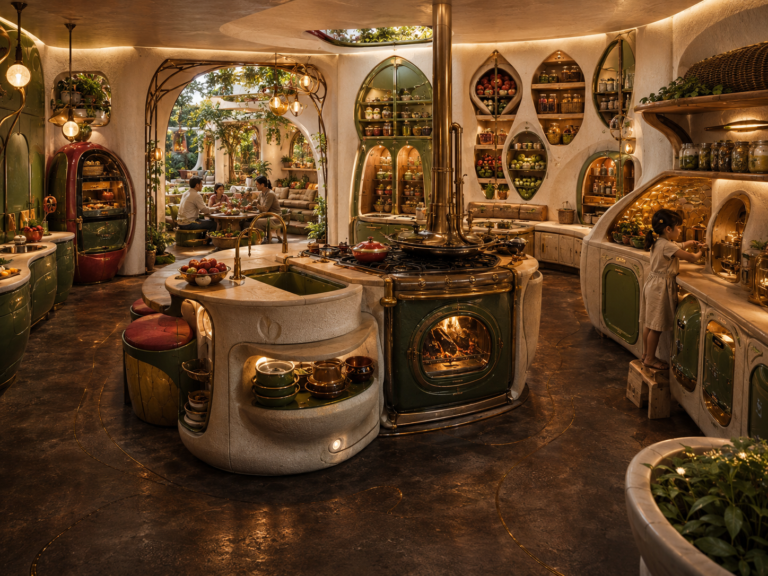
Krubaro Clean Return Inside Keslev Kitchen designed by Sherika Trott Bailey engineered by Kimroy Bailey
Krubaro Inside the Home: Why Clean Return Belongs in Beautiful Interiors
Krubaro is the clean-return system that prevents food scraps, water, containers, cloths, and packaging from becoming household chaos. In Trott Bailey interiors, return is designed into the room.
The Problem: Most Homes Treat Return as an Afterthought
Every household produces return. After cooking, eating, bathing, washing, or cleaning, something is left behind. There are vegetable peels, fruit skins, rinse water, damp towels, jars, baskets, cloths, food wrappers, crumbs, used serving trays, and objects that need to dry before being stored.
In many homes, these materials are handled badly. They are thrown into one bin, left on counters, hidden under sinks, piled near doors, or pushed into utility corners. The result is clutter, odor, confusion, wasted material, and extra labor for whoever has to clean up.
What Krubaro Does
Krubaro gives used materials a clear return path. It asks one practical question: After this object is used, where does it go so it can become clean, useful, safe, dry, stored, composted, or renewed?
In a Trott Bailey interior, Krubaro appears as built-in infrastructure. It is not an ugly trash corner. It can be beautiful, labeled, child-learnable, and integrated into the architecture of the room.
Key Terms Defined Clearly
The Krubaro Loop in a Keslev Food Room
In a Keslev kitchen, pantry, or dining room, Krubaro completes the food cycle. Food does not simply enter the room and then leave behind mess. The room guides materials through use and back into order.
What Krubaro Looks Like Inside a Beautiful Interior
Krubaro should not look like municipal trash handling. It should look like household intelligence. The design must be clean enough for a family interior, clear enough for children to learn, and practical enough to reduce daily labor.
How It Works in Real Life: A Banana-Leaf Food Delivery
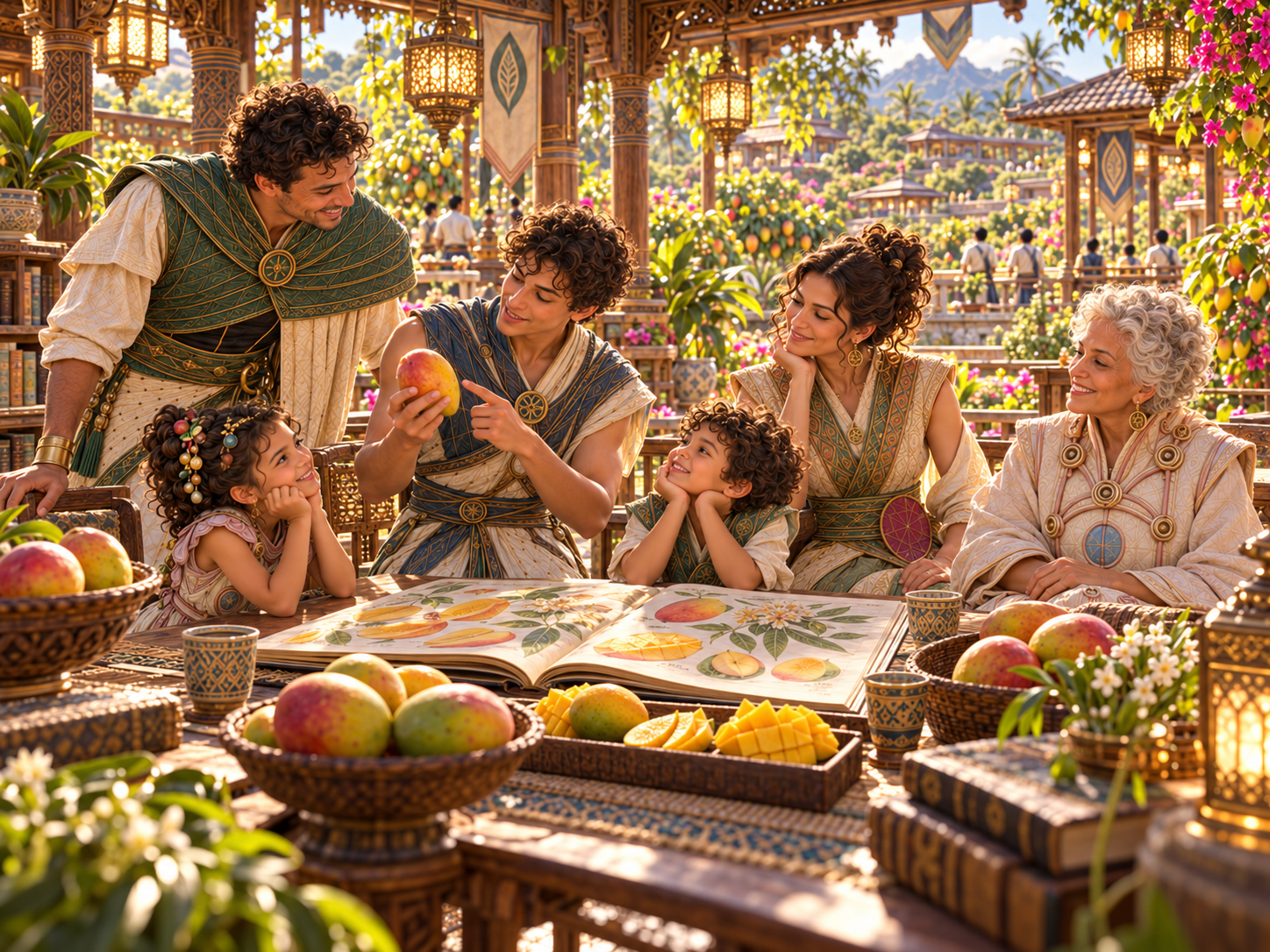
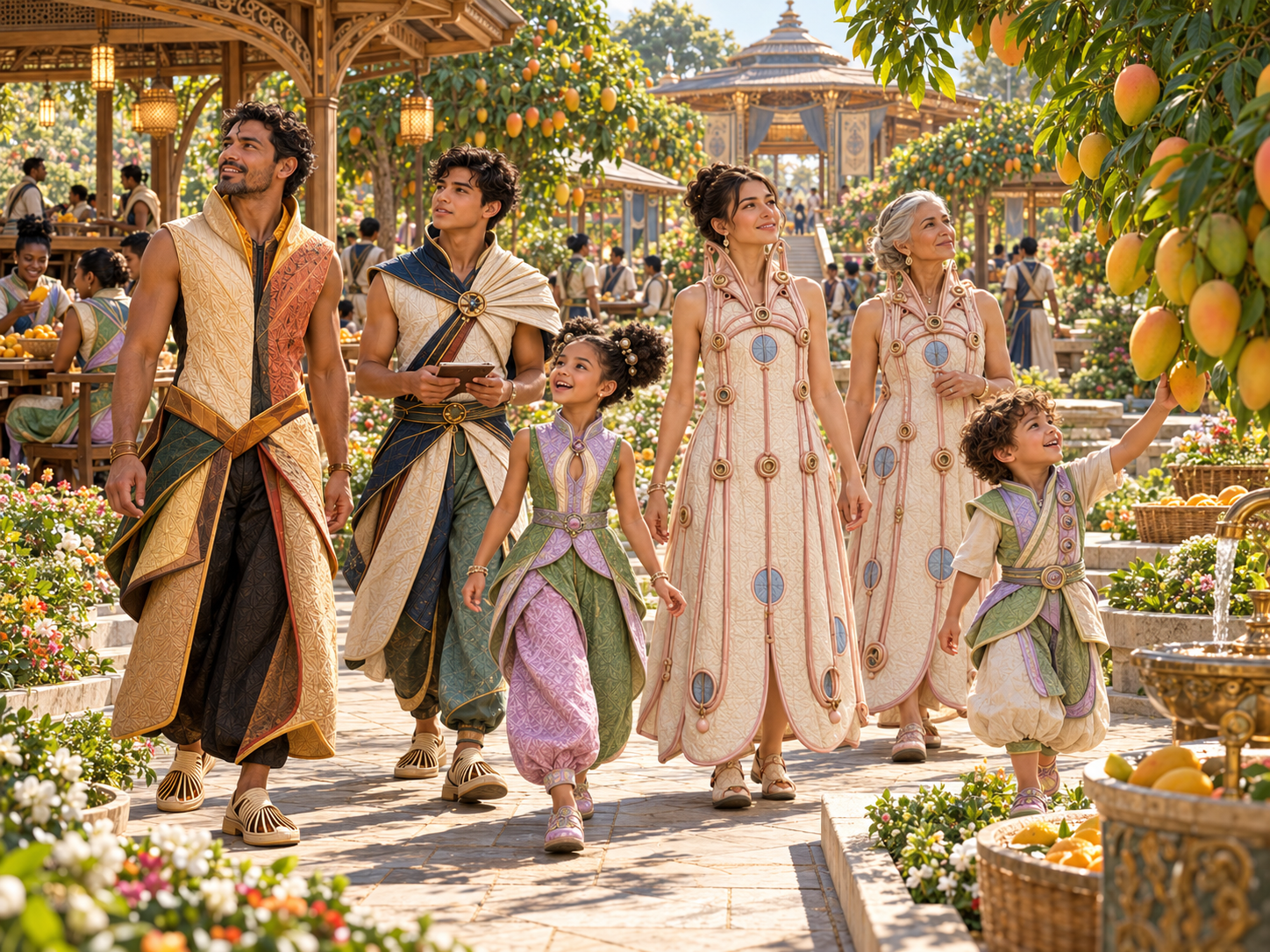
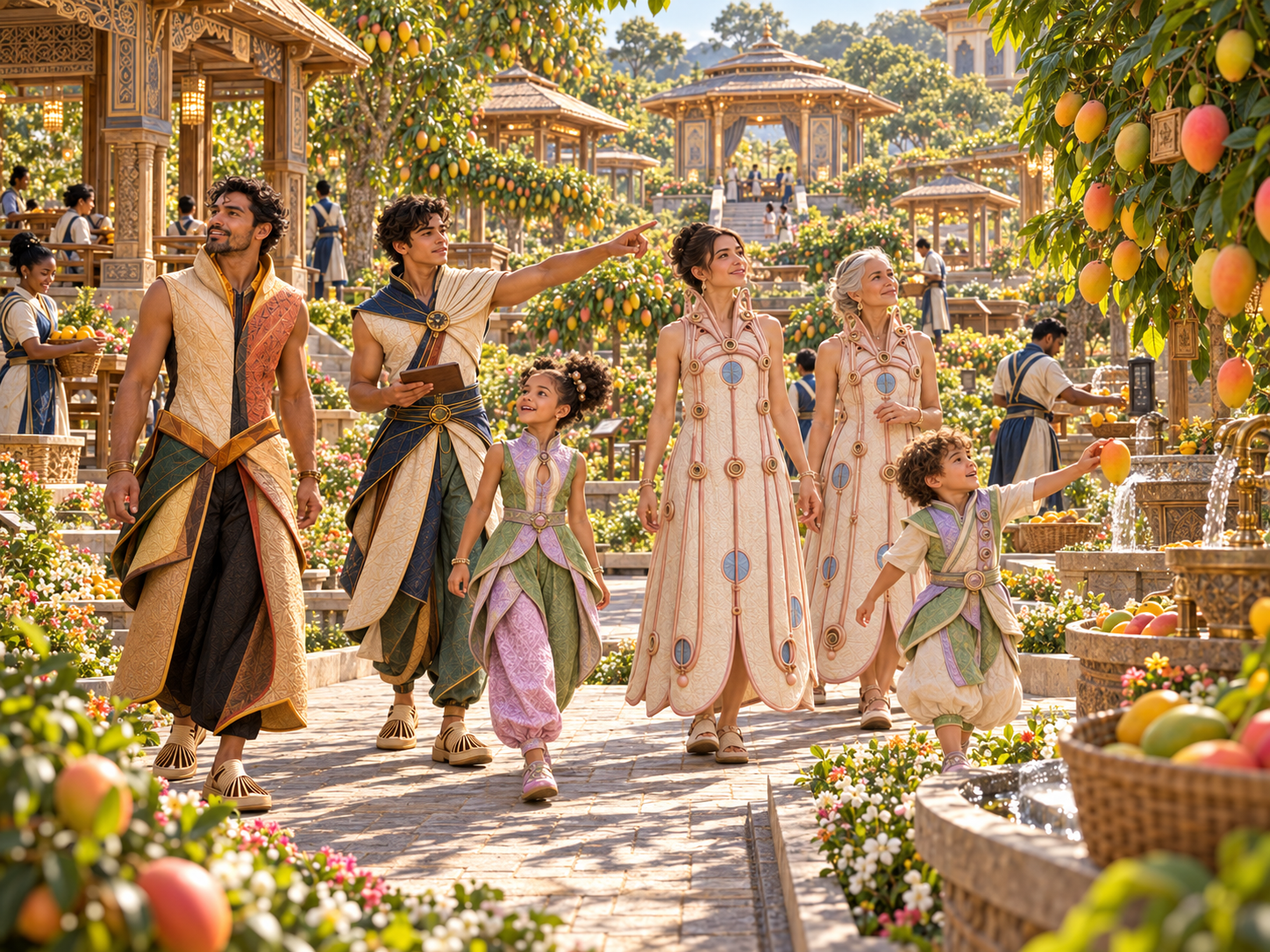
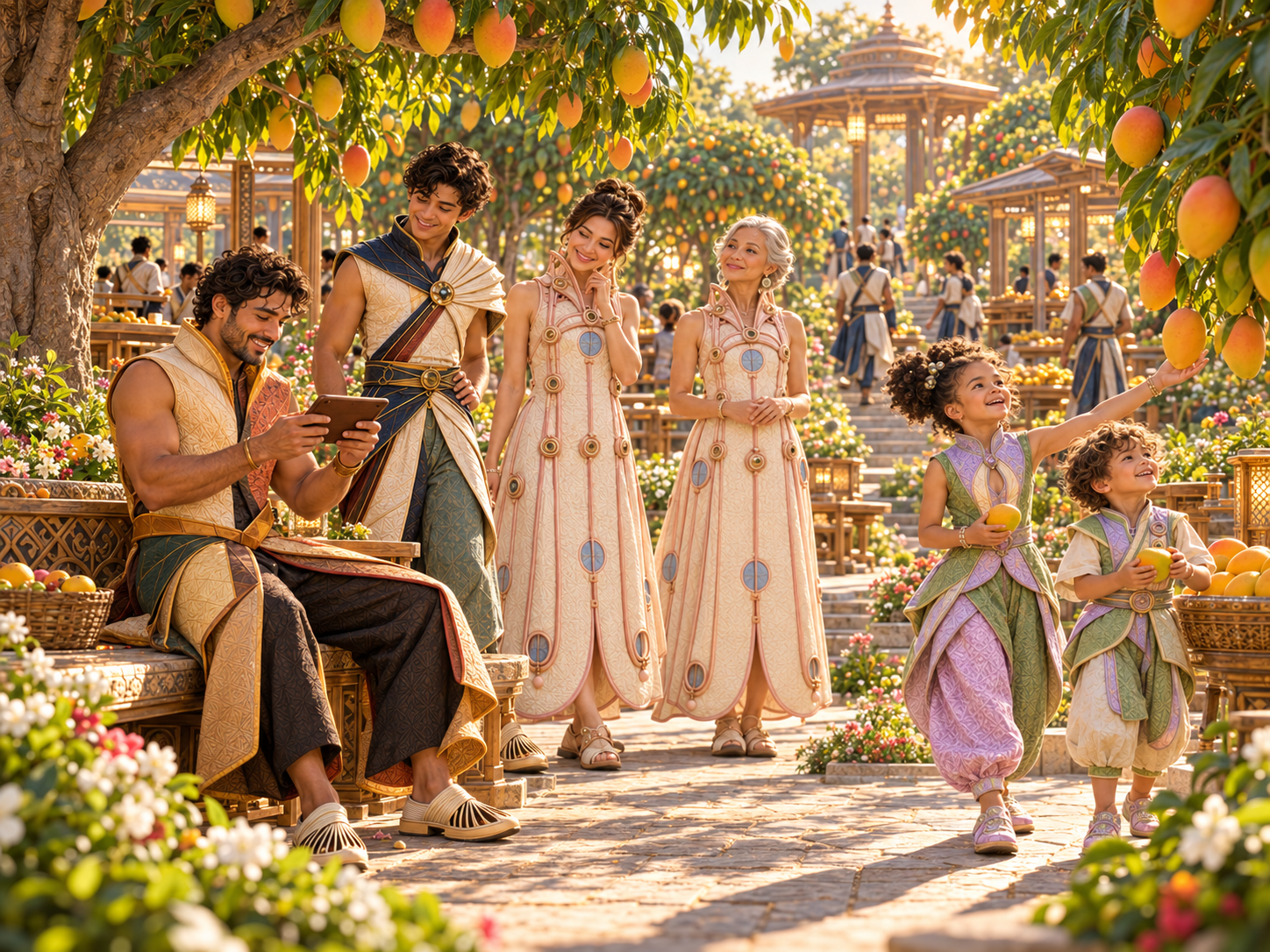
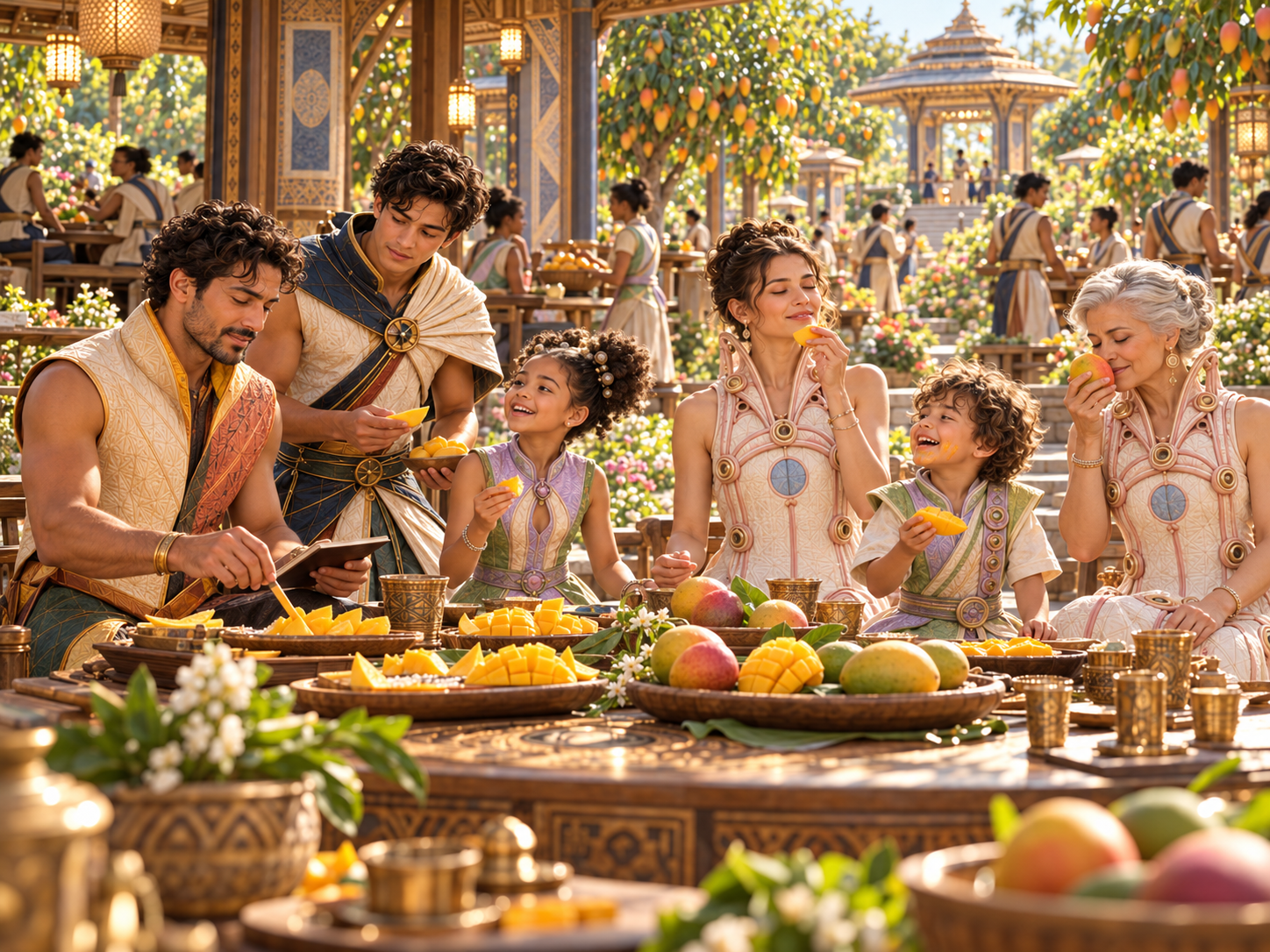
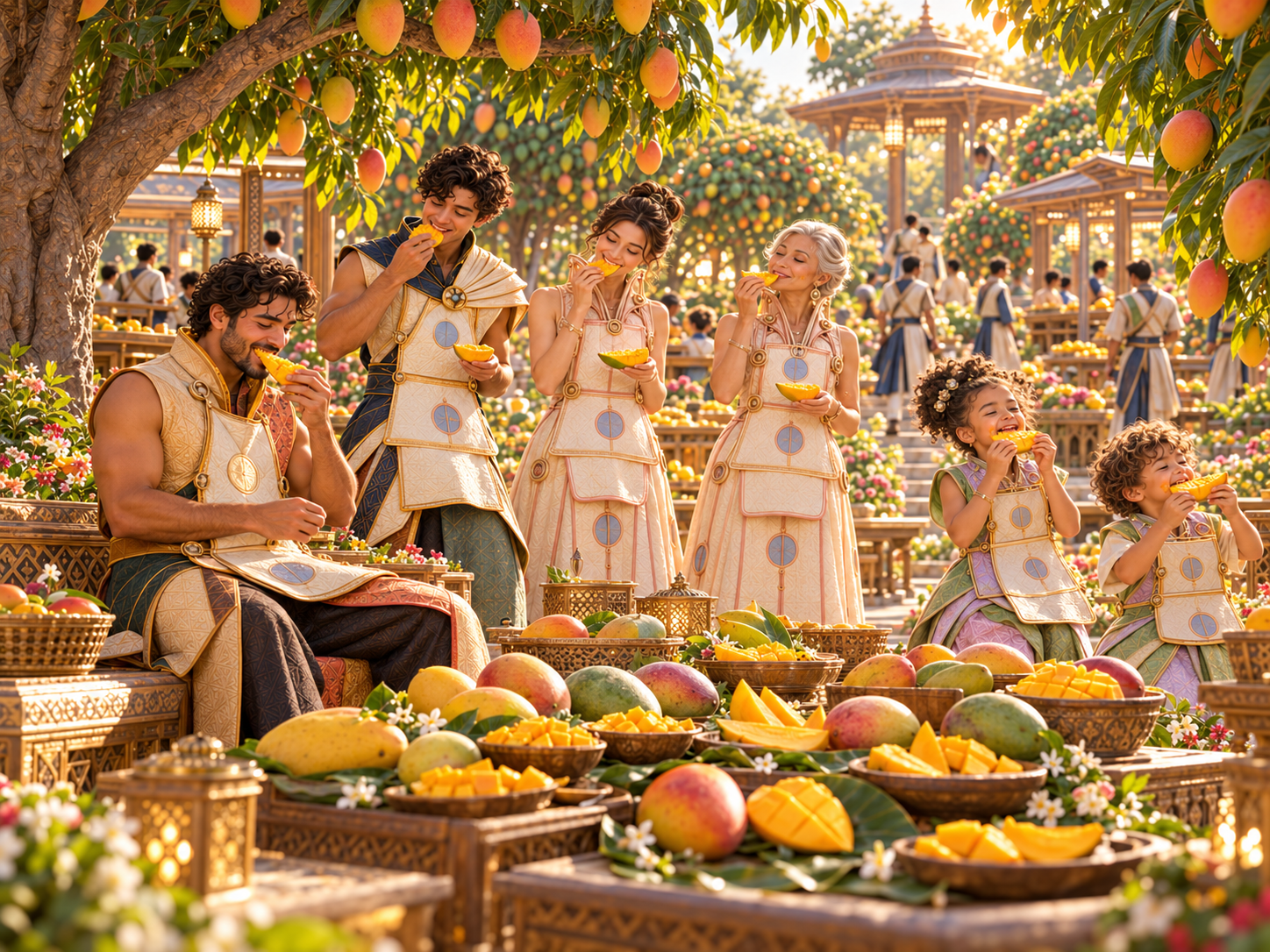
Here is a concrete example. A mother and her three children receive food from a male and female Keslev Sabennerie delivery team. The food is wrapped in banana leaves. The stewards wear banana-leaf-inspired service uniforms, showing that the package system and the rolewear belong to one food-support culture.
Step-by-step household use
- The stewards place the wrapped packages on a receiving ledge near the kitchen or pantry.
- The mother opens the main meal bundle and places serving items on the table.
- One child places smaller fruit or snack bundles into a child-height drawer.
- Another child carries empty jars to the jar return wall.
- Banana leaves from opened packages go into the organic return hatch if they are approved for compost or soil return.
- Damp cloths or rinsed trays go to the Dry-Return Wall.
- The delivery basket or tray returns to a Sabennerie return niche so it can be cleaned and reused.
The point is not to make children do adult labor. The point is to let them see that food has a responsible life cycle. They learn that eating is connected to cleaning, storage, compost, reuse, and care for the orchard.
Why Krubaro Must Be Visible Enough to Teach
Some systems should be hidden for safety or hygiene. But if every return process is hidden, children never learn what happens after food is eaten or objects are used. Krubaro should be visible enough to teach, while still being clean, safe, and controlled.
A child does not need access to dangerous machinery or adult processing areas. But a child can learn that banana leaves go here, jars go there, wet cloths hang here, seeds can be saved here, and baskets return to this slot.
What Krubaro Must Avoid
Krubaro fails when it looks like ordinary trash management. It must not bring dirty utility-room logic into family interiors.
Avoid this
- Generic plastic trash bins lined along the wall.
- Municipal recycling visuals inside the family room.
- Dirty utility-room corners.
- Random compost buckets under the sink.
- Smelly exposed food scraps.
- Cluttered piles of jars, baskets, cloths, and trays.
- Hidden return systems that nobody understands.
Design this instead
- Sealed organic return hatches.
- Beautiful jar and basket return niches.
- Ventilated dry-return walls.
- Clear child-safe sorting drawers.
- Washable mineral surfaces.
- Pacorips-guided labels or freshness indicators.
- Return lines connected to orchard, compost, or Sabennerie systems.
Why This Helps Families
Krubaro reduces the hidden burden of household reset. Without a return system, someone has to remember where everything goes, clean random piles, manage smells, handle damp objects, and solve mess after every meal.
With Krubaro, the room itself carries some of that burden. It gives each material a place, sequence, and purpose.
Why This Is Practical, Moral, and Necessary
Krubaro is practical because it reduces confusion and mess. It is easier to maintain a household when the room explains where used materials go.
Krubaro is moral because it refuses to treat the aftermath of family life as invisible, shameful, or someone else’s burden. Feeding, washing, cleaning, drying, and returning are real parts of life. They deserve design attention.
Krubaro is necessary because a family-first civilization cannot celebrate abundance while ignoring what abundance leaves behind. If the kingdom provides food, packaging, water, cloths, tools, and service systems, it must also provide a dignified way for those things to return.
Practical Summary
Krubaro is the Trott Bailey clean-return system. Inside the home, it gives food scraps, water, jars, baskets, cloths, packages, and tools a clear path back into reuse, drying, compost, filtering, storage, or safe processing.
In Keslev interiors, Krubaro belongs near kitchens, pantries, dining rooms, Sabennerie delivery points, wash areas, and Dry-Return Walls. It should look clean, beautiful, built-in, child-learnable, and connected to orchard renewal.
The main point is simple: what is used must have a designed return path. That is how a family food system stays beautiful after real life happens.



 and then