Why Trott Bailey Homes Are Finishing Hearths, Not Survival Kitchens


One of Trott Bailey Family civilization Kitchen designs


Why Trott Bailey Homes Are Finishing Hearths, Not Survival Kitchens
A survival kitchen makes one household carry the full burden of food every day. A finishing hearth receives support from the wider food system, then lets the family warm, season, assemble, teach, serve, eat, and cleanly return what is left.
In many homes, the kitchen is not just a room for cooking. It is where meal planning, food preparation, child interruption, dishwashing, waste handling, cleaning, nutrition pressure, and emotional labor all pile up.
This is why a kitchen can be full of appliances and still exhaust the family. A stove, sink, refrigerator, oven, microwave, and cabinets do not automatically create relief. They may help with pieces of the work, but the whole burden can still land on one household and often on one mother.
Trott Bailey Family Kingdom changes the purpose of the home kitchen. The home should not be the place where food life begins from raw stress every day. The home should be the final, peaceful step of a larger food civilization.
A finishing hearth keeps the family involved in food while stopping the household from being crushed by food production.
Plain Definition: What Is a Finishing Hearth?
A finishing hearth is a home food room designed for the last stage of nourishment. It receives food that has already been partly prepared by the wider kingdom, then the family warms it, seasons it, assembles it, tastes it, serves it, eats it, and returns the leftovers properly.
This is different from a survival kitchen. A survival kitchen expects the household to begin from raw ingredients, hungry children, tired adults, dirty dishes, limited time, and one small stove. The family must plan, prepare, cook, clean, and repeat the whole cycle again tomorrow.
The finishing hearth does not remove the family from food. It removes unnecessary exhaustion from family food life.
The Problem With the Survival Kitchen
A survival kitchen gives the household too many jobs at once. One person may have to decide what to cook, check what food is available, wash vegetables, cut ingredients, cook the meal, manage heat, answer children, serve everyone, clean the stove, wash dishes, handle grease, separate scraps, store leftovers, and plan for the next meal.
The stove may cook food, but it does not plan meals. The sink may wash dishes, but it does not solve the food-scrap system. The refrigerator may store food, but it does not make the food nourishing. The counter may hold work, but it does not stop the work from piling up.
That is why more appliances do not always mean more relief. Appliances can reduce one step while leaving the whole system overloaded.
The Wider Food System Must Carry Part of the Work
A finishing hearth only works because the home is not acting alone. It receives support from the wider Trott Bailey food system.
Keslev is the kingdom’s food-growing and preparation district. It grows food and also carries early preparation work. That may include washing greens, soaking grains or beans, roasting roots, preparing broth, cleaning fruit, grinding grain, preserving food, softening baby food, preparing elder-friendly food, and sorting portions for families.
A Sabennery is a kingdom food-abundance house. It is not a restaurant. It prepares, serves, packages, and supports food access as part of public life and family relief. Families may eat there, receive food there, or take prepared food home.
This matters because the family should not begin from zero every day. The wider food system should remove some of the work before food reaches the home.
- Greens may arrive already washed and ready to refresh.
- Grains may arrive cooked, soaked, steamed, or ready to warm.
- Roots may arrive roasted and ready to reheat.
- Broth may arrive prepared for soup, stew, baby food, or elder food.
- Fruit may arrive cleaned and sorted for eating or serving.
- Family portions may arrive wrapped for easy opening and finishing.
- Baby or elder foods may arrive softened and safe for final warming.
This Is Not Takeout Culture
A reader may ask: is this just a prettier version of takeout or prepared meals?
No. Takeout culture usually appears when a tired household pays a business for convenience. The food often arrives in disposable packaging, the family pays for relief, the cleanup still lands at home, and the food system is driven by profit and speed.
Trott Bailey finishing hearth logic is different. Food support is part of the civilization, not a paid escape from household exhaustion. The food is designed for household finishing, not just quick consumption. Packaging has return pathways. Families still participate. Children still learn. Nutrition is planned upstream. The burden is distributed across the kingdom instead of being sold back to tired families.
Takeout Pattern
A tired family buys relief. Food arrives quickly, often in disposable packaging. The meal may solve hunger, but the wider burden remains.
Finishing Hearth Pattern
The kingdom prepares food upstream. The family receives it in a form designed for warming, seasoning, serving, child learning, and clean return.
What the Finishing Hearth Receives
The finishing hearth works only if food arrives in a form that reduces household labor. This does not mean lifeless industrial food. It means real food that has already been cleaned, sorted, wrapped, cooked, steamed, roasted, portioned, or prepared enough to spare the household from starting from raw chaos.
One useful format is the banana-leaf package system. Banana leaves can wrap food without relying on disposable plastic. They can hold warmth and moisture, protect food, and make the food package visually connected to the plant world that produced it. Banana leaves are not just decoration; they must also have a return path after use.
Warm Meal Parcel
A banana-leaf wrapped package containing warm food or cooked meal components ready for final heating, seasoning, or serving.
Family Bundle
A larger package holding shared food such as roasted roots, grains, breads, fish, vegetables, or family meal pieces.
Fresh Prep Parcel
A lighter package with washed fruit, greens, herbs, child foods, prepared sides, or fresh finishing ingredients.
Reusable Vessels
Bowls, carriers, or containers that can return to the Sabennery or household wash system instead of becoming disposable waste.
What the Home Still Does
The finishing hearth does not erase the home’s role. It protects the home’s best role.
The home is where final flavor is decided. The home is where food is adjusted to family preference. The home is where children learn taste, where fathers and mothers participate, where elders receive suitable portions, and where food becomes family memory.
The difference is that the home is not forced to carry every food task before family life can begin.
- Open banana-leaf parcels.
- Warm soups, broths, grains, greens, or baby food.
- Reheat roasted roots, breads, vegetables, or family meal pieces.
- Add seasoning and family flavor preferences.
- Slice or arrange fresh fruit.
- Let children taste safe portions at a child-height ledge.
- Serve calmly.
- Separate scraps, cloths, vessels, grease, and banana leaves after eating.
This is not laziness. It is better placement of labor.
The Main Hearth Components
A finishing hearth should be organized around a few strong food bodies, not crowded with every possible cooking machine.
Steam-Broth Hearth
A combined moist-heat station for warming broth, soup, grains, leafy greens, baby soft food, and elder recovery food. These foods use similar steaming and warming logic, so they do not need separate bulky stations in the home.
Root / Roast Reheat Niche
A warm niche for reheating roasted roots, breads, vegetables, or family bundle pieces without turning the whole kitchen into a cooking production zone.
Fresh Finish Counter
A clean counter for opening parcels, arranging fruit, adding herbs, cutting small items, and finishing food that does not need full cooking.
Tiny-Taste Ledge
A child-height food ledge where children can taste small portions safely without crowding hot surfaces or interrupting the adult work path.
The home should feel spacious and calm, not like a miniature food factory.
Clean Return Must Be Built Into the Hearth
A finishing hearth is not complete if it only shows beautiful food. It must also show where the leftovers go.
Clean return means scraps, grease, cloths, vessels, banana leaves, and rinse water have clear next steps instead of becoming mixed trash.
The home does not need to become a waste facility. It needs simple, household-scale return points.
Scrap Channel
A small local collection point for peels, trimmings, and organic food scraps.
Grease Vessel Niche
A safe place to pour excess grease so it does not go into the sink or mix with general waste.
Doon Cloth Basket
A basket for protective food-life cloths such as bibs, lap cloths, gloves, and sauce cloths that need washing.
Carrier Return Alcove
A neat holding place for reusable vessels and carriers before they are washed, reused, or returned to the Sabennery system.
Krubaro is the wider kingdom clean-return infrastructure where separated organic return goes after local collection. Krubaro is not the little hole in the counter. The counter opening is only the first collection point.
A Practical Family Scene
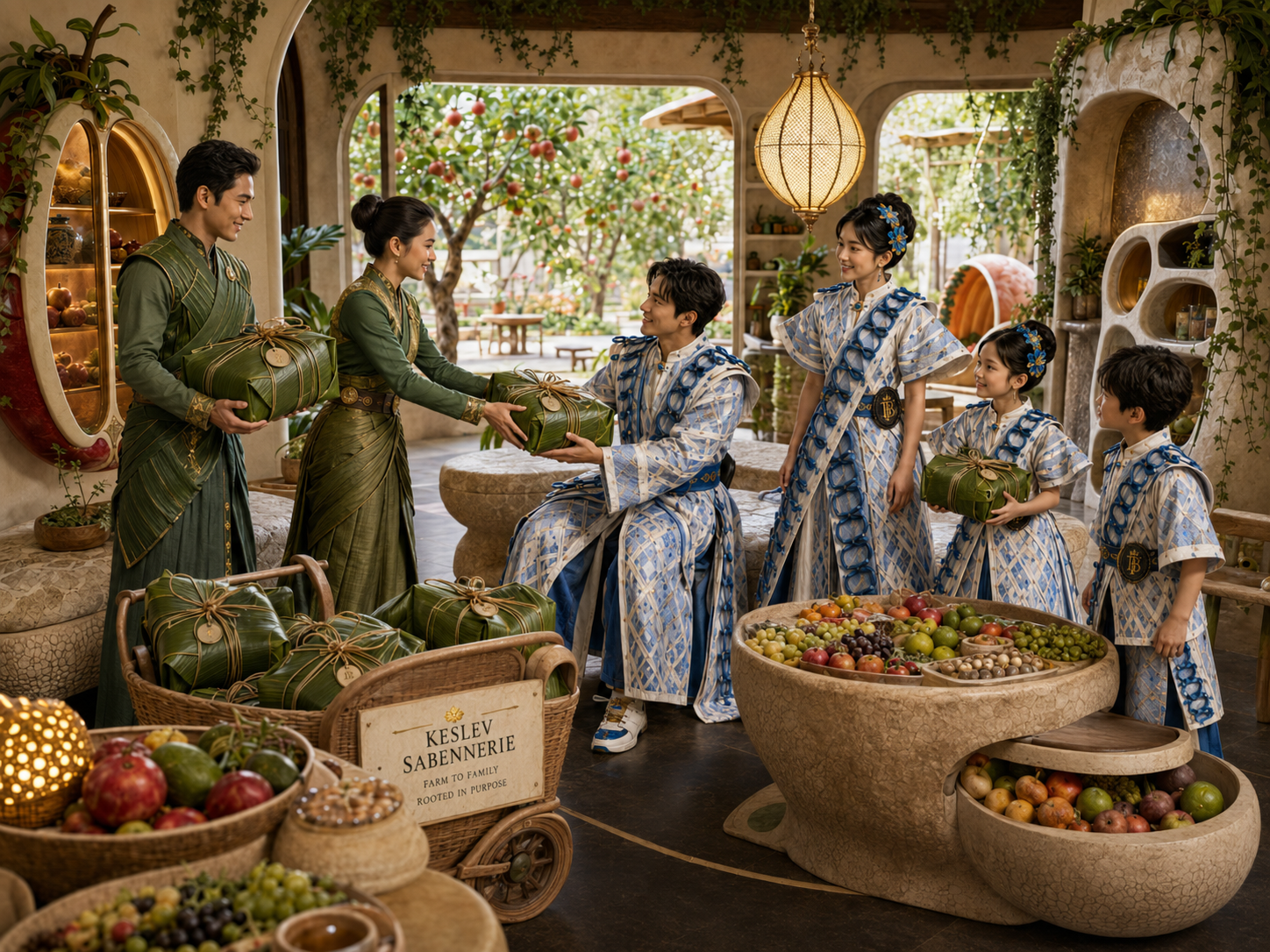
A family returns from a Keslev-linked Sabennery with three banana-leaf packages. The father places the Family Bundle on the fresh finish counter and opens it. The mother checks the Warm Meal Parcel and adds final seasoning. One child tastes a small piece at the Tiny-Taste Ledge. Another child places the clean banana-leaf tie in the correct return bowl.
The Steam-Broth Hearth warms soup and grains. The Root / Roast Reheat Niche warms roasted roots. Fresh fruit from the Fresh Prep Parcel is sliced and placed on the family table.
After the meal, peels go into the scrap channel. Excess grease goes into the grease vessel. Used Doon cloths go into the laundry basket. The reusable carrier goes into the return alcove. The separated organic return later moves onward to Krubaro.
This is burden relief in practical terms: the family still participates, but the home is not forced to carry the whole food system alone.
What This Is Not
The finishing hearth can be misunderstood, so the boundaries must be clear.
This Is Not
Takeout culture, microwave dinner culture, removing family cooking, making mothers useless, turning homes into food factories, or making every household dependent on central kitchens.
This Is
Upstream preparation, calmer home finishing, distributed food labor, protected family participation, child food learning, and clear return pathways after the meal.
The goal is not to move the cooking burden from mother to father. The goal is to stop dumping the whole burden onto one household body in the first place.
Why This Helps Mothers Without Erasing Mothers
The finishing hearth is not anti-mother and it is not anti-cooking. It is anti-burden.
Mothers may still cook, season, teach, host, bake, create, and pass down family food traditions. The difference is that the mother is not treated as the default engine of daily survival food.
Fathers can unpack food, warm food, serve food, return vessels, and help children at the Tiny-Taste Ledge. Children can learn safe participation. Elders can receive softer foods without forcing the household into a separate cooking crisis.
The Trott Bailey Correction
Survival Kitchen
Raw food enters. One household plans, washes, cuts, cooks, cleans, manages children, handles scraps, pays for everything, and repeats tomorrow.
Finishing Hearth
Keslev prepares, Sabenneries support, food arrives partly civilized, the family warms and finishes it, children participate safely, and clean return has a clear path.
The home kitchen should not be a daily survival factory. It should be the final, peaceful step of a larger food civilization.
A finishing hearth lets the family stay connected to food without forcing the household to carry the entire food burden alone.



 and then