
NoDumbDumbs Operational Extraction Record


NoDumbDumbs Operational Extraction Record
This work did more than produce two child stories.
By listening to Kaleeyon and Keilah speak from inside NoDumbDumbs, the operating logic of the learning civilization became visible.
The strongest discovery was that NoDumbDumbs is understood best through ordinary lived moments: a child finding her belonging hollow, a teacher correcting a backward letter, a parent being corrected in a fabrication workshop, a horse moving its foot, or a chocolate machine taking too long.
The civilization becomes believable because life inside it works.
1. The Voice Notebook Became a NoDumbDumbs Invention
What it is
A child-readable recording tool that asks short questions and listens to the learner’s spoken answers.
What it preserves
What the child noticed, misunderstood, feared, enjoyed, corrected, remembered, and wants to investigate next.
Why it matters
Children can preserve thought before their writing skill can fully carry it. The recording can later become material for reading, writing, reflection, and invention.
Operational boundary
The Voice Notebook should support learning and memory without becoming surveillance, personality scoring, or secret child ranking.
2. Child Perspective Is an Operational Design Test
The logs exposed whether systems actually make sense at child height.
| System claim | What the child’s experience must show |
|---|---|
| The school is welcoming. | The child can say who noticed her, where she went, and when she stopped feeling alone. |
| The environment teaches organization. | The child knows where her bag, tools, cloths, cards, and return items belong. |
| Safety is intelligent. | The child experiences a clear stop when needed, followed by an explanation rather than humiliation. |
| Learning is real. | The child encounters real materials, animals, food processes, water systems, and machinery under proper supervision. |
| Choice matters. | The learner can name the interests she selected and describe what she actually enjoys. |
| Family learning is real. | The child expects to see parents learning, making mistakes, receiving correction, and sometimes bringing children into their sessions. |
3. The NoDumbDumbs Learning Architecture
Serious foundations
Reading, writing, and mathematics remain direct, carefully taught, repeated, corrected, and evidenced.
Chosen interests
Learners may choose fields they genuinely want to deepen. Keilah selected Physical Education, cooking, and animal care techniques.
Mastery pace
Time does not determine readiness. Understanding determines readiness.
Changing mode
The learning target remains stable while the mode may change through movement, direct instruction, song, writing, making, or independent demonstration.
Keilah’s Age-Nine Learning Program
| Learning type | Current fields | Operational meaning |
|---|---|---|
| Foundation | Reading, writing, mathematics | Required, mastery-paced, and supported by direct teaching and clear evidence. |
| Chosen interests | Physical Education, cooking, animal care techniques | Selected by Keilah and able to deepen into more advanced branches over time. |
| Family learning crossings | Fabrication and other adult learning fields | Scheduled opportunities to join her parents’ learning without losing her own route. |
4. Whole-Family Learning Is a Scheduled System
Children joining their parents’ learning should not be treated as a rare exception. It should be expected, scheduled, and designed into adult learning programs.
Parents remain learners
Adults may study fabrication, agriculture, construction, food preservation, repair, governance, technology, animal care, and other civilization fields.
Children may accompany them
Adult sessions should expect that several parents may arrive with children of different ages.
The child keeps her own path
Family learning does not erase the child’s reading, writing, mathematics, or chosen interests.
The crossing is recorded
The learner may create a Voice Notebook entry, drawing, measurement, test piece, or written reflection.
Operational Requirements for Adult Learning Sessions
- Family attendance should appear on the schedule before the session begins.
- Mentors should know how many children and which age groups may attend.
- There should be safe observation areas near the real work.
- Age-appropriate tools, scrap materials, test pieces, and participation roles should be prepared.
- Children should receive real work scaled to their reach, strength, judgment, and current skill.
- Large machinery zones require visible boundaries, protective equipment, direct supervision, and clear stopping rules.
- The child’s regular guide and the adult-session mentor should both know where she is and when she is expected to return.
5. The Family Learning Crossing
Family Learning Crossing
A planned period when a child temporarily joins a parent’s learning field, receives a safe and meaningful participation role, records what she encountered, and later returns to her own route with the experience recognized as learning.
This is not truancy, a casual interruption, or an adult using school as childcare. It is a deliberate crossing between two active learning paths.
| Before | During | After |
|---|---|---|
| The session appears on the family schedule. The child’s guide prepares the transition. Clothing and safety equipment are checked. | The child observes real work, completes an age-valid task, asks questions, and remains within visible supervision. | Tools are restored. The child records a log, sketch, measurement, question, or reflection. Her learning record is updated. |
6. Real Civilization Work Enters Childhood Carefully
Cooking
Children encounter ingredients, bitterness, grinding, measuring, smoothing, waiting, machine safety, moulding, tasting, and restoration.
Animal care
Children learn how to approach, where to stand, how to read the animal, where not to cut, when to release a foot, and how to groom with useful pressure.
Physical Education
Hurdles and handstands develop timing, courage, repetition, body control, spatial awareness, and honest awareness of progress.
Fabrication
Children can test handles, compare edges, use scrap shapes, measure reach, observe machines safely, and discover that adults also make mistakes.
7. Safety Means Supervision, Legibility, and Explanation
- Urgent danger may require a strong immediate command: “Stop.”
- Explanation follows after immediate safety is secured.
- Children learn where to stand, what not to touch, when to release, and what environmental changes mean.
- Protective equipment is normal, but equipment does not replace attention.
- Supervision remains close enough to intervene without taking over every action.
- An animal or machine does not have to be angry to be dangerous. It may simply be strong.
8. Correction Without Humiliation
- A backward letter is corrected rather than falsely praised.
- A wrong fraction is examined instead of hidden.
- A parent’s machine instruction is corrected without pretending adults do not make mistakes.
- A child who takes over another child’s board is stopped without being reduced to a negative label.
- A learner may receive help without being made to feel incapable.
- Work may remain crooked when it is safe, functional, and truly belongs to the learner who made it.
9. Helping Without Taking Over
| Unhelpful control | NoDumbDumbs help |
|---|---|
| Taking the board because you know the answer. | Giving a clue and allowing the learner to make the mark. |
| Grabbing the tool because a younger child is slow. | Holding the material while the younger child operates the tool. |
| Rebuilding a child’s crooked but safe work. | Leaving visible evidence that the child completed it. |
| Solving every conflict for children. | Helping them explain what happened, test the situation, apologize, and repair it. |
10. Restoration Is Part of Learning
- Boards are wiped and returned.
- Pencils are counted and searched for.
- Wet cloths go to wet returns rather than dry storage.
- Tools with dirt in their hinges are cleaned before being returned.
- Damp care garments and bags are left open in drying storage.
- Food areas are wiped after spills.
- Animal-care tools and cloths are washed.
- Fabrication scraps, protective equipment, and templates have clear return places.
11. The Early-Learning Day Is Warm and Serious
- Arrive at a building that promises happiness.
- Know where belongings go.
- Receive a warm personal welcome.
- Begin with a small social connection.
- Meet the first academic target through outdoor search and movement.
- Return while the experience is fresh.
- Receive direct teaching, correction, repetition, and independent practice.
- Eat, wash, wait, pass, speak politely, and restore.
- Repeat the same target through song, rhythm, movement, and writing.
- Practise cooperation through paired friendship learning.
- Play, negotiate, include, disagree, and repair.
- Restore the territory before leaving.
12. Infrastructure Unearthed Through the Logs
| Infrastructure | Operational purpose |
|---|---|
| Voice Notebook | Captures spoken understanding, questions, memories, and material for later writing. |
| Belonging hollows | Teach where personal items, assigned materials, return items, and wet items belong. |
| Child-height standpipes | Provide direct clean drinking water without making personal bottles the default burden. |
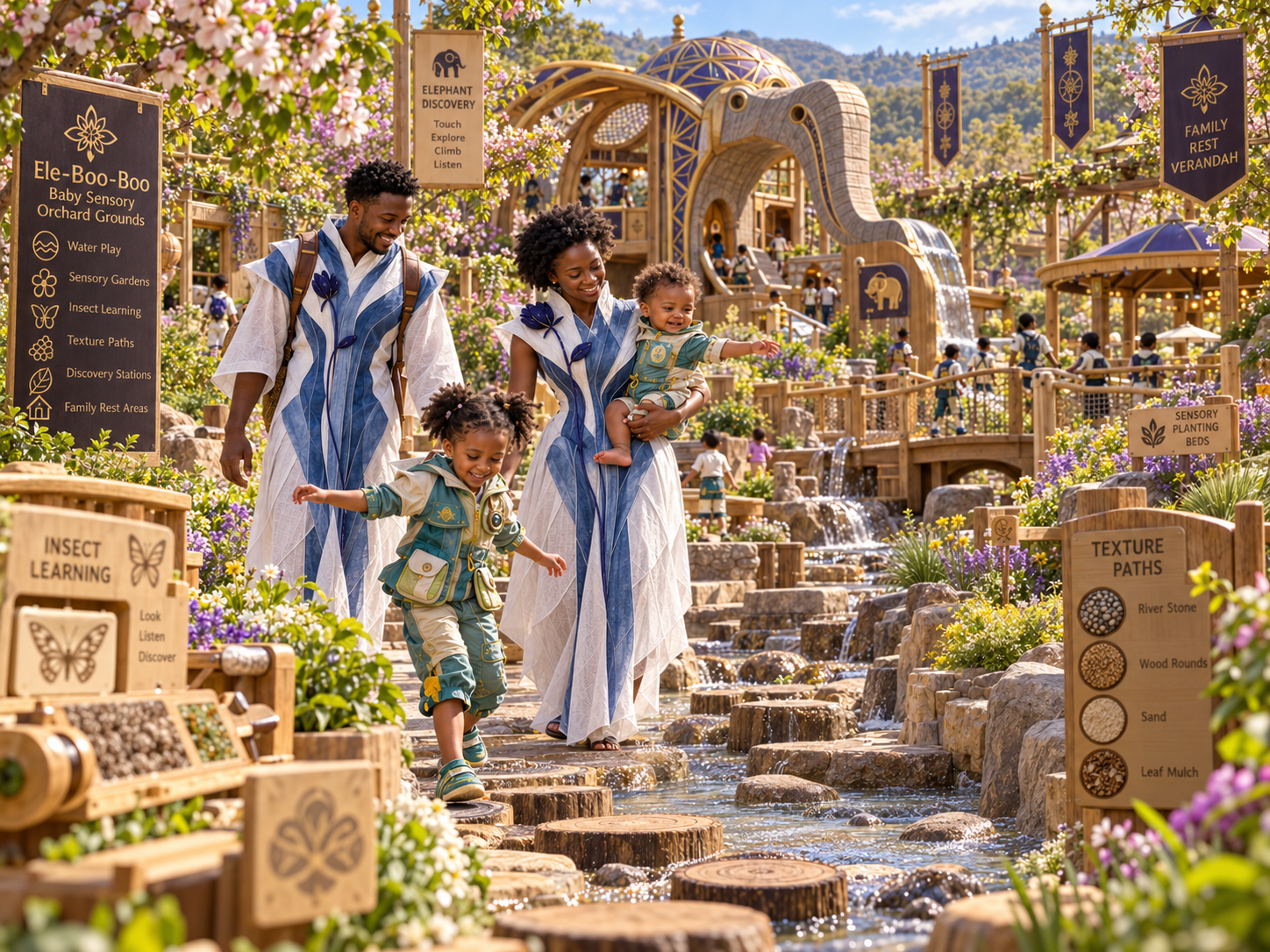
| Discovery and Capability Fields | Support movement, academic encounter, making, agriculture, water learning, and real investigation. |
| Physical Education grounds | Support hurdles, gymnastics, running, climbing, coordination, and progressive body skill. |
| Cooking laboratories | Support real food transformation, machinery, heat, measurement, waiting, tasting, and cleaning. |
| Animal-care territories | Provide supervised grooming, hoof care, wash points, tool return, and animal retreat. |
| Family fabrication workshops | Include adult work zones, child observation areas, age-valid stations, protective equipment, and family participation roles. |
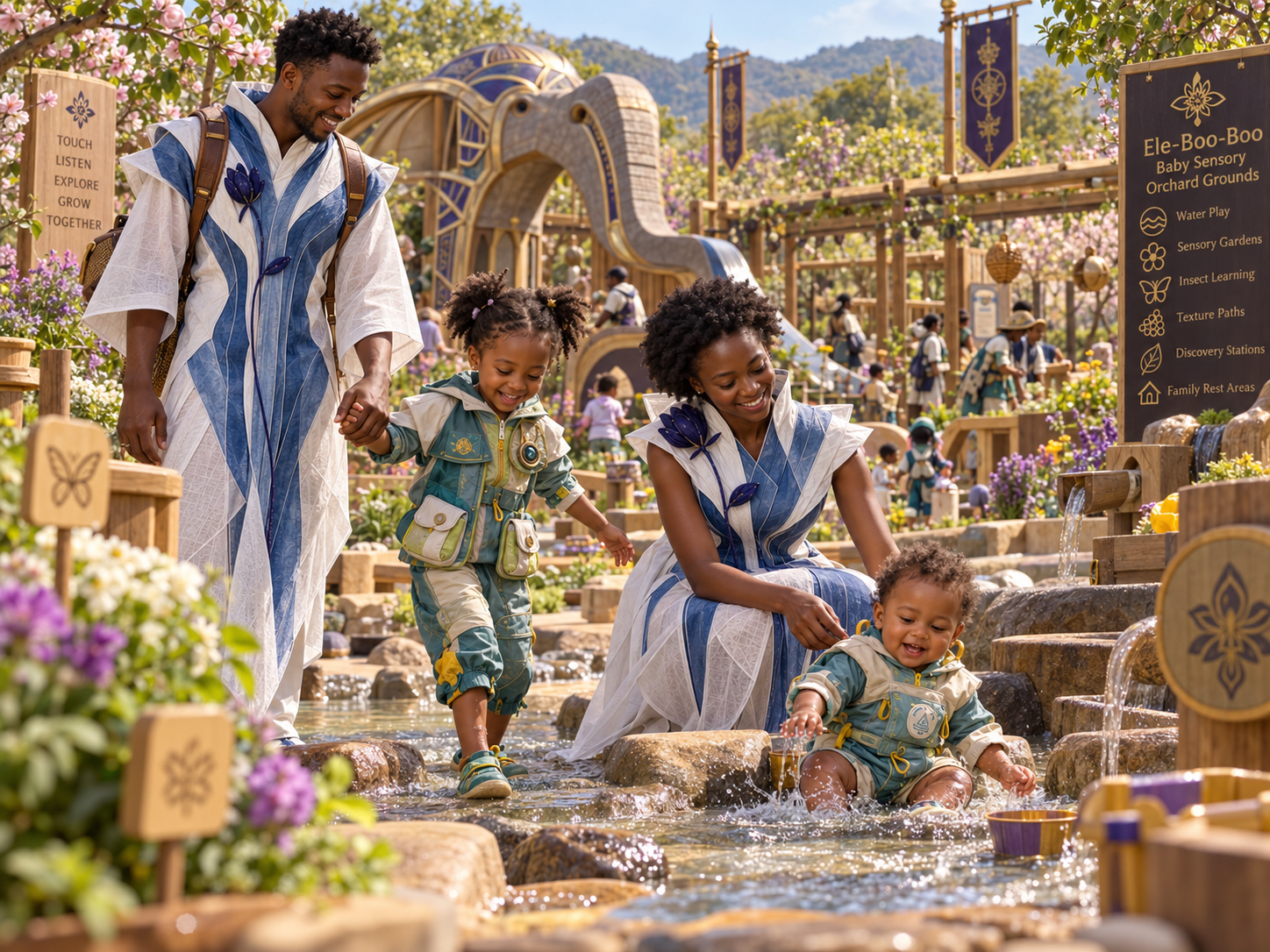
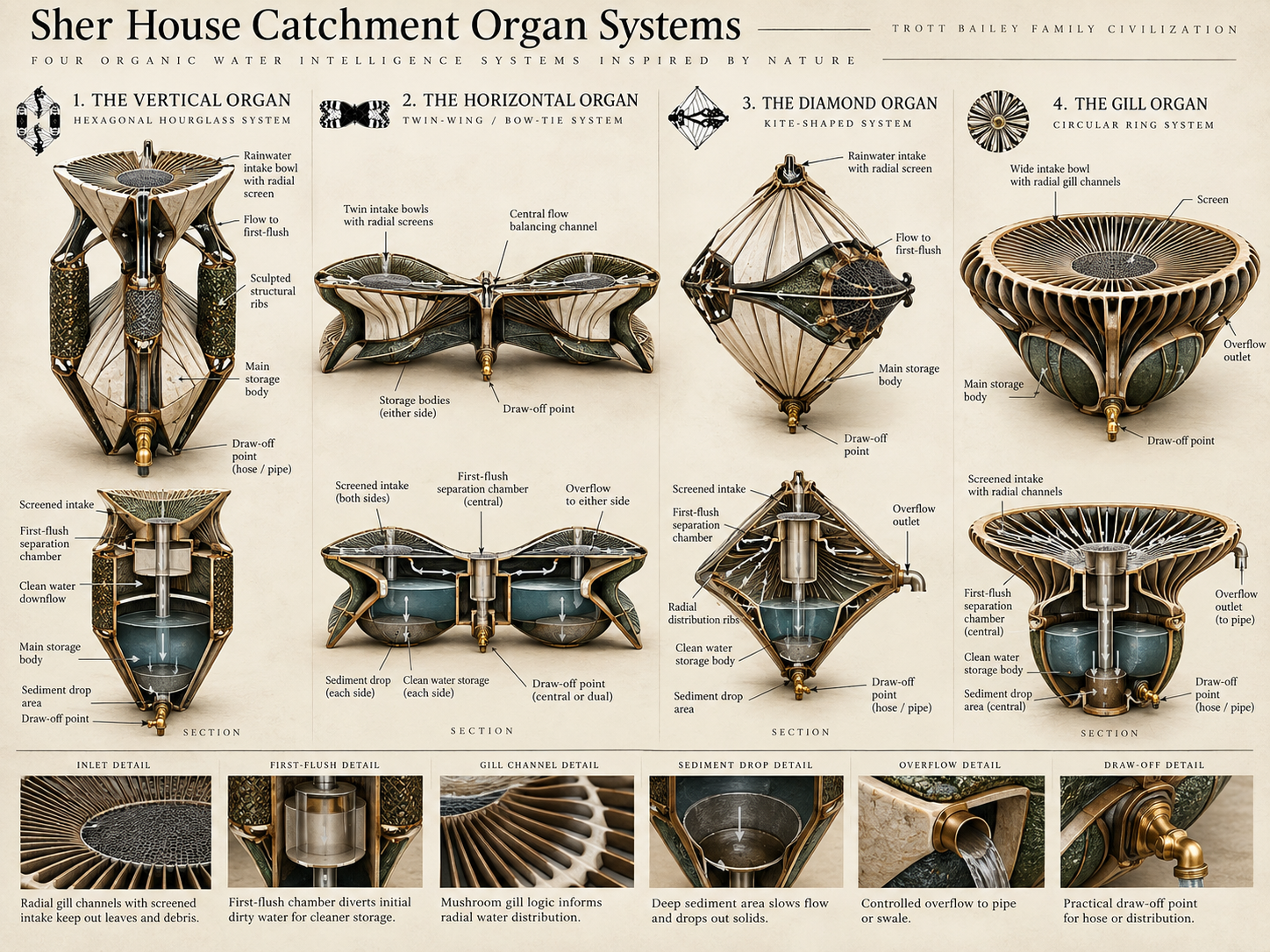
| Water routes and waterwheels | Make irrigation, power, movement, cooling, and invention visible at child height. |
| Family movement records | Show where children are, which parent-learning session they joined, and when they return. |
13. Staffing and Scheduling Implications
Foundation guides
Need skill in direct instruction, precise correction, social repair, child voice, and knowing when not to overtalk.
Specialist mentors
Cooking, animal care, Physical Education, fabrication, agriculture, and water systems require real practitioners who can teach across ages safely.
Family-session planners
Adult schedules must include expected child attendance, safe zones, supervision, equipment, tasks, and return times.
Learning-record stewards
Records should connect foundation mastery, chosen interests, Voice Notebook entries, practical demonstrations, and family crossings without reducing children to scores.
14. Clothing Is Part of the Operating System
15. Anti-Drift Warnings
- Do not make a child sound like an adult educational writer.
- Do not make every child reflection end with a polished moral or perfect conclusion.
- Do not allow chosen interests to replace serious reading, writing, and mathematics.
- Do not treat parents bringing children into adult learning as an improvised exception.
- Do not create fake children’s versions of work that have no real consequence, function, or material truth.
- Do not use supervision as an excuse to remove all agency from the learner.
- Do not use freedom as an excuse for unclear safety, missing handoffs, or adults not knowing where a child is.
- Do not praise incorrect work merely to avoid discomfort.
- Do not make every learner wear the same generic institutional uniform.
- Do not let beautiful infrastructure replace direct teaching, correction, repetition, and evidence of mastery.
- Do not turn the Voice Notebook into a surveillance device, personality-ranking tool, or secret assessment system.
- Do not assume adult learning spaces can safely receive children without advance planning.
- Do not let older children “help” by taking tools, boards, materials, or decisions away from younger learners.
- Do not erase a child’s safe, functional work merely because an adult could make it neater.
- Do not separate learning from restoration, cleaning, return routes, maintenance, and responsibility.
16. Constitutional Extraction
17. Immediate Implementation Questions
- What physical form should the Voice Notebook take for four-year-olds, nine-year-olds, teenagers, parents, elders, and specialist learners?
- How will the Voice Notebook ask age-appropriate questions without making every learner sound the same?
- How will recordings be stored, replayed, transferred into writing, and protected from misuse?
- Who can listen to a learner’s Voice Notebook entries, and under what conditions?
- How can children mark an entry as private, family-only, guide-supported, or ready for their formal learning record?
- How will Voice Notebook recordings become reading and writing material without replacing independent writing practice?
- How will weekly Family Learning Crossings appear on family schedules?
- Which adult learning sessions should always be family-ready?
- Which sessions require advance notice, age restrictions, special clothing, or additional supervision?
- How many children of each age can safely accompany adults into fabrication, agriculture, animal care, cooking, construction, water, governance, and repair learning?
- What age-valid tasks should be prepared for every major workshop?
- How will mentors prevent children from being reduced to passive observers?
- How will mentors prevent children from being given work beyond their judgment, reach, strength, or current skill?
- How will the child’s regular guide and the parent-learning mentor complete a clear handoff?
- How will the system show where the learner is, who is responsible for her, and when she is expected to return?
- How will learning records distinguish foundation mastery, chosen interests, family crossings, practical demonstrations, spontaneous discoveries, and personal reflections?
- How will children change or deepen their selected interests over time?
- How will NoDumbDumbs prevent chosen interests from becoming shallow entertainment courses?
- What progression exists from introductory cooking to food processing, preservation, nutrition, kitchen machinery, cacao work, and food-system design?
- What progression exists from introductory animal care to grooming, hoof care, feeding, observation, shelter, health support, breeding, transport, and veterinary pathways?
- What progression exists from Physical Education to gymnastics, running, swimming, climbing, dance, coordination, coaching, recovery, and body understanding?
- What progression exists from child workshop participation to youth fabrication, repair, machinery operation, design, and independent production?
- What supervision standards apply to cooking heat, blades, animals, fabrication machinery, boats, water routes, and Physical Education?
- What immediate stopping commands are standardized across dangerous learning territories?
- How will guides explain safety rules after urgent intervention so that children understand rather than merely obey?
- How will NoDumbDumbs teach older learners to help younger learners without taking over?
- How will safe but imperfect child work be preserved rather than quietly replaced by adults?
- How will restoration, washing, drying, repair, return routes, and missing-item searches be included in every learning activity?
- How will clothing, protective gear, storage, washing, and footwear change across learning territories?
- What does a complete family week look like when parents, children, youth, and elders all maintain active learning paths?
- How does the system protect family unity while still giving every learner a distinct personal route?
18. Operational Systems Requiring Formal Development
Voice Notebook System
Physical device, child interface, prompt library, privacy settings, storage, replay, transcription, family access, guide access, and writing-transfer methods.
Family Learning Schedule
A shared family map showing each person’s learning route, family crossings, required preparation, transport, meals, equipment, and return times.
Family Learning Crossing Protocol
Check-in, handoff, location record, mentor responsibility, child participation role, safety preparation, restoration, and return to the learner’s regular route.
Age-Valid Participation Library
Prepared tasks for young children, older children, youth, parents, and elders across fabrication, cooking, animal care, agriculture, water, repair, and construction.
Learning Territory Safety System
Territory-specific protective clothing, supervision standards, stopping commands, observation positions, emergency response, and child-readable danger markings.
Restoration and Return System
Built-in routes for cleaning, drying, inspection, missing-item recovery, tool return, material sorting, repair, composting, and waste prevention.
Chosen Interest Pathways
Clear routes showing how an early interest may deepen into skill, contribution, apprenticeship, invention, service, or professional capability.
Whole-Family Learning Record
A record that connects individual mastery, chosen interests, family crossings, practical work, Voice Notebook reflections, corrections, and future questions.
19. What the Voice Logs Revealed Without Direct Explanation
| Small moment in the log | System revealed |
|---|---|
| Kaleeyon presses her palm and her belonging hollow opens. | Child-readable storage, organization, identity, and return infrastructure. |
| Kaleeyon is told to stop before touching a caterpillar. | Immediate safety authority followed by explanation. |
| Kaleeyon corrects a backward C. | Honest correction, repetition, and independent evidence. |
| Kaleeyon helps Sami without taking his board. | Capability-preserving assistance. |
| Kaleeyon and Ana repair a play conflict. | Social learning through lived negotiation rather than lectures alone. |
| Keilah uses corn to explain fractions. | Concrete materials joined to serious mathematical reasoning. |
| Keilah jumps hurdles and practises handstands. | Physical capability is a real learning field, not merely recreation. |
| Keilah helps trim a horse’s hoof under supervision. | Real animal-care techniques enter childhood through scaled participation. |
| Keilah waits for chocolate to become smooth inside a machine. | Cooking includes transformation, machinery, patience, measurement, and material understanding. |
| Mom and Dad arrive to take Keilah to fabrication learning. | Parents remain active learners and children may cross into their learning routes. |
| Other children are already at the workshop with their parents. | Family attendance is expected and designed into adult learning operations. |
| Mom’s part comes out too thick and Dad’s workpiece moves. | Adults receive correction openly; learning does not end with parenthood. |
| Keilah tests a handle intended for a smaller child. | Children may contribute to real civilization design through age-valid work. |
20. Final Understanding
The Civilization Is Visible Because Life Inside It Works
NoDumbDumbs becomes most convincing when nobody has to stop and announce that it is a new civilization learning system.
Kaleeyon knows where her bag goes.
She knows which standpipe is for drinking.
She knows that a strong “stop” can protect her and that an explanation will follow.
She knows that helping Sami does not mean taking his board.
Keilah knows that her chosen interests matter.
She knows that reading, writing, and mathematics still require serious work.
She knows that chocolate does not begin smooth.
She knows that a horse’s hoof contains parts that must never be cut.
She knows that her parents have classes too.
Other children arrive at the fabrication workshop with their families.
Parents make mistakes.
Children see them receive correction.
Families learn separately.
Families learn together.
Children maintain their own routes while remaining connected to the learning lives of their parents.
The Voice Notebook captures what formal policy often misses: the hesitation, irritation, laughter, error, pride, curiosity, and ordinary warmth of learning.
NoDumbDumbs is not merely a place where lessons are delivered.
It is the learning infrastructure of a whole-family civilization.



 and then