
Why Krubaro Must Not Normalize Plastic Through Recycling
Trott Bailey University2026-06-23T08:01:25-05:00Why Krubaro Must Not Normalize Plastic Through Recycling
Krubaro is a physical waste-processing system designed to remove the burden of waste from family life. At the household level, its foundation is a mulcher, an incinerator, and a biodigester. Plastic is one boundary problem inside that larger system. It must not be allowed to redefine what Krubaro is.
Part 1 of 3 · The Physical Household FoundationKrubaro Must First Be Understood As A Real Physical System
Krubaro should not be described so abstractly that nobody can picture what it is.
At its basic level, usually at a family compound, Krubaro is a physical waste-processing system built around three foundational machines:
These machines work together so that ordinary household, kitchen, garden, biological, and selected burnable waste can be processed close to where the family lives.
Krubaro is meant to stop waste from becoming a permanent pile, a filthy corner, a forgotten bag, a monthly crisis, or another exhausting responsibility sitting on the family’s shoulders.
The family uses clear intake points. The system and its stewards carry the complexity from there.
The Three-Machine Household Foundation
Each foundational machine has a different job. Krubaro works because waste is not treated as one undifferentiated mass. Different material must move through different physical processes.
The Mulcher
The mulcher reduces suitable plant matter, garden waste, small woody material, trimmings, leaves, stalks, approved food-growing residues, and other suitable organic material into smaller pieces.
Smaller material is easier to compost, dry, transport, feed into another approved process, return to soil, or prepare for controlled use elsewhere in the Krubaro system.
The Incinerator
The incinerator handles selected material that is appropriate for controlled burning and should not enter the mulcher or biodigester.
It is not an open fire pit and it is not permission to burn anything available. Its inputs, temperature, emissions, ash handling, airflow, heat recovery, and safety boundaries must be deliberately designed.
The Biodigester
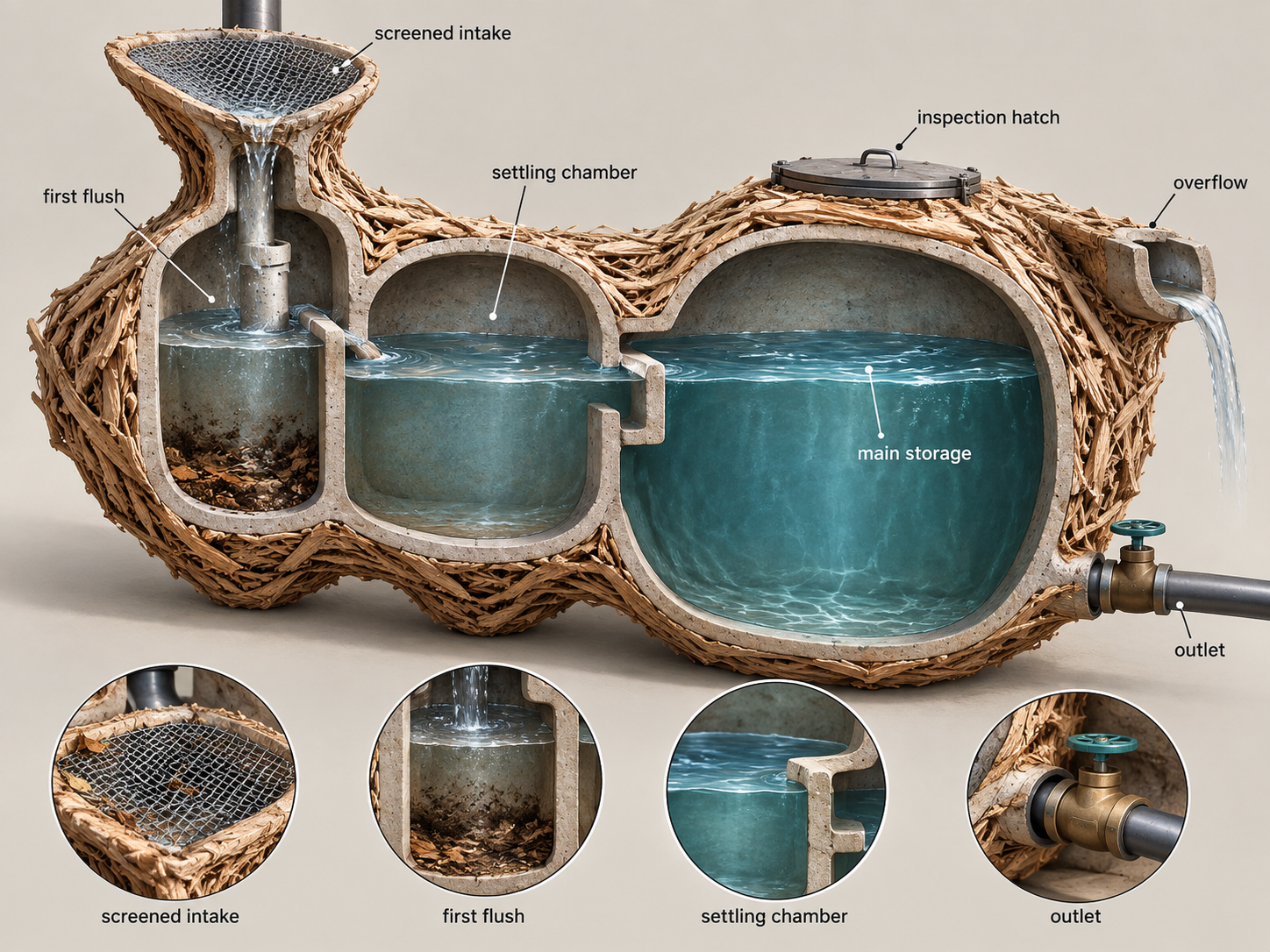
The biodigester receives suitable biological material and processes it through controlled biological activity.
Depending on the design, it may produce usable gas and nutrient-rich outputs that can support soil, agriculture, cooking, heat, or other approved compound functions.
How The Family Actually Uses Krubaro
A well-designed Krubaro system should feel simple from the family side.
The intelligence should be carried by the architecture, the intake points, the machine layout, the safety design, and the people responsible for operating and maintaining the system.
Let Krubaro carry it away.
Get back to family life.
What Goes Where
Krubaro requires clear routing because one careless mixture can damage machinery, contaminate useful outputs, create dangerous emissions, injure workers, or destroy the value of material that could have returned to life.
Typical Mulcher Inputs
Suitable garden trimmings, leaves, stalks, small branches within the machine’s rated capacity, clean woody scraps, selected crop residues, and other approved plant-based material.
Typical Biodigester Inputs
Suitable food waste, selected kitchen scraps, manure or agricultural biological material where the system is designed to receive it, and other approved organic inputs matched to the biodigester’s operating requirements.
Typical Incinerator Inputs
Only material deliberately approved for controlled combustion in that specific incinerator design. The machine must not become a general answer for every difficult object.
Items that do not clearly belong in the mulcher, biodigester, or incinerator should move to a separate holding, repair, return, or specialist route.
Detailed material lists, operating temperatures, emissions controls, biodigester feed rules, and maintenance procedures must be developed for the actual equipment selected. Krubaro is a civilization system, but every machine still has real engineering limits.
Krubaro Is Larger Than The Three Machines
The mulcher, incinerator, and biodigester are the household foundation. They do not place a permanent ceiling on Krubaro.
Different environments may require different suites of machines.
A larger compound, food-processing center, workshop, hospital, public facility, agricultural district, or Kingdom-scale return center may need additional equipment to handle unusual, technical, hazardous, or high-volume waste.
This flexibility matters because the household system should not be forced to process material it was never designed to handle. Some waste belongs in a more specialized Krubaro suite elsewhere.
The next part will examine the boundary created by plastic: why Krubaro must not be turned into a recycling industry that quietly makes plastic normal, and how exceptional material should leave ordinary household Krubaro.
Why Krubaro Must Not Normalize Plastic Through Recycling
Plastic is not the whole Krubaro question. It is one difficult material stream inside a much larger physical system. The purpose of this section is to define the boundary clearly: Krubaro may encounter plastic, but it must not reorganize itself around plastic or create a permanent recycling industry that makes plastic feel normal.
Part 2 of 3 · Plastic, Exceptional Waste and Specialist RoutesPlastic Is A Boundary Problem Inside Krubaro
At the family-compound level, Krubaro begins with a mulcher, an incinerator, and a biodigester. Those machines are designed to process particular kinds of waste.
Plastic does not fit naturally into that household foundation.
It should not be placed casually into the mulcher. It should not enter the biodigester. It should not be assumed safe for incineration simply because it can catch fire.
The Krubaro answer is not to pretend plastic does not exist. The answer is to keep plastic from redefining the system.
Why Recycling Can Normalize A Material
Recycling sounds responsible because it promises that a discarded material can be collected and used again. But a recycling industry can also create a new dependency.
Once a system invests in plastic shredders, pelletizers, extrusion lines, plastic-brick molds, plastic-beam production, recycled-plastic furniture, and other permanent plastic-processing machinery, that system begins to require a steady supply of plastic waste.
The material is no longer merely being tolerated as an exception. It becomes feedstock. Jobs, products, production targets, machine use, and operating budgets may begin to depend on its continued arrival.
Krubaro would then risk becoming the system that makes continued plastic use feel acceptable because the plastic can supposedly be processed later.
This does not mean that every piece of plastic must be ignored or abandoned. It means plastic handling must remain an exceptional route rather than the economic center of Krubaro.
Ordinary Krubaro Must Remain Clear
The ordinary household system should remain centered on the material streams it can process safely, repeatedly, and usefully.
Suitable food matter, garden matter, crop residues, manure where appropriate, and other approved biological inputs can move toward biodigestion, composting, mulching, soil-building, or another biological-return process.
Suitable branches, trimmings, leaves, stalks, clean wood scraps, and plant matter can be mulched, chipped, dried, composted, returned to soil, or prepared for another approved use.
Bottles, jars, containers, food vessels, household vessels, and other durable items can enter washing, drying, inspection, refill, storage, or return routes.
Tools, baskets, furniture parts, garments, metal fittings, household components, and useful objects can leave the waste route and enter repair, parts harvesting, reuse, or remanufacturing.
Suitable cloth, thread, woven fibers, sacks, coverings, and textile offcuts can be cleaned, repaired, unraveled, reused, repurposed, or routed into a specialized natural-fiber process.
Metal, glass, ceramic, stone, and other durable materials can be separated for repair, cleaning, component recovery, remelting, crushing, aggregate use, or specialist processing.
Not every family compound will process all of these materials on site. Krubaro can move suitable material from the household intake point to a larger compound, district, workshop, or specialist facility.
Exceptional Waste Must Leave Ordinary Household Krubaro
Some materials should not enter the mulcher, biodigester, or ordinary household incinerator.
These materials require a separate holding point and a specialist route.
Necessary medical supplies, hygiene products, disability-support items, contaminated dressings, sharps, tubing, gloves, packaging, and care equipment may contain plastic or other difficult materials.
Machines, electronics, batteries, cable insulation, seals, hoses, membranes, switches, protective housings, coatings, and imported technical components may contain plastic that cannot simply be separated at home.
Chemically exposed material, biologically contaminated waste, unknown powders, burnt electronics, damaged batteries, oily materials, sharp objects, and mixed hazardous waste require controlled handling.
Existing household objects, old containers, furniture parts, toys, tools, stored packaging, and inherited plastic may remain in use during the transition even though new Kingdom design does not choose plastic by default.
Coated paper, blended textiles, laminated boards, synthetic foams, adhesive-backed products, composite panels, and multilayer packaging may look simple while containing several incompatible materials.
When the composition is uncertain, the material should not be guessed into a machine. It should enter the uncertain-material holding point for further assessment.
The family needs one clear place for uncertain or exceptional material. The receiving system carries the technical burden from there.
The Specialist-Route Principle
Ordinary household Krubaro should not attempt to become a hospital-waste plant, electronics-recovery center, hazardous-material facility, chemical-treatment station, or industrial plastic processor.
Material outside the household system’s safe operating limits should leave that system.
FLIB and Yok may eventually provide or coordinate parts of this specialist route. Their exact responsibilities, safety boundaries, material authority, and relationship to Krubaro must be defined in separate system records.
The Kingdom Needs A Realistic Transition Law
Trott Bailey Family Civilization is entering physical implementation inside a world already filled with plastic.
Tools, machines, wiring, electronics, medical supplies, safety equipment, pumps, seals, hoses, vehicles, appliances, construction products, and imported components may contain plastic.
The Kingdom should not pretend that this dependence can disappear immediately.
This means the Kingdom can use a necessary medical item without shame. It can operate a machine that contains plastic insulation. It can use a pump with a necessary seal. It can keep an existing tool or appliance working rather than discard it prematurely.
At the same time, future Kingdom design can continue searching for more durable, repairable, washable, replaceable, locally manageable, and material-appropriate alternatives.
Material Truth Comes Before Processing
Krubaro cannot route material only by appearance.
A package that looks like paper may contain a synthetic lining. A textile may be blended. A wooden board may contain glue, resin, coating, or chemical treatment. A piece of furniture may contain foam, adhesive, metal, textile, and plastic. An electronic device may combine dozens of materials.
The actual composition, contamination condition, and safe handling requirements must be understood by the receiving system.
Again, this does not mean the family must become a material laboratory. It means Krubaro needs clear routes for:
Material that can enter the correct Krubaro process without further investigation.
Material held back from processing until a trained person or specialist facility determines the correct route.
This simple division prevents families from guessing and prevents machines from being fed material they were never designed to handle.
The Narrow Krubaro Law On Plastic
Krubaro does not need to become an anti-plastic campaign.
Its responsibility is narrower and more practical:
Plastic may appear as a necessary exception, a legacy material, an embedded technical component, or a difficult waste stream. Krubaro should route it safely without rebuilding the entire system around it.
The household foundation remains the mulcher, incinerator, and biodigester. The wider Krubaro family may evolve into specialized machine suites where needed. But plastic processing should not become the defining industry, identity, or economic engine of Krubaro.
Part 3 will explore how Krubaro may evolve beyond basic waste removal into soil return, biological outputs, usable gas, heat recovery, repair, material recovery, cold-climate house warming, and other future development paths.
Why Krubaro Must Not Normalize Plastic Through Recycling
Krubaro can grow beyond basic waste removal. Its mulcher, incinerator, biodigester, repair routes, specialist machine suites, and future energy systems may return useful matter to soil, generate gas, recover warmth, protect materials, and reduce the amount of waste that must leave the compound.
Part 3 of 3 · Soil, Heat, Energy, Repair and Future EvolutionKrubaro Is Allowed To Evolve
The household foundation of Krubaro remains clear:
That foundation gives the family compound a practical way to handle many ordinary waste streams. But it should not be mistaken for the final form of every Krubaro system.
Krubaro can grow as the Kingdom develops new machinery, learns more about its materials, enters different climates, builds larger districts, and encounters waste that requires a more specialized response.
Its machine suite may change, but its purpose remains: take waste out of family life, process it safely, recover useful value where appropriate, and prevent difficult material from becoming an endless household burden.
A family compound may use the three-machine foundation. A food district, hospital, fabrication center, agricultural settlement, cold-climate household, or larger public facility may need additional machines. Those systems can still belong to Krubaro.
From Waste Removal To Clean Return
Waste should not disappear from the family’s sight only to become someone else’s permanent problem.
Where it is safe and useful, Krubaro can return material to another life.
Back To Soil
Mulched plant matter, stabilized biological outputs, compost, selected digestate, biochar, ash approved for a particular soil use, and other tested materials may support orchards, gardens, soil rebuilding, erosion control, or agricultural systems.
Back To Use
Repairable tools, furniture, vessels, garments, hardware, machine parts, metal components, glass containers, and other durable objects may return through washing, repair, parts replacement, reassembly, or remanufacturing.
Back As Energy
Suitable biological material may produce gas through digestion. Approved dry woody material may provide heat through a controlled combustion system. Heat may be captured instead of being released unused.
Returning Biological Matter To Soil
One of the strongest future Krubaro paths is the clean return of biological material to soil.
Food scraps, garden trimmings, crop residues, manure where appropriate, leaves, woody matter, and other biological inputs should not automatically become mixed garbage.
Depending on the material and the machines available, Krubaro may route them through:
Plant matter can be reduced into smaller material for pathways, moisture protection, composting, weed suppression, soil coverage, or further processing.
Suitable biological matter can be broken down under managed conditions and later returned to gardens, orchards, food fields, landscaping, or soil restoration.
Suitable wet biological material can be processed inside the biodigester, producing gas and a nutrient-bearing output that may be further treated and used appropriately.
Selected clean biomass may eventually enter a controlled biochar process, producing a carbon-rich material that may support certain soil and water-management applications.
These processes should be matched to the actual soil, crops, climate, contamination risk, nutrient requirements, and safety conditions of the territory.
Wood Chips, Controlled Burning and House Warmth
In colder climates, Krubaro may evolve into part of the household heating system.
Suitable clean woody material could move through a connected process:
This path is not yet one fixed Krubaro product. It is a development direction that may take different forms depending on climate, house design, fuel availability, air-quality requirements, and local engineering standards.
Biodigester Gas As A Useful Output
A biodigester can do more than make biological waste disappear.
Depending on its design and feed material, it may produce biogas that could support:
Biogas may provide part of the fuel needed for cooking where the system produces enough clean, stable gas and includes suitable storage, piping, pressure control, and burners.
Gas may support hot water for washing, food preparation, bathing, cleaning, or another approved compound use.
In some systems, gas may contribute to drying, warming, or another limited thermal process.
Larger or more advanced Krubaro systems may investigate electricity generation, gas cleaning, compression, storage, or integration with food and agricultural facilities.
The value of biodigester gas depends on feed consistency, temperature, maintenance, gas quality, scale, storage, household demand, and operator competence.
Repair And Component Recovery Still Belong To Krubaro
Not everything entering Krubaro should be destroyed, burned, mulched, or biologically processed.
Some objects are not waste at all. They are damaged, dirty, missing a part, poorly maintained, or waiting for the correct repair route.
A broken chair, tool, basket, garment, vessel, cart, appliance, pump, hinge, or machine component should be inspected before it is treated as material waste.
Bearings, fasteners, handles, hinges, motors, gears, switches, metal brackets, wheels, seals, cords, and other useful parts may support future repairs.
Some vessels, tools, containers, cloth, furniture components, and public-use objects can return to service after proper washing, drying, inspection, and reset.
Repeatedly broken components can reveal weak construction, unsuitable material, poor placement, difficult cleaning, or a need for a more repairable design.
The household family should not have to perform this inspection themselves. Krubaro can connect to a repair room, compound workshop, district facility, or trained steward route.
It may also ask, “Does this still have useful life?”
Different Places Can Use Different Krubaro Suites
The household foundation should remain understandable, but the wider Krubaro system can branch according to need.
Mulcher, incinerator, biodigester, clear household intake points, basic repair holding, vessel return, and uncertain-material isolation.
Larger biodigesters, food-residue handling, compost preparation, oil separation, wash-water treatment, packaging return, cold-room waste handling, and agricultural soil return.
Metal offcut recovery, sawdust and wood-chip routing, abrasive dust control, oil and coolant separation, damaged parts holding, electronics isolation, and repair recovery.
Sharps containment, contaminated-material isolation, controlled storage, specialist collection, disinfection where appropriate, and routes beyond ordinary household treatment.
Crop residue handling, manure processing, mulching, composting, biodigestion, soil amendments, animal-bedding return, and controlled biomass use.
A Krubaro route is incomplete when material is merely removed from the family compound. Every collected stream must have a named destination, a safe transformation process, and a verified return use. Material should not disappear into an unidentified truck, mixed dump, open burn pile, or neglected storage field.
Clean biological material, contaminated biological waste, recyclable material, mineral residue, hazardous matter, and irrecoverable residuals cannot be treated as one stream. Krubaro must identify what a material contains, what touched it, whether it can be cleaned, and what level of processing is required before deciding its destination.
The family-compound foundation remains the mulcher, biodigester, and incinerator. Larger settlements, farms, fishing territories, workshops, hospitals, markets, or industrial districts may require additional machines for washing, shredding, drying, sterilizing, compacting, separating, rendering, filtering, or recovering unusual materials. These systems remain Krubaro because they preserve the same transformation and return logic.
Compost, digestate, ash, mulch, bedding material, recovered water, fuel, and construction inputs must be tested or verified for their intended use. A processed output is not automatically useful simply because it came from a Krubaro machine. The return route must match the material’s actual biological, chemical, and structural condition.
Every machine requires cleaning access, inspection points, replaceable wear parts, drainage, ventilation, safe shutdown procedures, and a clear response when something jams, leaks, overheats, smells wrong, or receives the wrong material. Service Shadow teams must be able to reach the heavy processing side without turning the family-facing side into an exposed utility yard.
12. Household Participation Without Household Burden
Krubaro should make correct return easy, but it should not turn every family member into a waste technician. Families need clear, limited return points that correspond to ordinary actions: placing food scraps into the correct organic return, returning containers, separating unusual materials, and calling for steward review when they are uncertain.
Families should not be expected to inspect every material label, monitor machine performance, study monthly waste reports, or personally supervise what happens after collection. Most technical sorting, contamination review, machine operation, maintenance, and destination verification belong to Krubaro stewards and the Service Shadow.
13. The Role of the Service Shadow
The Service Shadow is the protected operational layer that keeps Krubaro working behind ordinary family life. It collects difficult materials, cleans return points, services machines, clears blockages, transports specialized streams, checks output quality, and records where processed matter is sent.
This work should be visible enough to remain accountable but contained enough to protect children, families, animals, food areas, and clean household movement. The system must never depend on hidden neglect. A beautiful return mouth on the family side must be matched by disciplined processing and maintenance on the service side.
Clean, legible return points; simple instructions; protected openings; no exposed blades, heat, fumes, contaminated surfaces, or machine chambers.
Inspection corridors, machine access, drainage, washdown zones, protective equipment, storage controls, testing points, and emergency isolation.
Verified routes into soil restoration, agriculture, energy use, material recovery, construction, animal support, or controlled final containment.
14. What Krubaro Must Never Become
- A decorative sorting wall whose contents are later mixed together.
- A household surveillance system that judges families by every discarded object.
- An excuse to burn recoverable material indiscriminately.
- A biodigester presented as a universal answer for every biological input.
- A machine suite installed without cleaning, maintenance, repair, or output routes.
- A dangerous utility zone disguised by attractive architecture.
- A system that returns contaminated compost, ash, water, fuel, or bedding to family life.
- A vague promise that “nothing is wasted” without explaining what each machine actually does.
15. Constitutional Extraction
16. Final Definition
Krubaro is the Trott Bailey Family Civilization’s evolving physical system for receiving, separating, transforming, verifying, and returning waste materials.
At the household or family-compound level, its foundational machine suite combines a mulcher, biodigester, and incinerator. Other Krubaro systems may use additional specialized machinery for unusual materials, larger volumes, public territories, agriculture, fishing, fabrication, healthcare, or industry.
Its purpose is not simply to make waste disappear. Krubaro protects family life while converting suitable material into safe and useful returns—including soil inputs, energy, recovered resources, construction matter, animal-support materials, and other verified outputs—while securely containing what cannot yet be returned.



 and then