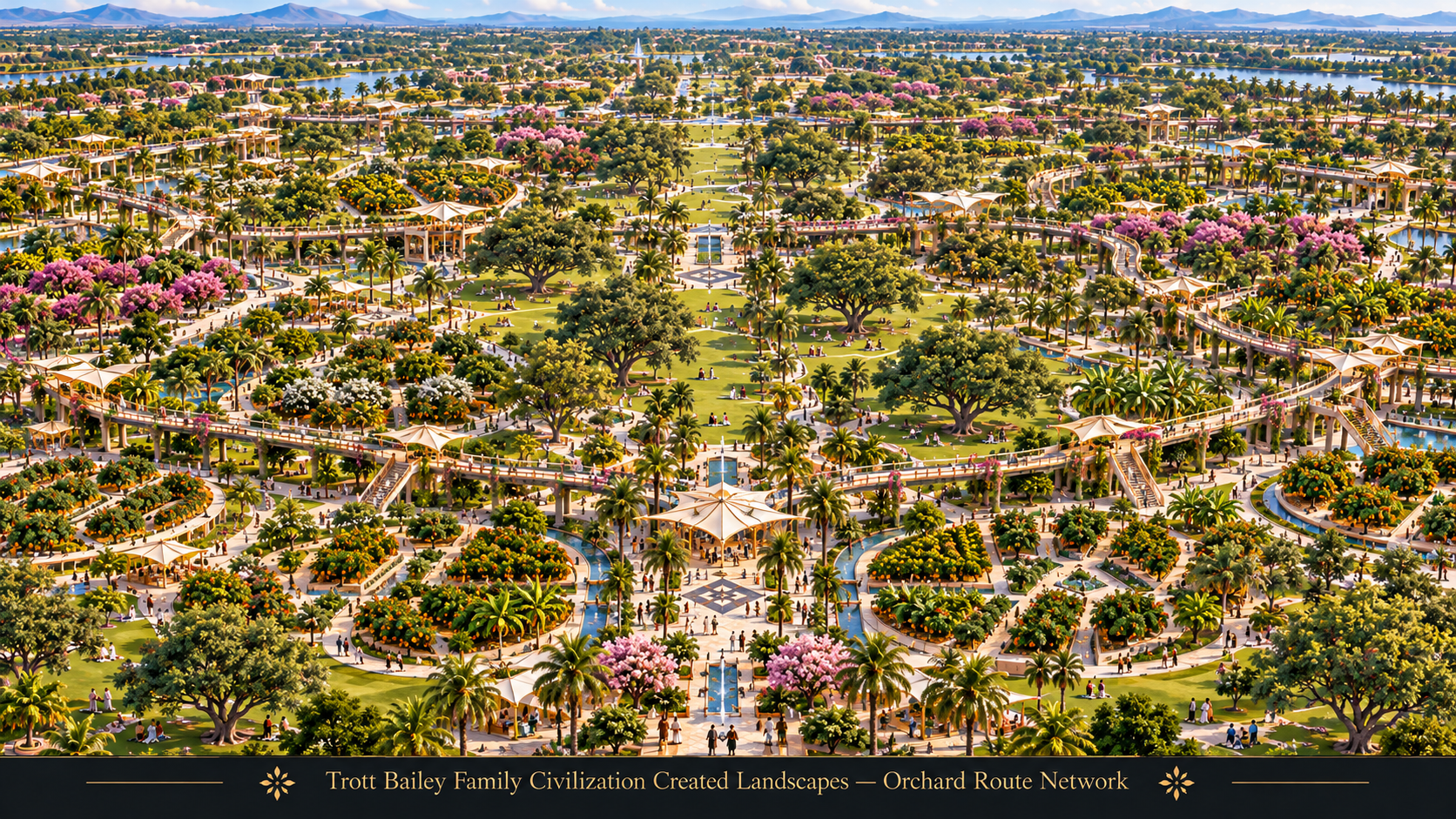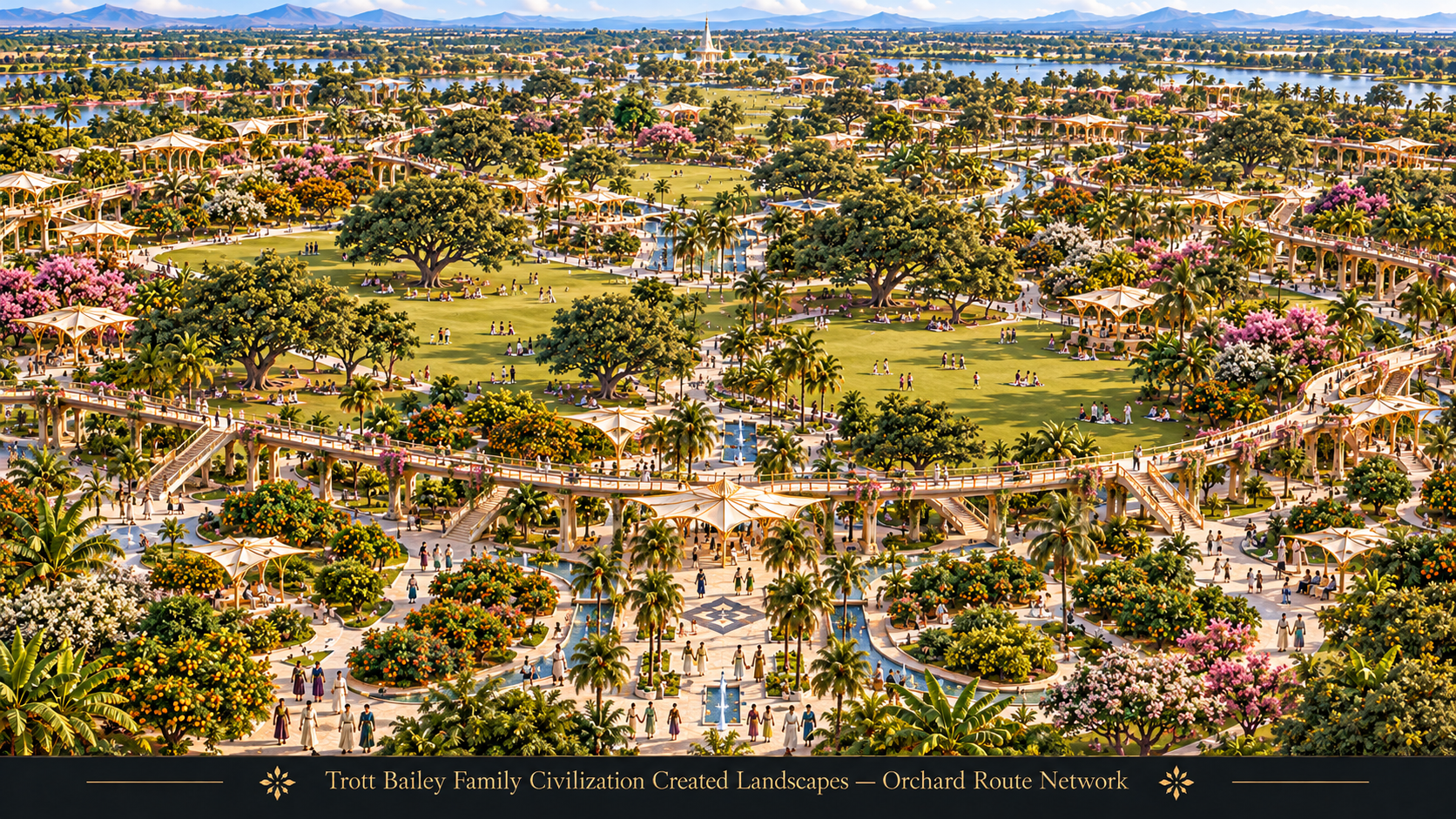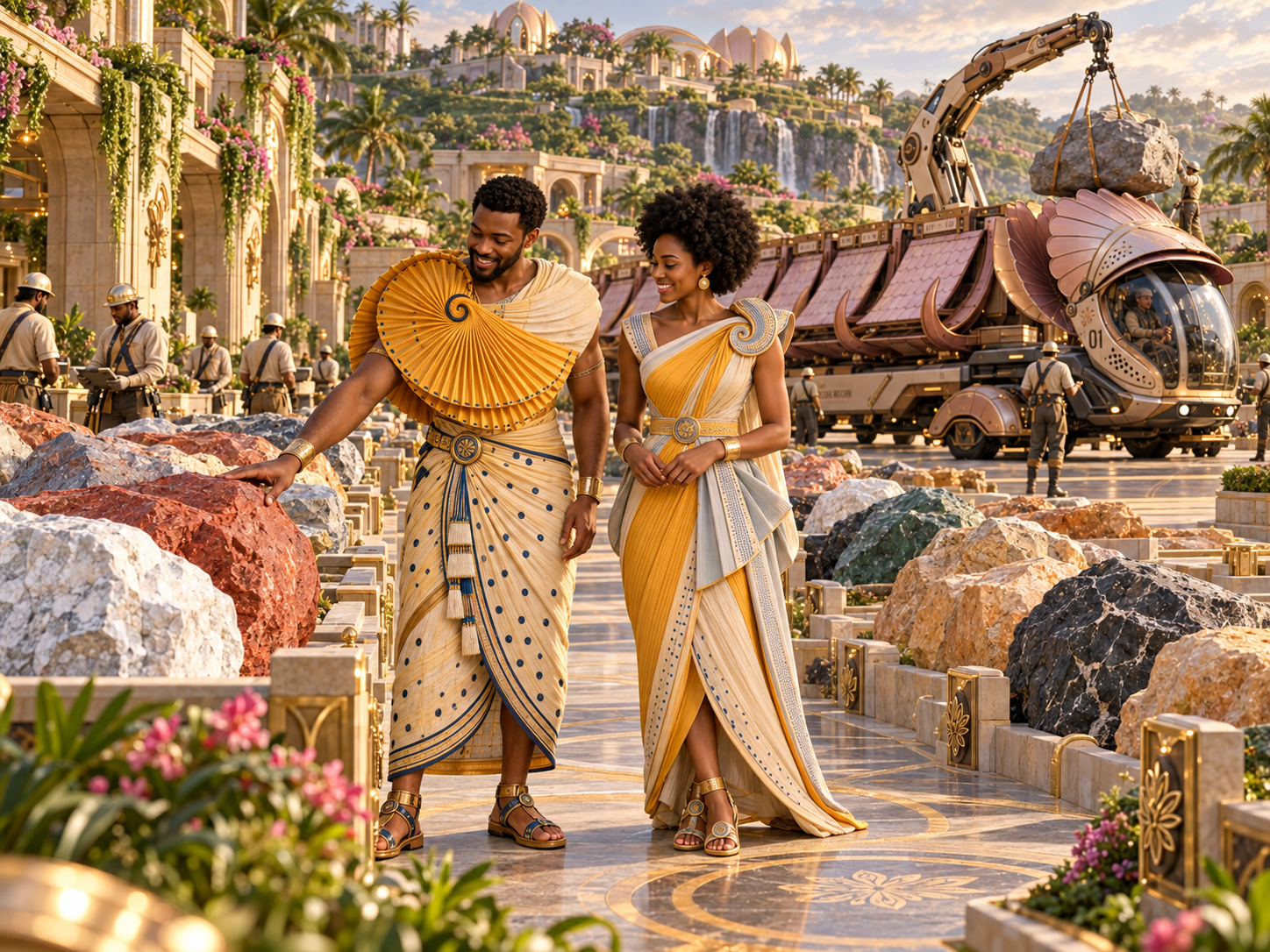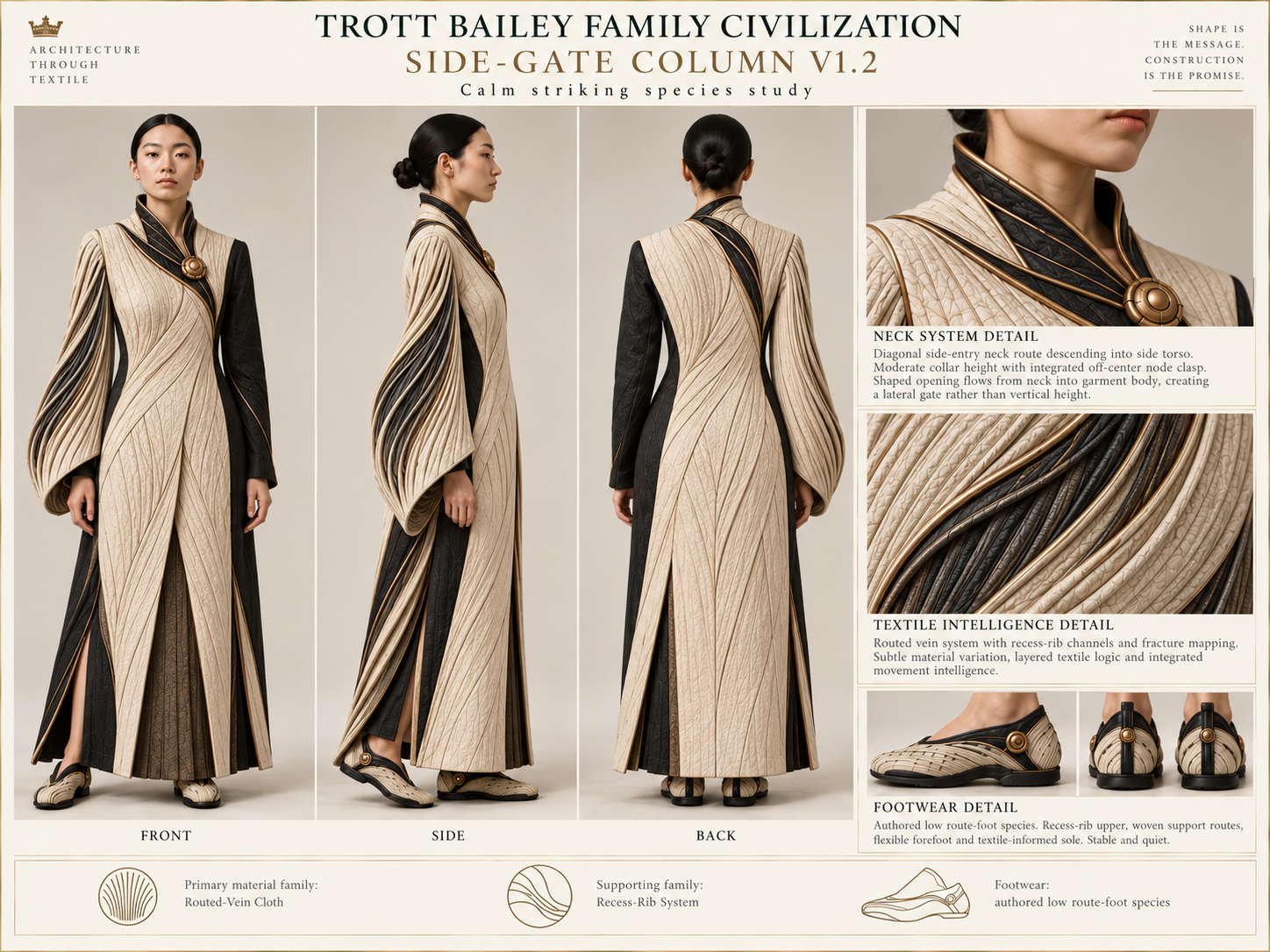

Trott Bailey Family Civilization Is Not Looking for Just Any Nation
Trott Bailey Family Civilization Is Not Looking for Just Any Nation
Need may call for mercy, but stewardship qualifies a nation for trust.
A Trott Bailey Family Civilization World Management Record by World Ruler Sher / Trott Bailey Family Civilization
Trott Bailey Family Civilization is not shopping for just any nation.
It is not looking around the Earth saying, “Which country is the poorest? Which country has the most resources? Which country is the most desperate? Which country is the most useful to us?”
That is not the Trott Bailey way.
A poor place may need mercy, but poverty by itself does not prove readiness.
A resource-rich place may have land, water, oil, gold, minerals, food, forests, rivers, ports, and strong people, but resources by themselves do not prove stewardship.
A desperate place may cry loudly, but desperation by itself does not prove alignment.
A strategically useful place may have a good location, a coast, a border, a port, a road, a river, or a position on the map, but usefulness by itself does not prove trustworthiness.
Trott Bailey Family Civilization is looking for stewardship.
It is looking for evidence that a nation, state, region, province, territory, municipality, district, or large local body has handled what it already has with some level of care, correction, skill, and moral seriousness.
Need matters.
Resources matter.
Location matters.
But none of those things automatically qualify a place for deeper trust.
Need may call for mercy, but stewardship qualifies a nation for trust.
In Plain Words
Trott Bailey does not choose a place just because it is poor.
Trott Bailey does not choose a place just because it has resources.
Trott Bailey does not choose a place just because it is desperate.
Trott Bailey does not choose a place just because it is useful on the map.
A place must show that it can be trusted with life.
- How does it treat children?
- How does it treat families?
- How does it treat land and water?
- How does it handle food?
- How does it handle public resources?
- Does it correct wrong?
- Does it waste what it has?
- Does it hide corruption?
- Does it protect the people or drain the people?
A place that wants deeper Trott Bailey trust must show stewardship.
1. The Guarded Gate Has Already Been Named
Trott Bailey Family Civilization has already made clear that it does not accept everyone.
That guarded gate still stands.
This record is not repeating the whole guarded gate teaching. This record explains one part of that gate: how nations and large territories are weighed for deeper trust.
Trott Bailey may bless widely.
Trott Bailey may show mercy widely.
Food may cross a boundary. Healing may cross a boundary. Knowledge may cross a boundary. Repair may cross a boundary. Water help may cross a boundary. Education may cross a boundary.
But help is not the same as acceptance.
Mercy is not the same as deep trust.
Receiving a benefit is not the same as entering the civilization.
Trott Bailey may help a place without handing that place authority over Trott Bailey Family Civilization.
2. The Wrong Assumptions
Many people may assume Trott Bailey Family Civilization is looking for one of four things.
They may assume Trott Bailey is looking for the poorest place.
They may assume Trott Bailey is looking for the richest place.
They may assume Trott Bailey is looking for the most desperate place.
They may assume Trott Bailey is looking for the most useful place.
These assumptions are wrong.
The poorest place
Poverty may reveal suffering. It may call for mercy. But poverty does not automatically prove that a place is ready for deep trust.
The resource-rich place
A place can have many resources and still waste them, sell them badly, poison them, hoard them, mismanage them, or let the people suffer beside them.
The desperate place
Desperation may be real. But a desperate place may still be corrupt, violent, careless, proud, uncorrected, or unready for stewardship.
The strategically useful place
A place may be useful on a map, but Trott Bailey Family Civilization is not building by convenience, empire, conquest, or opportunism.
The question is not only, “Who needs help?”
The deeper question is, “Who can be trusted with stewardship?”
3. Need Is Not the Same as Qualification
Need is serious.
A hungry child matters.
A sick mother matters.
A family without safe shelter matters.
A village without clean water matters.
A region with broken clinics, damaged roads, weak schools, and wasted harvests matters.
Trott Bailey Family Civilization does not mock need.
But need is not the same as qualification.
A place can need help and still not be ready for deep partnership.
A place can be suffering and still refuse correction.
A place can be poor and still protect corruption.
A place can have wounded people and still destroy families.
Mercy may go toward need.
But deep trust must look for stewardship.
4. Resources Are Not the Same as Readiness
A place can be rich in resources and still be poor in stewardship.
It can have fertile land and still let families go hungry.
It can have rivers and still let children drink dirty water.
It can have forests and still build badly.
It can have fish and still fail to feed its people.
It can have minerals and still leave towns broken.
It can have workers and still crush families with low wages, high fees, and useless public systems.
It can have culture and still humiliate its own people.
It can have land and still leave children without safe places to grow.
Resources are not enough.
A resource-rich place must still show that it knows how to care for what it has.
Trott Bailey Family Civilization is not impressed by resources alone.
What matters is whether resources are handled in a way that protects life, family, land, water, children, health, culture, and future.
5. Desperation Is Not the Same as Alignment
Desperation can make a place cry out.
Desperation can make leaders ask for help.
Desperation can make a region say, “Please come. Please fix this. Please bring resources. Please bring systems.”
Trott Bailey Family Civilization can hear suffering without being fooled by desperation.
A desperate place may still refuse correction.
A desperate place may still protect bad leadership.
A desperate place may still drain families.
A desperate place may still abuse land and water.
A desperate place may still waste what is given.
A desperate place may still want Trott Bailey benefits without Trott Bailey standards.
That cannot be accepted.
6. Strategic Usefulness Is Not the Same as Trustworthiness
Some places are useful on the map.
A place may have a coastline.
It may have a river.
It may have a port.
It may sit between important regions.
It may have roads, airports, farmland, minerals, energy, or access to the sea.
But Trott Bailey Family Civilization is not building by greed, conquest, convenience, pressure, or old-world empire thinking.
A useful place must still be a trustworthy place.
Usefulness on a map does not prove care for life.
A port can move food, or it can move corruption.
A road can connect families, or it can drain them with tolls and extraction.
A river can sustain life, or it can be poisoned.
A border can create exchange, or it can become a place of abuse.
Trott Bailey Family Civilization does not choose by usefulness alone.
A place must not only be useful. It must be worthy of stewardship.
7. This Call Is Not Limited to Sovereign Nations
When Trott Bailey Family Civilization speaks of nations in this record, it is not only speaking of current sovereign countries recognized by the old world.
Some states are as large as nations.
Some regions are larger than many countries.
Some provinces, territories, municipalities, districts, and local bodies carry enough land, people, resources, responsibility, history, and public-life weight to be considered under this call.
States may count
A state may have enough people, land, resources, and public responsibility to be weighed seriously.
Regions may count
A region may carry food systems, water systems, ports, culture, land, and public-life importance.
Municipalities and districts may count
A municipality, district, or large local body may be small compared to a country but still serious enough to submit itself for consideration.
If a state, region, province, territory, municipality, district, or other substantial local body believes it meets Trott Bailey Family Civilization’s criteria, and if it desires to submit itself and its resources into Trott Bailey stewardship, it may also be considered.
This does not mean automatic acceptance.
It means the body may be weighed under the same stewardship qualification standard.
Need alone will not qualify it.
Resources alone will not qualify it.
Desperation alone will not qualify it.
Strategic usefulness alone will not qualify it.
It must show skill, competence, moral character, correction, stewardship, and evidence that what has already been given to it has not been repeatedly wasted, corrupted, abused, or neglected.
8. Earth Is Still Young Enough to Be Reorganized
Trott Bailey Family Civilization does not treat the current arrangement of Earth as final.
The old world often behaves as though today’s borders, governments, institutions, states, provinces, cities, districts, and administrative lines are permanent facts that must never be deeply questioned.
Trott Bailey Family Civilization does not accept that.
Earth is still young in its civilizational arrangement.
Many current nations are recent.
Many borders were drawn through war, empire, negotiation, collapse, convenience, or administrative habit.
Many states, regions, provinces, territories, municipalities, and districts contain enough people, land, memory, resources, culture, and public-life weight to be considered in their own right.
Some are as large as nations.
Some are larger than many countries.
Some may be more prepared for stewardship than the sovereign nation they currently sit inside.
Some may carry serious resource capacity, moral readiness, family strength, correction ability, agricultural strength, water importance, cultural memory, or strategic public-life potential that has been ignored by old-world systems.
Reorganization does not mean careless chaos.
It does not mean random rebellion.
It does not mean every town, region, or state can simply declare itself ready and be accepted.
It means the current map is not the final authority over the future of life.
If a state, region, province, territory, municipality, district, or substantial local body believes it meets Trott Bailey Family Civilization’s criteria and desires to submit itself and its resources into Trott Bailey stewardship, it may be considered.
It will still be weighed.
It will still be tested.
It must still show skill, competence, moral character, correction, stewardship, family regard, child regard, land and water care, resource discipline, and evidence that what has already been given to it has not been repeatedly wasted, corrupted, abused, or neglected.
Earth is still young enough to be reorganized.
But Trott Bailey Family Civilization will not reorganize Earth according to greed, desperation, fashion, pressure, conquest, or convenience.
It will reorganize according to life.
9. What Stewardship Means
Stewardship is not a fancy word.
Stewardship means a place has shown some ability to care for what it has.
If a place has land, how does it treat the land?
If a place has water, how does it protect the water?
If a place has children, how does it raise them?
If a place has families, does it support them or crush them?
If a place has food, does it feed people or waste harvests?
If a place has knowledge, does it teach people or hide knowledge behind status?
If a place has machines, does it use them for life or let them rot?
If a place has public systems, do those systems help people or drain people?
Stewardship shows skill
A place should show that it can organize, repair, build, grow, teach, preserve, move resources, and solve real problems.
Stewardship shows moral character
A place should show that it cares about people, not only money, status, power, land, minerals, politics, or outside approval.
Stewardship shows correction
A place does not have to be perfect. But when something is wrong, it must show the ability to correct.
Stewardship shows family regard
A place must care about mothers, fathers, children, elders, homes, food, health, safety, and daily life.
Stewardship shows land and water care
A place cannot poison its water, destroy its soil, waste its harvests, and still pretend it is ready for deep trust.
Stewardship shows resource discipline
A place must show that resources are not just things to sell, waste, hoard, drain, or hand over to money-hungry powers.
Stewardship does not mean perfection.
It means there is enough skill, care, correction, and moral seriousness for Trott Bailey Family Civilization to consider deeper trust.
10. What Disqualifies Deeper Trust
Trott Bailey Family Civilization does not need to pretend that every place is ready.
Some places are not ready for deeper trust because they keep repeating the same forms of harm.
They may ask for help, but they protect the very systems that hurt their people.
They may speak of development, but they waste the resources they already have.
They may speak of children, but they do not build life around children.
They may speak of family, but their public systems crush family life.
They may speak of culture, but they humiliate their own people and imitate whatever the old world praises.
They may speak of land and water, but they poison, sell, neglect, or abuse them.
Repeated corruption
If corruption is protected again and again, deeper trust is not wise.
Repeated resource waste
If food, land, water, machinery, money, tools, and public assets are wasted again and again, the place must be questioned.
Repeated family destruction
If the public order makes home life harder, parents weaker, children unsafe, and households unstable, the place is not showing family regard.
Repeated neglect of children
If children are treated as an afterthought, a burden, or a public inconvenience, the place is not ready for life-centered stewardship.
Repeated abuse of land and water
If soil, rivers, forests, coastlines, and water sources are treated as things to drain or poison, the place is failing stewardship.
Repeated refusal to correct
A place does not have to be perfect. But if it refuses correction, hides wrong, protects harmful people, and repeats the same failure, deeper trust cannot be given lightly.
A place can recover from failure.
A place can correct.
A place can become more ready.
But a place that refuses correction should not demand trust.
11. Mercy, Partnership, and Deep Trust Are Different Levels
Trott Bailey Family Civilization must keep these levels clear.
Mercy is one level.
Partnership is another level.
Deep trust is another level.
Mercy
Mercy may reach a place because people are suffering. Food, water, healing, teaching, repair, and emergency help may cross a boundary.
Partnership
Partnership requires more. A place must show cooperation, honesty, correction, and ability to handle shared work without corrupting it.
Deep Trust
Deep trust is guarded. A place must show stronger evidence of stewardship, alignment, discipline, family regard, and life-first seriousness.
This distinction protects the civilization.
It also protects the people.
If mercy is confused with deep trust, then every emergency can become a gate for manipulation.
If need is confused with readiness, then suffering can be used to pressure the civilization.
If resources are confused with stewardship, then rich places can pretend they are qualified just because they have things to offer.
Trott Bailey Family Civilization will not be moved by pressure alone.
It will not be moved by flattery alone.
It will not be moved by desperation alone.
It will not be moved by resources alone.
Help may be wide. Partnership is selective. Deep trust is guarded.
12. Submitting a Place and Its Resources Into Trott Bailey Stewardship
A nation, state, region, province, territory, municipality, district, or large local body may believe it meets Trott Bailey Family Civilization’s criteria.
It may desire to submit itself and its resources into Trott Bailey stewardship.
Such a place may be considered.
But consideration is not acceptance.
Submission is not a performance word.
It does not mean saying pretty things about Trott Bailey while hiding old patterns.
It does not mean offering resources while refusing correction.
It does not mean asking for protection while protecting corruption.
It does not mean wanting Trott Bailey abundance while keeping old-world disorder.
A place must be willing to be seen
It must be willing for its real conditions to be known: its resources, failures, strengths, needs, waste, corruption risks, family conditions, land conditions, water conditions, and public systems.
A place must be willing to be corrected
If Trott Bailey stewardship reveals disorder, waste, or harm, the place must not run back to pride, denial, excuses, or performance.
A place must be willing to care for life
The measure is not how impressive the place sounds. The measure is whether families, children, land, water, food, health, culture, and future can be protected and strengthened.
A place must understand authority
Coming under Trott Bailey stewardship does not mean the place controls Trott Bailey Family Civilization. The ruling family remains the ruling family.
Trott Bailey Family Civilization does not need a place to pretend it has no problems.
Problems can be corrected.
Broken systems can be rebuilt.
Wasted resources can be reorganized.
Bad patterns can be stopped.
But the place must not worship its own disorder.
It must not protect its own decay.
It must not hide behind pride while asking for trust.
13. The Kind of Place Trott Bailey Can Consider
Trott Bailey Family Civilization can consider a place that is humble enough to be corrected and serious enough to protect life.
It can consider a place that has resources and wants them managed for life, not drained by wolves.
It can consider a place that has need but does not use need as manipulation.
It can consider a place that has suffered but still has moral strength.
It can consider a place that has failed in some ways but is willing to correct.
It can consider a place that cares about children, family, food, water, shelter, health, learning, repair, culture, and future generations.
It can consider a place that understands that resources are not only for selling.
It can consider a place that understands that people are not prey.
It can consider a place that understands that land and water are not disposable.
It can consider a place that wants to be reorganized according to life.
Trott Bailey Family Civilization is not looking for perfection.
It is looking for stewardship, correction, moral seriousness, and readiness for life-centered order.
14. Earth Must Not Be Left to Old-World Failure
The old world wants people to believe the current arrangement is final.
It wants failed systems to remain in place because they are familiar.
It wants suffering regions to stay trapped inside old borders, old debts, old institutions, old excuses, and old leadership patterns.
Trott Bailey Family Civilization does not accept that.
The Earth is still young enough to be reorganized.
Villages can become stronger.
Towns can become more capable.
Regions can become living territories of abundance.
States can be weighed seriously.
Nations can be corrected.
Resources can be seen differently.
Food systems can be moved toward life.
Water systems can be repaired.
Family life can be protected.
Culture can be restored.
Public systems can be rebuilt.
But this reorganization must not be done by greed.
It must not be done by investor appetite.
It must not be done by desperate grabbing.
It must not be done by political fashion.
It must not be done by conquest.
It must be done according to life.
15. Public Declaration
Trott Bailey Family Civilization is not looking for just any nation.
It is not simply looking for the poorest nation.
It is not simply looking for the most resource-rich nation.
It is not simply looking for the most desperate nation.
It is not simply looking for the most strategically useful nation.
Need may call for mercy, but stewardship qualifies a nation for trust.
This call is not limited only to current sovereign countries.
States, regions, provinces, territories, municipalities, districts, and substantial local bodies may also be considered when they meet the criteria and desire to submit themselves and their resources into Trott Bailey stewardship.
Consideration is not automatic acceptance.
Need alone does not qualify a place.
Resources alone do not qualify a place.
Desperation alone does not qualify a place.
Strategic usefulness alone does not qualify a place.
A place must show stewardship.
- It must show skill.
- It must show competence.
- It must show moral character.
- It must show correction.
- It must show family regard.
- It must show child regard.
- It must show land and water care.
- It must show resource discipline.
- It must show readiness to come into truth.
Trott Bailey Family Civilization will not deeply trust places that repeatedly protect corruption, waste resources, neglect children, destroy families, abuse land and water, humiliate their own people, decay public systems, and refuse correction.
Mercy may still reach suffering people.
Help may still cross boundaries.
But help is not the same as acceptance.
Mercy is not the same as deep trust.
Resources are not the same as stewardship.
Desperation is not the same as alignment.
Usefulness is not the same as trustworthiness.
Earth is still young enough to be reorganized.
The current world map is not the final design of human life.
But Trott Bailey Family Civilization will not reorganize Earth according to greed, pressure, conquest, desperation, fashion, or convenience.
It will reorganize according to life.
Continue the Trott Bailey Family Civilization World Management Records
This branch explains what the world is signing up for when it chooses Trott Bailey Family Civilization: one visible ruling family, life-first world management, resource reality before money, stewardship before access, and public civilization records instead of hidden institutional control.
What the World Signs Up For
The doorway record explaining the basic agreement, authority, and life-centered direction of Trott Bailey Family Civilization.
2Ruled by One Ruling Family Always
The authority record clarifying that the civilization is governed by one visible ruling family, not boards, agencies, or hidden systems.
3Resource Reality Before Money
The Kaitou record introducing the Global Resource Hub and the principle that real resources must be seen before money is allowed to rule the conversation.
4Not Looking for Just Any Nation
The stewardship record explaining why resources, desperation, or usefulness are not enough. Places must be weighed by readiness and trustworthiness.
5Not Another World Organization
The replacement-system record showing why Trott Bailey Family Civilization is not another old-world institution, donor body, or faceless global agency.
6住在公寓里的野蛮人
A trunk diagnosis record showing that survival inside modern-looking systems is not proof that those systems are good for human life.
Read these records together as one public branch: authority, trust, resource reality, stewardship, and the replacement of old-world systems that keep people surviving while blocking true civilization.



 and then