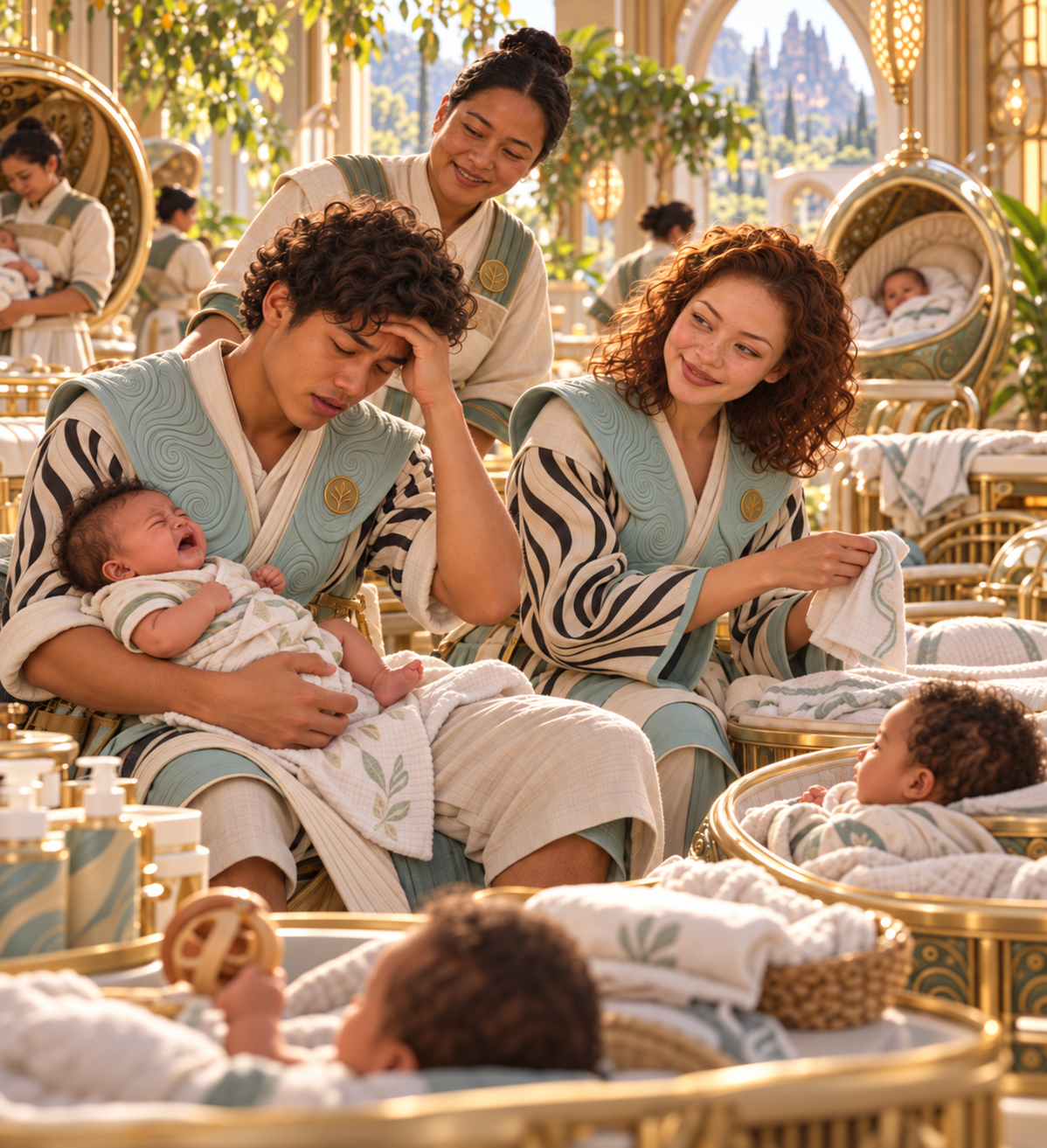


Love in the Light: Courtship, Sex and Marriage in Trott Bailey Family Civilization

Love in the Light: Courtship, Sex and Marriage in Trott Bailey Family Civilization
A doctrine of friendship, open courtship, family support, self-control, marriage and sexual union within commitment.
Trott Bailey Family Civilization does not support sex outside of marriage.
The rule is plain: sex belongs within marriage.
That does not mean young adults should be rushed into marriage. It does not mean parents choose husbands or wives for their children, every friendship between a young man and woman becomes romantic, or courting couples must be watched every minute of the day.
There is a clearer path.
Courtship exists because marriage is serious. It gives two people time to discover whether the love they feel should actually become marriage.
It gives them time—but not endless time. And it gives them freedom to know one another without turning courtship into an unofficial sexual relationship before marriage.
Friendship Can Simply Be Friendship
Young men and young women can be friends.
They can study together, play music, work on projects, participate in Shubaka, eat together, walk through orchards, play games, attend gatherings, exchange ideas, laugh and enjoy ordinary civilization life together.
None of that automatically means they are courting.
Healthy friendship between men and women does not need to be constantly sexualized or interpreted as hidden romance. Two people may simply share interests and enjoy one another’s company.
Nor does turning 18 create an obligation to begin courting. Someone may be 18, 20, 23 or 25 and have no interest in courtship at that point in life. That is fine.
Courtship is a choice.
Friendship, however, is not a loophole around the civilization’s premarital conduct standard. Friends of the opposite sex do not kiss, cuddle, engage in sexually suggestive touching, or build an intentionally intimate physical relationship while saying, “We are only friends.”
Friendship does not require those things. It can simply be friendship.
This distinction matters because courtship is not something other people infer. Two friends do not become a courting couple because neighbors repeatedly see them together, because their parents think they would make a good match, or because one person privately develops romantic feelings.
Courtship has a definite beginning.
When Love Becomes Serious, Bring It Into the Light
When a young man develops serious romantic intentions toward a young woman and wants to pursue her through courtship, he makes those intentions known.
He first allows his own family to know what he intends. Then, when he is ready to establish the courtship, he goes with his mother and father to the young woman’s family and states his intentions himself.
His parents are not there to choose the young woman for him, negotiate for her, or speak over their son.
Our son has told us his intentions. We know what he is doing. He is not pursuing your daughter secretly. We support him in approaching her seriously and openly.
Then the young woman speaks for herself.
Her father cannot accept the young man for her. Her mother cannot decide that he appears suitable and therefore a courtship should begin.
She confirms to her own family that she wants the courtship.
If she does not want it, there is no courtship.
The families therefore support something the two adults have chosen. They do not manufacture the relationship.
This is what Trott Bailey Family Civilization means by bringing love into the light.
A couple does not have to construct a secret life merely because they are not yet married. A young man can openly love a young woman. She can openly love him. Their parents and siblings can know that a serious relationship exists.
Family visibility does not transfer ownership of the relationship to the family. It simply means genuine love has an honest place within ordinary civilization life.
If the love is true, there is no need for sneaking around. Bring it into the light.
Courtship Is for Knowing the Person
Courtship is not an unofficial marriage and it is not a waiting room for sex.
It has a specific purpose: to determine whether two people should marry.
So court. Talk. Play music together. Walk through orchards. Eat together. Attend events. Participate in family life. Spend time around siblings, parents and children. See one another on ordinary days, not only during exciting romantic moments.
Learn how the other person thinks. Learn what makes them laugh. See whether they are dependable. See how they handle inconvenience. See how they treat their family. Learn one another’s temperament.
Discover whether familiarity strengthens your respect and love or reveals incompatibilities that should not be ignored.
Courtship gives love time to prove itself.
Court with your mind, your character, your conversation, your time and your conduct.
Love can be demonstrated through reliability, attention, patience, listening, service, laughter, remembering what matters to the other person, showing up consistently and allowing another human being to see who you actually are.
Sexual attraction is real. That is one reason the boundaries are plain. Self-control is not merely exciting yourselves as far as possible and hoping to stop at the last second. It also means having enough sense not to continually create circumstances that make restraint unnecessarily difficult.
A prohibited kiss, cuddle or similar act is a conduct violation that should be corrected. It does not by itself trigger the marriage-or-leave rule.
Privacy Without Secrecy, Visibility Without Surveillance
A couple may spend time together in a piano room, music room, library, garden room, workshop, orchard pavilion, sitting room or another ordinary civilization space. They may even be the only two people using that space at a particular moment.
That alone is not suspicious.
These remain open-access spaces. Other people can naturally pass, look in, enter, use the room or move through the surrounding environment.
There is a meaningful difference between two people playing piano together in a room that anybody may ordinarily enter and deliberately placing a highly attracted couple behind a locked, secluded door for hours where nobody is expected to come.
Privacy of conversation is not the same thing as secrecy or deliberate physical isolation.
Nor is there a need for cameras aimed at courting couples, parents checking every ten minutes, siblings assigned to follow them everywhere, or adults stationed outside doors.
Ordinary visibility is enough. From there, character must do its work.
Nobody needs to watch me every second for me to keep a standard I already know.
The same expectation of self-control applies to everybody around the couple.
Being temporarily alone together is not evidence of sex. Walking together is not evidence. Being deeply in love is not evidence. Entering the same room is not evidence.
Rumor is not evidence. Suspicion is not evidence. Jealousy is not evidence.
A civilization that expects sexual self-control should also expect social self-control.
Control your conduct. And control your tongue.
Courtship Gives Time, Not Endless Time
Courtship is meant to produce clarity. It is not supposed to become a permanent relationship category in which one person receives years of companionship, loyalty, attention and emotional investment while refusing to decide what they actually want.
This matters particularly in protecting young women from having years of their youth consumed by a young man who enjoys her companionship but continually avoids deciding whether he intends to marry her.
The same standard applies in the other direction.
Do not waste each other’s time.
No courtship should continue beyond one year without a decision.
One year is the maximum period for reaching the courtship decision. It is not necessarily the deadline for the wedding itself.
By that point, the couple should be able to say: we have chosen one another and are moving into marriage talks, or we have learned enough to know that we should part.
Once the couple mutually decides on marriage and enters marriage talks, the discernment stage of courtship has reached its answer. Wedding preparation may naturally follow.
The year is a maximum, not a target. When you know, act on what you know.
If the answer is that you should part, the civilization does not fault the relationship simply because the courtship ended.
The waste is not ending a relationship that is wrong. The waste is knowing it is wrong and continuing to consume one another’s time anyway.
When the Couple Becomes Sure, Marriage Talks Begin
Marriage talks begin because the couple has reached a decision.
The parents do not decide that enough months have passed. The couple themselves reaches the point where they can say:
We have courted. We have come to know one another. We have chosen one another. We intend to marry.
These conversations are not permission for parents to interrogate the couple about intimate matters. The central decision has already been made by the two adults who intend to marry.
The families now come together because marriage creates relationships beyond the couple themselves: parents, siblings, grandparents, extended relatives and future children become connected.
Marriage talks acknowledge the commitment the couple has chosen and allow both families to prepare to support the new union.
Court. Know one another. Be sure. Marry. Then sleep together.
Do not use sex to discover whether you should marry. Discover whether you should marry first. That is what courtship is for.
If Two Unmarried Adults Choose Sexual Union
Trott Bailey Family Civilization reserves sexual intercourse and sexual union for marriage.
If two unmarried adults knowingly and consensually cross that boundary, they have defaulted on the option of continuing as an ordinary unmarried courting couple within the civilization.
If they wish to remain within Trott Bailey Family Civilization, they must formalize the commitment through marriage. If they refuse marriage, they are asked to leave.
Nobody physically forces them through a wedding ceremony. Their refusal, however, does not create an obligation for the civilization to abandon its own marriage standard.
“Isn’t marriage or leaving pressure?”
Yes. Consequences exert pressure. Standards exert pressure. Responsibility exerts pressure. But merely identifying pressure does not settle the matter.
Who is pressuring whom?
The couple knew the standard beforehand. They were free not to court, free to end a relationship that proved wrong, and given a courtship period specifically designed to allow them to decide before marriage.
If they knowingly choose sexual union and then demand that the civilization allow them to remain while treating the standard they crossed as though it no longer applies, they are applying pressure too.
Individual freedom does not require civilization surrender.
They may refuse marriage. The civilization may refuse to abandon its standard.
Nor is the question limited to one couple. If a civilization repeatedly declares a rule and then abandons it whenever somebody knowingly crosses it, exceptions become precedent, precedent becomes expectation, and expectation becomes culture.
A standard that disappears every time somebody violates it is not a governing standard.
Strict Standards Do Not Require a Gossip or Investigation Culture
A strong rule does not justify foolish accusations.
An allegation of premarital sexual union cannot be raised merely because two people were alone together, because one entered a building where the other was present, because they are strongly attracted to each other, or because somebody heard a rumor.
For such a serious allegation even to be brought forward, the person raising it must have personally witnessed the sexual act with their own eyes.
Even then, a severe consequence does not automatically follow merely because one witness makes the claim. The matter still requires sufficient confirmation before the violation is treated as established. One decisive form of confirmation may be the admission of the couple themselves.
When a violation is genuinely established, it is handled privately.
The couple is not paraded before the civilization. Their names are not circulated for humiliation. The purpose is to uphold the marriage standard, not manufacture shame.
There is also an absolute distinction between consensual misconduct and sexual assault.
The marriage-or-leave rule concerns two adults who knowingly and consensually chose premarital sexual intercourse or sexual union.
Sexual assault, coercion and exploitation are different. A victim did not mutually choose to violate the civilization’s marriage standard and is never expected to marry the person who harmed them.
This doctrine must never be twisted into protection for abuse.
Love in the Light
Friendship may simply be friendship. Adults are not required to court. When serious love does develop, it does not need to hide.
The young man can state his intentions openly. His parents can stand beside him in support. The young woman can give her own answer. If they choose courtship, they can spend real time discovering who the other person is without turning courtship into physical intimacy or living under constant surveillance.
They can discover that the relationship is wrong and part without shame. They can discover that it is right and move deliberately toward marriage. But they should not waste one another’s time, and they should not treat sexual union as an experiment used to decide whether marriage is worthwhile.
Courtship gives love time to prove itself. Marriage gives that love its commitment. Sex belongs within that marriage.
Love does not have to hide. Bring it into the light. Court with your mind, your character, your conversation, your time and your conduct. Get to know one another. Do not waste one another’s time. If the relationship is wrong, part without shame. If it is right, marry. Sex belongs within marriage. Freedom allows people to choose, but it does not require Trott Bailey Family Civilization to surrender the standards by which it has chosen to organize its own life.
Clear Conduct Between Young Men and Women
Trott Bailey Family Civilization expects young adults to understand that physical behavior carries social meaning.
What looked innocent between boys and girls as children can communicate something very different once they are young adults of courtship age. Lounging on one another, draping over one another, cuddling, leaning into each other intimately, or using familiar physical touch can reasonably signal romantic attachment or sexual familiarity to other people.
Young adults should therefore behave with wisdom and clarity.
Friends of the opposite sex should not physically behave in ways that make their friendship look like courtship.
Courting couples should not physically behave in ways that make courtship look like premarital intimacy.
This protects more than the sexual conduct standard. It also protects clear communication between young people.
If another young man is interested in a woman, he should not be unnecessarily led to believe that she is romantically attached to her male friend because the two are constantly lounging against one another. The same principle applies in the other direction.
Young adults should not deliberately send one message with their bodies and then complain when other people reasonably understand that message.
This does not require coldness between men and women. They may talk, laugh, work, study, play music, walk, share activities and enjoy one another’s company.
The principle is simply:
Trott Bailey Family Civilization therefore teaches young adults to communicate their relationships not only through words, but through clear, wise and socially honest conduct.