

The Home Should Not Fight Stained Fabric Alone


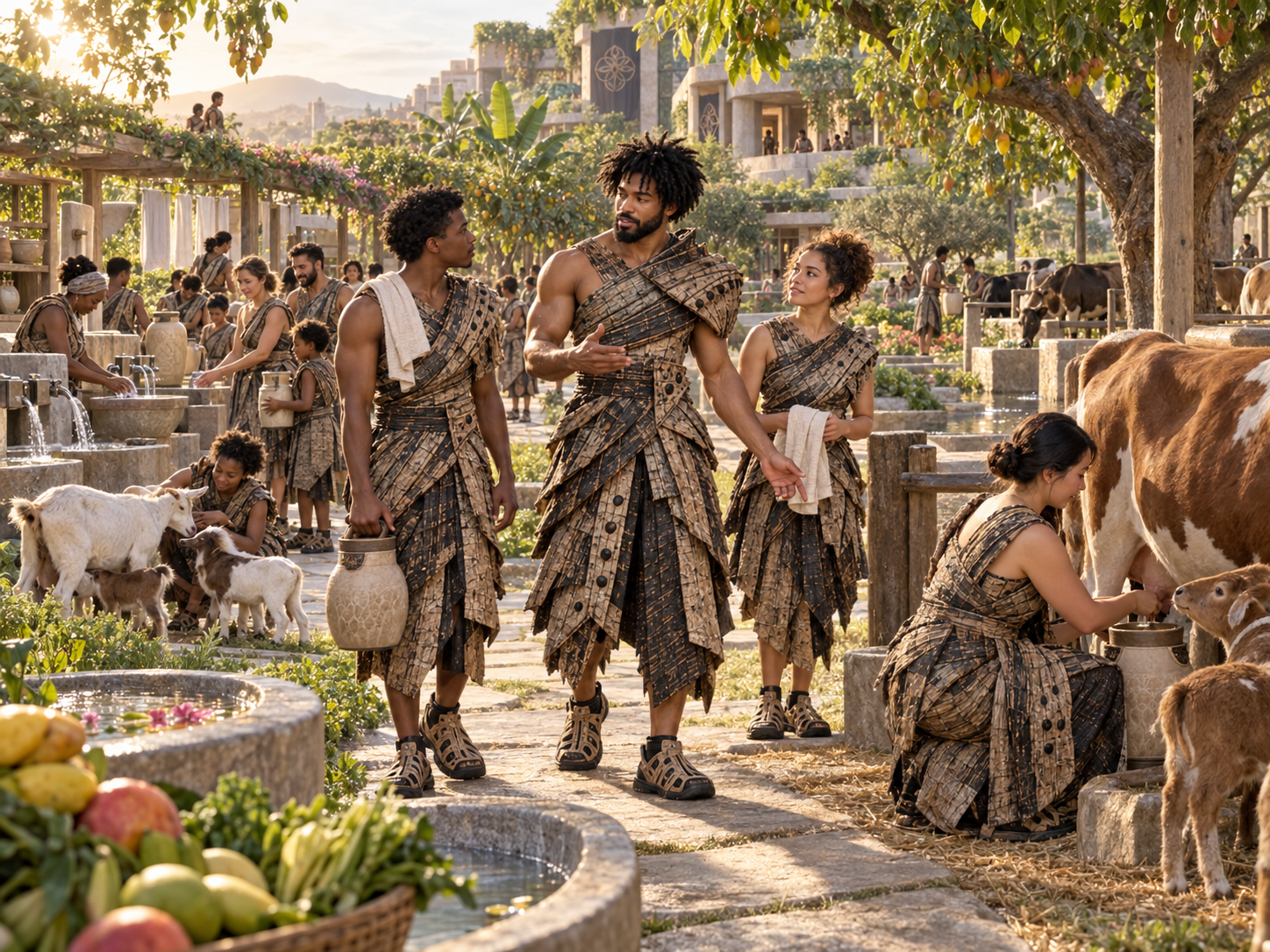
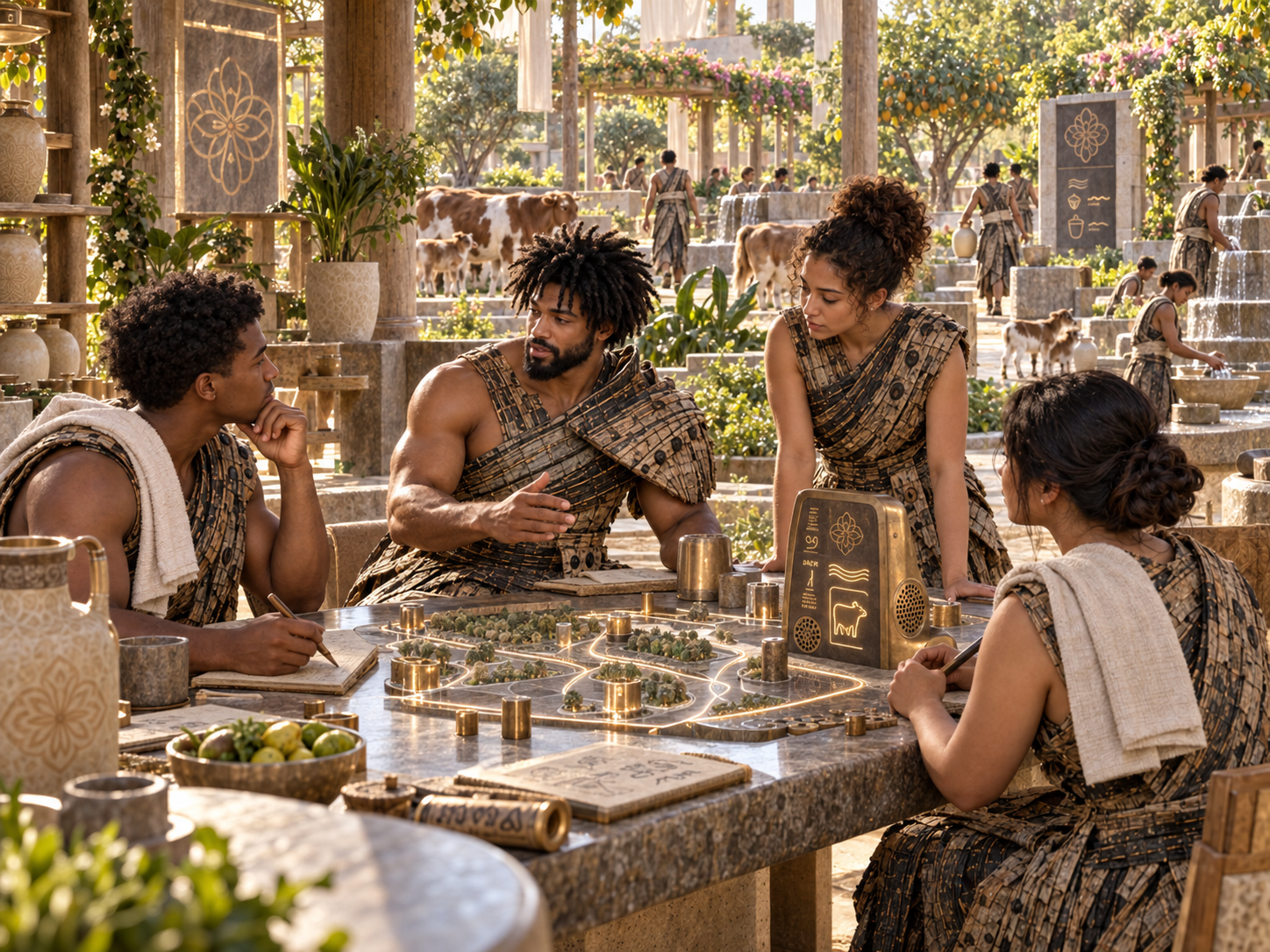
Fabric Nodes are the Trott Bailey Family Civilization Fabric Care and Treatment facilities available for free use to all it’s citizens.
The Home Should Not Fight Fabric Alone
Part One: Why stains make ordinary life feel impossible, and why Trott Bailey Civilization begins fabric care before the wash even starts.
Laundry can feel like a never-ending misery of futility.
There are stains waiting to get into clothes everywhere. When you sit. When you eat. When you cook. When you hold a baby. When you accidentally touch something. When the smallest ketchup drip falls from your fingers and lands on fabric for half a second.
So what is a human being supposed to do? Dress in black? Dress in nothing? Wear rough coconut-leaf outfits and stop caring about beauty?
Tell me. I would really like to know.
How does a civilization truly answer these questions?
Trott Bailey Family Civilization does not tell people to stop living beautifully. It builds the fabric-care support that lets beautiful clothing survive real life.
Stains Are Not a Small Domestic Problem
A stain is not just a mark on cloth. A stain can become a whole chain of work. Someone has to notice it. Someone has to decide what caused it. Someone has to decide whether to blot, rinse, tag, wash, air-dry, send out, or give up. Someone has to remember not to put it in the dryer. Someone has to worry about whether the garment can be replaced if it is ruined.
That is why laundry feels so exhausting. It is not only the washing. It is the guessing, the sorting, the timing, the stain panic, the drying, the folding, the missing garment, the ruined shirt, the baby cloths, the towels, the food cloths, the public clothes, and the feeling that the pile will return no matter what you do.
The old-world household was usually given one washing machine, one dryer or limited drying space, a few detergents, limited time, limited money, and the expectation that the family should somehow keep up.
Trott Bailey Family Civilization does not treat that as a private family failure. It treats it as a design failure.
The First Correction: Design Clothing for Care Before the Stain Happens
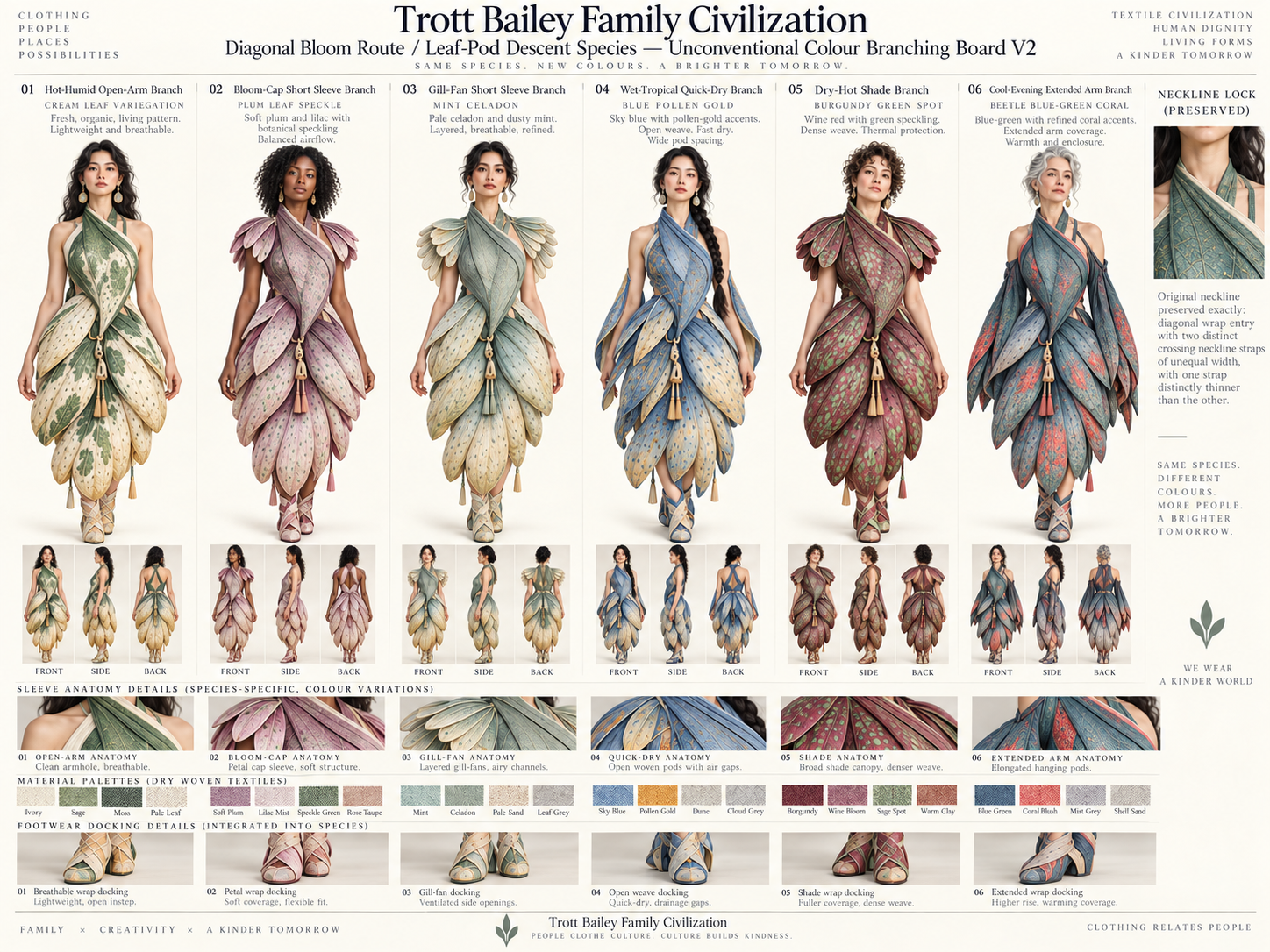
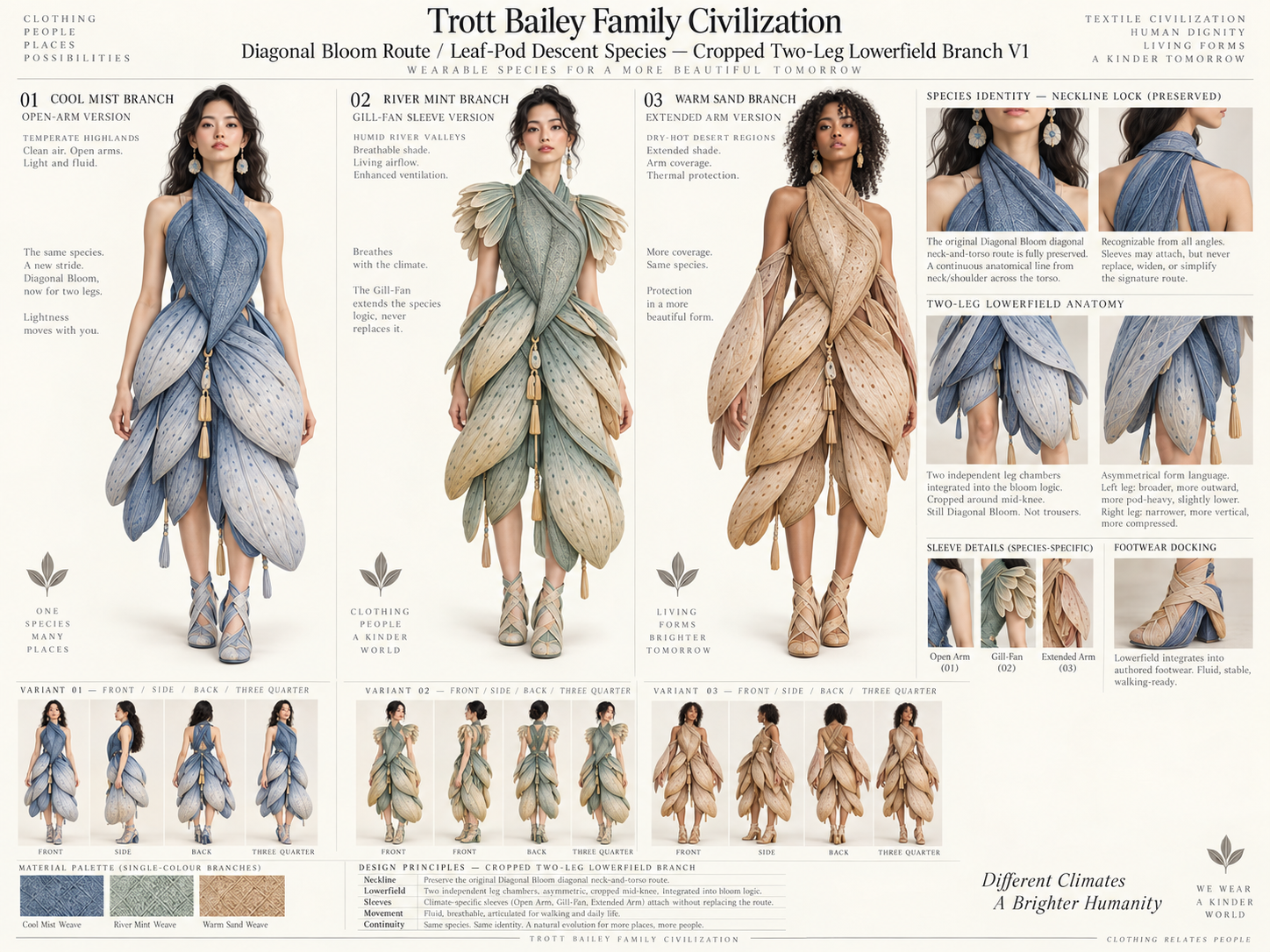
A truly fashionable civilization cannot only design beautiful garments. It has to design garments that can survive being worn by real people.
This matters especially in the first years of child care. From baby to age three, the adult caring for the child can expect frequent mess. Not occasional mess. Frequent mess. Baby food, drool, milk, sticky hands, sauce, biscuit crumbs, fruit pulp, damp cloths, wiping, carrying, kneeling, feeding, lifting, sitting, and recovering are part of daily life.
Trott Bailey Family Civilization does not romanticize that as vague sentiment. It treats it as early-years care logistics.
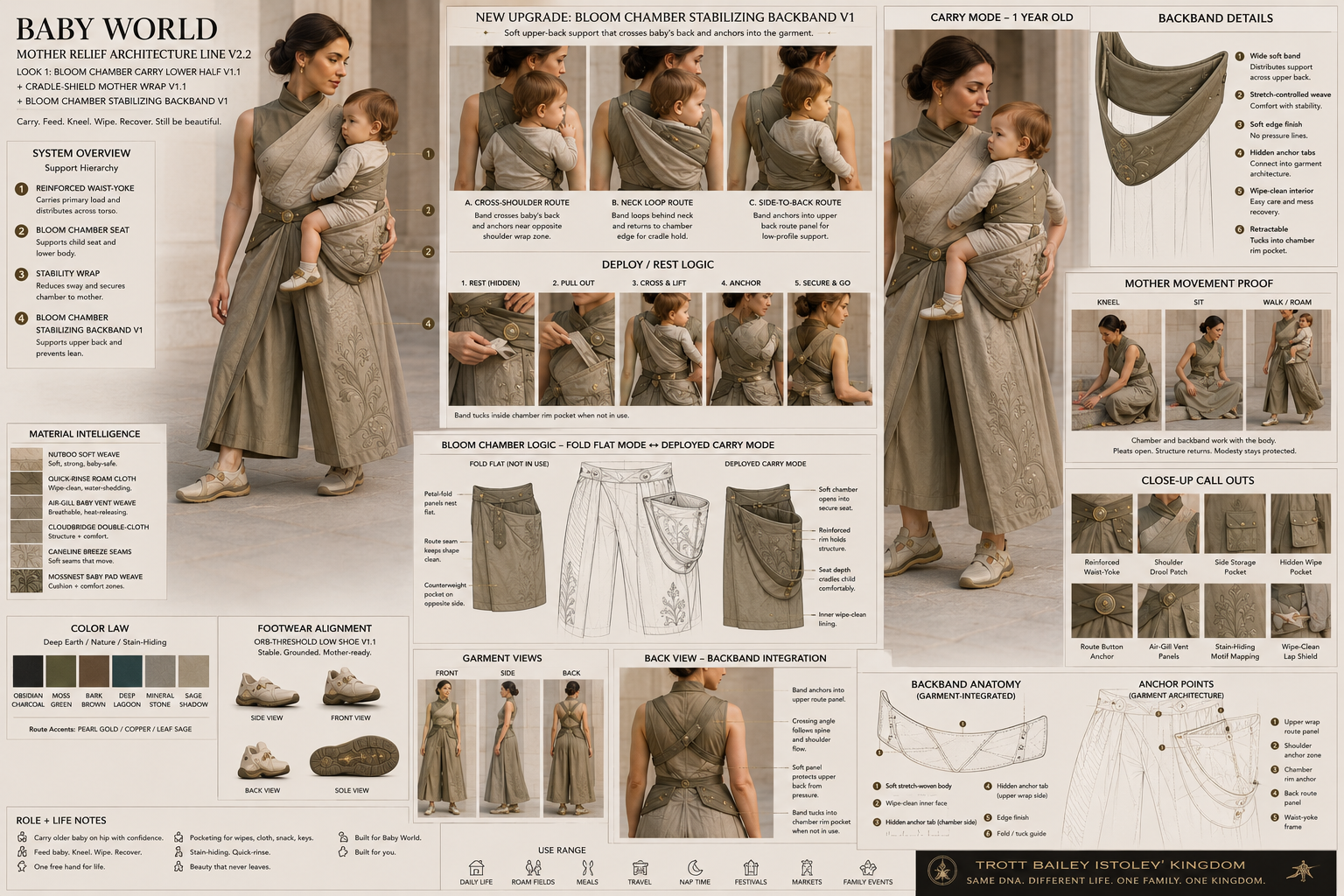
If an adult is caring for a baby or toddler, the clothing should help the adult. It should not make the adult feel trapped in fragile fabric that cannot be touched, wiped, rinsed, sat in, kneeled in, or carried through a long day.
Adult Early-Years Care Clothing
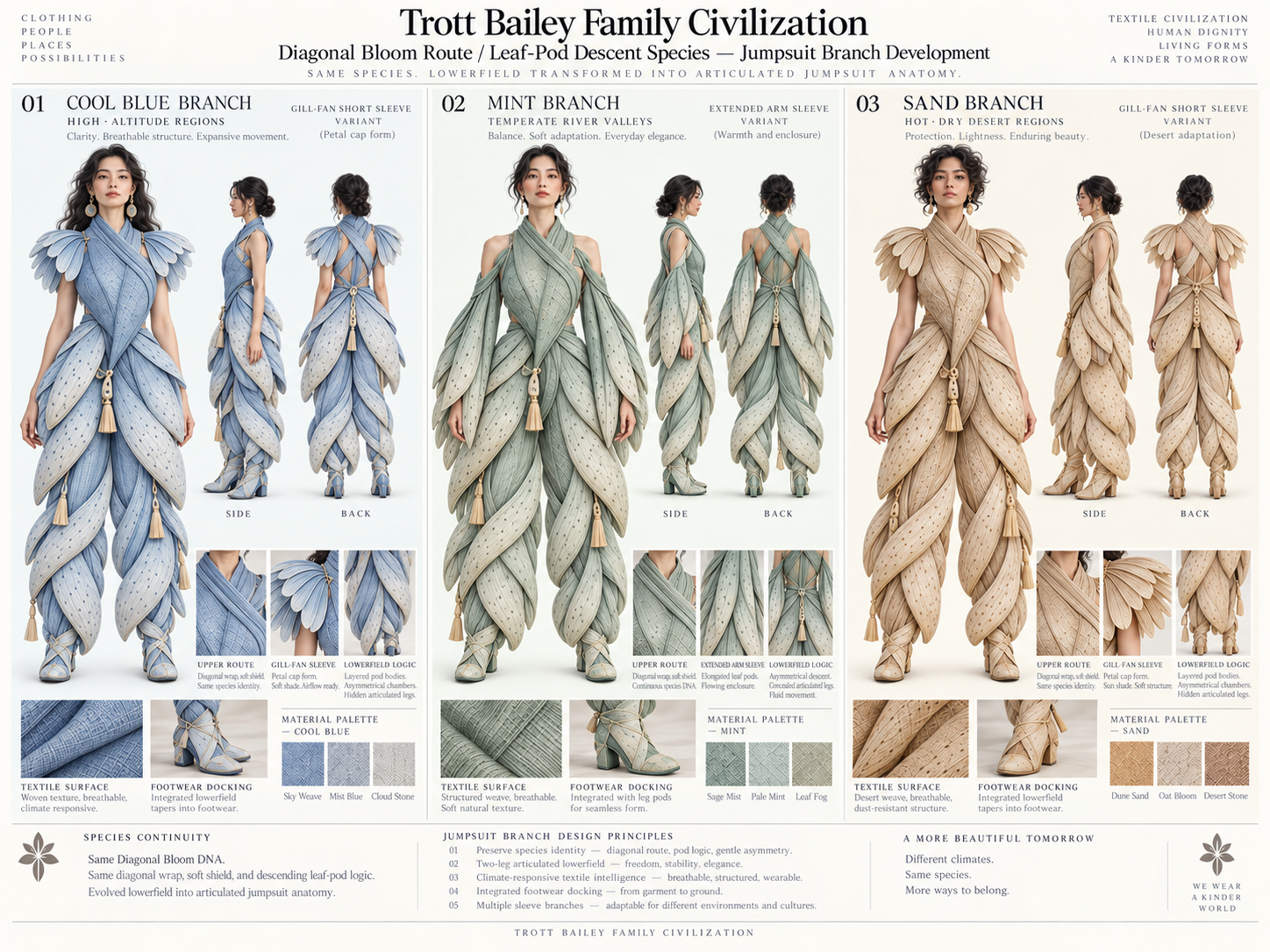
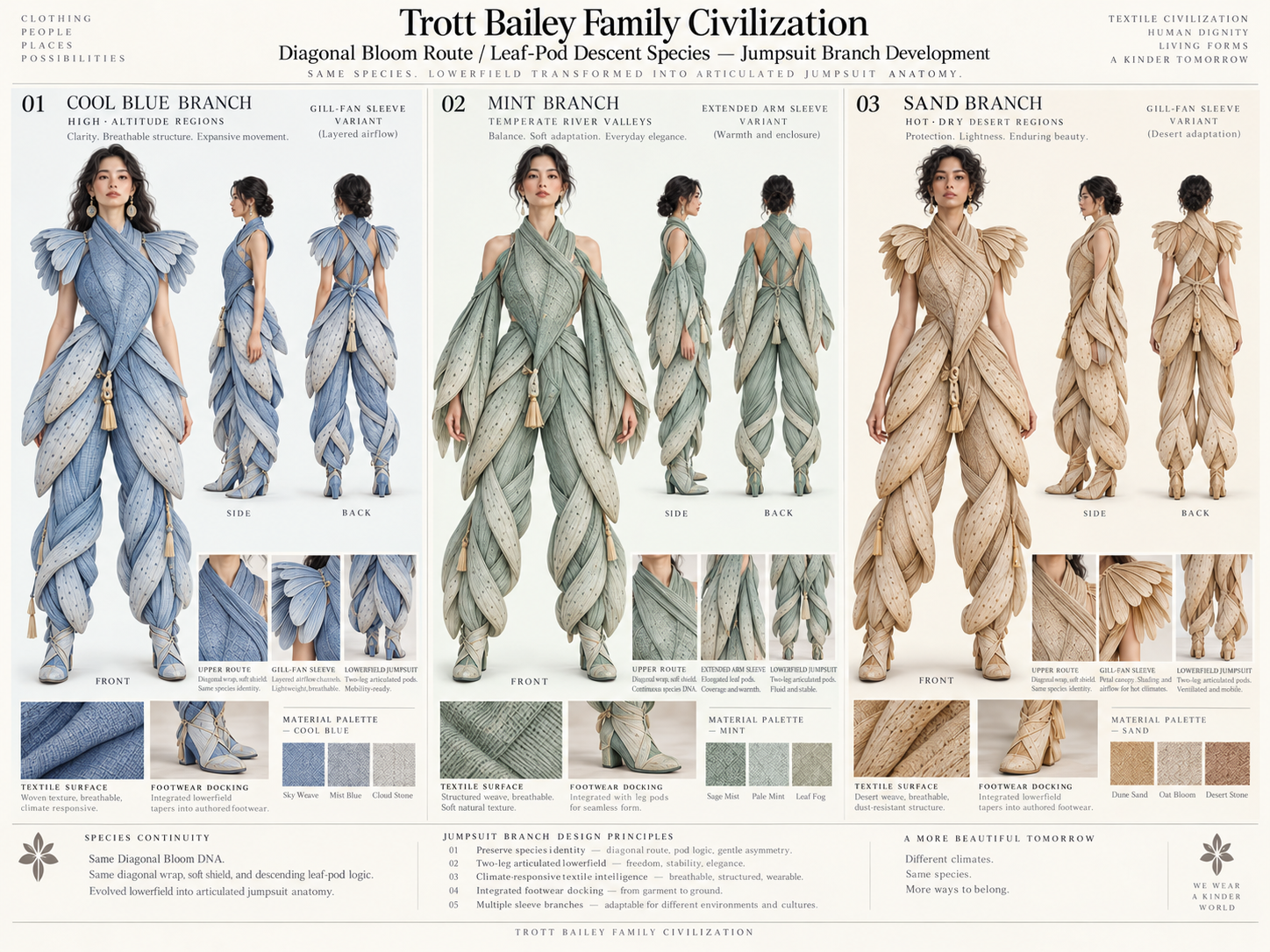
Sturdy adult clothing can include wipe-clean shields across the lap, chest, shoulder, and hip zones; quick-rinse surfaces; hidden wipe and recovery pockets; kneel-ready construction; carrying support; stain-hiding but beautiful fabrics; and easy on/off layers.
Baby and Toddler Clothing
Baby clothing should be rugged, soft, baby-safe, easy to remove, easy to replace, and designed for crawling, eating, sitting, being carried, and being cleaned quickly.
Doon System Pads
Removable front pads or Doon pads belong where mess is most likely: the chest, belly, lap, and feeding zones. The pad can be removed or replaced without changing the whole outfit every time.
Beauty Without Fragility
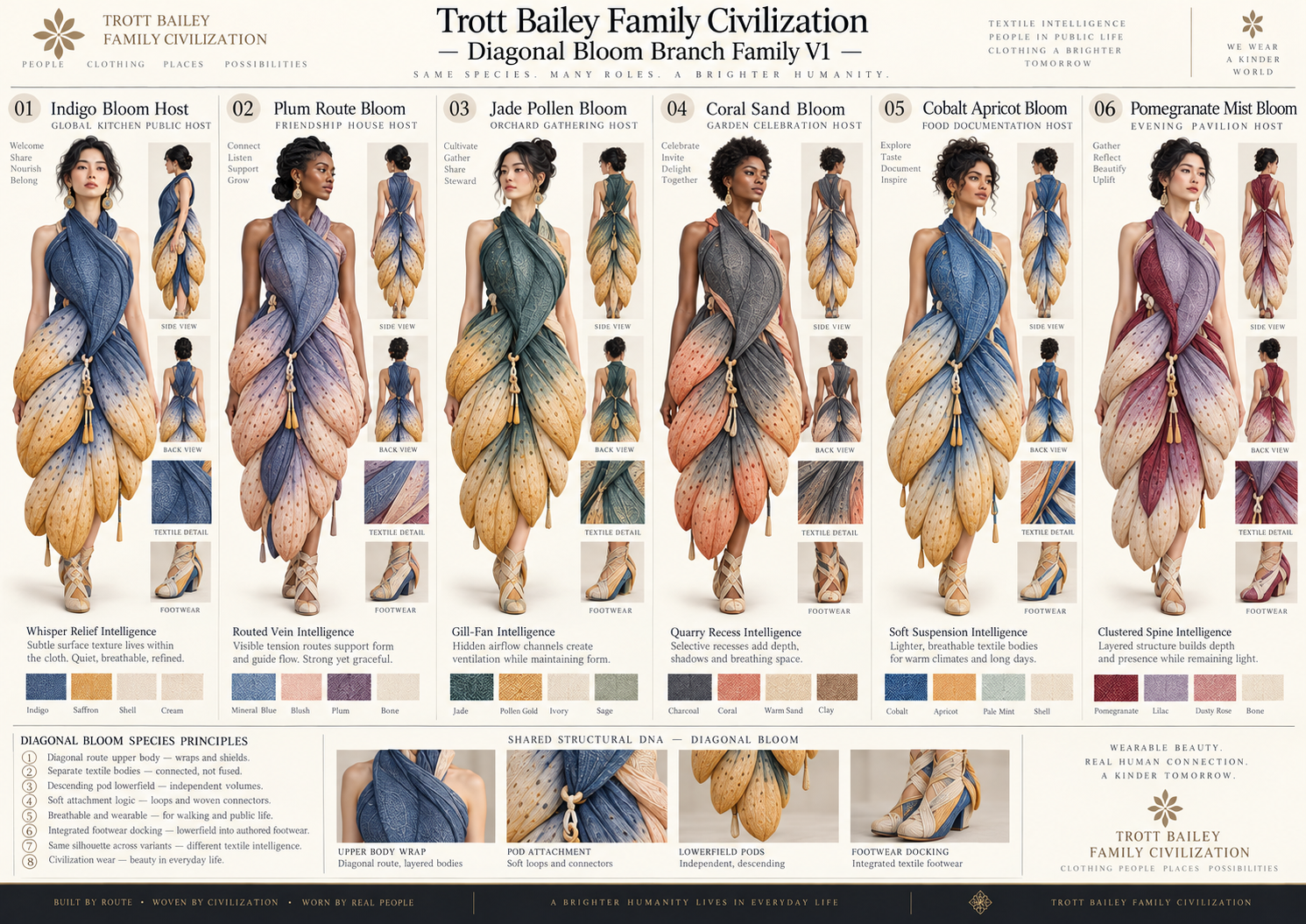
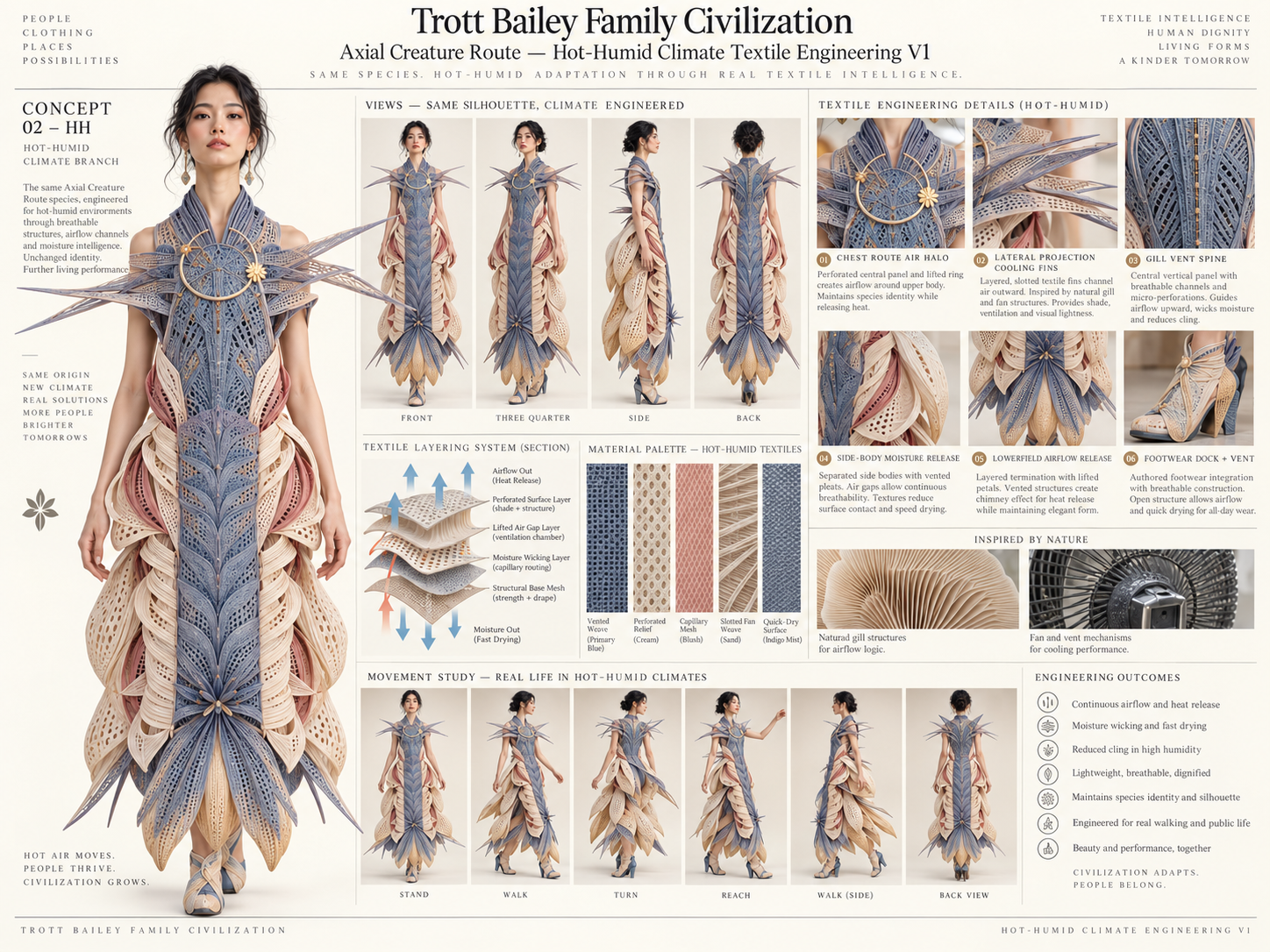
Trott Bailey clothing can still be beautiful, authored, colorful, strange, and fashionable. But beauty should not mean that one sticky hand ruins the day.
The Second Correction: The Mini Fabric Rescue Kit
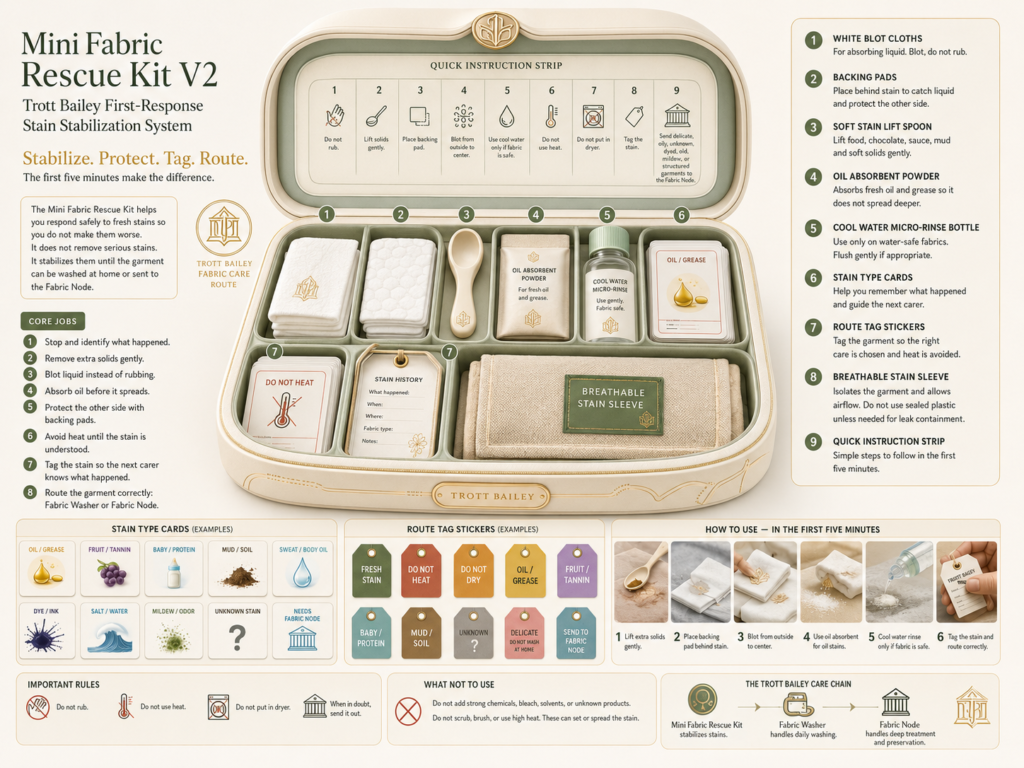
The Mini Fabric Rescue Kit is the first-response layer. It is used in the first few minutes after a stain happens. Its job is not to perform miracle stain removal. Its job is to stop the stain from getting worse.
This matters because many garments are not damaged only because a stain happened. They are damaged because the first response was wrong.
Someone rubs hard and pushes mango deeper. Someone scrubs chocolate and spreads the oil. Someone throws the garment into a pile and forgets what happened. Someone puts it in the dryer and the heat sets the stain. Someone sprays the wrong product on delicate fabric and changes the color.
The household does not need to become a stain laboratory. But it does need a way to stop stains from getting worse.
The Mini Fabric Rescue Kit gives the family a safe first move. It helps people lift, blot, absorb, tag, protect, and route the garment correctly.
- Stop and identify what happened. Was it oil, fruit, baby food, mud, sweat, dye, saltwater, or unknown?
- Remove extra solids gently. Lift chocolate, baby food, sauce, fruit pulp, or mud without grinding it deeper into the fabric.
- Blot liquid instead of rubbing. Blotting lifts liquid. Rubbing can spread the stain and damage fibers.
- Absorb oil before it spreads. Fresh grease or cooking oil needs quick absorption, not panic scrubbing.
- Protect the other side of the garment. Backing pads stop liquid from passing through to another layer.
- Avoid heat until the stain is understood. Heat can set some stains and make them harder to remove.
- Tag the stain. The Fabric Washer or Fabric Node needs to know what happened.
- Route the garment correctly. Some garments can be washed at home. Some must go to the Fabric Node.
What Belongs in the Mini Fabric Rescue Kit?
The kit should be safe, simple, clearly organized, and usable by a tired adult who does not have time to decode complicated instructions while a child is sticky and moving.
White Blot Cloths
Soft white cloths press into spills and lift liquid. White matters because colored cloths can transfer dye into the garment.
Absorbent Backing Pads
Pads placed behind the stain help stop liquid from passing through to the other side of the garment.
Soft Stain Lift Spoon
A smooth rounded tool lifts chocolate, baby food, sauce, fruit pulp, or mud clumps without scraping or tearing the fabric.
Oil Absorbent Packet
A garment-safe packet helps absorb fresh oil before it spreads deeper into the fibers.
Cool Water Micro-Rinse Bottle
Used only when the fabric is safe for water. It can help gently flush some fresh water-based stains.
Stain Type Cards and Route Tags
These record what happened: fruit, oil, baby/protein, mud, sweat, dye, saltwater, unknown, do not heat, or send to Fabric Node.
Breathable Stain Sleeve
A breathable sleeve isolates the stained garment without trapping moisture the way sealed plastic can.
Clear Instruction Strip
The kit should say plainly: do not rub, remove solids gently, blot from outside toward center, avoid heat, tag the stain, and route correctly.
The kit should not include dangerous chemicals. No harsh solvents. No strong bleach. No dye removers. No chemical mixing bottles. No hot steam tools. No aggressive brushes. Those belong in the Fabric Node, where trained workers can inspect, test, treat, flush, reassess, and preserve garments properly.
Example: Mango and Chocolate on a Child’s Outfit
A child is eating mango and chocolate. The mango juice runs onto the shirt. The chocolate softens, spreads onto the hand, and smears across the front of the outfit.
In the old pattern, the parent may grab a cloth and rub hard. The chocolate grease spreads. The mango pigment pushes deeper. The shirt gets thrown into a basket. Later, someone forgets what happened, washes it with other clothes, dries it, and the stain may remain.
With the Mini Fabric Rescue Kit, the parent has a better first step.
The parent did not fully remove the stain. The parent prevented the stain from becoming worse. That is success.
Trott Bailey Family Civilization is a money free society. This means there are no gateway barriers of money costs to access anything in the Trott Bailey Family Kingdoms.
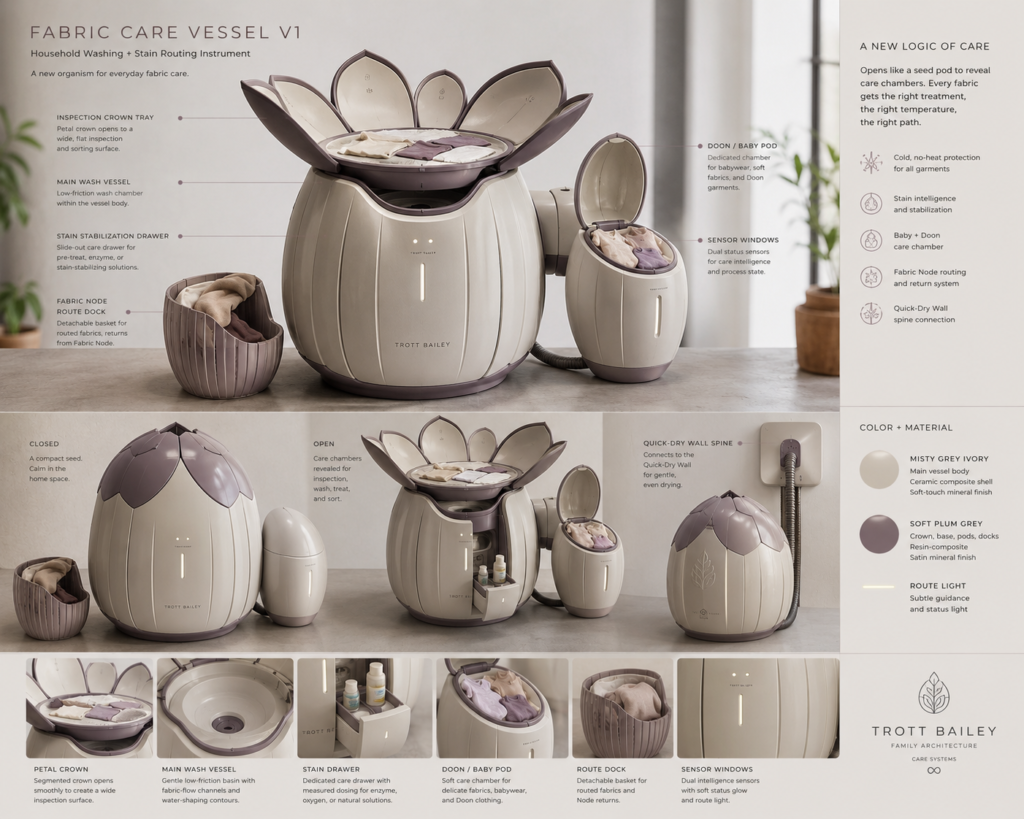
The Fabric Washer Is Not Another Washing Machine
Part Two: Why the home still needs a washer, but the washer must stop pretending to be a stain lab, repair center, drying system, and public infrastructure replacement.
The Fabric Washer is the household daily-care layer. It washes ordinary washable clothing, towels, underclothes, pajamas, simple playwear, some baby cloths, some Doon cloths, and light household fabric loads.
But it is not just another old-world washing machine. Its purpose is not to pretend every fabric problem belongs inside the home washer. Its purpose is to help the household inspect, separate, protect, wash, dry, and route garments properly.
The Fabric Washer handles daily care. The Fabric Node handles deep care.
What the Fabric Washer Includes
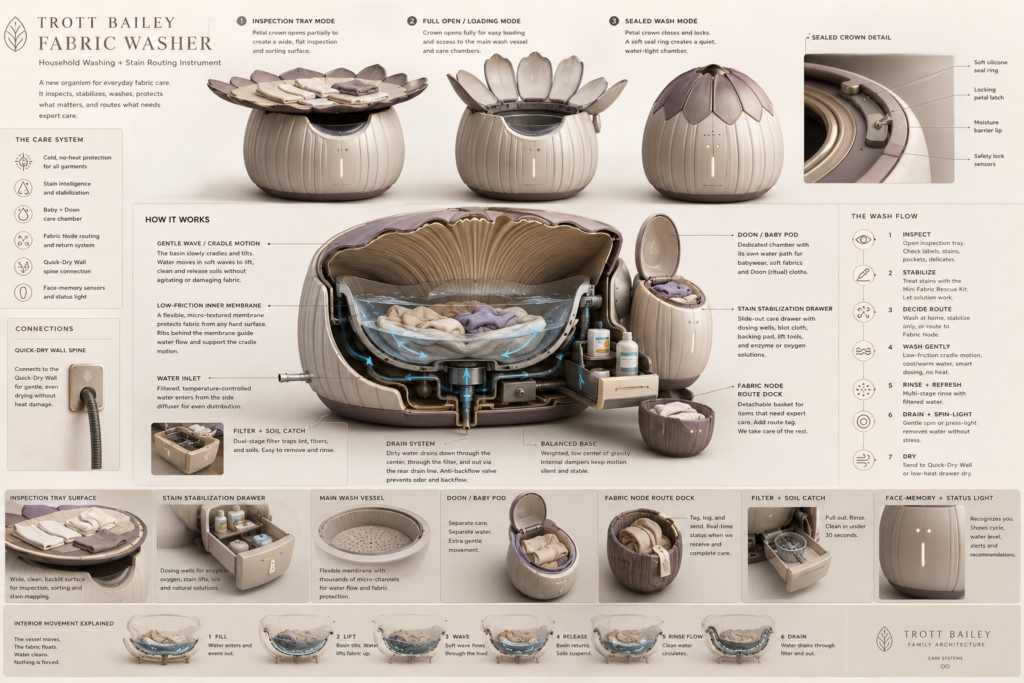
The Fabric Washer includes an inspection tray, a stain stabilization drawer, a main wash chamber, a smaller Doon/baby cloth chamber, a low-friction wash basket, a no-heat stain lock, a Fabric Node route basket, and a Quick-Dry Wall or dry spine connection.
Inspection Tray
A surface where garments are checked before washing. It helps prevent stained, delicate, or misrouted garments from entering the wrong cycle.
Stain Stabilization Drawer
A built-in area for first-response tools such as blot cloths, backing pads, route tags, breathable sleeves, and other safe stabilization items.
Main Wash Chamber
The daily wash vessel for ordinary washable garments, using lower-friction movement and fabric-protection logic.
Doon / Baby Cloth Chamber
A smaller separate chamber for food cloths, baby cloths, bibs, lap cloths, and small fabric loads that should not be mixed casually with everything else.
No-Heat Stain Lock
A safeguard that warns or blocks high heat when a garment is tagged as stained, delicate, unknown, or not yet cleared.
Fabric Node Route Basket
A separate route-out dock for garments that should not be washed at home and need professional Fabric Node care.
Quick-Dry Wall Connection
A link to the household dry spine so wet cloth does not wander onto chairs, doors, counters, and beds.
Filtered Drain + Soil Catch
A removable filter and drain logic for lint, soil, loose particles, and controlled water return.
Honest Questions About the Fabric Washer
These questions matter because if the Fabric Washer is just another washing machine, then it is pointless.
This type of Fabric Washer, how does it really differ from a washing machine?
The key difference is that an ordinary washing machine mostly asks: “What cycle do you want?”
The Fabric Washer asks a different set of questions: “What kind of fabric is this? What happened to it? Should this be washed here? Should it be stabilized first? Does it need the Fabric Node?”
That is the major difference. The Fabric Washer is not only a water-and-detergent machine. It is a home fabric-care gatekeeper. It interrupts the automatic habit of throwing every fabric problem into one machine.
It does not replace the Fabric Node. It stops the household from making wrong decisions before deep care is needed.
You said washing machines do not solve stains properly, so what is the point of another washer?
A washing machine is not useless. It is just overburdened and wrongly treated as the whole solution.
A washing machine can wash. It can remove ordinary sweat, dust, some food residue, some soil, and general dirt from washable fabrics. That is useful.
But the old-world mistake was pretending the washing machine could also be a stain diagnosis system, a fabric testing system, a preservation system, a repair system, a drying intelligence system, a family relief system, and a public infrastructure replacement.
It cannot do all that.
So the Fabric Washer is not valuable because it “washes better” only. It is valuable because it has a different job description. It handles ordinary daily washing while protecting the family from the lie that every fabric problem belongs in the home washer.
Can the Fabric Washer really handle the washings produced from a family of five daily?
Yes, but only if we define handle correctly.
A family of five produces a lot of fabric movement: daily clothes, school and play clothes, baby cloths, towels, food cloths, bedding, underclothes, public-life garments, occasional stains, and occasional special garments.
If the Fabric Washer had to handle all of that alone, it would eventually become the same trap as the old washing machine.
But in Trott Bailey Civilization, it does not handle everything alone. It handles the daily washable stream.
The Mini Fabric Rescue Kit handles immediate stain stabilization. The Fabric Node handles oil and grease stains, dye transfer, mildew, unknown stains, delicate garments, ceremonial garments, structured Trott Bailey garments, Kultan salt and humidity garments, Keslev fieldwear stains, repair, reshaping, deep preservation, and garment restoration. The Quick-Dry Wall handles controlled drying, airflow drying, no-heat drying, Doon cloth drying, baby cloth drying, towel drying, and wet-to-dry household organization.
So yes, the Fabric Washer can support a family of five because it is not being asked to carry the whole civilization on its back. It is one part of a fabric-care chain.
What is the key difference between a family using the Fabric Washer in Trott Bailey Civilization versus a frustrated family living in old-world systems?
The key difference is not only technology. The key difference is civilization context.
A normal washer in an overburdened home becomes another machine the family must manage. A Fabric Washer in Trott Bailey Civilization becomes part of a supported care chain.
A frustrated old-world family is not frustrated only because the washer is limited. The entire life system is stacked against them. They may be tired, busy, underpaid, worried about bills, rushing to work, dealing with children, cooking, cleaning, lacking space, lacking drying areas, lacking money for professional cleaning, lacking access to repairs, lacking garment knowledge, unable to replace damaged clothing easily, unable to send things to deep care for free, and unable to pause long enough to treat stains properly.
So when the washer fails, the family feels like they failed. But they did not fail. They were under-resourced.
In Trott Bailey Civilization, the Fabric Washer is not standing inside that same pressure cage. The family has no money panic over every garment, free access to Fabric Node care, better garments designed for care, Mini Fabric Rescue Kits nearby, Quick-Dry Wall systems, Doon/baby separation, public fabric rescue points, helper support where needed, garment routing, repair and restoration systems, less shame around needing help, and less pressure to solve everything alone.
That is why the same general idea — a home washing instrument — becomes completely different inside a different civilization.
What a Regular Washing Machine Mostly Does
A normal washing machine mostly follows a simple mechanical sequence.
- It fills with water.
- It adds detergent.
- It agitates or tumbles fabric.
- It drains.
- It rinses.
- It spins.
- It leaves the family to dry, fold, sort, repair, and hope.
That process can help with general dirt. It can clean ordinary washable fabrics. It can reduce physical labor compared with handwashing everything. That should be acknowledged.
But it does not truly know what is happening inside the fabric.
- It does not know whether a stain is oil, protein, fruit, dye, mildew, or soil.
- It does not know whether heat will set the stain.
- It does not know whether the garment should not be washed at home.
- It does not know whether a child’s cloth should be separated from food cloths.
- It does not know whether the garment needs no-heat protection.
- It does not know whether repeated friction is wearing down the fabric.
- It does not know whether the garment should be routed to deeper care.
- It does not know whether the family is too tired to manage all this manually.
That is why the washing machine should not be blamed for failing to be everything. It was never built to be everything.
The Old-World Laundry Pressure Cage
Old-world laundry is not only a fabric problem. It is also a money problem, a time problem, a housing problem, and an organization problem.
A family may want to sort clothing properly, but they are tired. They may want to treat stains first, but the baby is crying. They may want to run a smaller load, but detergent costs money. Water and electricity cost money. They may feel, “I need to get the most out of this wash.”
So they cram more clothes into the washer. They skip stain inspection. They mix towels, baby clothes, school clothes, adult clothes, stained clothes, dark clothes, delicate clothes, and food cloths. They use one detergent for everything. They rush the drying. They hope nothing gets ruined.
Then the machine performs worse. Clothes rub too hard. Stains spread. Dye transfers. Soap does not rinse properly. Odors remain. Fabric wears down. The family feels defeated, even though the real problem is scarcity and pressure.
The Trott Bailey Difference Around the Washer
In Trott Bailey Family Civilization, the Fabric Washer is not standing inside that old pressure cage.
The family is not trying to save every drop of soap because detergent is expensive. They are not overloading the washer because water and electricity are punishing them. They are not avoiding Fabric Node care because professional treatment costs too much. They are not trying to organize laundry inside a poorly planned house with no proper storage, no drying route, and no clear sorting space.
A Trott Bailey home is not haphazard poor housing with poor planning. A beautiful, functional home is a minimum civilization standard. That means laundry and fabric care are planned into the house.
Child-Friendly Sorting Stations
Children can learn where things go: baby cloths, Doon cloths, towels, stained garments, daily clothing, and Fabric Node route items.
Clear Garment Routes
Clothing is not left to wander from floor to chair to basket to machine. The home has places for fabric to move.
No Money Barrier to Deep Care
Fabric Node care is part of the civilization support system, not a luxury service only some families can afford.
Planned Drying
Wet fabric has a place to go through Quick-Dry Walls or dry spines instead of hanging over chairs, doors, beds, and railings.
Old world: “Hurry up. Save soap. Stuff it in. Hope it works.” Trott Bailey: “Sort it properly. Stabilize what needs stabilizing. Wash what belongs at home. Route what needs deeper care. Dry it correctly.”





The Civilization Must Preserve the Garment
Part Three: Why the Fabric Node, Quick-Dry Wall, home organization systems, and a human amount of grace complete the Trott Bailey answer to laundry.
A home can stabilize a fresh stain. A home can wash ordinary fabric. A home can organize laundry better when the house itself is designed to help.
But the home should not be expected to solve every textile problem alone.
This is where the Fabric Node becomes essential.
Layer Three: The Fabric Node
The Fabric Node is the deep-care layer. It is not a laundromat. A laundromat gives people machines. A Fabric Node gives garments a care pathway.
The Fabric Node handles what the home should not be expected to solve: complex stains, dye transfer, mildew, oil and grease, unknown stains, delicate garments, ceremonial garments, structured Trott Bailey garments, Kultan salt and humidity garments, Keslev fieldwear stains, repair, reshaping, deep preservation, garment restoration, and beautiful return.
Professional garment care does not begin with “throw it in and wash.” It begins with inspection. A garment is checked for stains, fabric type, dye stability, seams, weak areas, trims, closures, underarms, hems, and hidden discoloration. Then the stain is classified. Then the garment is treated according to what the fabric can survive.
That is a completely different care logic from ordinary household guessing.
A fashionable civilization must know how to preserve its fashion.
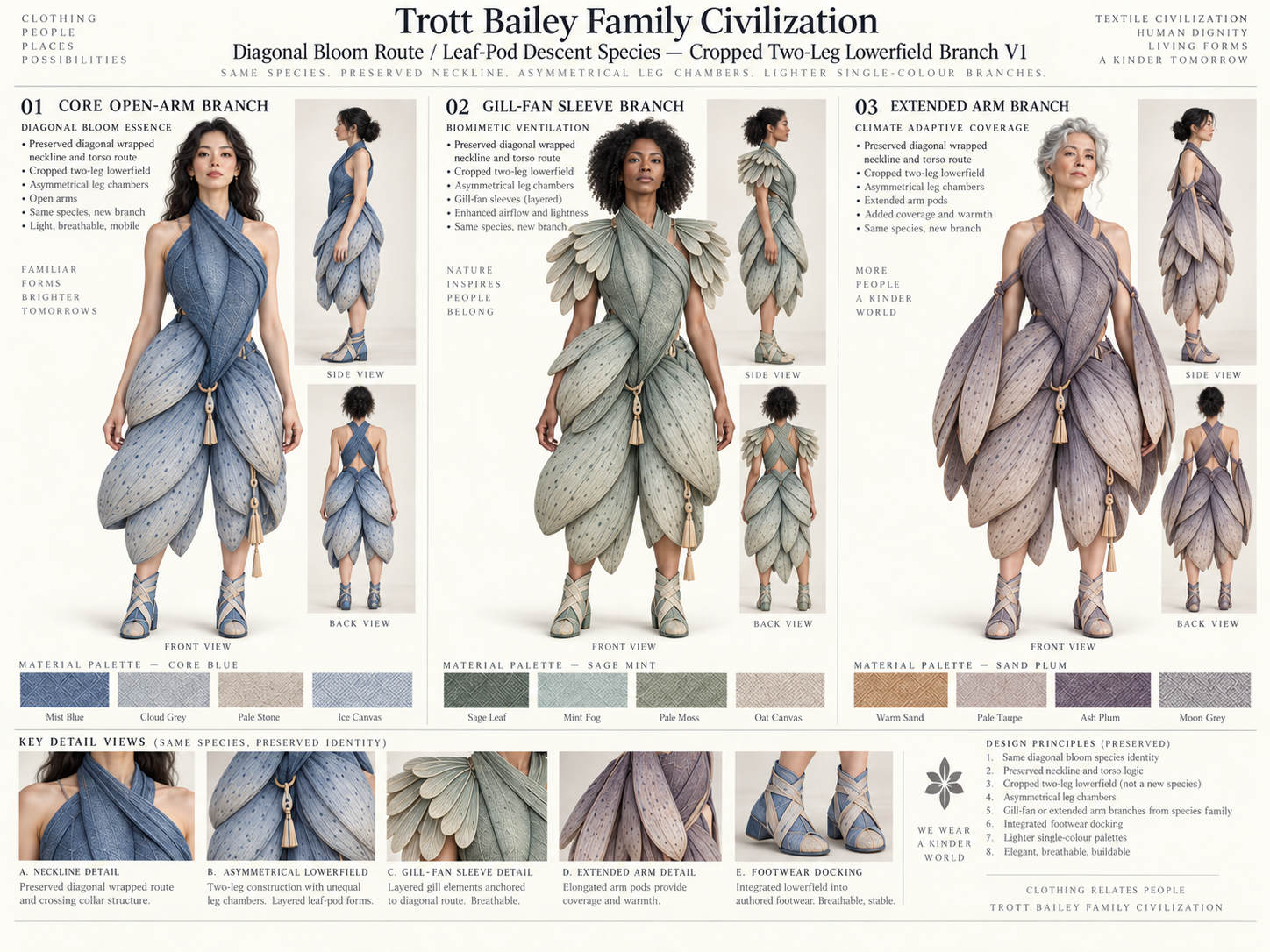
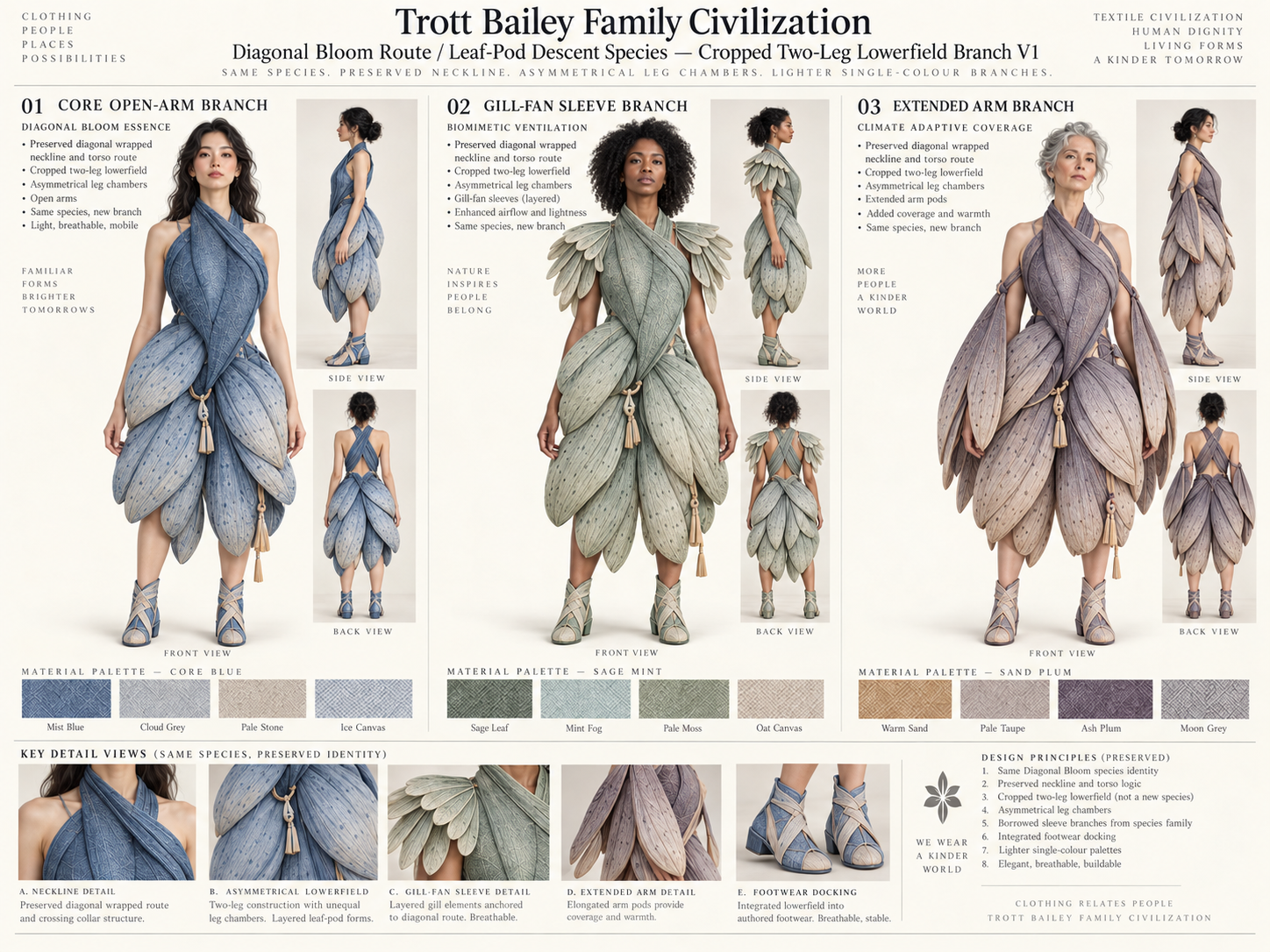
This matters because Trott Bailey clothing is not disposable decoration. It carries family dignity, public identity, rolewear, ceremony, beauty, and memory. A civilization that creates beautiful garments must also create beautiful systems to preserve them.
Layer Four: The Quick-Dry Wall and Home Organization System
Washing is not the end of fabric care. Wet fabric still has to go somewhere.
In many homes, wet fabric wanders. Towels hang over chairs. Cloths sit damp in corners. Baby cloths wait in a basket. Kitchen cloths sour. Small garments are hung wherever there is space. Damp fabric becomes smell, mildew risk, clutter, and another task waiting for someone already tired.
Trott Bailey homes need planned drying, not random drying. The Quick-Dry Wall or dry spine gives wet fabric a proper airflow route. Baby cloths, Doon cloths, towels, and light garments can dry with separation, air movement, and no-heat protection when needed.
This is paired with home organization systems. The house should help the family sort before the washer and reset after the washer.
Child-Friendly Sorting Stations
Children can learn where items go: baby cloths, Doon cloths, towels, stained garments, daily clothing, and Fabric Node route items.
Stain Holding Areas
Stained garments are not lost inside a general pile. They have a clear place to wait with their tags visible.
Dry Spine
Clean damp fabric has a proper route instead of being thrown over furniture, doors, beds, and railings.
Fabric Node Route Basket
The home has a dedicated place for garments that need deeper care, so they are not accidentally washed at home.
This is not luxury. In Trott Bailey Family Civilization, a beautiful and functional home is a minimum standard. The home is planned so the family does not have to invent order from chaos every day.
The Distinguishing Difference: Old-World Laundry Versus Trott Bailey Fabric Care
Old-World System
The family is expected to solve fabric care privately with one washer, one dryer, a few detergents, limited space, limited time, money pressure, and no guaranteed access to professional garment care.
Trott Bailey System
The family has layered support: design-for-care clothing, Mini Fabric Rescue Kits, a smarter Fabric Washer, Quick-Dry Wall drying, public fabric rescue points, and free Fabric Node care for deep treatment and preservation.
In the old world, laundry often happens under pressure. A parent sees the pile and thinks, “I have to get this done before work, before school, before the baby wakes up, before the clothes smell, before someone needs that shirt.”
There may not be time to inspect every stain. There may not be money for professional care. There may not be space to air dry. There may be fear of ruining clothes because replacement costs money. There may be no organized home system to help children understand where things go. There may be no free Fabric Node equivalent. There may be no room to breathe.
In Trott Bailey Civilization, the family is not asked to fight that battle alone. The Mini Kit handles the first minutes. The Fabric Washer handles the daily washable stream. The Fabric Node handles deeper care. The Quick-Dry Wall gives wet fabric a proper place to go. Public rescue points support stains that happen outside the home. Repair and restoration systems keep clothing from becoming disposable.
The difference is not only better technology. The difference is that the family is no longer abandoned.
A Practical Family-of-Five Evening
A family of five finishes a full day. There are two school outfits, one baby cloth bundle, three towels, a parent’s underclothes, children’s pajamas, a Doon cloth bundle from food cleanup, a play shirt with mango and chocolate, a Kultan water-facing garment with salt marks, and a structured public-life garment with a faint sauce stain.
In an old-world system, all of this may become one pile. Someone is tired. Someone is rushing. Someone wants the washing done before morning. The stained items may be thrown in with ordinary clothes. The dryer may set a stain. The special garment may lose shape. The towels may stay damp too long. The parent may feel defeated.
In Trott Bailey Civilization, the fabric stream divides.
- The ordinary school outfits, underclothes, pajamas, and towels can go through the Fabric Washer.
- The baby cloth bundle can go into the Doon/baby cloth chamber or a baby-safe wash route.
- The Doon cloth bundle can be washed separately instead of mixed into one dirty load.
- The mango and chocolate shirt is stabilized first with the Mini Fabric Rescue Kit, tagged, and washed only if safe.
- The Kultan salt-marked garment is routed to Fabric Node salt/water refresh if needed.
- The structured public-life garment goes to the Fabric Node instead of being damaged at home.
- Clean wet items move to the Quick-Dry Wall or dry spine instead of being thrown over chairs and doors.
This is what support means. The family is not expected to treat every fabric problem as the same kind of laundry.
And If You Still Do Not Feel Like Doing Laundry?
Even in Trott Bailey Family Civilization, a person is still human.
You can have design-for-care clothing, Mini Fabric Rescue Kits, a Fabric Washer, a Fabric Node, Quick-Dry Walls, organized homes, no money barrier to deeper care, and still have a week where you do not feel like managing laundry at home.
That is not failure. That is being alive.
Some days, you may still say, “Today I am wearing dark colors because I do not have the strength to fight ketchup.”
That is allowed.
If you need to route more garments to the Fabric Node for a season, do that. If you want to wear darker colors during heavy baby years, do that. If the home carries more of the organizing work, that is the point.
The standard is not, “A good family always keeps up.”
The standard is, “A good civilization gives families enough support that falling behind does not become misery.”
What This System Is Not
This Is Not
A claim that washing machines are useless, a miracle stain system, a dangerous chemical kit, a replacement for the Fabric Node, or a way to make households solve every textile problem alone.
This Is
A fabric-care chain that gives families design-for-care clothing, first-response stabilization, daily washing support, safer drying, and clear routing to deep garment care when the problem is too complex for the home.
The point is not to add more burden to the household. The point is to stop pretending that one old-world washing machine can replace a full fabric-care civilization.
The Trott Bailey Correction
Stains begin before the wash. A wash can damage the garment if the stain was not understood. A dryer can set a stain that the washer did not clear. A family can lose a garment simply because the care chain was broken.
Trott Bailey Civilization corrects that broken chain.
It designs clothing for real life. It gives families tools for the first five minutes, not just laundry day. It gives them a Fabric Washer that asks whether the garment belongs in the washer at all. It gives them a Fabric Node for deep treatment and preservation. It gives them Quick-Dry Walls so wet fabric has a proper place to go. It gives children sorting systems so the home teaches order instead of dumping chaos onto tired parents.
The home should not fight fabric alone. A family-centered civilization must carry fabric care with the family.
That is the real difference.