

Food Movement Is Part of Abundance
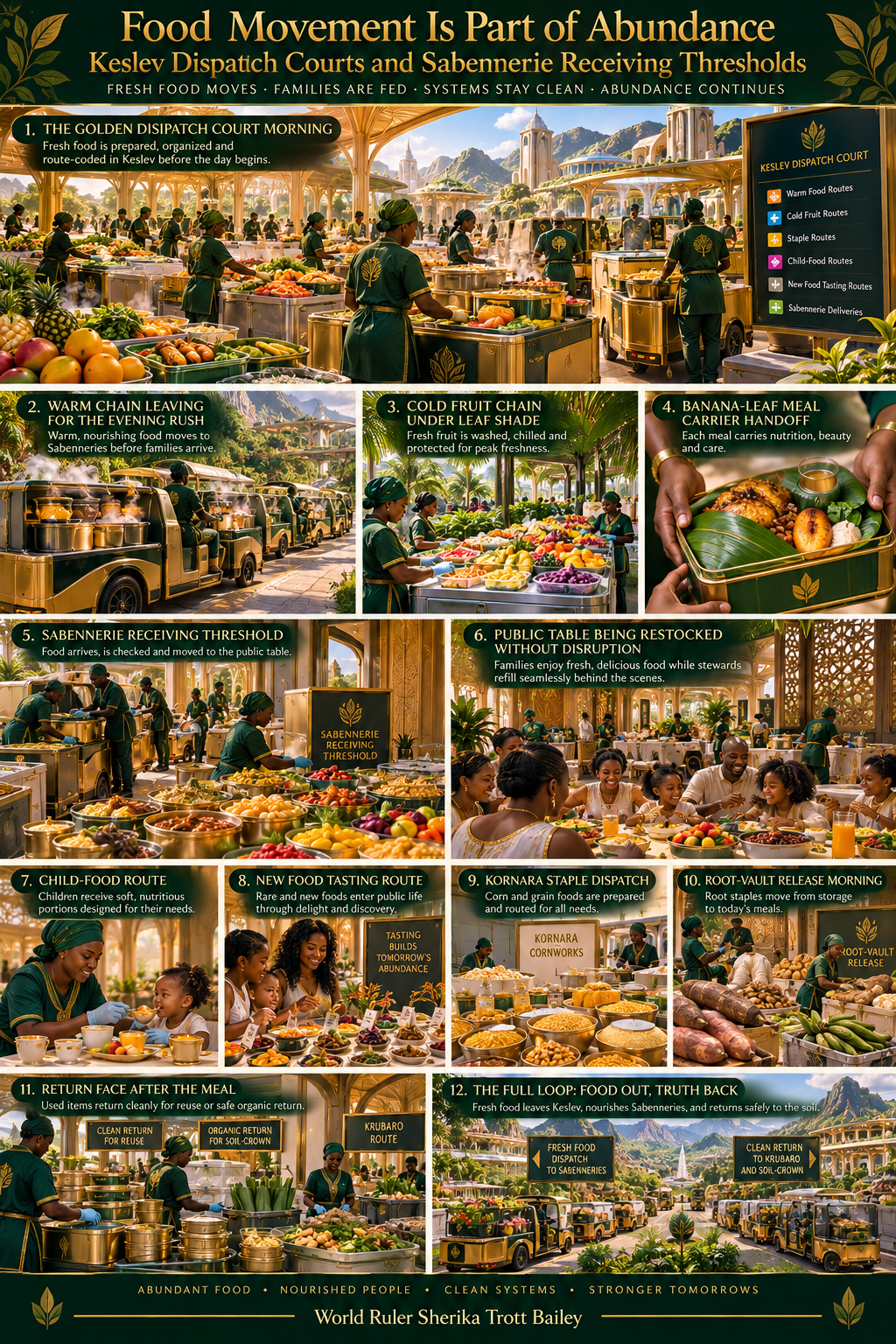
Food Movement Is Part of Abundance
Keslev Dispatch Courts and Sabennerie Receiving Thresholds
Keslev does not only grow food. It moves food cleanly, beautifully, and truthfully into public life through dispatch courts, temperature routes, carrier systems, Service Shadow lanes, receiving thresholds, return walls, and Pacorips food-truth records.
Keslev does not only grow food. Keslev moves food cleanly, beautifully, and truthfully into public life.
A family entering a Sabennerie may see fruit, warm bowls, roasted foods, child portions, fresh drinks, dessert trays, and wrapped meal carriers. It can look effortless. That is the point. The public table should not feel like panic, shortage, backroom confusion, or commercial hustle.
But the table is not effortless. Behind it is a movement system. Food has to leave Keslev’s fields, orchards, Root-Vaults, Husk-Ridge Processing Works, Grain-Gill verification houses, Kornara Cornworks, Rhizome Water-Ribbon systems, and Food Allocation Houses. It has to be separated by route, protected by temperature, carried by the right vessel, received without public ugliness, served with dignity, and returned without waste becoming shame.
Field / Root-Vault / Kornara / Husk-Ridge → Food Truth → Dispatch Court → Route Chain → Sabennerie Receiving Threshold → Public Table → Return Face → Krubaro / Soil-Crown / Pacorips Feedback
That missing handoff is the purpose of Keslev Dispatch Courts and Sabennerie Receiving Thresholds.
Quick Terms Before We Begin
Keslev is the kingdom’s food-sovereignty district. It grows, stores, verifies, processes, dispatches, and plans food before hunger arrives.
Sabenneries are the kingdom’s public food abundance centers. They are not restaurants, cafeterias, food courts, or charity kitchens. They are places where families, children, workers, helpers, and visitors receive daily nourishment from the kingdom’s food system.
Pacorips is the kingdom’s care-routing and verification intelligence system. In Keslev, Pacorips tracks food demand, origin, condition, storage, dispatch, return, and response.
Service Shadow is the hidden or semi-hidden work layer that keeps public life beautiful: support lanes, cleaning routes, maintenance access, carrier movement, return paths, and quiet worker systems.
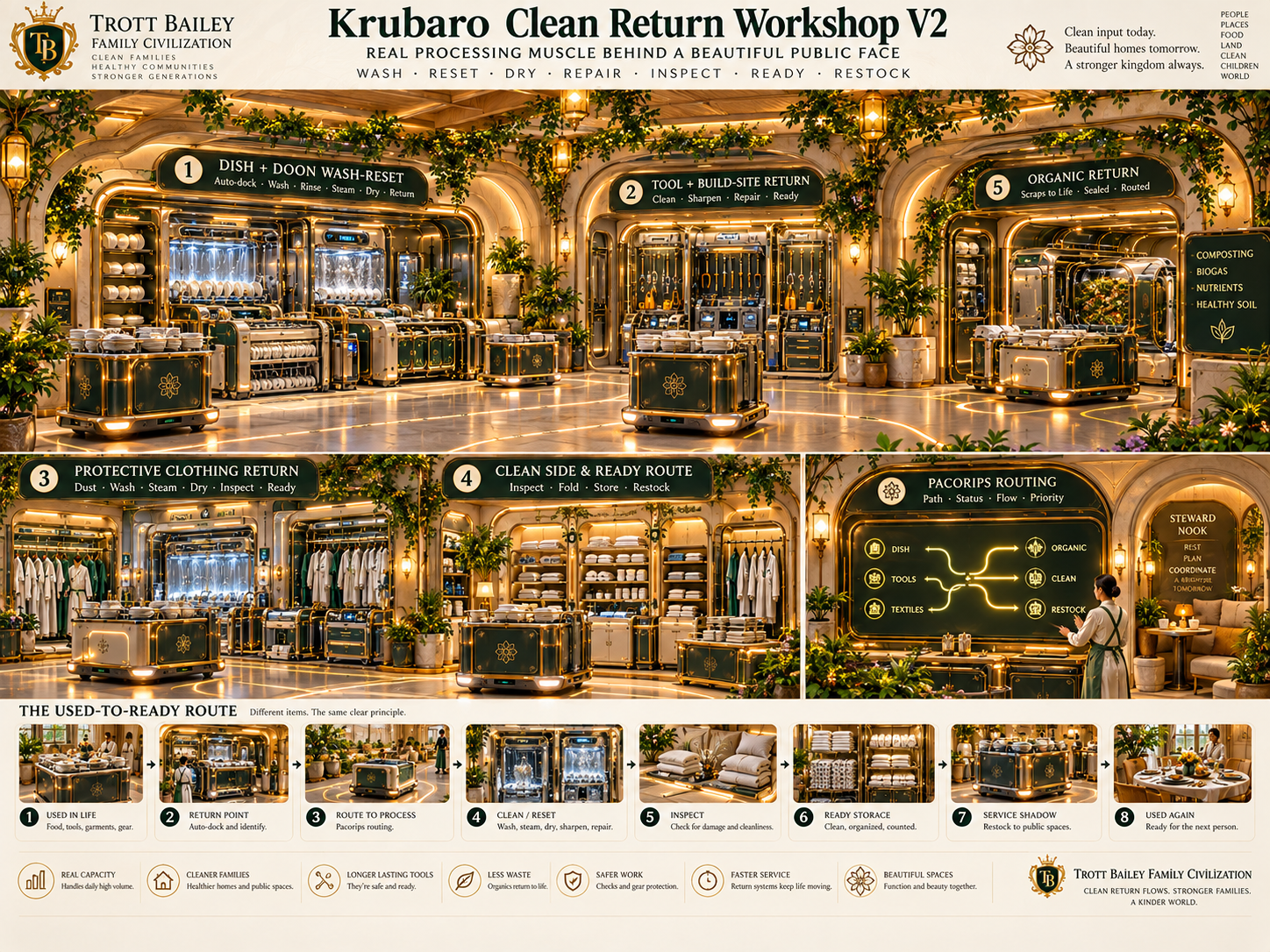
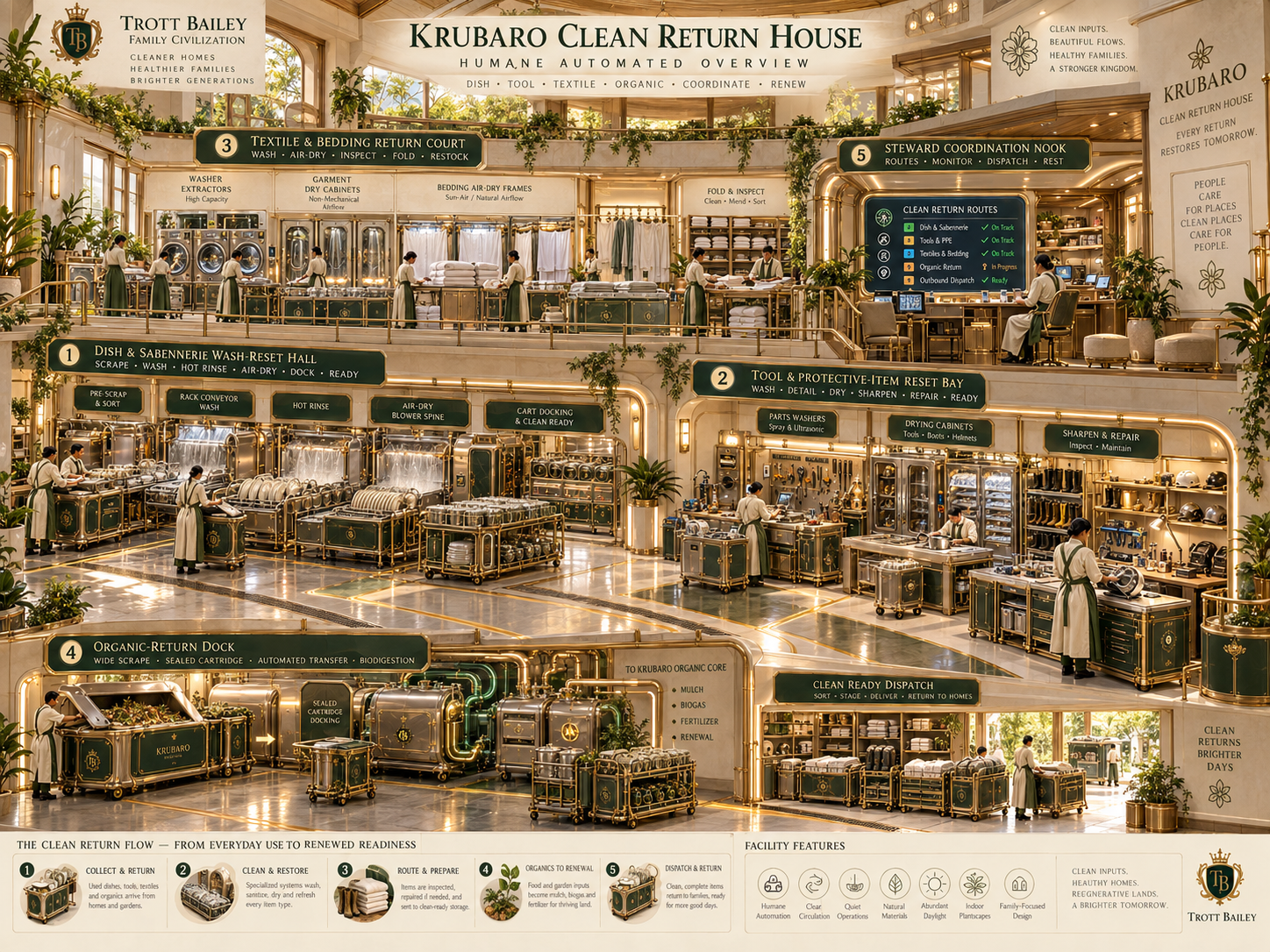
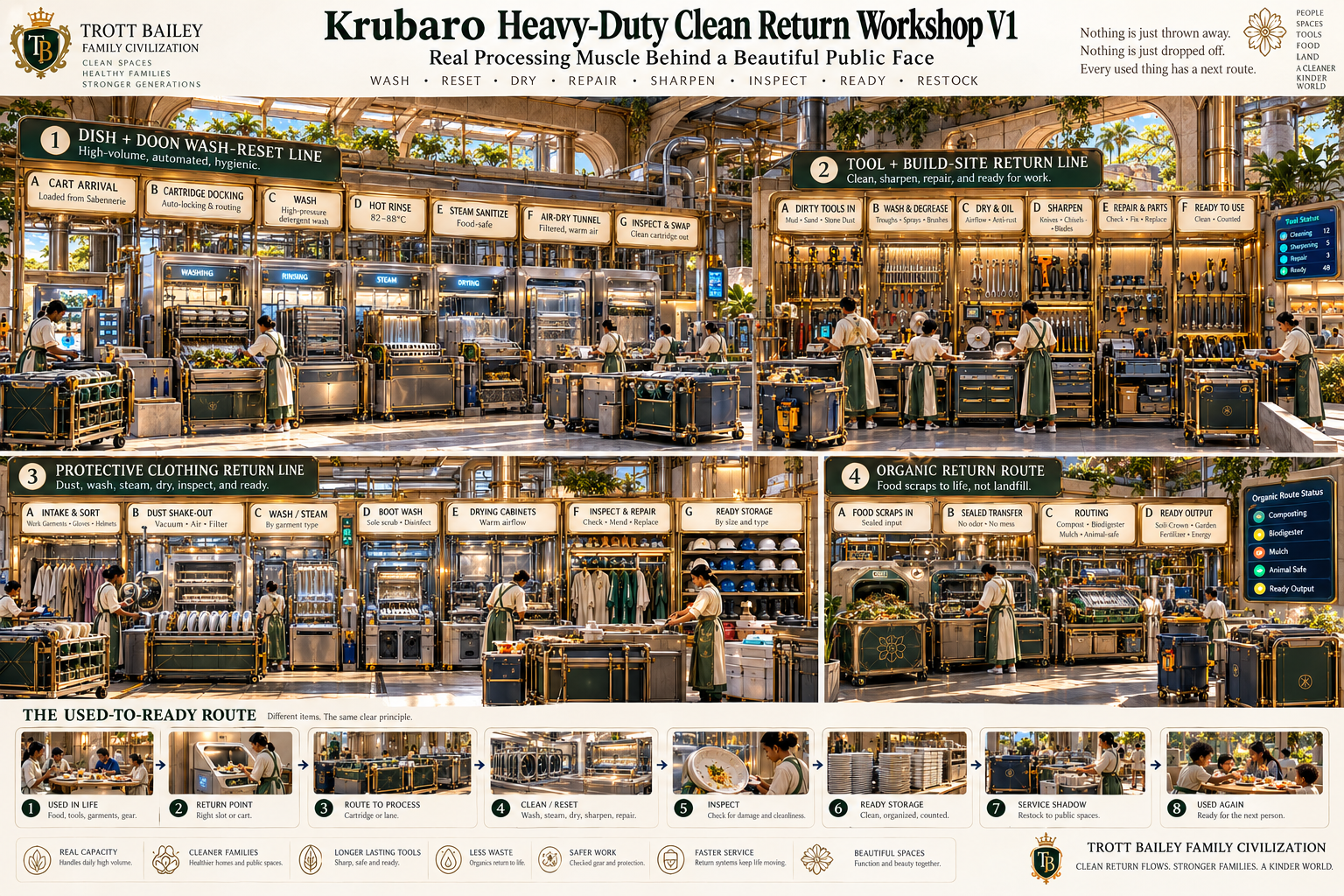
Krubaro is the kingdom’s waste-handling and return-routing system. Krubaro separates unsafe material, routes usable return, and prevents waste from becoming a household or public-space burden.
Growing Food Is Not the Same as Feeding People
A weak food system can have a harvest and still fail families. Food can rot in one place while people need it in another. Food can be processed but not routed. It can be cooked but not warm when it arrives. It can be abundant but poorly counted.
Keslev refuses that weakness. Feeding the kingdom means the food system must answer practical questions before a family arrives.
- What food is available now?
- What food is protected for family use before animal feed, reserves, or other routes?
- Which Sabennerie needs warm meals, fruit, child portions, roasted food, or tasting samples?
- Which foods must remain cold?
- Which foods must remain warm?
- Which foods are staples and must never be treated casually?
- Which carriers must return cleanly?
- What does yesterday’s return tell Keslev about today’s need?
This is why dispatch is not an afterthought. Dispatch is part of food sovereignty.
A harvest becomes public nourishment only when it can be verified, converted, routed, received, served, returned, and understood.
What a Keslev Dispatch Court Does
A Keslev Dispatch Court is not an ugly loading dock hidden behind a food building. It is an organized food-movement court where prepared, verified, protected, and route-coded food leaves Keslev toward Sabenneries, homes, public-life points, child-food routes, elder tables, travel carriers, and district events.
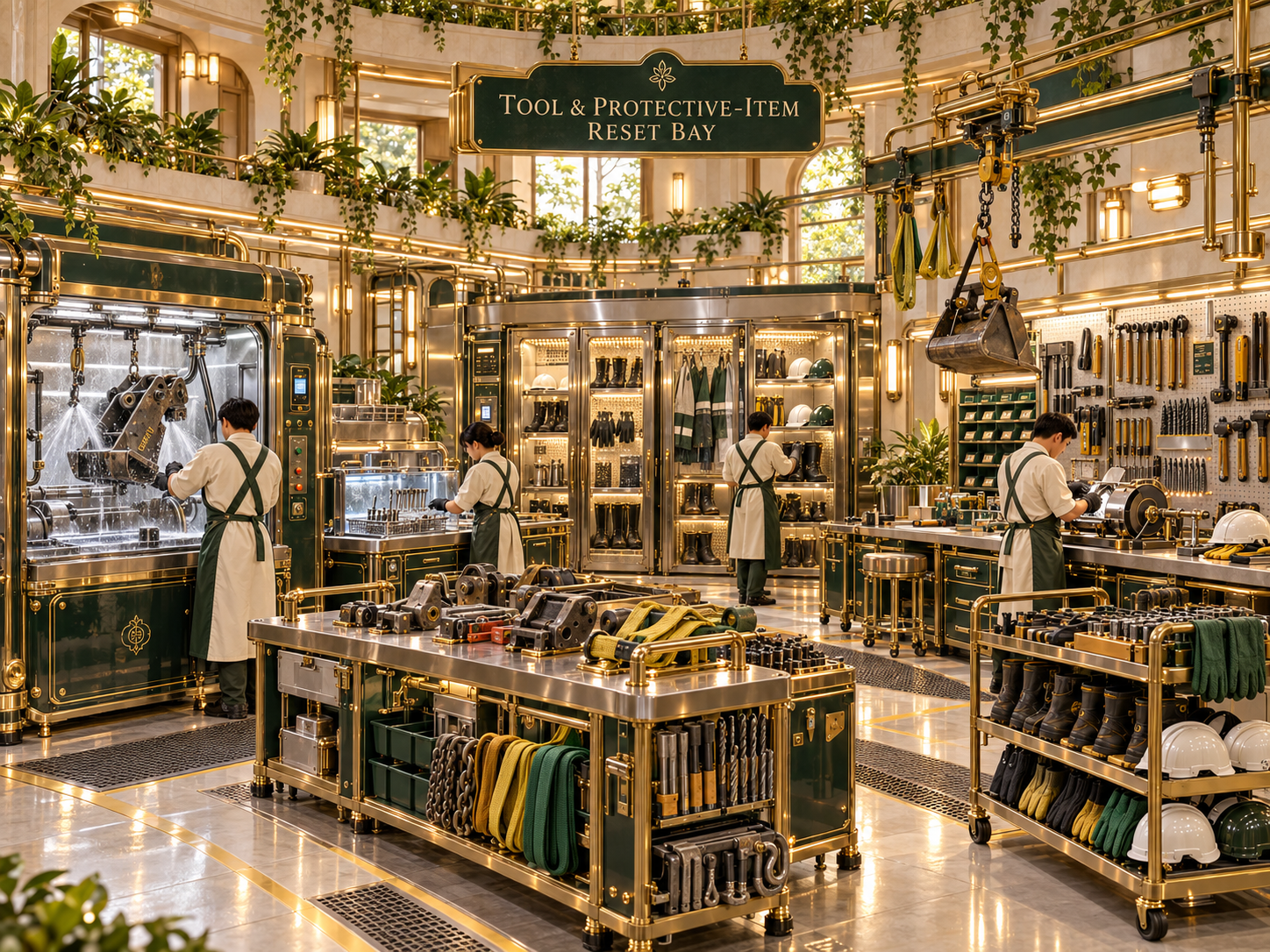
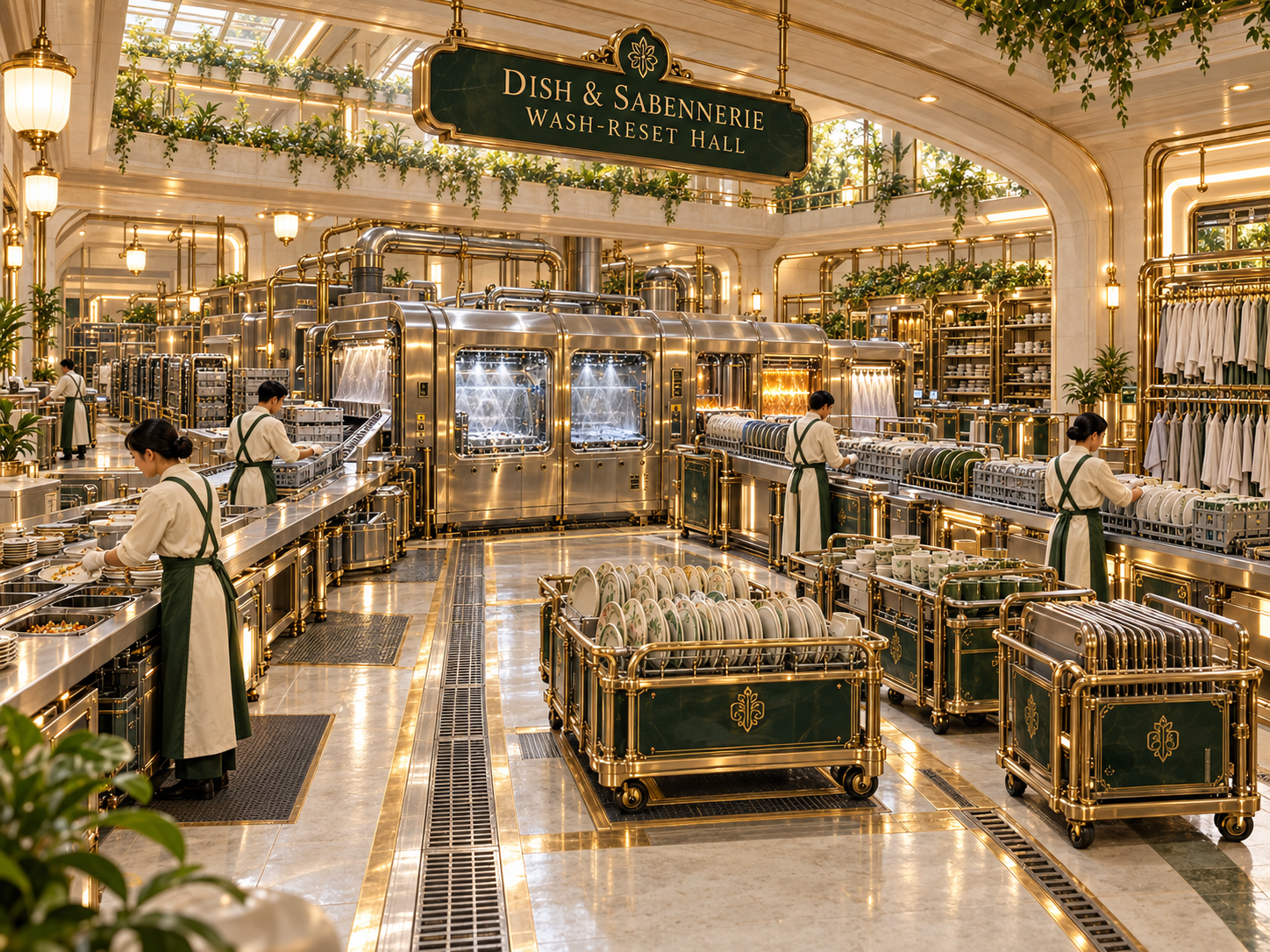
It must be practical. Carts, carriers, warm vessels, cold vessels, reusable trays, sealed staple containers, banana-leaf meal bundles, and return vessels all need room to move. Stewards need shaded work edges, wash-reset access, Pacorips route boards, handoff benches, inspection surfaces, water-vein hygiene channels, and service lanes that do not collide with family walking paths.
It must also be beautiful. Keslev does not make the public table beautiful and then make the movement of food look miserable. The work that feeds people deserves dignity.
A Dispatch Court may include:
- route-coded carrier bays
- warm-chain staging shelves
- cold-chain holding chambers
- staple-chain bulk vessel lanes
- child-food preparation handoff points
- new-food tasting sample racks
- urgent-route dispatch ledges
- Pacorips food-truth and route boards
- wash-reset and carrier-check stations
- Service Shadow return lanes
- covered cart courts and steward shade
- water-vein cleaning and drainage channels
The Routes Are Not All the Same
Food should not all be moved as if it has the same body, urgency, temperature, and purpose. A roasted plantain route is not the same as a cold fruit route. A child-food route is not the same as a bulk staple route. A tasting route is not the same as a warm evening meal route.
Warm Chain
For foods that must arrive warm and ready for serving: warm bowls, stews, porridge bases, roasted portions, soft family meals, and comfort foods.
Cold Chain
For fresh fruit, chilled drinks, creams, delicate desserts, certain prepared foods, and items that need cooling for safety or quality.
Staple Chain
For core dependable foods: cornmeal, rice, cassava, yam, taro, sweet potato, plantain, beans, grains, and bulk meal foundations.
Child-Food Route
For safe child portions, soft foods, warm baby foods, school-age meals, fruit portions, snacks, and child-friendly testing.
Tasting Route
For new foods, rare crops, food discovery samples, voting portions, feedback trays, and district-identity tasting events.
Urgent Route
For sudden need, weather changes, event spikes, shortage correction, visitor overflow, elder care, pregnancy support, and family emergencies.
These routes keep Keslev from treating abundance carelessly. The kingdom can have a lot of food and still handle each food with respect.
Daily-life example
A Warm Food Sabennerie may need yam base, bean stew, soft grain bowls, warm vegetable sides, roasted plantains, and fruit before the evening family rush. A New Food Tasting Sabennerie may need small sample trays, voting markers, and Pacorips-linked return vessels. Both are food routes. They are not the same route.
Kornara and Other Staple Systems Need Special Dispatch
Kornara, the Kingdom Cornworks, shows why dispatch cannot be lazy. Corn can become cornmeal, porridge meal, cornflakes, roasted corn snacks, masa-style wraps, child snack puffs, crackers, public meal bases, Makji travel packs, reserves, and animal feed only after human-food boundaries are protected.
That means Kornara output cannot simply be piled and sent out. Some routes go to Warm Food Sabenneries. Some go to child-food systems. Some enter reserves. Some go to travel provision. Some support public snacks. Some become ingredients for other food houses.
The same applies to cassava, yam, taro, sweet potato, plantain, rice, beans, wheat, coconut, fruit, cocoa, and root crops. Staple foods are not loose abundance. They are protected foundations of family life.
Dispatch cannot happen blind. It must be tied to Food Truth, storage, processing, verification, and real Sabennerie demand.
The Sabennerie Receiving Threshold
If the Dispatch Court is where food leaves Keslev, the Sabennerie Receiving Threshold is where food enters public nourishment.
This threshold is not a dirty back door. It is also not a theatrical front door pretending no work exists. It is a designed handoff edge where the beauty of the public table meets the truth of service.
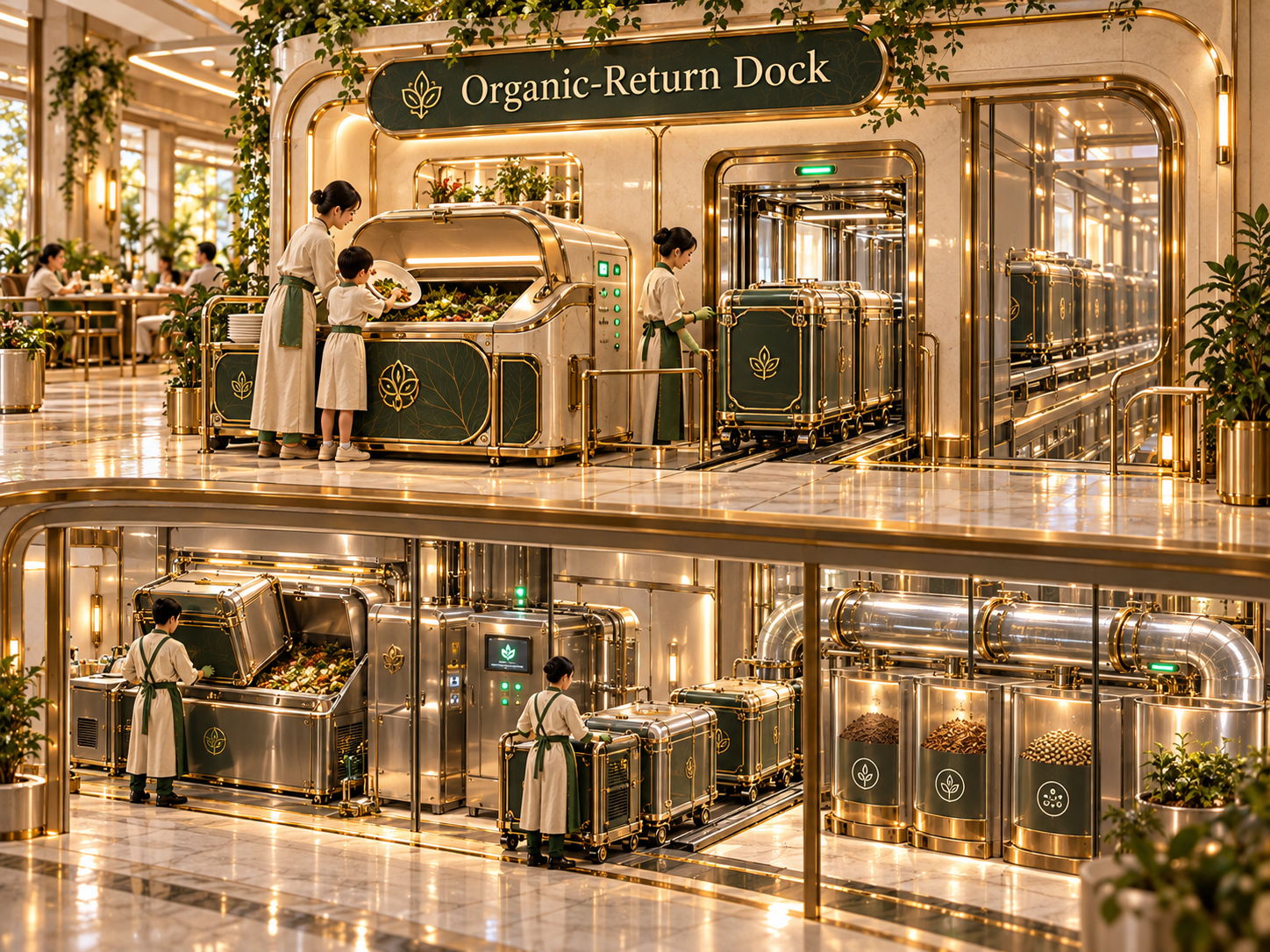
The Receiving Threshold receives route-coded carriers, checks food truth, separates warm and cold vessels, prepares serving lanes, routes return vessels, and sends information back to Keslev. It must do this without confusing families, blocking public paths, exposing dirty return, or hiding workers in miserable spaces.
A Sabennerie Receiving Threshold may include:
- warm vessel receiving ledges
- cold vessel receiving niches
- staple intake shelves
- fruit and fresh-food wash points
- child-food check ledges
- tasting tray handoff points
- Pacorips check-in panels
- clean carrier return mouths
- used utensil return trays
- organic return channels
- Krubaro-safe separation points
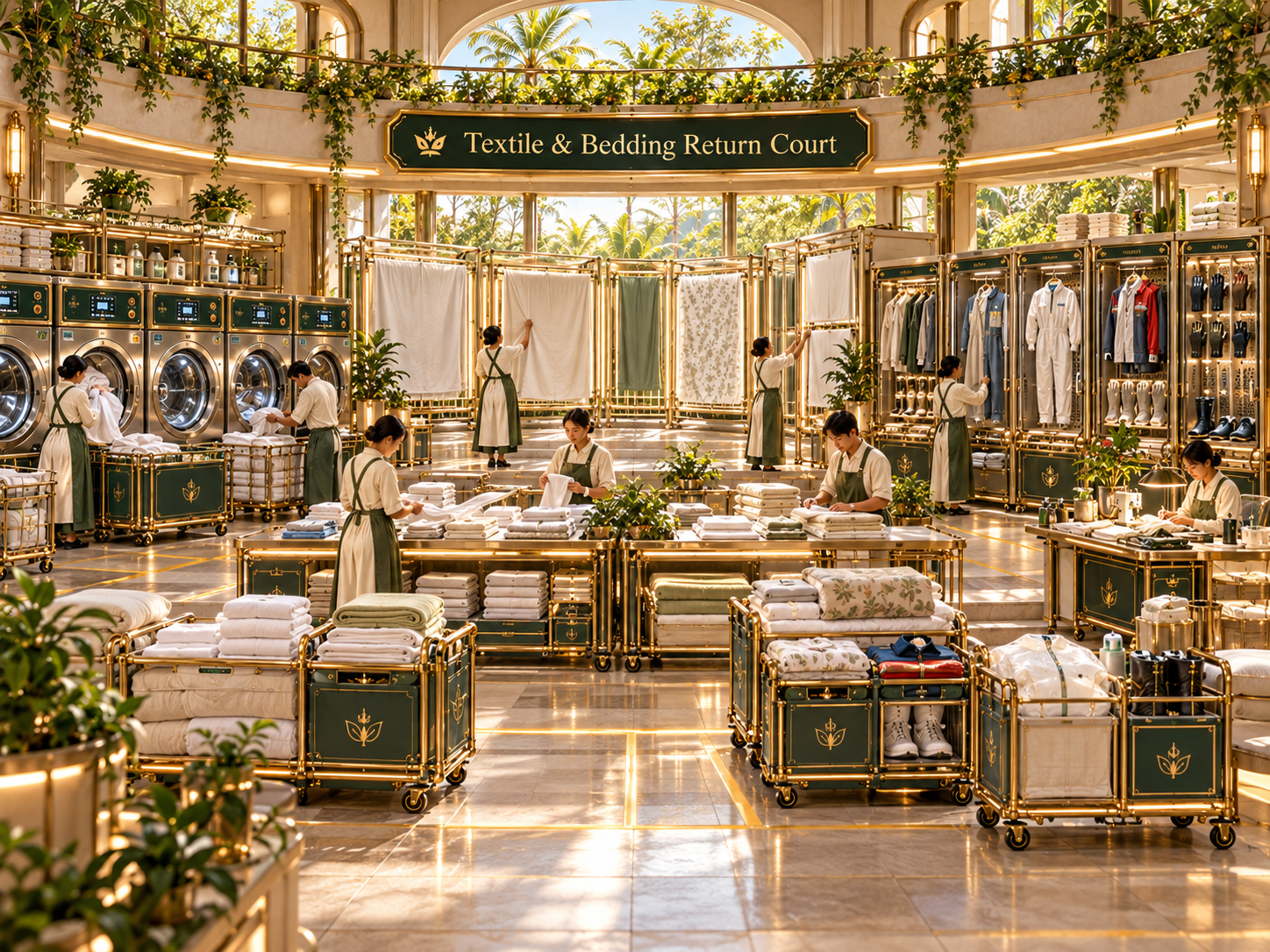
- steward washing and reset stations
- Service Shadow doors that keep public space calm
The receiving threshold is where abundance becomes ready for people.
The Banana-Leaf Meal Carrier Belongs in This System
The banana-leaf wrapped meal carrier is not a random pretty package. It belongs inside this dispatch and receiving system.
A meal carrier may hold a banana-leaf wrapped food bundle, utensils, small side portions, fruit, a drink element, and return instructions. The outer carrier protects the meal. The leaf wrap keeps the food connected to Keslev’s orchard and food-care identity. The utensil system prevents families from scrambling. The return tray makes it obvious that the object is not disposable trash.
This is why the meal carrier becomes iconic. It is small enough to hold in the hand, but it carries the logic of the whole district.
Daily-life example
A steward arrives with a route-coded carrier from a Warm Food Sabennerie. Inside are banana-leaf wrapped meal bundles, utensils, fruit portions, and a clean-return tray. After the family eats, the carrier, utensils, leaf return, and usable organic return move back through the return face. Krubaro handles separation. Keslev receives the food-use data and safe organic streams. The object comes back into the loop instead of becoming rubbish.
The carrier deserves its own article because it is a full kingdom object: food, beauty, stewardship, return, utensils, family care, and district identity in one visible item.
The Return Face Matters as Much as the Feed Face
A weak food system celebrates serving and forgets return. Keslev cannot do that.
Every Sabennerie has to think in more than one direction. Food enters. People eat. Vessels return. Utensils return. Organic material returns. Feedback returns. Shortage signals return. Damaged carrier reports return. Tasting votes return. Child-food reactions return. Excess patterns return.
What returns from a Sabennerie?
- reusable carriers
- utensils and serving tools
- banana-leaf wraps and organic material
- clean vessel reports
- damaged carrier reports
- shortage notices
- excess notices
- child-food reactions
- new-food tasting votes
- family preference patterns
- temperature-chain issues
- Krubaro separation signals
- Soil-Crown safe organic streams
Krubaro handles return routing and contamination control. Keslev uses verified return data and safe organic streams to improve future food and soil planning. Soil-Crown receives the safe organic stream after Krubaro has separated and routed it properly. Pacorips records what happened so tomorrow is not guessed.
Keslev does not guess from appetite alone. Keslev learns from serving, return, vote, shortage, excess, and soil response.
Service Shadow Protects Public Beauty
Service Shadow is not shame. It is care for the public world.
Public life should not be crowded with carrier piles, dirty return, confused workers, blocked paths, emergency restocking, or raw service noise. The answer is not to pretend the work does not exist. The answer is to give the work its own intelligent body.
Service Shadow routes let Sabenneries remain calm while work continues. Stewards move carriers. Return workers sort vessels. Krubaro-safe streams leave the building. Warm food is restocked. Cold vessels are checked. Pacorips updates the route board. Nothing has to spill into the family-facing table.
Daily-life example
During a busy evening, families may see fresh fruit displays and warm food being renewed at the public table. Behind a carved screen, a Service Shadow lane receives empty carriers, routes utensils to wash-reset, separates organic return, and sends an urgent signal for more roasted plantain. The public space stays peaceful because the work has a place.
Worker Roles Inside the Handoff
Dispatch and receiving create real Shubaka roles. These are not invisible jobs. They are kingdom food roles with skill, timing, cleanliness, judgment, and responsibility.
Dispatch Court Steward
Coordinates carrier lanes, route-coded vessels, loading timing, and outgoing food movement from Keslev.
Warm Chain Steward
Protects temperature and timing for warm foods moving toward Sabenneries and family routes.
Cold Chain Steward
Protects chilled foods, fruits, drinks, creams, and delicate prepared items.
Staple Route Steward
Handles dependable staple flows from Kornara, Root-Vault, Husk-Ridge, Grain-Gill, and storage systems.
Child-Food Route Steward
Checks child portions, softness, safety, timing, and family-specific care needs.
Tasting Route Steward
Moves new-food samples, voting trays, discovery portions, and feedback vessels.
Receiving Threshold Steward
Receives route-coded carriers at Sabenneries and confirms serving readiness.
Return Loop Steward
Oversees carrier return, utensil return, organic return, damaged vessel reports, and clean-reset routing.
Pacorips Demand Monitor
Reads food-use data, shortage signals, excess patterns, route pressure, and Sabennerie feedback.
No Ugly Loading Dock Civilization
Many systems make the beautiful front and hide the ugly back. The public sees a clean table. Workers fight chaos behind it. Waste piles up somewhere else. Carriers break. Routes tangle. Food gets counted late. Temperature fails quietly. Return becomes someone else’s burden.
Trott Bailey Family Civilization cannot build that way.
If the public table is beautiful, the support edge must also be authored. If the Sabennerie is dignified, the Receiving Threshold must be dignified. If Keslev grows food with care, the dispatch court must move food with care.
Food movement is not the ugly back of abundance. Food movement is part of abundance.
How This Connects the Kingdom
Keslev Dispatch Courts and Sabennerie Receiving Thresholds connect many parts of the kingdom at once.
Kornara sends corn foods and corn foundations. Root-Vault releases yam, cassava, taro, sweet potato, and plantain from protected storage. Husk-Ridge Processing Works transforms crops at scale. Grain-Gill houses verify and hold food truth. Rhizome Water-Ribbon supports water-food systems, greens, herbs, and fish-linked nourishment. Soil-Crown receives safe organic return after Krubaro separation and turns it back toward fertility.
Sabenneries receive, serve, report, return, and nourish public life. Pacorips remembers what happened. Families feel the result as food that arrives without begging, buying, panic, or shame.
The Simple Meal Is Not Simple
A child may remember the fruit, the warm bowl, the roasted plantain, the soft food, or the banana-leaf wrapped bundle. A tired mother may remember that she did not have to fight money to feed her family. A father may remember sitting with his wife at a table that was already supplied. A visitor may remember the shock of food arriving without commercial pressure.
They may not see the full movement system. They may not think about the dispatch court, the warm chain, the receiving threshold, the return face, the Pacorips signal, or the Service Shadow lane.
But Keslev must think about it.
The public table is simple because the civilization behind it is not.
Keslev feeds the kingdom by growing food, proving food, moving food, receiving truth, and returning life back into the system.