

How Did Rest Become a Luxury?

How Did Rest Become a Luxury?
Rest is a human need. Family restoration is a human need. Seeing the Earth should not depend on whether a family has enough money to cross the gates.
I keep coming back to a question that should bother us more than it does:
That is a need. A right.
It is in a human being’s makeup to need long seasons of rest and restoration, especially for a family.
How did resting, seeing another part of the Earth, leaving the normal rhythm of work for a while, and spending long stretches of time with family become gatekept?
And underneath that question is another frustration:
Modern society took something deeply human, rest, movement, family time, recovery, curiosity, and seeing more of the world, and turned access to it into something you have to buy.
Humans were never meant to spend almost the whole year working and then use a few rushed days to recover, reconnect with their spouse and children, travel, play, explore, and somehow return refreshed.
Rest is part of human life.
So are changes of environment, social connection, unstructured time, play, sleep, sunlight, movement, curiosity, and periods when producing things is not the main demand.
The need for rest did not become expensive.
Access to rest became expensive.
You need permission to stop working.
You need enough money to survive while you are not working.
You need money for transportation.
Money for a place to stay.
Money for food.
Money for activities.
Sometimes money for childcare, passports, visas, luggage, equipment, insurance, and all the other things wrapped around travel.
So a basic human need gets turned into a question:
That is a strange question when you really think about it.
Families Pay More to Rest
Families feel this problem even more.
One person buying one ticket and one room is expensive.
A mother and father moving three or four children through the same system face more costs everywhere.
The people doing some of the hardest daily human work, raising children, can face some of the biggest financial barriers to real rest.
The larger the family, the more the system often charges that family simply to move together through the world.
So restoration becomes something families must save for, squeeze into a short window, postpone, or give up.
Vacation Is Gatekept Twice
Money is only one gate.
The second gate is time ownership.
A person can have enough money and still not control enough of their own year to spend six weeks away with their family.
Their employer controls much of the calendar.
School controls another part.
Rent or mortgage payments keep going.
Bills do not stop because the family is resting.
By control of money.
And by control of time.
If somebody else controls most of your year, you are not truly free to rest.
That is why modern vacation often looks less like real restoration and more like a rushed event.
That is not the same thing as a resting season.
A Week Off Is Not a Resting Season
A resting season is long enough for the whole rhythm of the family to change.
The first few days may simply be for slowing down.
Then people begin sleeping differently.
Talking differently.
Eating without watching the clock.
Swimming without trying to squeeze three more activities into the day.
Parents linger with their children.
Husbands and wives have long conversations that are not squeezed between work, errands, school runs, housework, and exhaustion.
Families visit relatives without feeling that every day must be packed.
They explore without urgency.
They learn without turning everything into work.
They do nothing.
They wake without immediately thinking about tomorrow’s duties.
That is what long seasons of rest and restoration mean.
Humans do not only need short breaks and entertainment.
Families need real periods when work moves into the background and restoration comes first.
The Earth Already Exists
A civilization designed around human beings would think very differently about access to the planet.
There is no natural law saying a family should get only one or two weeks of deep rest.
There is no natural law saying seeing the Amazon, the Caribbean, the Sahara, Patagonia, Japan, Jamaica, the Pacific islands, or another part of your own country should depend on whether your family has enough money.
Food can be grown.
Homes can be built.
Energy can be produced.
Transportation can be organized.
The problem is how we have organized access to it.
A family can have the time, curiosity, health, willingness, and desire to see another part of Earth, while the system says:
Nothing about their need for rest changed.
Nothing about the destination changed.
Nothing about their ability to enjoy it changed.
Only access was denied.
Every Child Is Born on Earth, but Not Every Child Gets to Experience It
There are children who will grow up on this enormous planet and experience only a tiny part of it.
Not because the rest of Earth is unreachable.
Not because humanity lacks airplanes, ships, trains, roads, food systems, places to stay, or technical skill.
Not because those children lack curiosity.
They simply do not have enough money to cross the gates.
A child can learn that the Amazon exists.
That whales move through distant waters.
That snow falls on mountains.
That deserts stretch far beyond the horizon.
That islands sit in bright blue seas.
That families in other places cook, celebrate, build, dress, sing, farm, raise children, and solve problems differently.
Then the system effectively tells that child:
Every child is born on Earth.
Not every child gets meaningful access to Earth.
That is not a natural law.
That is an arrangement.
Travel teaches.
Travel creates family memories.
Travel connects cultures.
Travel expands the mind.
Travel lets people see different ways of solving problems.
Travel reconnects families who live far apart.
And sometimes travel does not need to produce anything at all.
Sometimes a family should be able to go somewhere beautiful because being alive on Earth is enough reason.
Rest Is a Right
Calling rest a right means something clear.
A commercial privilege says access depends on what you can pay.
A human right says access comes from being human.
A person should not be blocked from resting, spending time with family, moving through the planet, or stepping away from work for a season simply because they do not have enough money.
Once we understand restoration and access to the Earth as normal parts of human life, the idea of the “luxury vacation” starts to look stranger than the system that taught us to call it one.
The Few Are Calling the Shots
That is one of the deepest frustrations in it.
A relatively small number of governments, corporations, financial institutions, landowners, employers, planners, and inherited systems end up determining the practical boundaries of life for billions of people. Not because those billions collectively sat down and designed those boundaries, but because the systems already existed, accumulated power, and became difficult to challenge.
And often the failure is not that nobody is intelligent. It is that the imagination is too small for the scale of the responsibility.
That is what visionlessness looks like at civilization scale.
Money exists, so everything gets designed around money.
Employment exists, so human contribution gets interpreted through employment.
Scarcity pricing exists, so abundance is treated almost like a problem.
Five-day workweeks exist, so the debate becomes whether workers deserve a few more vacation days instead of whether the whole rhythm of human life is poorly designed.
Then billions of people are expected to fit themselves inside those assumptions.
The tragedy is that humanity has enormous ability.
Yet a mother can still have to calculate whether her family can “afford” to spend a month resting beside an ocean that nobody created.
That contradiction should bother us.
The problem is not simply that the few are calling the shots.
Every large civilization needs coordination and people willing to make hard decisions.
The danger begins when the people making the biggest decisions cannot imagine anything much better than the system they inherited.
Then administration replaces authorship.
And humanity can spend generations optimizing a cage that nobody stopped to ask whether we still needed.
The Question Is Bigger Than Vacation Days
The real question is:
How much of a year should belong to work?
How much should belong to children?
How much should belong to spouses?
How much should belong to wandering?
How much should belong to learning something with no commercial purpose?
How much should belong to grandparents, cousins, oceans, mountains, forests, gardens, sleep, celebration, silence, and absolutely nothing?
We inherited a civilization that gives huge parts of human life to economic production and treats whatever is left over as personal time.
That relationship should be reversed.
Production should support life.
Life should not exist to feed production.
What Was the Machinery For?
Machines should make human life easier.
Automation should reduce the number of hours people need to spend producing food, housing, transportation, clothing, energy, sanitation, and the other things civilization needs.
As our tools get better, people should get more of their time back.
Instead, humanity has become far more productive while ordinary people are still told that civilization needs most of their adult lives.
That is a failure.
We increased our ability.
We did not return enough of that gain to people as time, freedom, movement, and rest.
If our machines and knowledge keep getting better but people do not get more of their lives back, then all that progress has failed to produce enough human freedom.
Civilization Should Be Designed Around Life
Rest is not outside civilization.
Rest is part of civilization.
Family time is part of civilization.
Travel is part of civilization.
Exploration is part of civilization.
A civilization is not successful simply because it keeps people alive and productive.
The real question is what kind of life those people get to live.
Do families have enough time together?
Do parents truly know their children?
Do husbands and wives have enough unhurried life to remain lovers instead of becoming two exhausted people managing the same household?
Can people step away from work for a season without their lives falling apart?
Can an ordinary family spend a month beside the sea?
Can children know distant parts of their planet?
Can grandparents travel with their grandchildren?
Can a person rest before exhaustion turns into illness?
Can human beings do nothing sometimes without having to defend their usefulness?
These are civilization questions.
One of the strangest things about the present system is that it has convinced billions of people that asking for this much life is asking for luxury.
It is not.
It is asking civilization to do its job.
We Will Design It Differently
This is a design problem.
Design problems can be redesigned.
Rest will not be treated as a luxury in Trott Bailey Family Civilization.
Long family restoration, movement, exploration, family time, and access to the Earth belong inside the normal structure of human life.
Machines should return time.
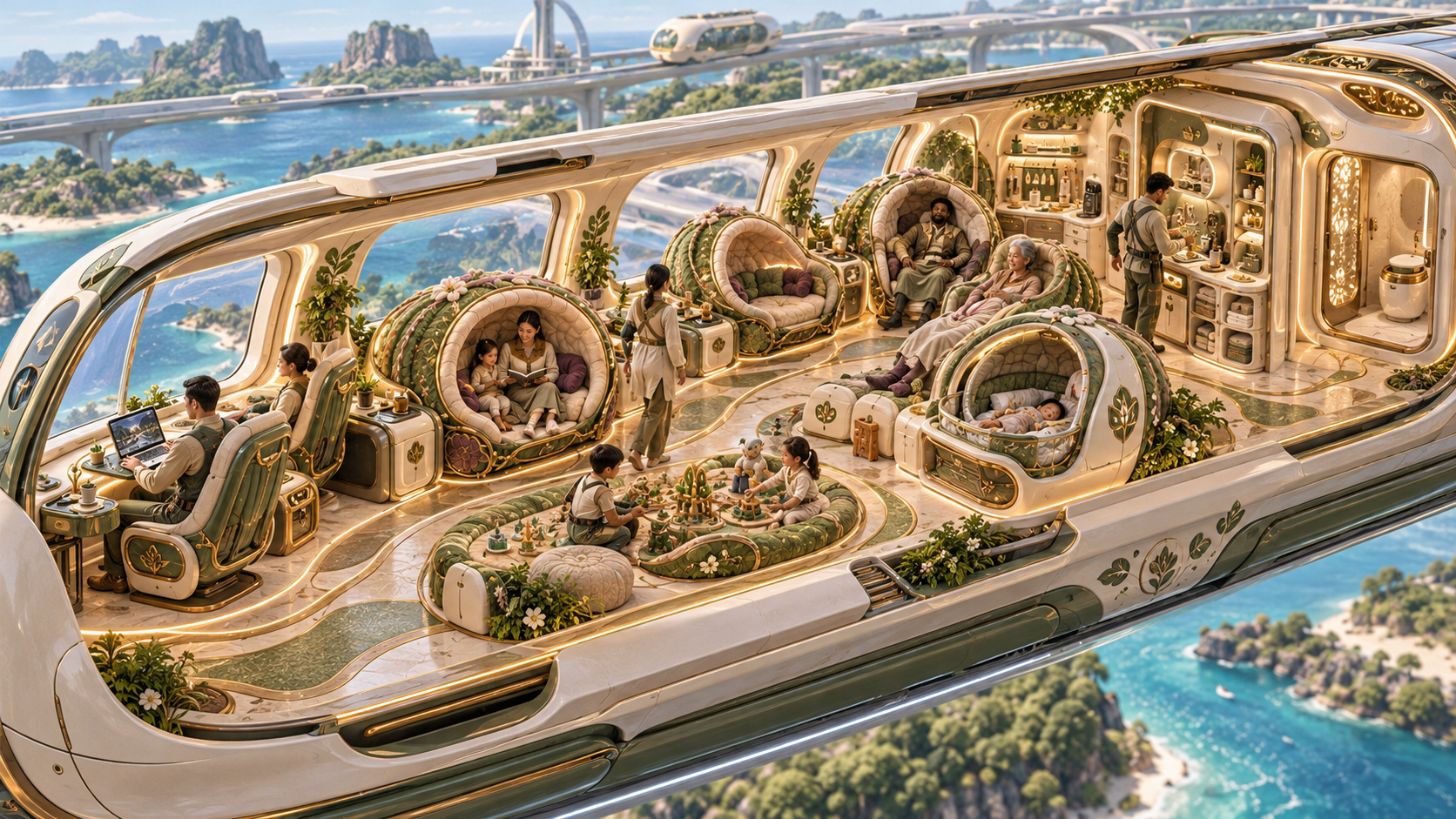
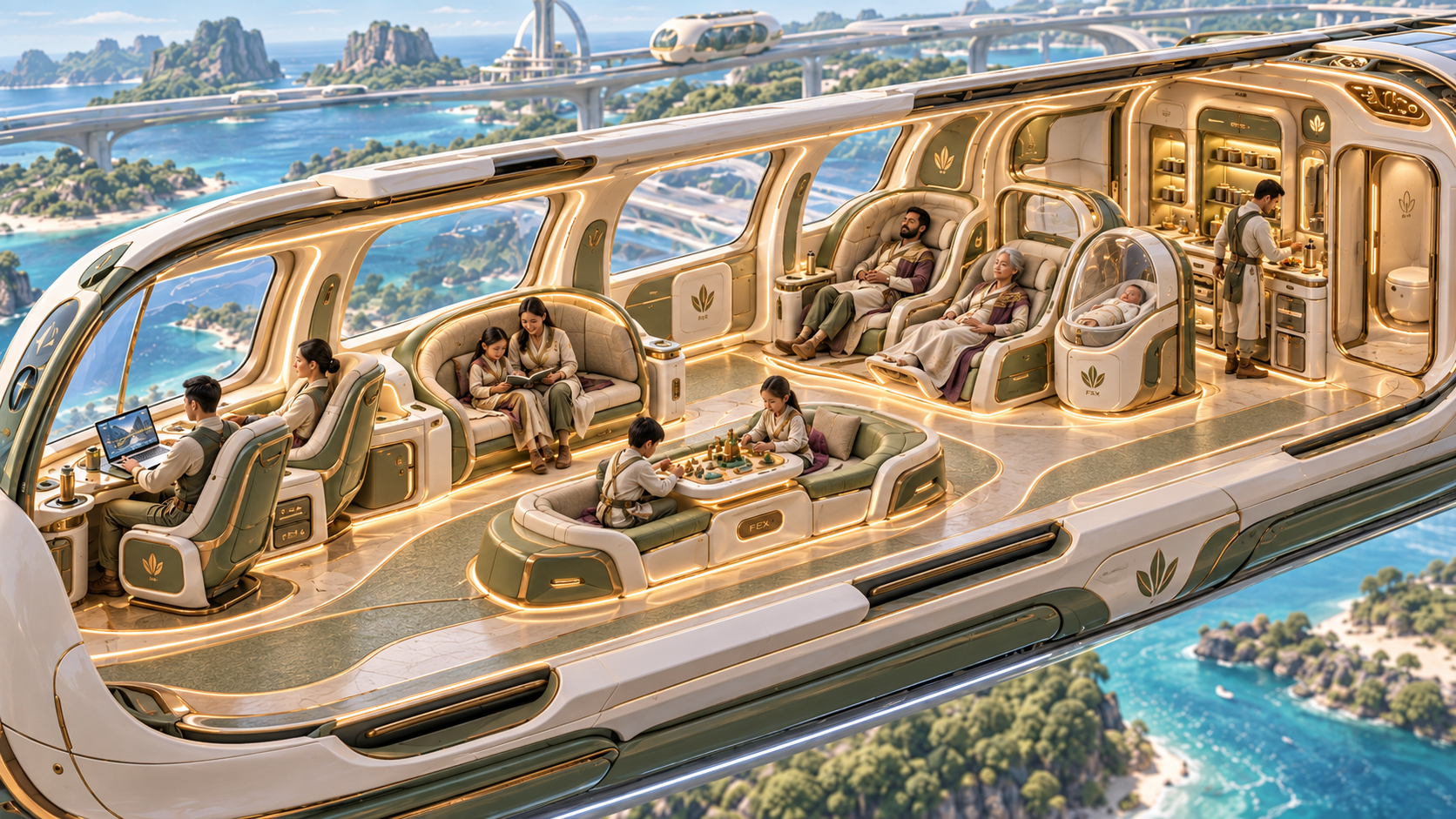
Transportation should connect people to their planet.
Provision should allow families to move without turning every mile into another financial test.
Families should have seasons when work moves into the background and life itself comes forward.
And return restored instead of financially punished for having lived.
Civilization exists to make a full human life possible.
Four ideas established in this article
Put simply, this article identifies four connected problems: people do not get enough real rest, they do not control enough of their own time, money limits how much of Earth they can experience, and humanity’s growing technical power has not returned enough freedom to ordinary families.
The following four propositions are claimed as original authored concepts by Sherika Trott Bailey within the Trott Bailey Family Civilization body of work.
The Rest Principle
Human beings require extended periods in which productive obligation recedes and restoration becomes primary.
The Time-Ownership Problem
People cannot meaningfully be free to rest when institutions control most of their usable annual time.
The Earth-Access Problem
Being born on Earth does not presently grant meaningful access to Earth; purchasing power heavily determines geographic experience.
The Capability Paradox
Humanity’s productive and technological capability has risen dramatically without an equivalent return of time, mobility, and freedom to ordinary families.