

What If Civilization Worked Toward Rest?

What If Civilization Worked Toward Rest?
We already know how to work together toward roads, farms, hospitals, machines, energy, and cities. We can also organize civilization so that the work itself produces long seasons of human rest.
In the last article, I asked a simple question:
Now I want to go one step further.
What if civilization did not only give people a few vacation days?
What if civilization actually worked toward rest?
That means we agree to work harder during shorter periods so that we can rest for longer periods.
We prepare ahead.
We build what we need.
We store what we need.
We finish repairs.
We organize important services.
Then we enter a longer period when much less work is required.
This is not a complicated idea.
It is a scheduling idea.
A planning idea.
A civilization idea.
That is a very different question.
Rest Is Something Civilization Can Produce
We usually talk about productivity as if producing more is the final goal.
But what is all that productivity supposed to give human beings?
If we become better at growing food, building homes, making energy, moving supplies, repairing machines, and running public systems, then people should get some of that gain back.
Not only as more things.
As more life.
A civilization should be able to produce rest just as deliberately as it produces roads, food, electricity, and buildings.
Work Does Not Have to Be Spread Evenly Across the Year
There is another assumption we rarely question.
It does not.
We already understand this in many parts of life.
Farmers have planting seasons and harvest seasons.
Builders have periods of heavy work and periods when less is happening.
Factories build inventory ahead.
Families cook food ahead.
Energy systems keep reserves.
Cities prepare for storms.
Schools have terms and breaks.
Ships and warehouses prepare supplies before they are needed.
We already know how to work harder before an important period.
We already know how to prepare ahead.
So we can use that same thinking for rest.
A civilization can say:
Then the pace slows.
That is not collapse.
That is planning.
The Collective Rest Principle
A civilization can deliberately concentrate necessary work into shorter periods so that longer periods of shared rest and restoration become possible.
The point is not that every person works themselves into exhaustion before resting.
The point is that civilization plans its work better.
We stop spreading maximum activity across the whole year as if constant work is the only possible way to live.
We work toward something.
One of those things should be rest.
We Can Build Ahead for Rest
A lot of people will immediately ask:
The answer is preparation.
We build ahead.
The more we prepare before a resting season, the less work is needed during it.
That is already how human beings handle many important things.
We prepare before storms.
We prepare before harvests.
We prepare before large events.
We prepare before long trips.
We prepare before a baby is born.
Not Everyone Has to Rest at the Same Time
This is important.
A civilization does not need every single person to stop working at once.
The goal is not:
The goal is:
Those are very different ideas.
Some services need to continue every day.
That does not mean the same people have to keep working without long breaks.
It means we organize people into groups.
One group works.
Another group rests.
Then they switch.
The Rest-Rotation Principle
Take doctors.
One group of doctors can work while another group takes a long restoration period.
When the resting group returns, another group can begin its rest.
The hospital stays open.
The doctors rotate.
The same thing can happen with nurses.
Water workers.
Electricity workers.
Emergency teams.
Transport workers.
Maintenance teams.
Food-system workers.
Communication workers.
Other important services.
Active Service
Working, caring for systems, handling daily needs and keeping the service running.
Long Restoration
Resting, traveling, spending time with family, learning, recovering and living.
They Switch
Group B returns. Group A begins its restoration season. The service never disappears.
Essential services can remain continuous while the people who provide them rotate through long periods of work and restoration. Civilization protects continuity of service without demanding continuity of labor from the same human beings.
The same human being does not need continuous labor.
What About Hospitals, Water, Electricity and Emergencies?
We already have real proof that civilization does not require everybody to work at full speed all the time.
We saw an extreme and unpleasant version of this during the COVID-19 pandemic.
It brought illness, fear, isolation, pressure on families, pressure on health workers, school problems, business closures, and major disruption.
But it showed something important.
Huge parts of ordinary life stopped or slowed down.
Yet life continued.
The pandemic was an emergency and it was badly coordinated in many places.
And yet essential parts of civilization still continued while huge amounts of ordinary activity stopped.
That matters.
If societies managed to keep essential systems going during an unexpected global emergency, then we can certainly organize planned periods of lower work on purpose.
And unlike the pandemic, we would prepare.
The service needs continuity.
The same human being does not need continuous labor.
That is the difference between shutdown and organization.
The Work-Rest Coordination Principle
Once we understand that, the whole idea becomes easier.
Work and rest can be planned together.
Not separately.
A civilization can decide:
The amount and timing of work are design choices. A civilization can organize labor, automation, reserves, maintenance, and production schedules around long restoration periods instead of forcing continuous year-round work.
The calendar itself becomes part of civilization design.
Machines Should Make Rest Easier
Machines matter here.
The point of machines should not only be faster production.
Machines should reduce human burden.
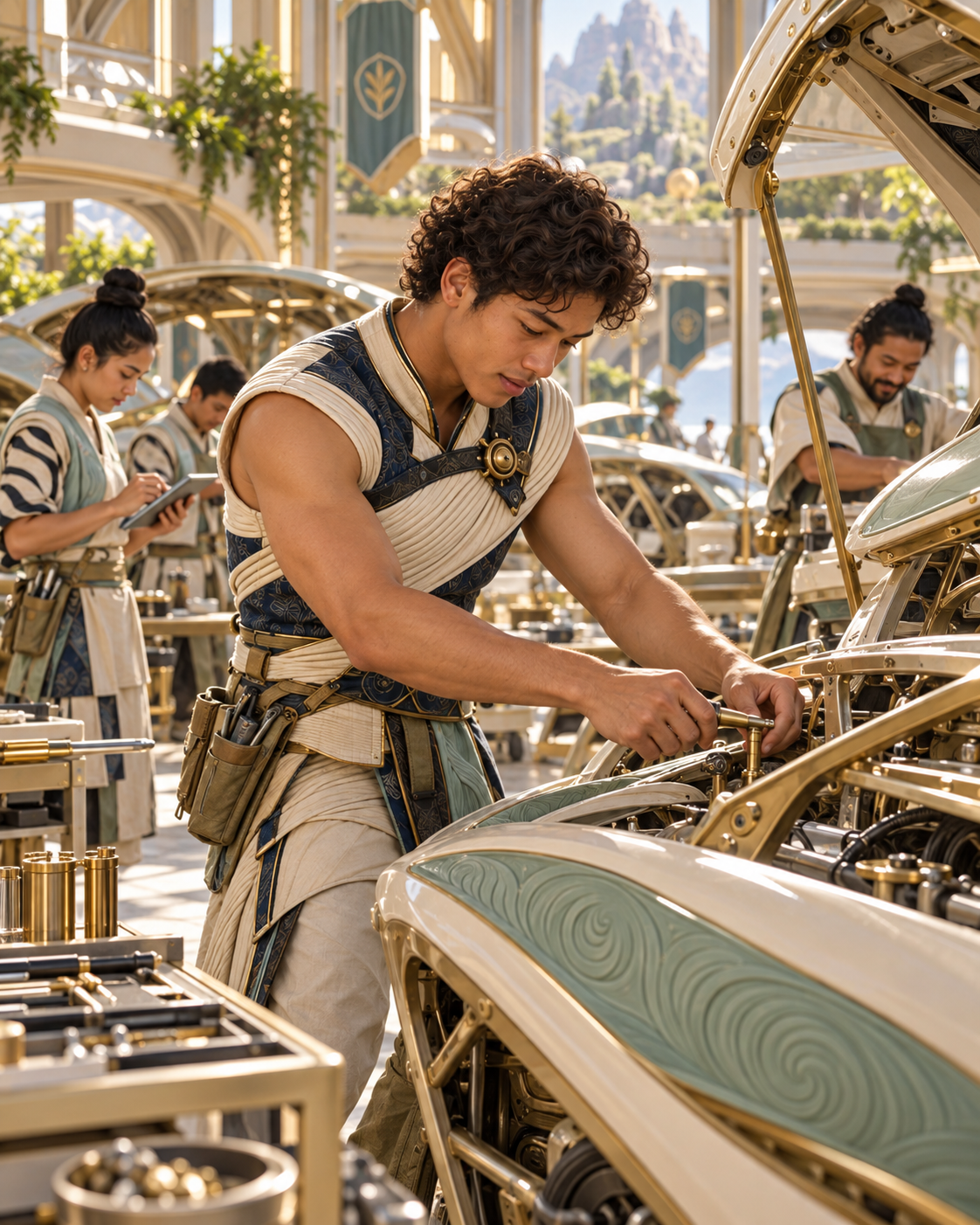
If a machine can do a task safely and reliably, fewer people need to stay on duty.
If machines can help grow food, move supplies, clean, inspect systems, monitor equipment, sort materials, repair simple faults, or run routine processes, then more human beings can step away.
That means more people can rest.
Machines can also help us prepare before resting periods.
They can help build reserves faster.
They can help keep important systems running with smaller teams.
They can help reduce the number of people who need to be on duty.
It should return time.
The Whole Logic Is Simple
The entire idea can be shown in one sequence:
That is the whole system.
It is not about shutting civilization down.
It is about organizing civilization better.
What a Rest-Rotation Civilization Looks Like
Picture a normal hospital during a long restoration season.
The hospital is still open.
Doctors are still there.
Nurses are still there.
Emergency care still works.
But one large group of doctors is away resting.
When they return, another group leaves.
The same thing is happening in the energy system.
The electricity stays on.
One group of engineers works.
Another group rests.
Then they switch.
Water keeps running.
Emergency teams keep responding.
Food keeps moving.
Transportation keeps operating.
Communication systems stay online.
But the people who keep these systems alive are not trapped inside endless work.
They rotate.
Everyone eventually gets their season.
And because the system is planned around this from the beginning, it does not feel like somebody disappearing unexpectedly from work.
A New Measure of Productivity
We should also change how we measure success.
Today we often ask:
But there is another question we should ask:
That question matters.
A machine that doubles production but leaves everyone working the same amount of time has increased output.
A machine that allows people to reclaim weeks or months of their lives has increased freedom.
Those are not the same thing.
The second one matters more to human life.
If our tools keep getting better but people never get more time back, then something has gone wrong.
We increased our ability.
But we did not return enough of the gain to the people.
Rest Should Be Something We Build Together
Civilization already works together to build things.
We already understand that some things are too important to leave to one person.
Rest should be one of those things.
We should organize for it.
Prepare for it.
Build toward it.
Protect it.
Make room for it.
And make sure every person eventually receives it.
Not because they won a prize.
Not because they became rich.
Not because they convinced an employer to approve a few days.
Because rest is part of human life.
A strong civilization should be able to keep hospitals open, water running, electricity flowing, food moving, emergencies covered, and still return long seasons of life to the people doing the work.
That is not impossible.
That is organization.
It should work together to build rest.
Three ideas established in this article
These three principles describe how a civilization can deliberately organize work, preparation, rotation, and technology so that long periods of human rest become part of normal life.
The Collective Rest Principle
A civilization can deliberately concentrate necessary work into shorter periods so that longer periods of shared rest and restoration become possible.
The Work-Rest Coordination Principle
The amount and timing of work are design choices. A civilization can organize labor, automation, reserves, maintenance, and production schedules around long restoration periods instead of forcing continuous year-round work.
The Rest-Rotation Principle
Essential services can remain continuous while the people who provide them rotate through long periods of work and restoration. Civilization protects continuity of service without demanding continuity of labor from the same human beings.