

What Would Humanity Become If Money Stopped Interrupting Human Potential?

Article 6 of 7
What Would Humanity Become If Money Stopped Interrupting Human Potential?
If you are young, imagine starting your adult life without money standing between you and almost every useful thing you want to do.
You are not choosing a career mainly because you are afraid of being poor.
You are not staying in a job you hate because you need rent money.
You are not abandoning an idea because you cannot afford the equipment.
You are not deciding whether to learn something based on whether the course is too expensive.
You are not wondering whether you can travel to meet the person who could teach you what you need to know.
You are not delaying a project because you cannot buy the materials.
You are not giving up on a machine because one replacement part costs too much.
You are not sitting at home with talent, curiosity and energy while the tools, workshops, laboratories, studios and people you need are somewhere else behind a price.
Your food is secure.
Your home is secure.
Your clothing is secure.
Your health care is secure.
Transport is available.
Learning is available.
Tools are available.
Machinery is available.
The civilization is not asking you to spend the first years of adulthood fighting just to remain alive.
Imagine being 18, 20 or 23 years old and knowing that if your interests take you to another part of Earth, you can go.
If the person you need to work with is in Thailand, you can meet them.
If the machinery you need is in Brazil, you can get to it.
If you need a workshop, materials, training, parts or a team, the next question is how to organize those things around the work.
Not whether you have enough money to deserve access to them.
That changes the starting point of youth completely.
Instead of waking up thinking:
How am I going to survive?
You can wake up thinking:
What are we working on today?
Abundance does not mean everybody becomes passive.
Quite the opposite.
When food, shelter and basic dignity are not rewards held over people’s heads, human activity can become much more ambitious.
Curiosity no longer has to justify itself immediately in financial terms.
People can pursue discoveries whose usefulness is not obvious on day one.
More experiments can be attempted.
More people can collaborate.
More mistakes can be survived.
More knowledge can move between places.
That is what abundance can release.
Right now, an idea can hit ten gates.
Can I afford to stop working long enough to develop it?
Can I buy the materials?
Can I access the machine?
Can I get the replacement part?
Can I travel to the person who knows what I need to know?
Can that person afford to spend time helping me?
Can we afford somewhere to work?
Can I feed myself while I experiment?
Can we manufacture a prototype?
Who is going to fund the next step?
An enormous amount of human thought dies somewhere between:
“I have an idea.”
and
“Let’s build it.”
Now imagine removing money from the space between a human idea and the people, tools, materials and places needed to pursue it.
A person has an idea.
They discuss it.
They find other people who are interested.
Materials are available.
Machinery is available.
Parts are available.
Food is already provided.
Housing is already provided.
Child care is available.
Transport is available.
They can travel to another district or another part of Earth to work with somebody whose ability complements theirs.
They build.
They fail.
They adjust it.
They build again.
Other people see what they made and improve it.
Then that improvement becomes the starting point for somebody else’s idea.
That is the multiplier effect.
Security multiplies curiosity.
Curiosity multiplies learning.
Learning multiplies capability.
Capability multiplies collaboration.
Collaboration multiplies invention.
Invention creates new work, new tools and new possibilities.
Those possibilities release even more people.
Now scale that across a whole society.
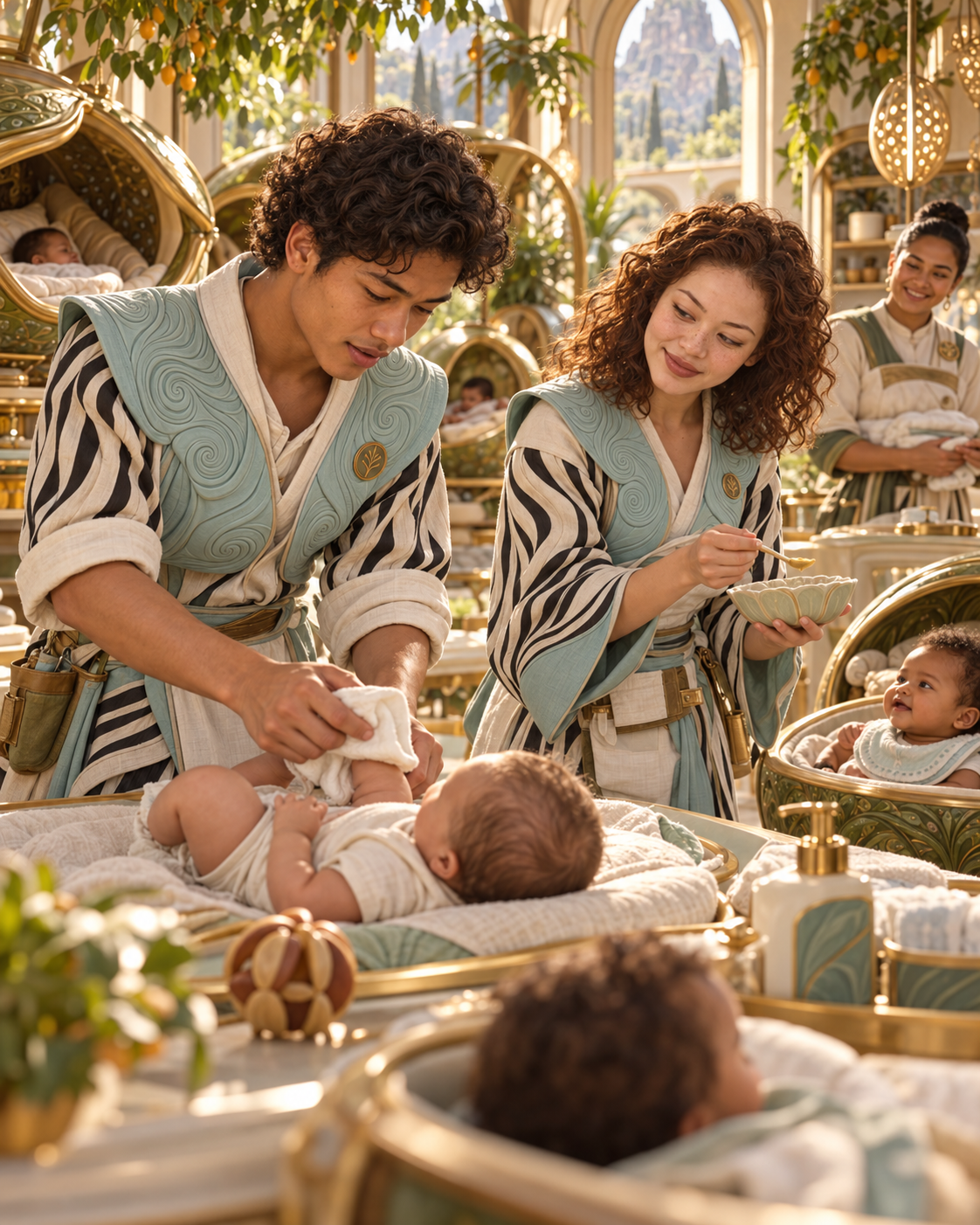
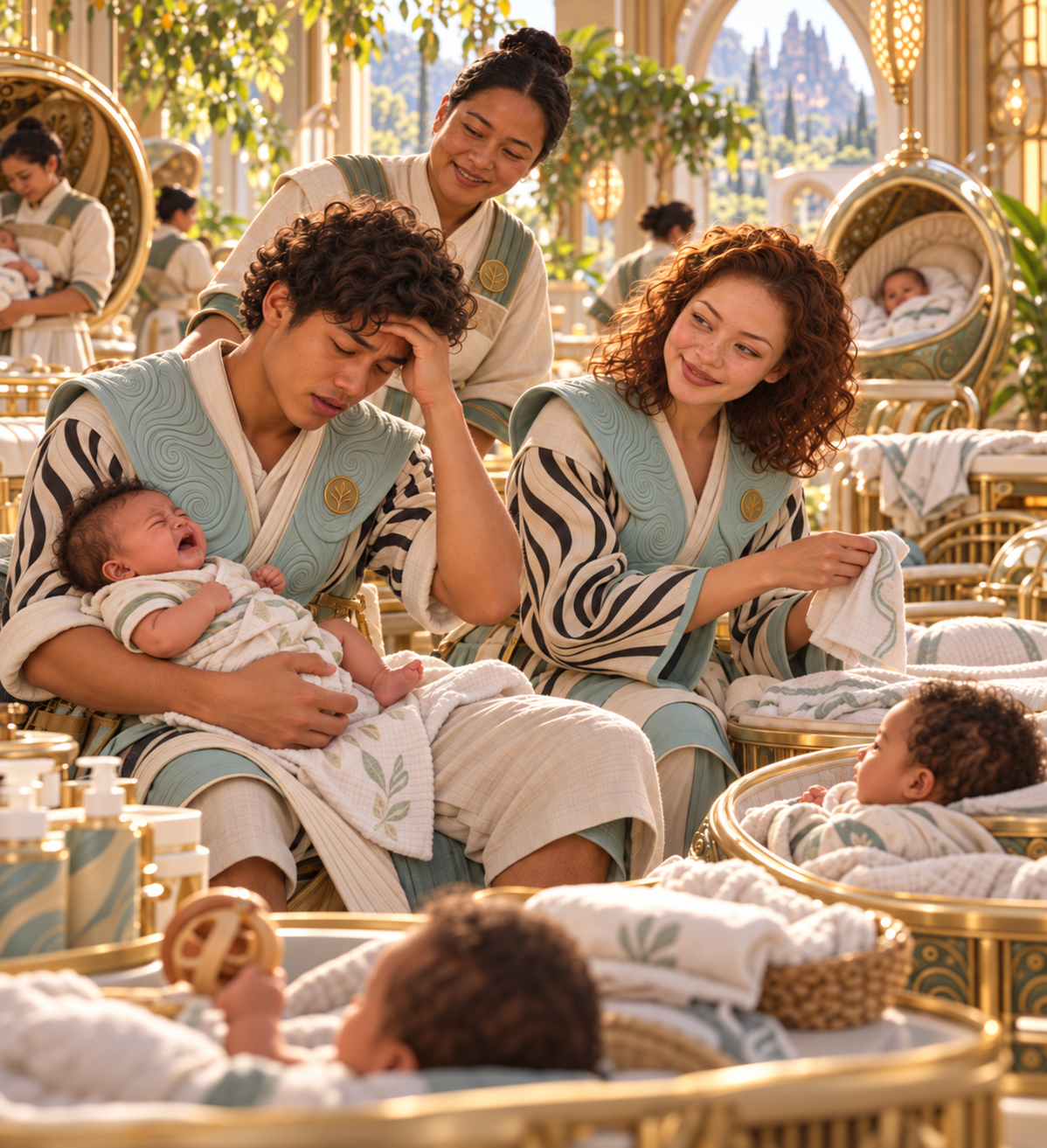
A mother should not have to choose between caring well for her baby and earning enough to keep a roof over the family.
In Trott Bailey Family Civilization, her food, home, clothing, health care, transport and family support are not held hostage by whether she has a paycheck this month.
She can care for her child.
She can rest when she needs rest.
She can learn.
She can develop an interest.
She can contribute where she is capable.
She can raise children without financial terror sitting permanently in the room.
That changes the life of the child too.
A child’s curiosity should not be limited by whether the family can pay for lessons, travel, equipment, books or experiences.
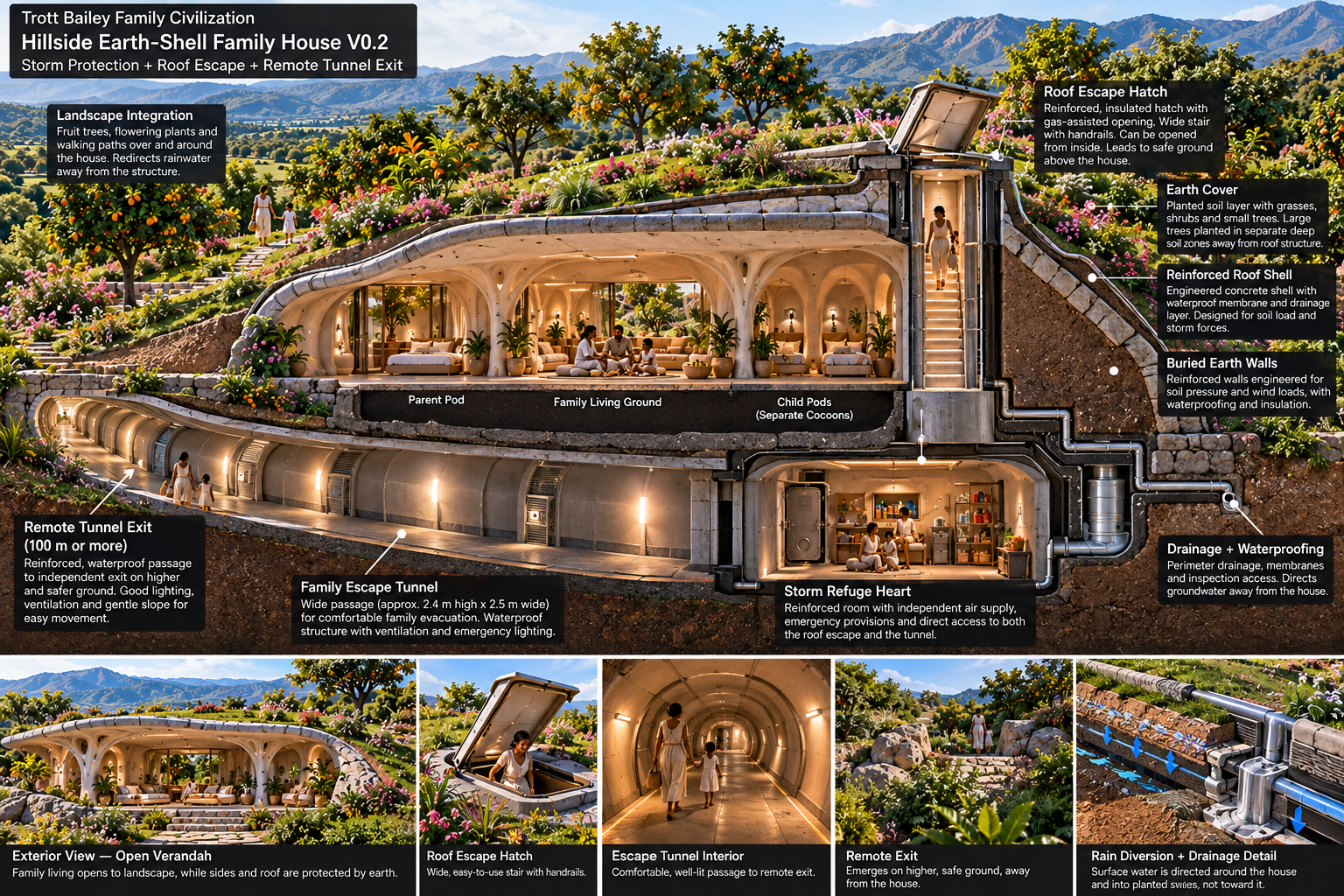
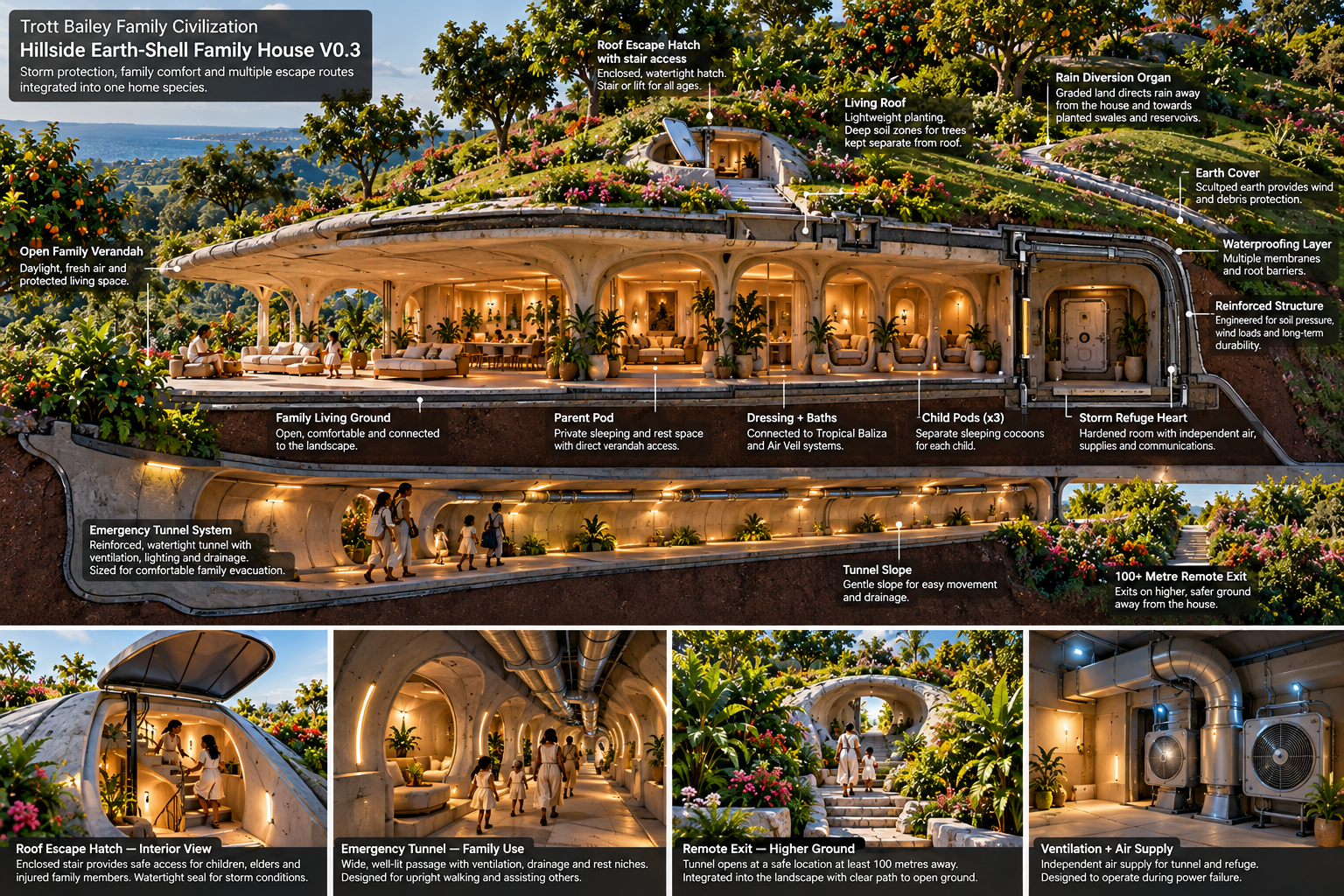
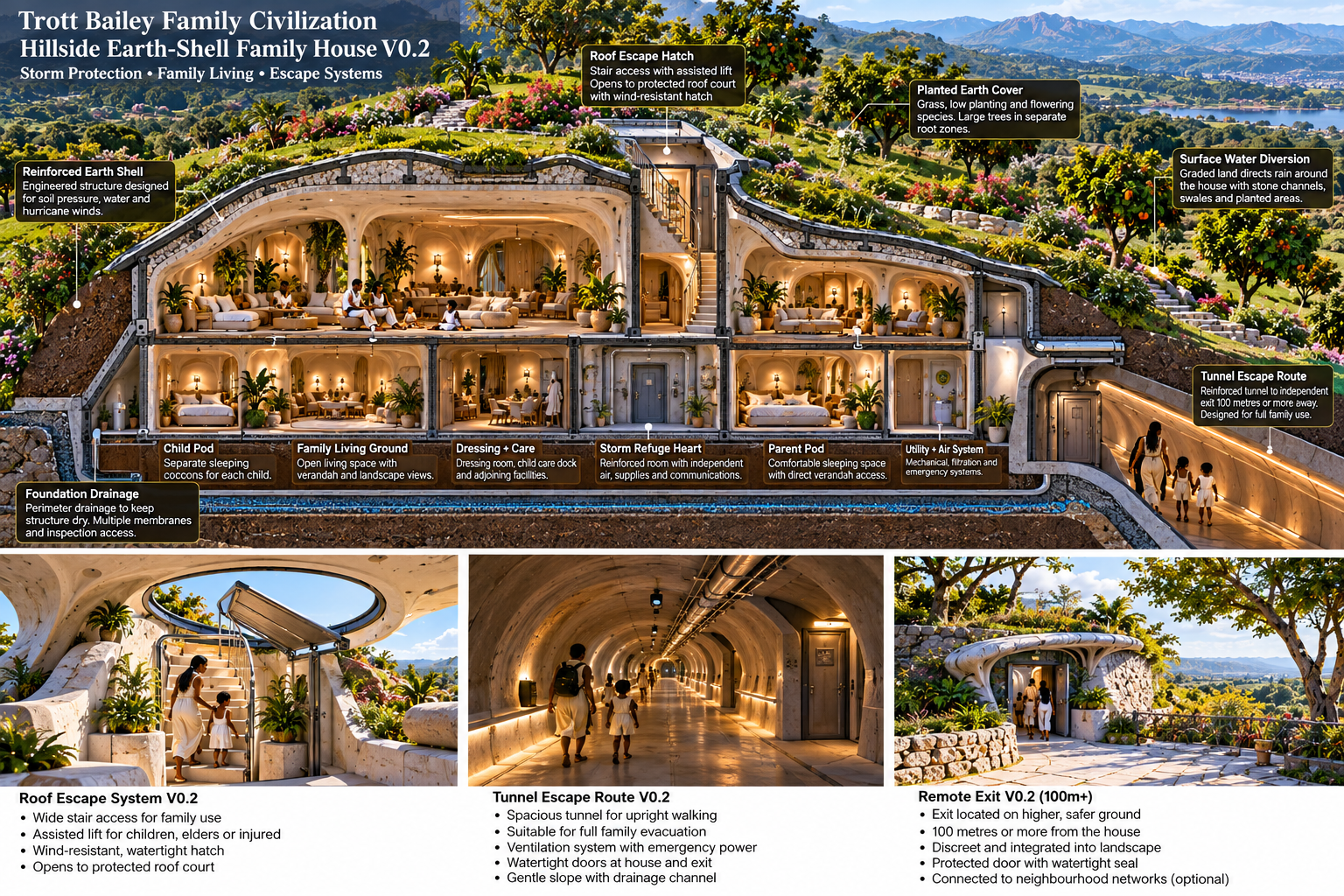
The orchard is available.
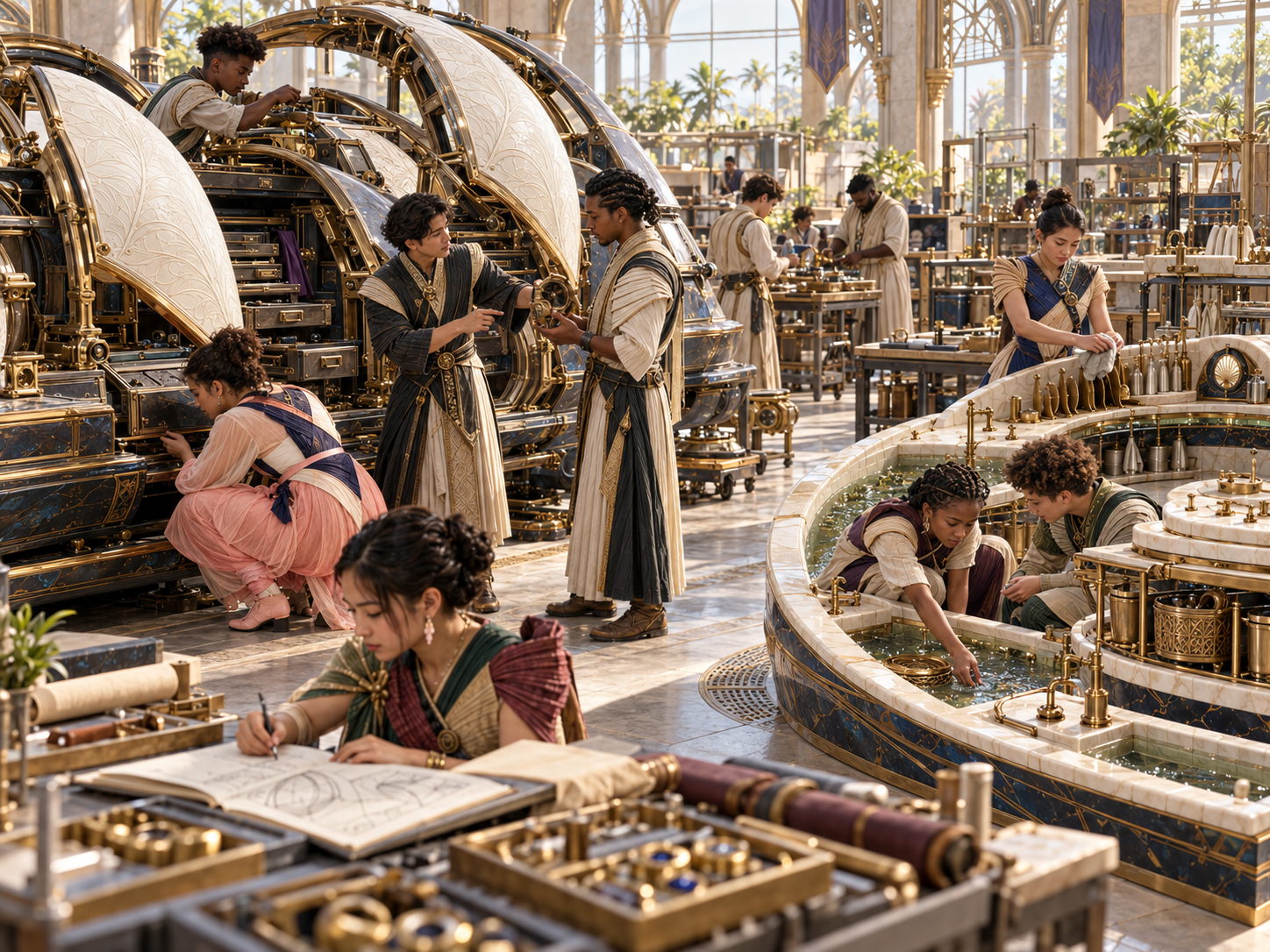
The workshop is available.
Music is available.
Nature is available.
Teachers are available.
Machines are available when appropriate.
Science is available.
Travel is available.
The child’s curiosity does not have to wait for a parent’s bank balance.
A child becomes interested in insects.
Someone notices.
The child gets to study them.
That interest grows into biology.
Years later, that young person may understand something about pollination, crop health or insect behavior that improves an entire food system.
We cannot know beforehand.
That is the point.
A civilization should create enough room to find out.
Medicine changes too.
A doctor should not have to ask whether the patient can afford treatment before asking what treatment the patient needs.
A physician sees a medical problem.
An engineer may be able to help solve it.
A materials specialist may understand a better material.
A machinist may be able to fabricate a new part.
A programmer may improve the control system.
A caregiver may notice that the device is difficult for an elderly person to use.
They collaborate because the problem is worth solving.
Engineering changes.
An engineer has an idea for a machine.
The machine requires a particular component.
The first question is not:
Can we afford the component?
It is:
Where can it be produced?
The engineer may need to work with someone hundreds or thousands of kilometres away.
Travel should not end the conversation.
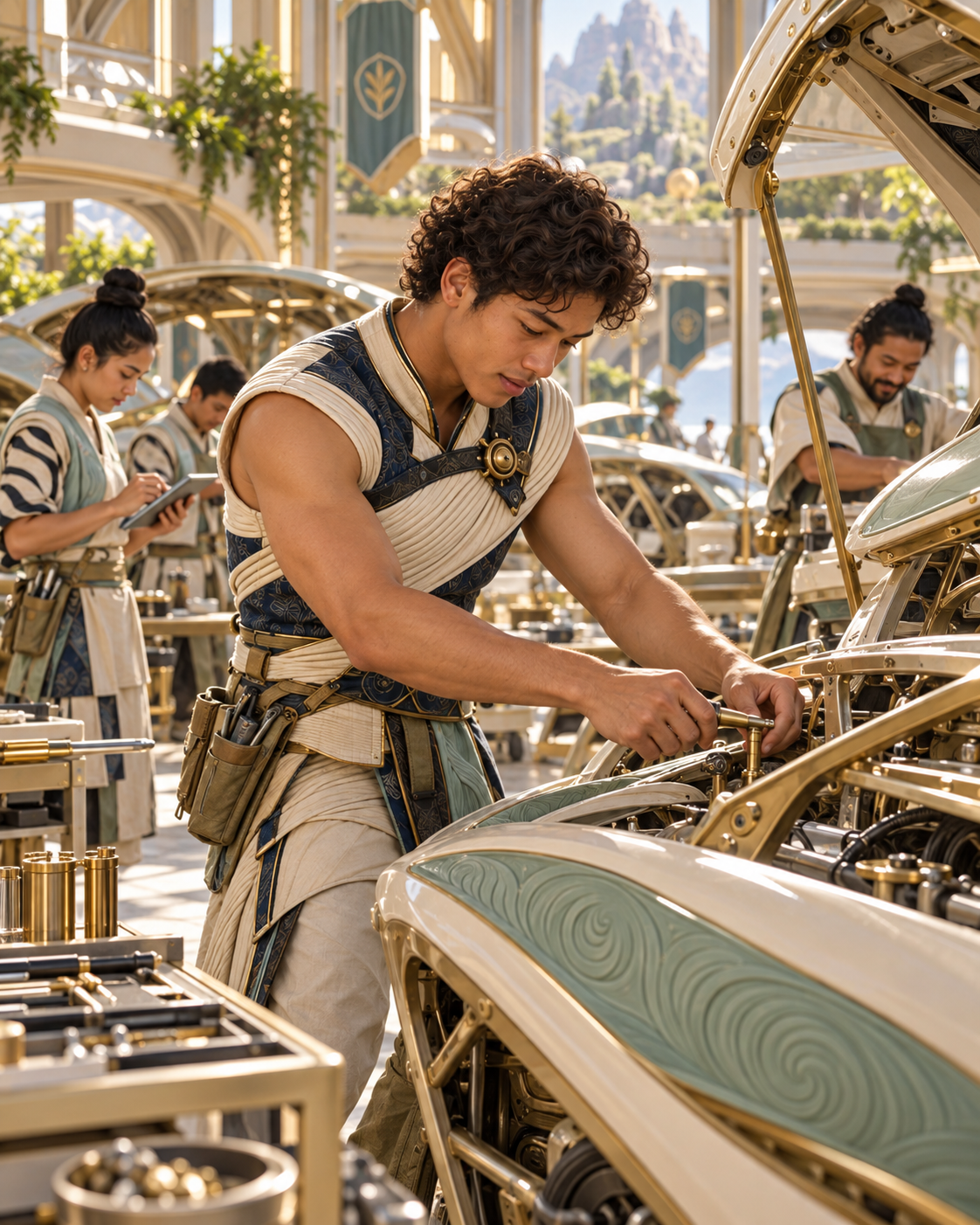
If a talented fabricator in Thailand understands the problem better than anyone nearby, get the engineer to Thailand.
If the useful meeting needs to happen in Brazil, get the people to Brazil.
If five people from five parts of Earth should be standing around the same prototype, bring them together.
Human collaboration should not slow down every time somebody has to ask whether airfare fits into a budget.
Farmers gain the same momentum.
A farmer notices that a particular task is wasting enormous amounts of time.
The farmer talks to a machinery team.
They develop a tool.
The first version does not work properly.
They change it.
A materials specialist improves one component.
Another farmer notices that the same mechanism could solve a different problem.
A young person watching the process suggests an adjustment nobody else considered.
Now there is another machine.
That machine reduces strain for thousands of people.
The knowledge gained from building it may later solve a completely different problem.
This is how capability multiplies.
Artists are released too.
An artist should not have to make only what sells before making what they actually believe should exist.
A musician should be able to explore sound.
A filmmaker should be able to document discoveries.
A sculptor should be able to contribute to public places.
A textile artist should be able to work with garment designers.
A storyteller should be able to preserve family memory.
Beauty itself should be allowed to become useful work.
Scientists face another form of the same gate.
A scientist should not have to shape every promising question around what a grant committee is willing to finance.
Some discoveries begin with questions whose usefulness nobody can prove yet.
That is how discovery works.
If every unusual question must first produce a business case, humanity will keep throwing away possibilities before we understand them.
A money-free civilization can afford to investigate.
It can afford to be curious.
It can afford to be wrong.
It can afford to try again.
That matters.
Then there is all the ability we have never discovered.
This may be one of the largest losses in the world today.
There are people who may be extraordinary designers who have never touched design tools.
People who could become excellent machinists who have never entered a workshop.
Children who could become brilliant biologists but have never had serious access to nature, laboratories or mentors.
People with unusual spatial intelligence who have spent years doing repetitive work because nobody ever placed them near architecture, fabrication or engineering.
People who could cook extraordinary food, grow new plant varieties, solve logistics problems, care beautifully for babies, compose music, repair machines, organize complex systems or invent something we do not yet have a name for.
We do not know how much human ability is buried under survival.
A money-free civilization gives society a chance to find out who people actually are.
And then the multiplier becomes enormous.
A well-supported mother has more energy for her children.
Children with their needs met have more room to explore.
A curious child discovers an unusual interest.
A teacher notices it.
Pacorips connects the child with people and places where that ability can grow.
Years later, that young person develops something useful.
That invention helps a farmer.
The farmer produces more food with less strain.
That frees other people and resources.
Someone improves the machine.
An artist makes the working environment more beautiful.
A materials researcher finds a better material.
A transport team carries the design to another part of Earth.
People there adapt it to a completely different problem.
And the chain continues.
Everybody gets free stuff.
That is far too small.
When basic human life is secure, the civilization gains access to far more of the intelligence, imagination, care, courage and curiosity already present in its people.
A cleaner may identify a recurring design failure in a public building because cleaners see problems architects miss.
An elderly craftsperson may teach young people knowledge that would otherwise die with them.
A cook may work with a botanist, food scientist and machine designer because they are exploring a new food.
A textile designer may sit with a mother and ask why children’s clothing is frustrating her.
A child may ask a strange question and adults actually have the time and tools to investigate it.
A person with no formal qualification may turn out to understand a machine better than anyone else.
A talented person in one part of the world may travel to another because that is where the people they need are working.
The civilization does not have to predict every outcome.
It has to make human participation possible.
Now multiply that across millions of people.
Then billions.
Not billions of people merely consuming free services.
Billions of people who are less frightened, less interrupted, more mobile, more connected, better equipped and more able to pursue useful interests.
Trott Bailey Family Civilization is not trying merely to provide enough jobs for the world that already exists.
We are trying to create the conditions in which human beings can keep discovering what else is possible.
Once billions of people are released from financial fear, connected to one another and given access to the tools, knowledge, materials and places they need, we cannot know in advance how much civilization they will create.
We cannot calculate the full result because undiscovered human potential is itself part of what we are releasing.
Imagine the multiplier effect.