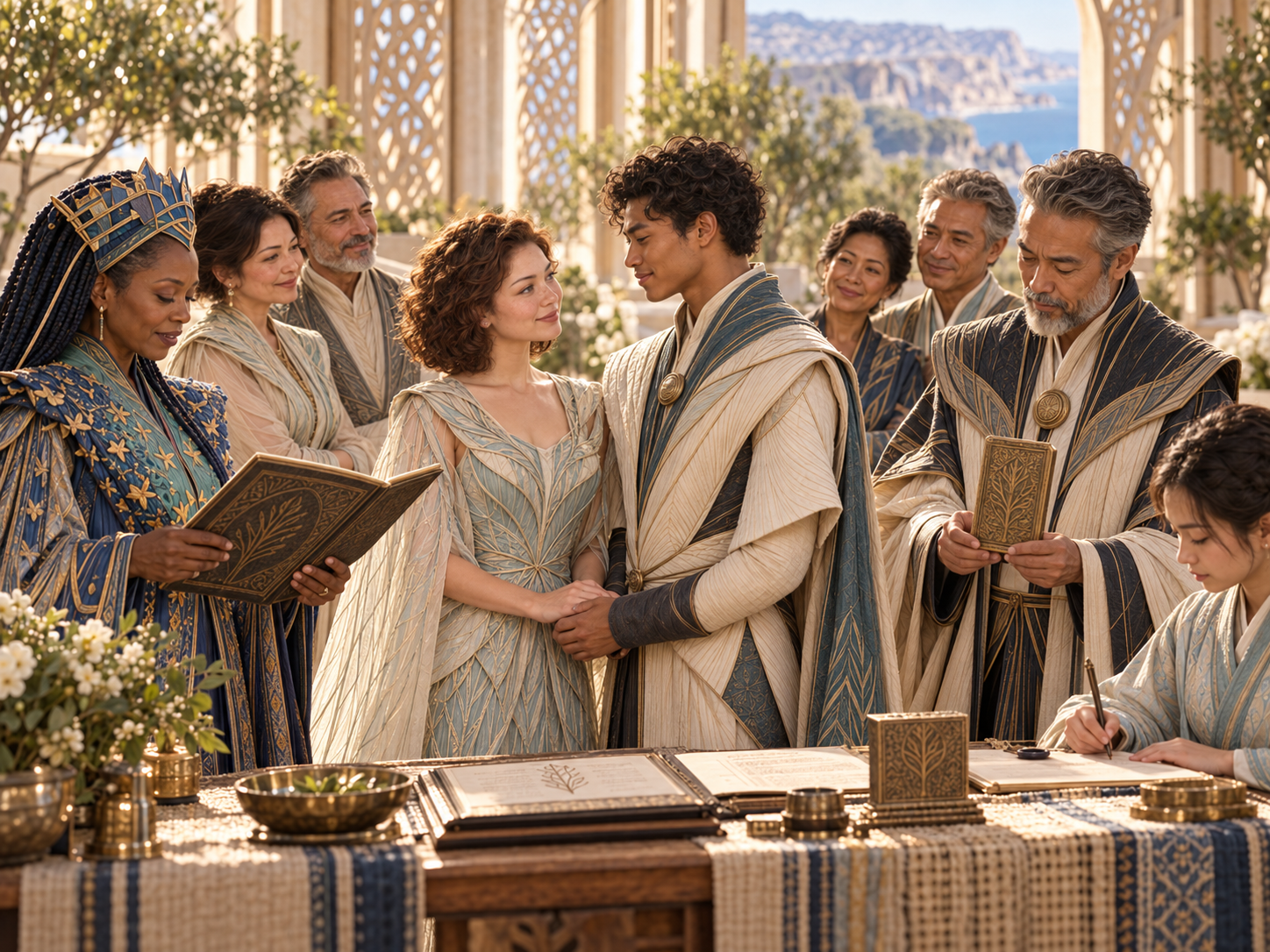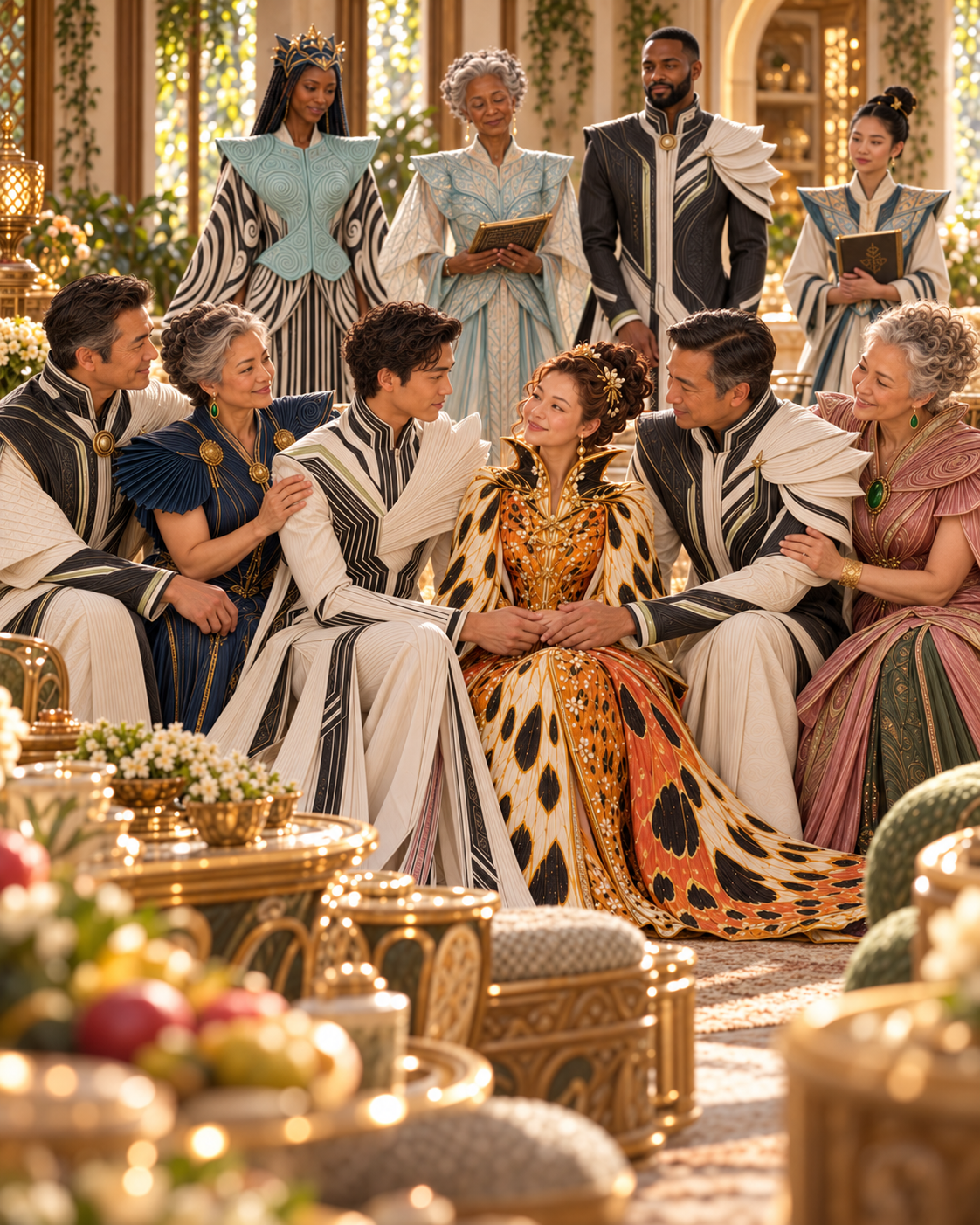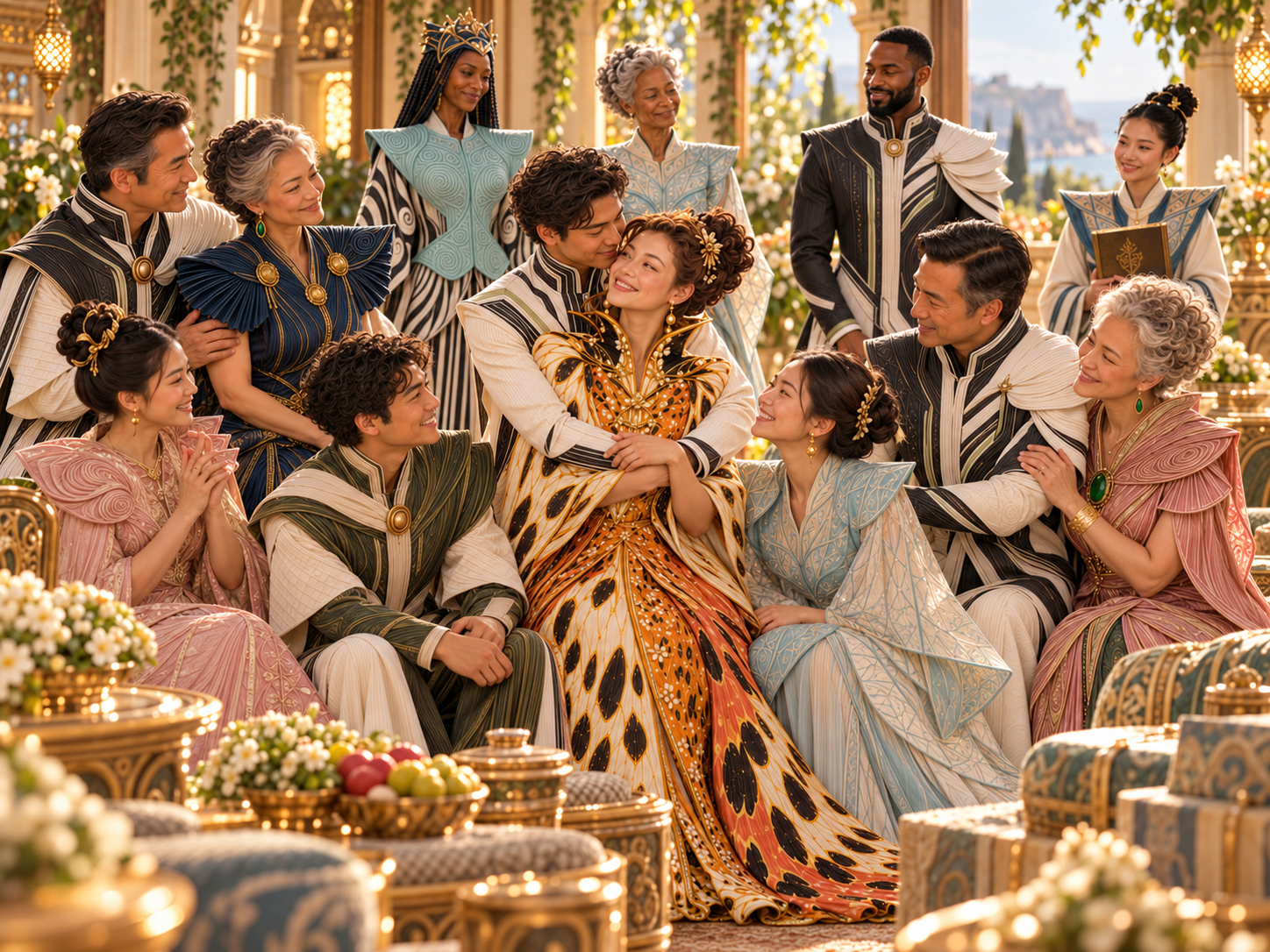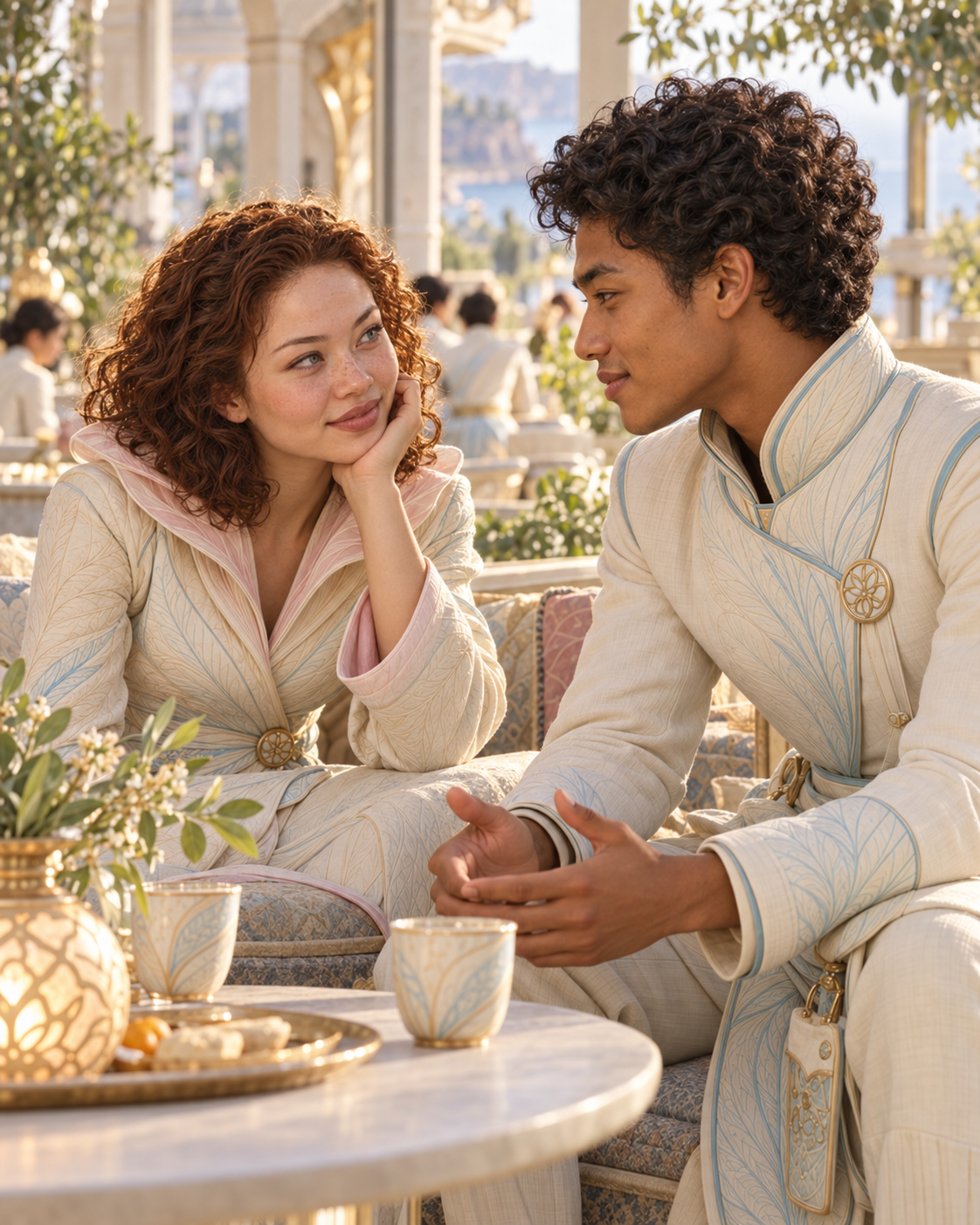


Why Free Food and Free Travel Do More Than Remove a Price. Change the Permission, Change the System

Trott Bailey Family Perspectives
Change the Permission, Change the System
Why Free Food and Free Travel Do More Than Remove a Price
Imagine waking up and knowing two ordinary things about your civilization.
You can eat.
You can go.
You do not first have to prove that you have enough money to reach food. You do not first have to prove that you have enough money to travel across the civilization.
At first, those might sound like two simple changes.
Free food.
Free travel.
But think about what begins happening around them.
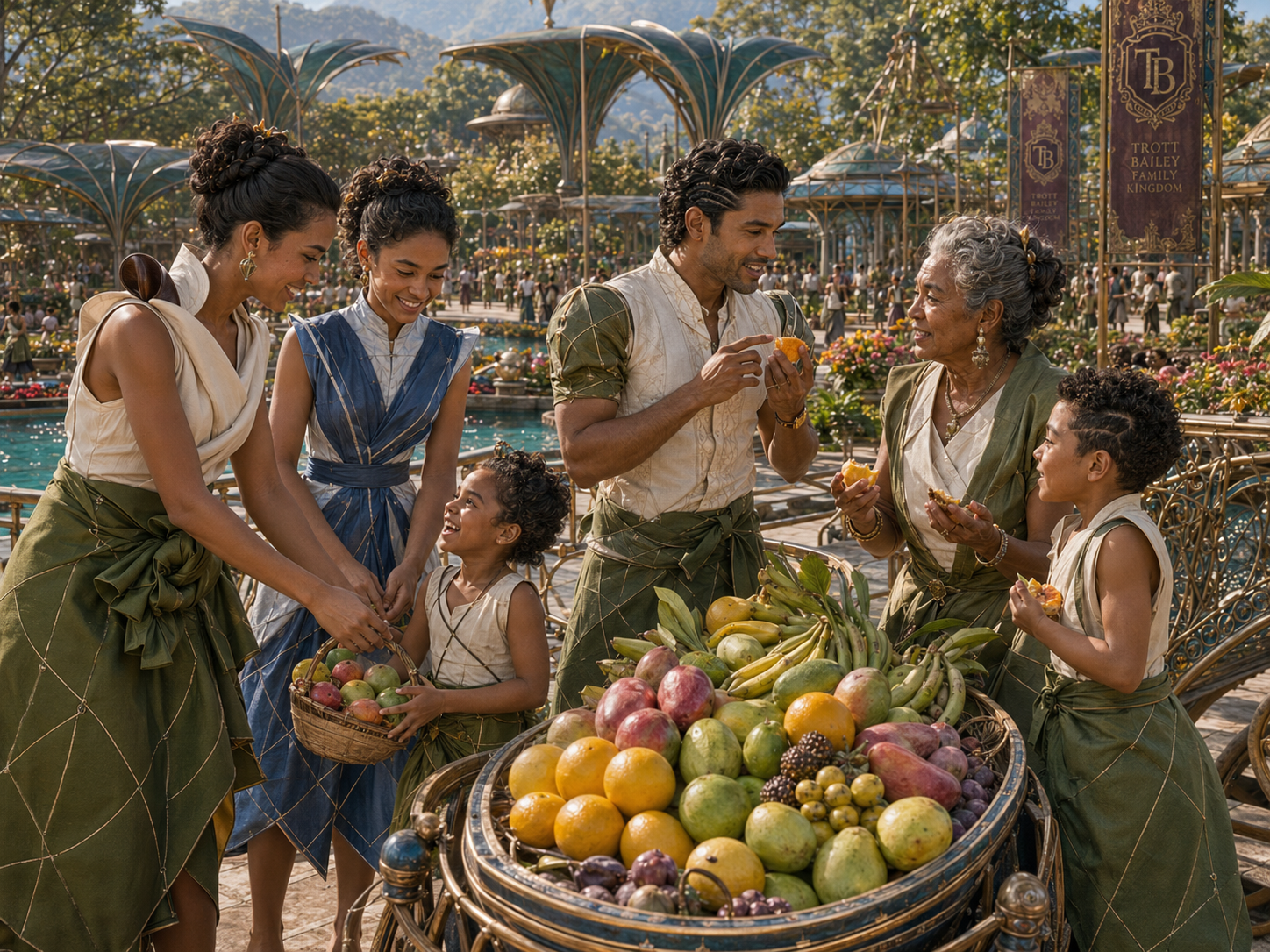
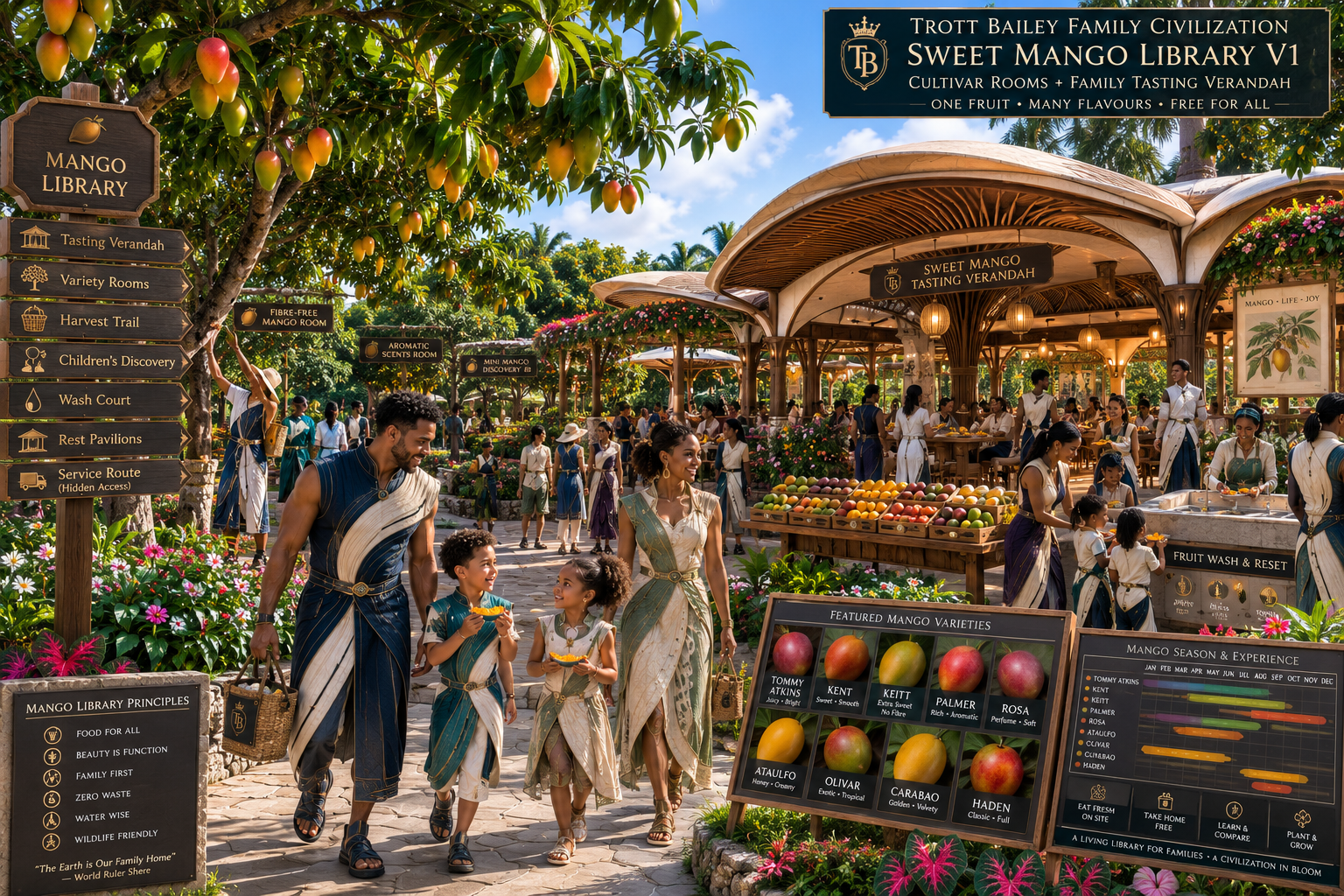
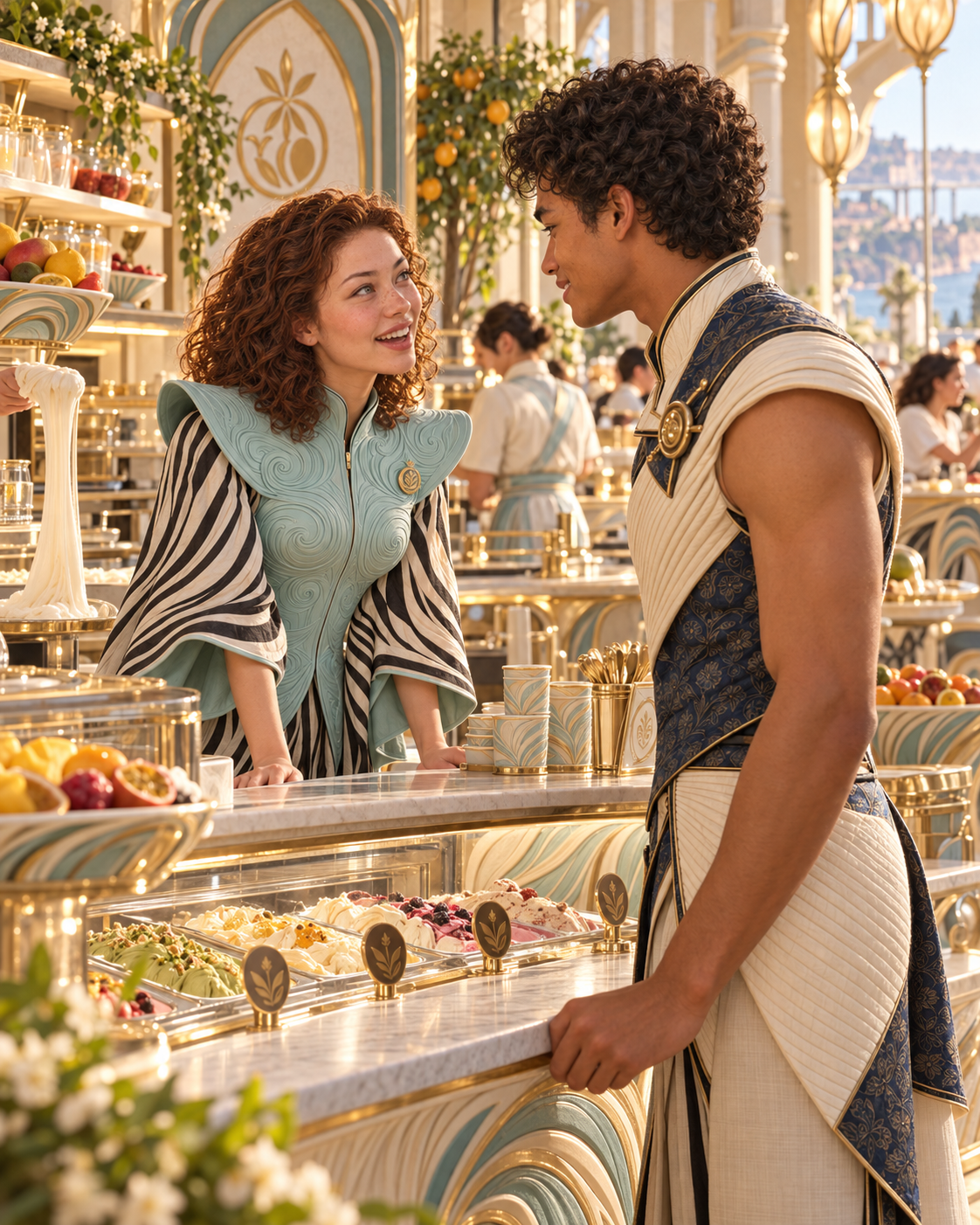
A mixed orchard in another region has an extraordinary year. Strawberries are at peak sweetness. Lychees are heavy on the trees. Grapes will be harvested Friday.
Someone tells the civilization.
Families hear about it.
Children want to go.
There is an AgriGames fruit-tasting competition that weekend.
Travel is free.
So they go.
Suddenly we are no longer talking only about food or transportation.
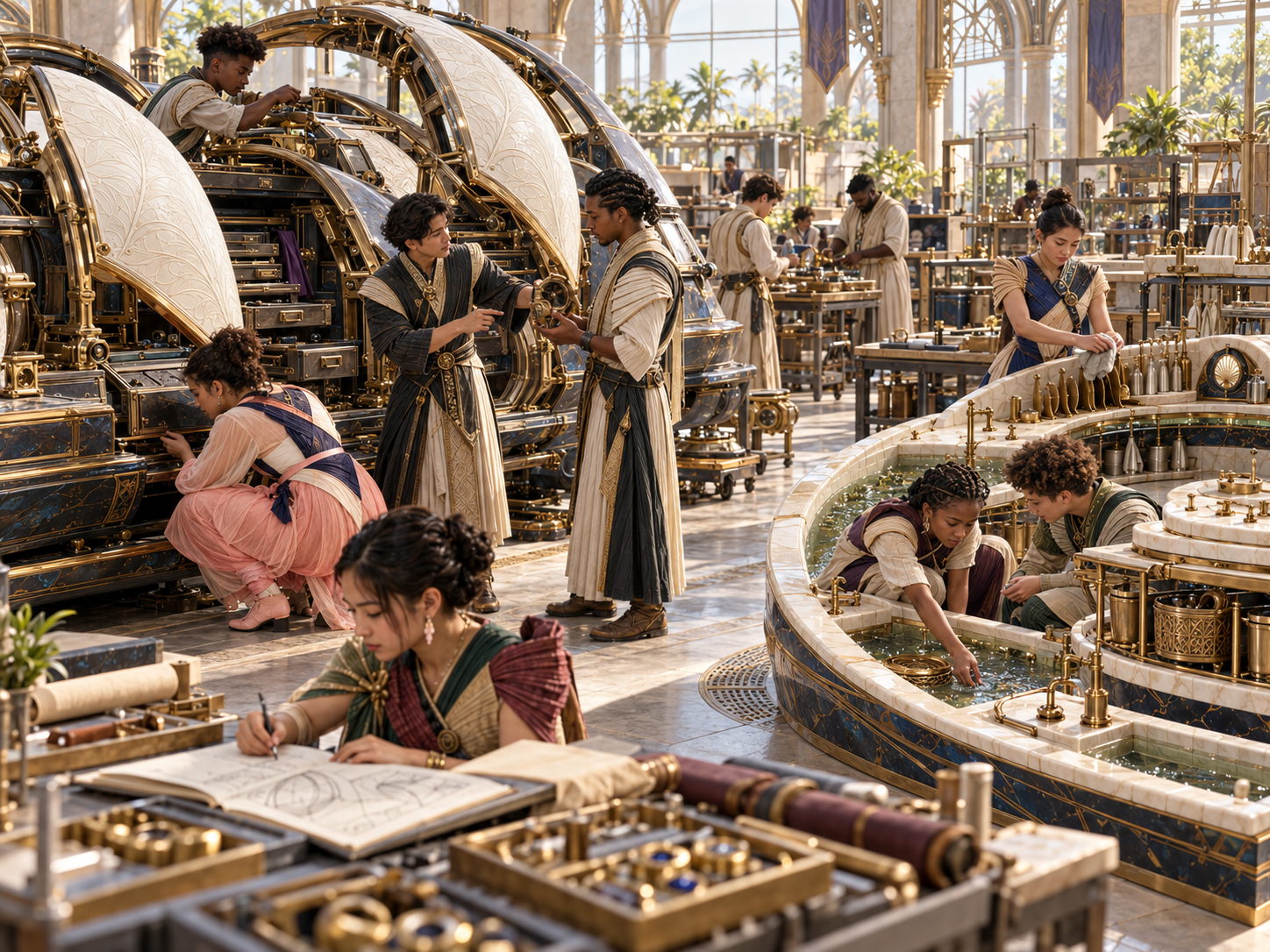
We are talking about news, recreation, learning, geography, family experience, capability and the movement of knowledge.
Change one basic permission and you may discover entirely new things civilization can build around it.
Free Food Becomes Much Bigger Than a Free Checkout
The smallest version of free food would be easy to imagine.
Keep the farms. Keep the supermarkets. Keep the shelves. Keep deciding what gets grown and where it goes in roughly the same way.
Then simply remove the checkout.
But why stop there?
Now the possibilities begin opening.
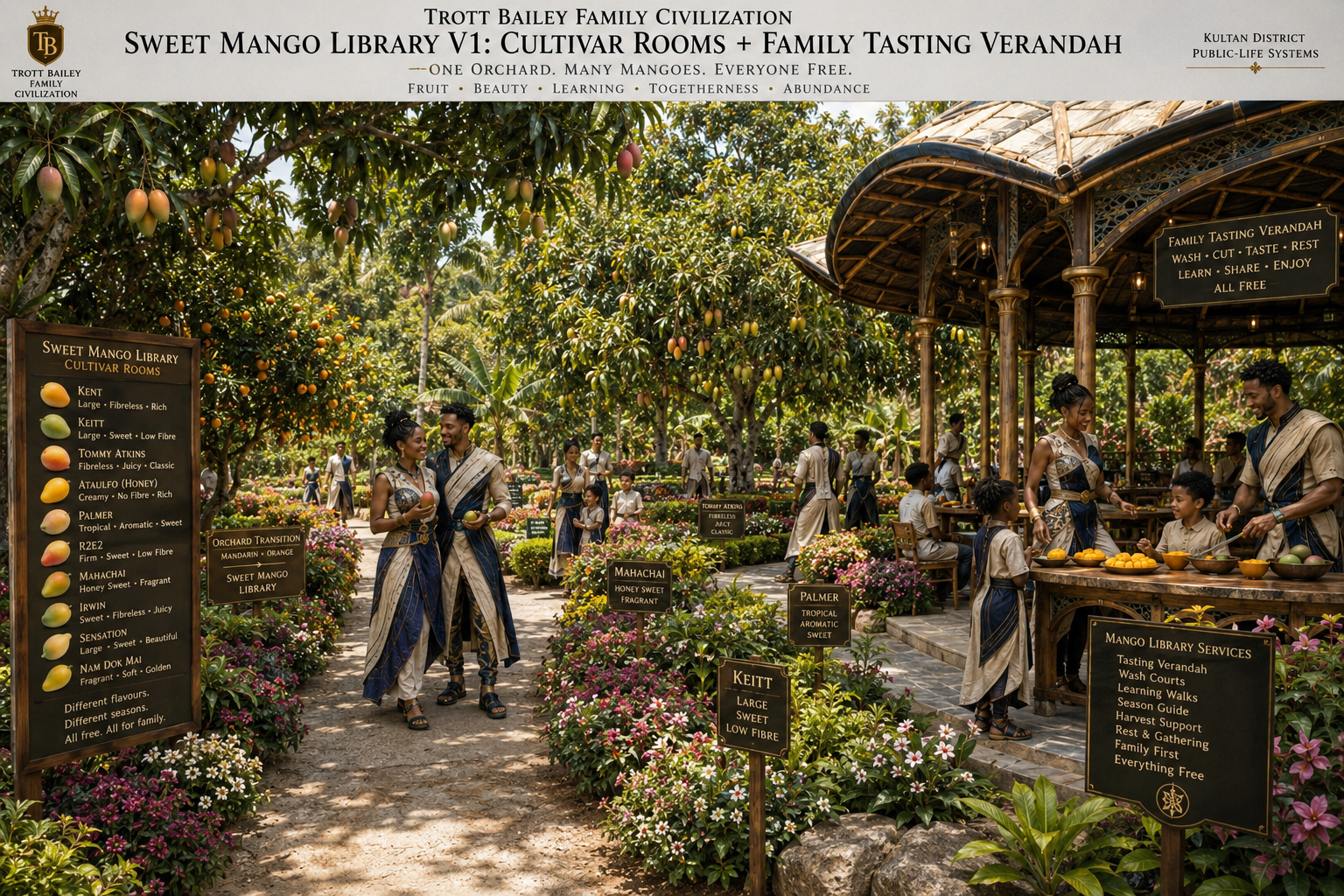
- Grow mixed orchards where one landscape carries many foods through changing seasons.
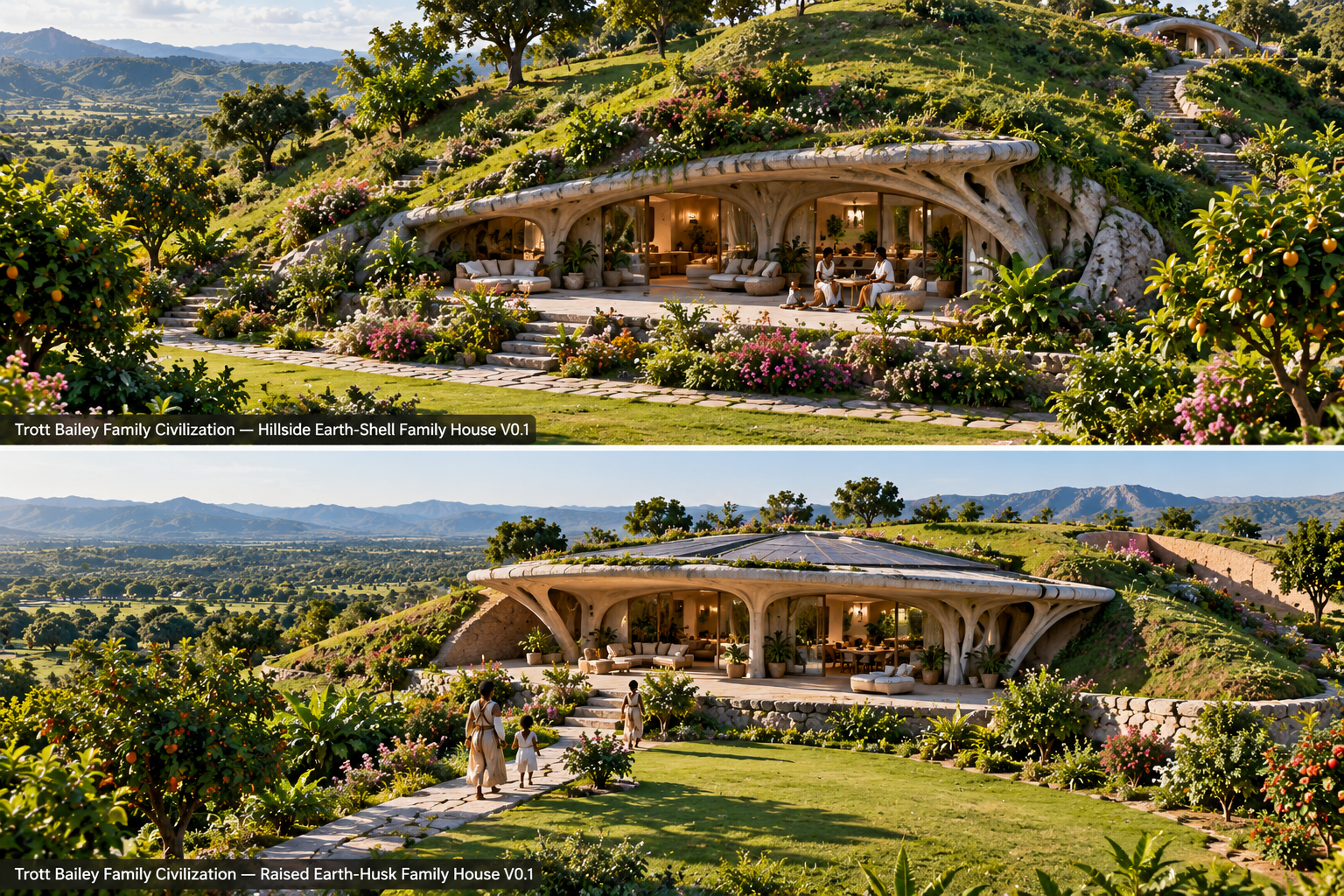
- Build Foodways where children can walk through productive landscapes.
- Preserve abundance that cannot be eaten today.
- Return seeds.
- Propagate exceptional plants.
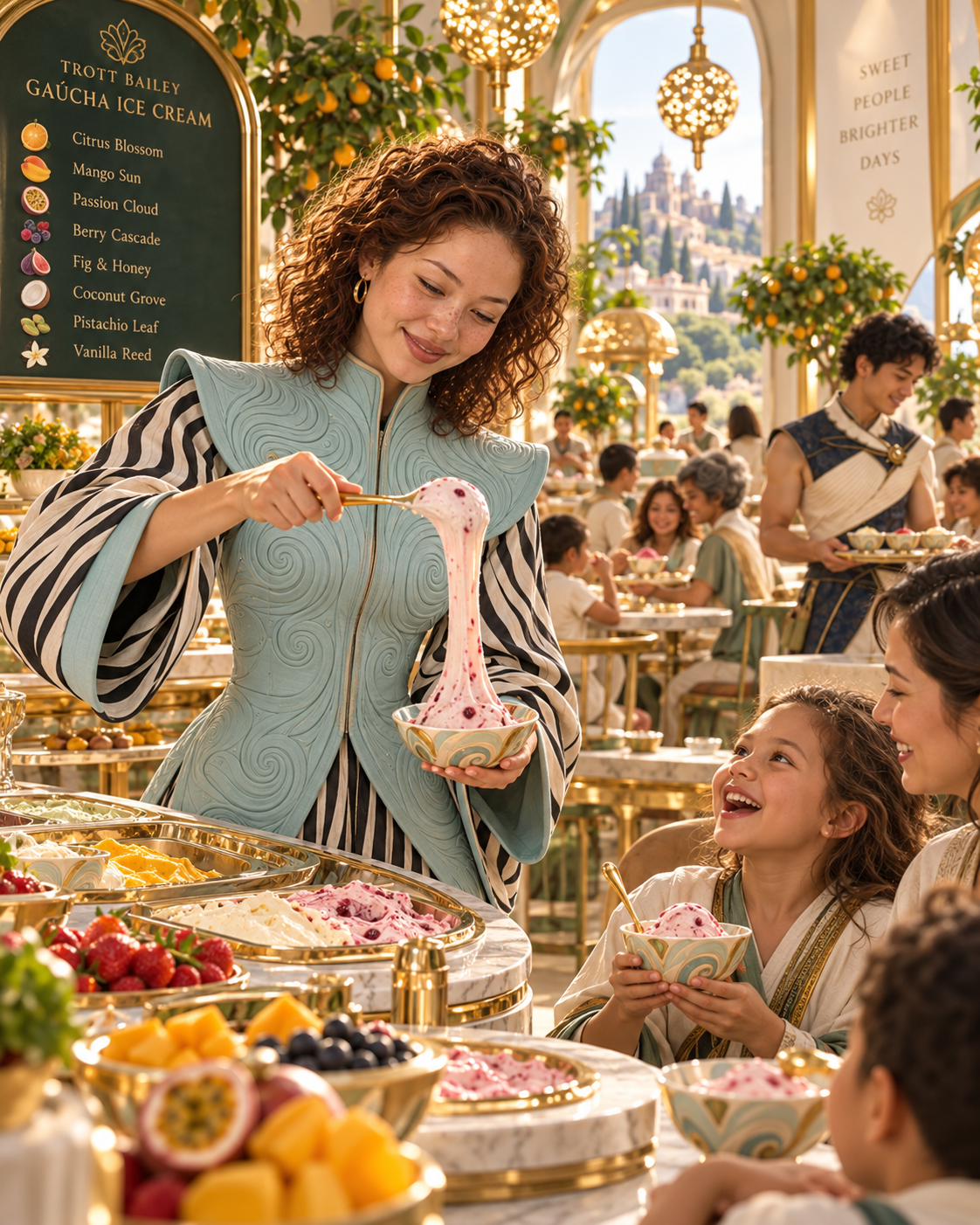
- Build public kitchens where people cook, taste and learn together.
- Notice what people actually enjoy eating.
- Plant for the children who will be hungry ten years from now.
Food can now be organized around growing, nourishing, enjoying, preserving and multiplying life.
Free food does not merely remove a price.
It gives civilization permission to rethink what the entire food world could become.
Free Travel Creates New Reasons to Go Somewhere
The smallest version of free travel would also be easy to imagine: the travel system we already know, except nobody pays for the ticket.
But once people can move freely, something more interesting happens.
A family might travel because the cherries are extraordinary this month.
A child might want to see snow for the first time.
Someone might hear that another region has developed an ingenious rain-catching system and want to see it working.
A teenager might spend several weeks around boat building because boats suddenly fascinate him.
Grandparents might spend one season near one branch of the family and another season near another.
Celebrations.
Learning.
Climate.
Curiosity.
One another.
Free travel does not make every place the same.
It makes the differences between places more reachable.
Jamaica should still feel like Jamaica.
Brazil should still feel like Brazil.
Kazakhstan should still feel like Kazakhstan.
The point is not to erase geography.
You cannot reach that.
News Becomes Something You Can Act On
This is where Wokumbakia becomes especially interesting.
If worthwhile things are happening across the civilization and people are free to reach them, civilization has a reason to tell people.
Trott Bailey Family Civilization calls this Wokumbakia — The News of Abundance.
Wokumbakia tells people what is growing, improving, recovering, becoming possible and worth experiencing.
And because free travel exists, the news does not have to end with:
Isn’t that interesting?
It can end with:
Imagine the alert:
Bumper Orchard Year
Strawberries at peak sweetness.
Lychees heavy.
Grape harvest Friday.
Mango season approaching.
AgriGames throughout the weekend.
A family sees it over breakfast.
By afternoon, they are deciding when to leave.
The Orchard Can Become the Game
Then AgriGames enters naturally.
Suppose everyone arrives at the orchard.
Why should they only walk around looking at fruit?
- Which strawberry is sweetest?
- Which family can identify ripe fruit most accurately?
- Which local grape wins the blind tasting?
- Can children create a new drink from foods ripe in the orchard today?
- Which preservation method keeps mango closest to its fresh flavor?
Now food abundance is also recreation.
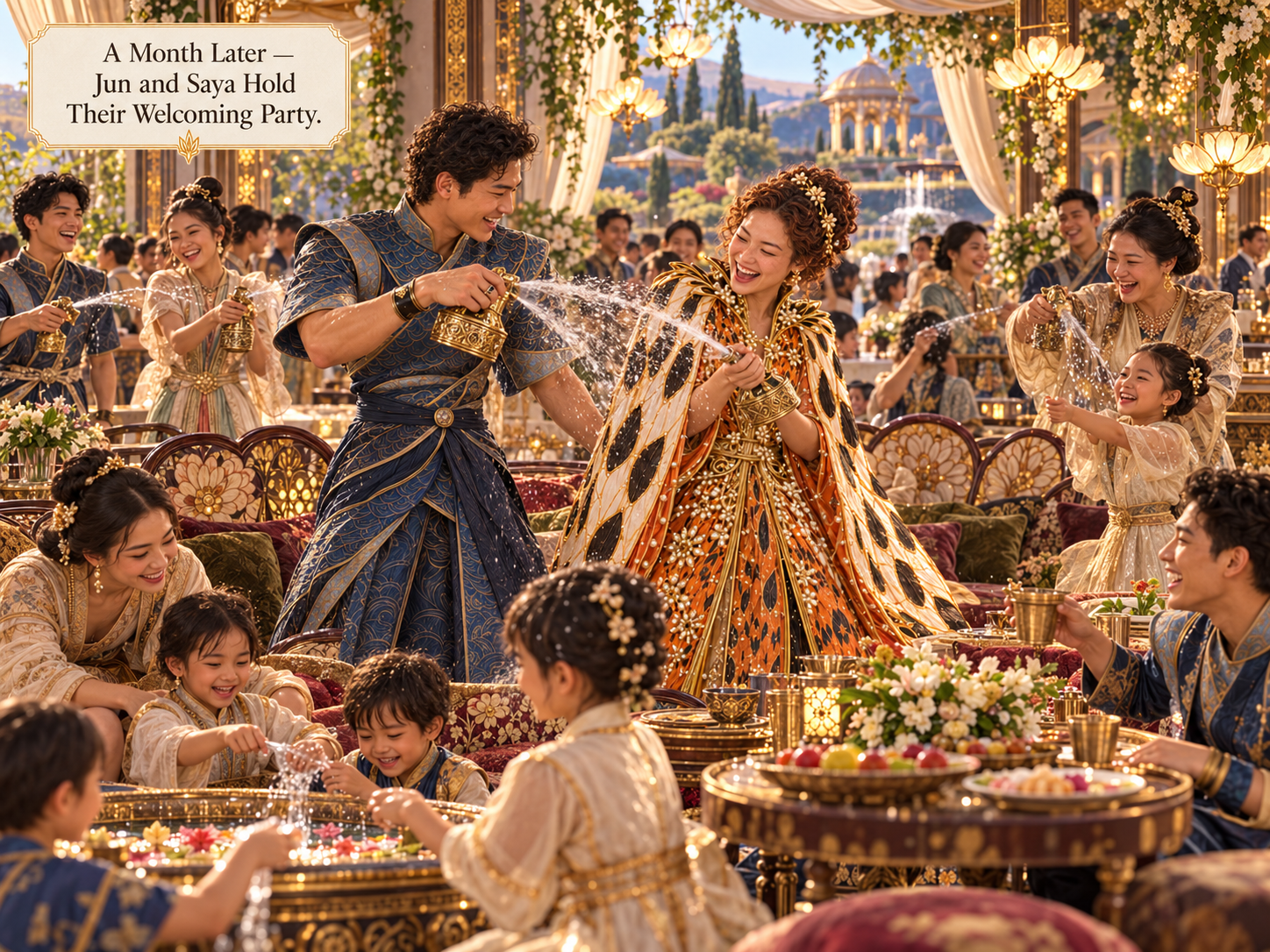
Children are laughing. Adults are comparing flavors. Someone is stubbornly defending the grape they voted for. A grandmother is teaching a recipe. A teenager becomes fascinated by preservation machinery.
And when the game ends, the useful results remain.
The preservation knowledge remains.
The successful plants remain.
The capability remains.
That is what becomes possible when real life contains enough access and abundance to play with.
A Trip Can Accidentally Reveal a Capability
Imagine one child on that trip.
He did not go because he wanted career guidance.
He went because everybody else was going and there were grapes.
Then he notices the irrigation system.
Where does this water come from?
Who built this?
Can I see inside it?
Another young person spends most of the day around preservation equipment.
Another becomes fascinated by grafting.
Another keeps returning to the kitchen.
Nothing had to begin with:
Life exposed them to something.
Curiosity did the rest.
Free travel makes more of Earth available for that kind of discovery.
They need to stand beside the thing.
Wokumbakia Can Turn a Nutrition Need Into Choices
Now imagine Wokumbakia reports that iron intake across the civilization needs to rise.
Instead of simply telling people to eat more iron, civilization can connect that need to food, place and movement.
And it does not have to send everybody to the same place.
A civilization can improve iron intake through many different food worlds.
Some routes might draw more from seafood or meat. Others can build around beans, lentils, leafy vegetables and vitamin-C-rich fruits and vegetables that help the body absorb iron from plant foods more effectively.
So Wokumbakia might announce:
IRON MONTH — SIX FOOD WORLDS OPEN
- Coastal Iron Route — sardines, suitable seafood, fruit and vegetable dishes
- Tropical Iron Route — beans, lentils, leafy foods, guava, papaya, citrus and peppers
- Regional Meat + Produce Route — meat, legumes, vegetables and seasonal fruit
- Local Iron Menus — district combinations using foods that grow well nearby
Now the response is not one instruction.
It is a map of possibilities.
The civilization provides possibilities. Families choose among them.
LuvYou Caterports Make Those Choices Reachable
One family sees the routes and says:
Another child wants the tropical food world.
Another family wants somewhere cooler.
Another wants to stay close to home.
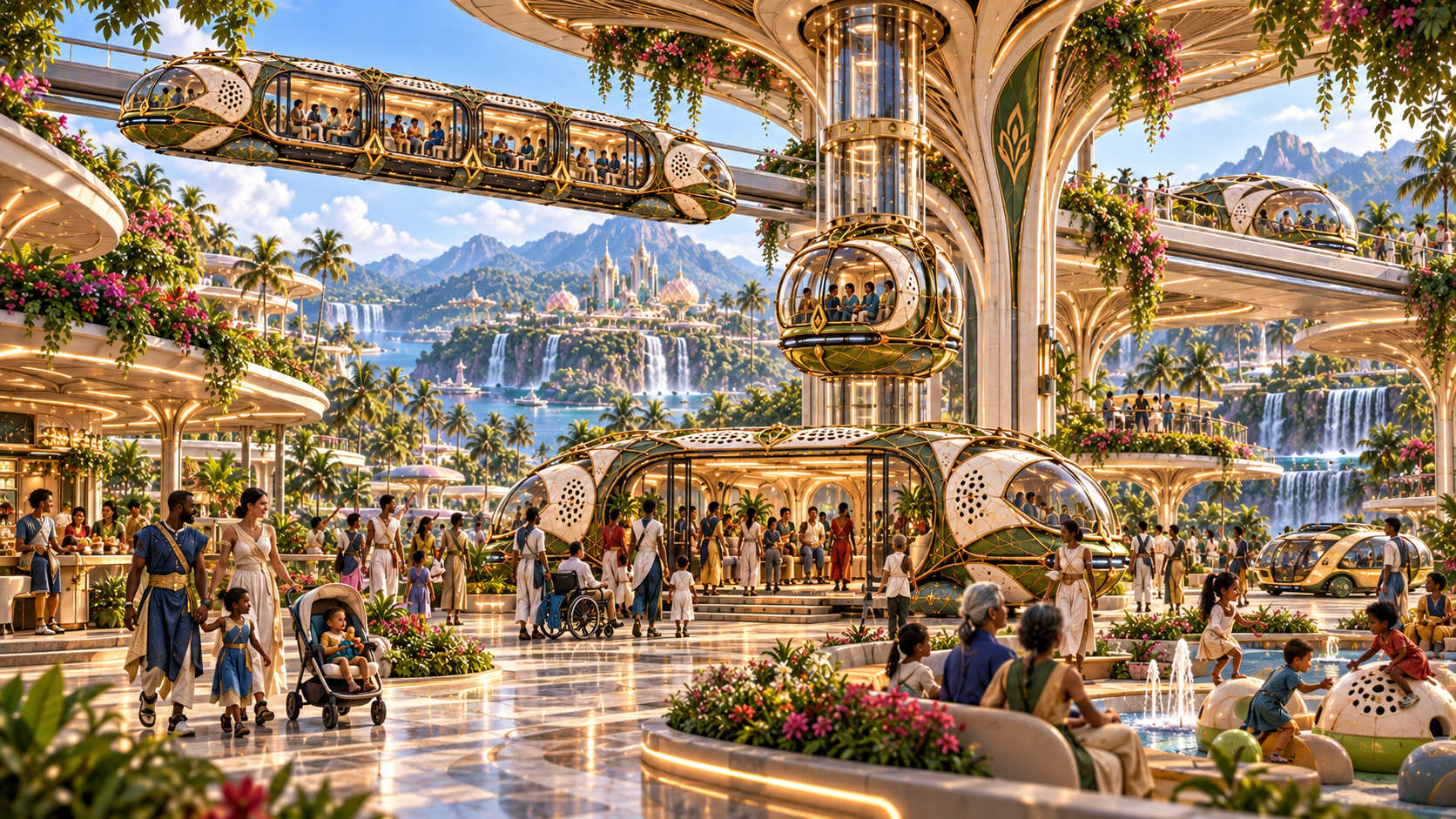
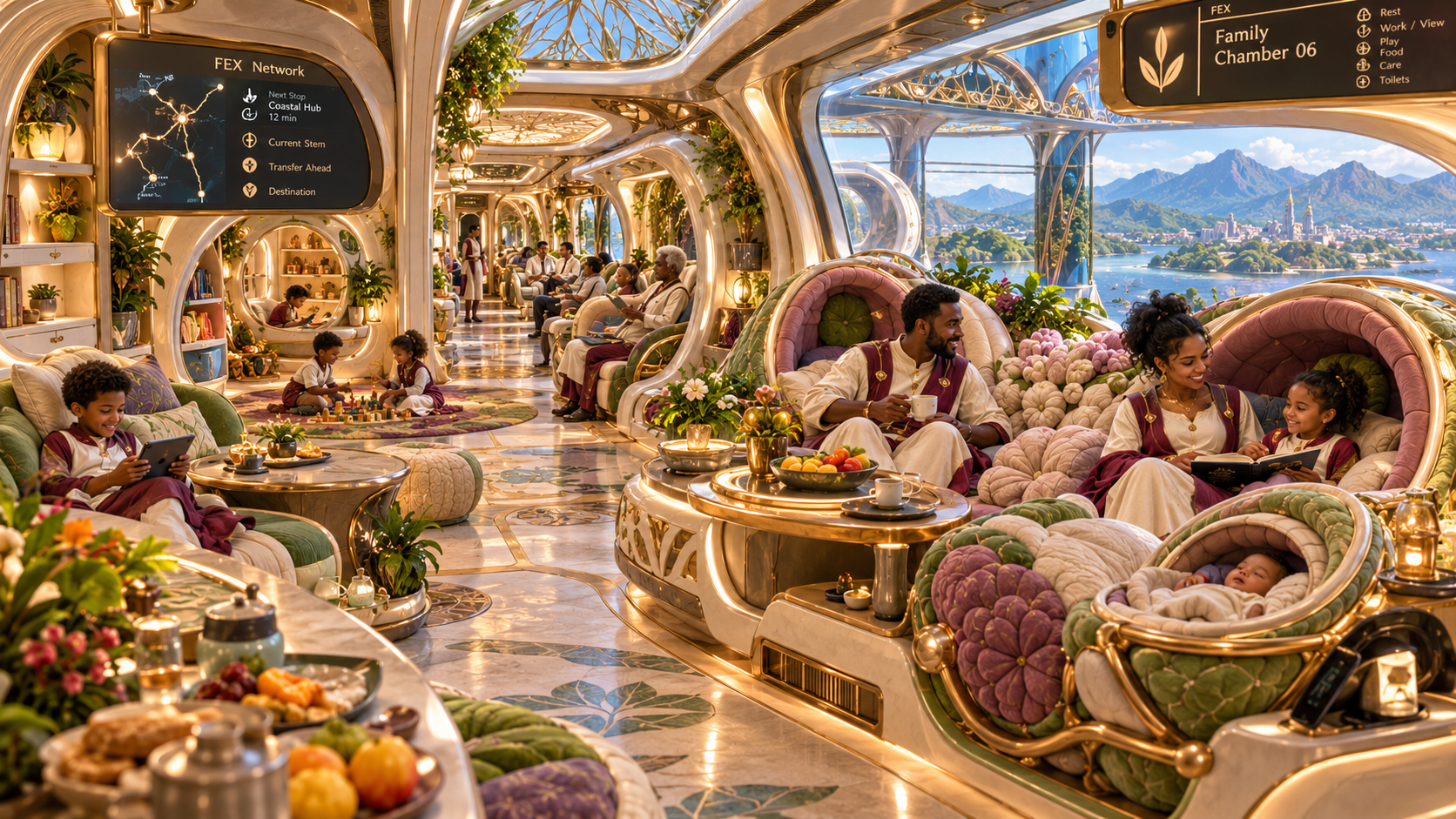
Those choices become practical through the LuvYou Caterports, Trott Bailey Family Civilization’s free travel network.
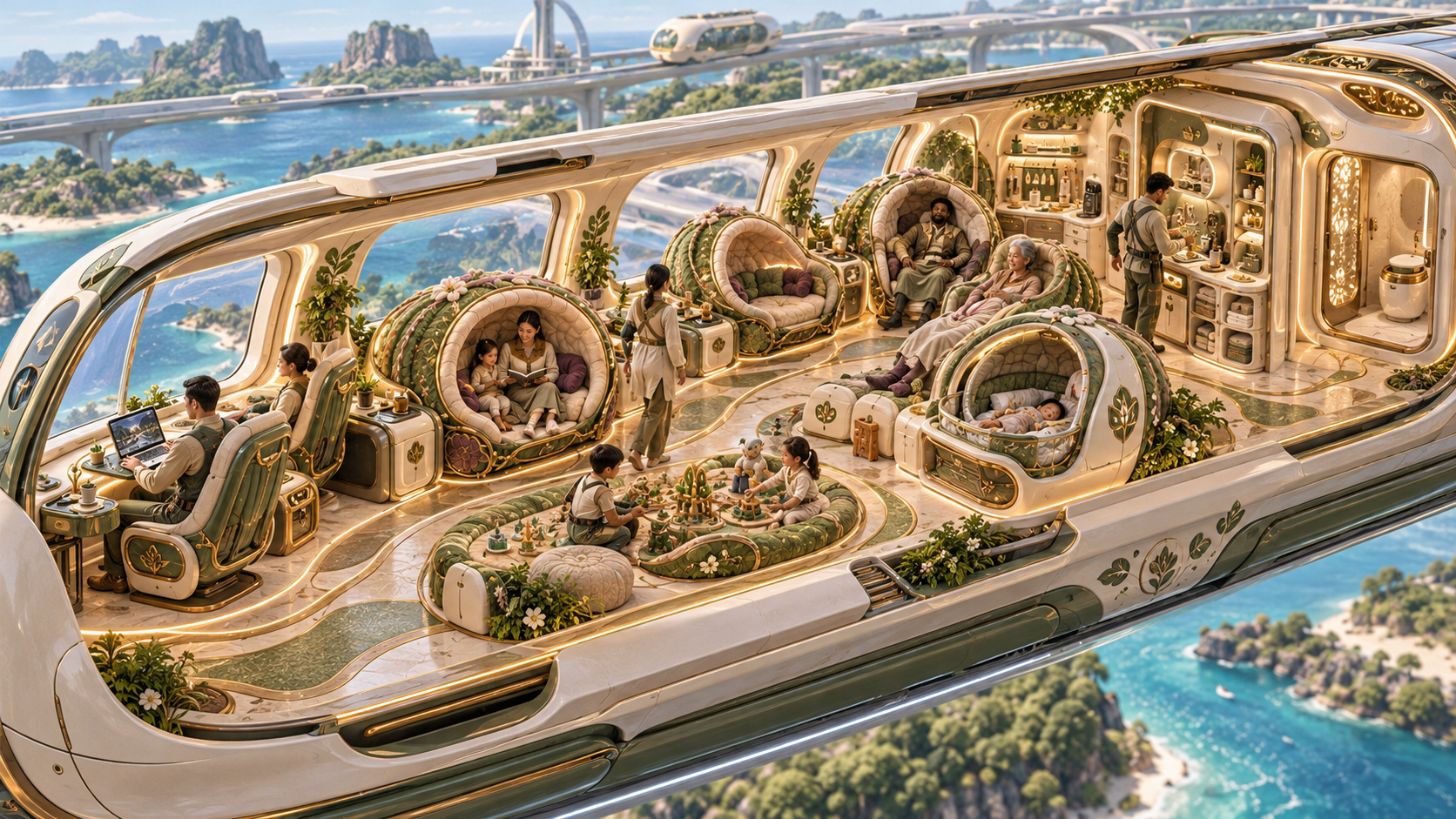
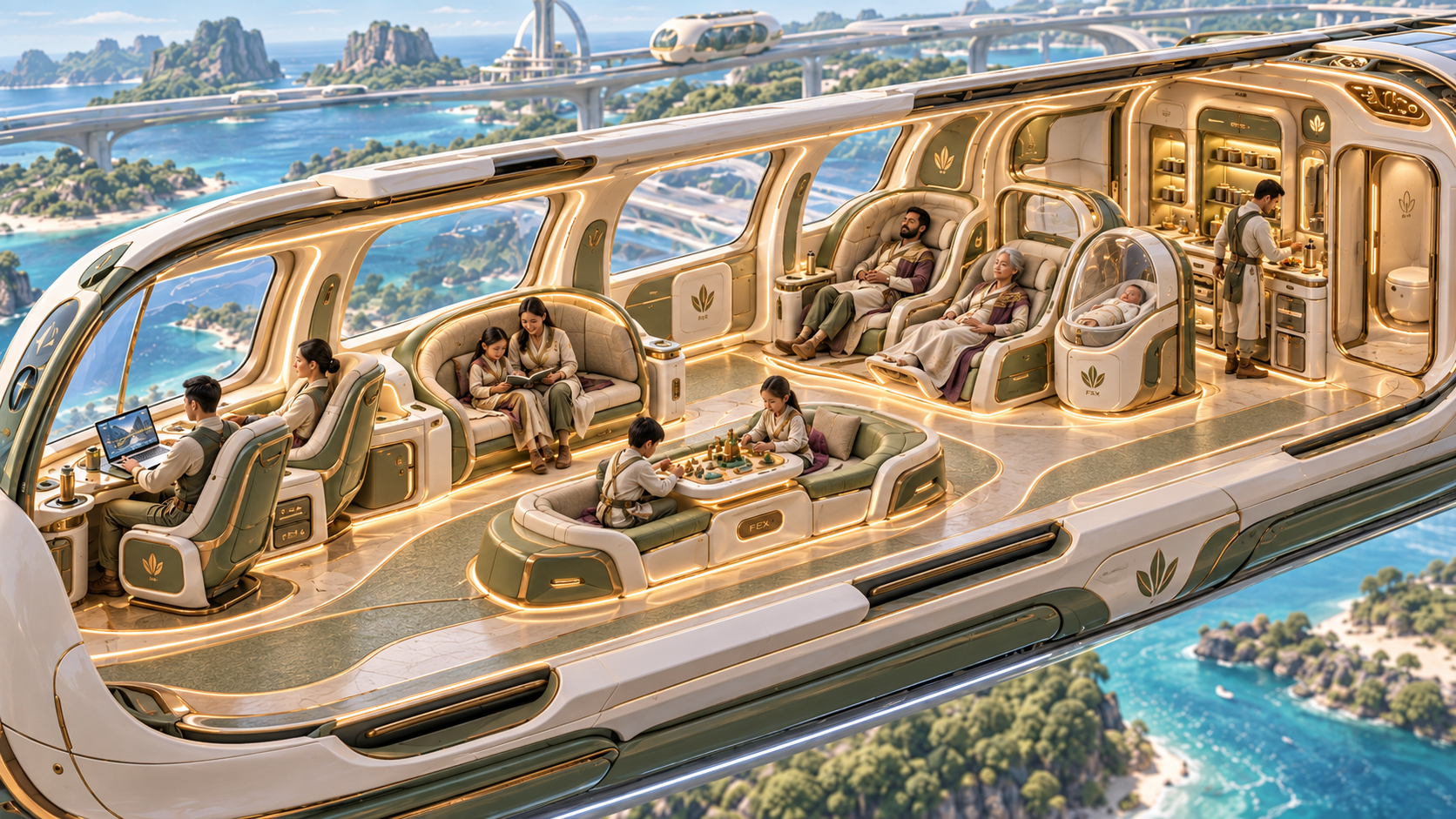
Its travel organs include Sea Care-Ports, Air Care-Ports, Land Care-Ports and Makji Care-Ports, helping people move through the civilization with the transport, arrival and traveller support needed for the journey, without a payment gate.
So a Wokumbakia alert could say:
Iron Month
Coastal route open.
Tropical Bean + Fruit Route open.
Highland route begins Monday.
Local no-travel menus available throughout the civilization.
Departures available through LuvYou Caterports.
Now nobody has to be funnelled into one destination.
Some families go for a weekend.
Some spend six weeks by the sea.
Some stay home.
Some try two different food worlds.
Different landscapes can carry different combinations of food, menus, activities and capacity.
A Nutrition Route Can Become a Family Adventure
There is no reason an iron-focused food world has to feel like a clinic.
Imagine the coastal route.
Sardine kitchens.
Citrus gardens.
Tomato and pepper beds.
Children learning where sea foods come from.
Recipe competitions.
Preservation demonstrations.
Swimming.
Boats.
Sea walks.
Evening meals.
Now imagine the tropical route.
Leafy vegetables.
Fruit orchards.
Cooking houses.
Children’s harvest games.
Recipe challenges.
Families compare meals and help cooks discover which combinations people actually love.
The nutrition goal is serious.
The experience does not have to be grim.
A civilization can take nourishment seriously without making nourishment joyless.
And the menus themselves become civilization knowledge.
- Which combinations do children enjoy most?
- Which recipes are easiest to reproduce?
- Which preparation methods work best?
- Which foods thrive in each region?
AgriGames can test them. Public kitchens can refine them. Families can respond. Growers can expand what people love. Wokumbakia can share what is working.
The next Iron Month can be better than the first.
Travel Can Leave Longer Consequences
Now return to the family that chose the coast.
They expected to stay for three weeks.
Then they stayed for six.
The children love the sea.
Someone learns new seafood recipes.
Another family member becomes interested in preservation.
A teenager starts spending time around fishing vessels.
They make friends.
Perhaps they return home afterward.
Perhaps they come back every year.
Perhaps one day they say:
Nobody ordered them to migrate.
A nutritional route simply exposed them to another part of Earth, and they discovered that they wanted more of it.
Other families return home carrying knowledge instead.
A preservation method.
An understanding of tides.
A better way of preparing beans.
An idea for a harvest game.
A fascination with boats.
Free travel does not only circulate people.
It can circulate knowledge, experience, recipes, techniques, curiosity and capability.
Sometimes they discover a place they want to become part of.
This Is the Question We Should Keep Asking
Food and travel made this principle visible.
But the principle is larger than either one.
The first question when changing a system is usually:
What happens to this thing?
What happens when food is free?
What happens when travel is free?
But there is another question:
What else becomes possible because the old gate is gone?
That question led from food into Wokumbakia.
From food into AgriGames.
From free travel into wider learning and capability discovery.
And it can take a simple observation—
our civilization should increase its iron intake
—and turn it into several food worlds, new menus, family journeys, coastal seasons, games, cooking discoveries and perhaps even a new place to live.
The ideas are not random additions.
Build for What People Can Do Now
If people can eat freely, do not keep designing as though money still decides whether they can eat.
If people can travel freely, do not keep designing as though most people must remain wherever their wallets allow them to remain.
Build around the new reality.
People can eat.
People can go.
Now ask:
- What should food become?
- What should travel become?
- What should news become?
- What should learning become?
- What should recreation become?
- What kinds of lives become possible when these things begin working together?
Build the new systems around the fact that people can eat freely and travel freely—not around the old system where money decided who could eat and who could move.
The Possibility Is Bigger Than the First Change
At first we say:
Make food free.
Then orchards change.
Preservation changes.
Public kitchens change.
Games appear.
Wokumbakia appears.
Then we say:
Make travel free.
People can follow harvests.
Children can reach capabilities.
Families can experience different climates.
Knowledge can travel.
Wokumbakia alerts can become journeys.
Then Wokumbakia says:
We need to improve iron intake.
And instead of one instruction, an entire map opens.
Tropics.
Highlands.
Local routes.
Different ways to participate.
So when a basic restriction disappears, the most interesting question may not be what disappeared.
It may be:
Because changing one basic permission does not merely change one service.