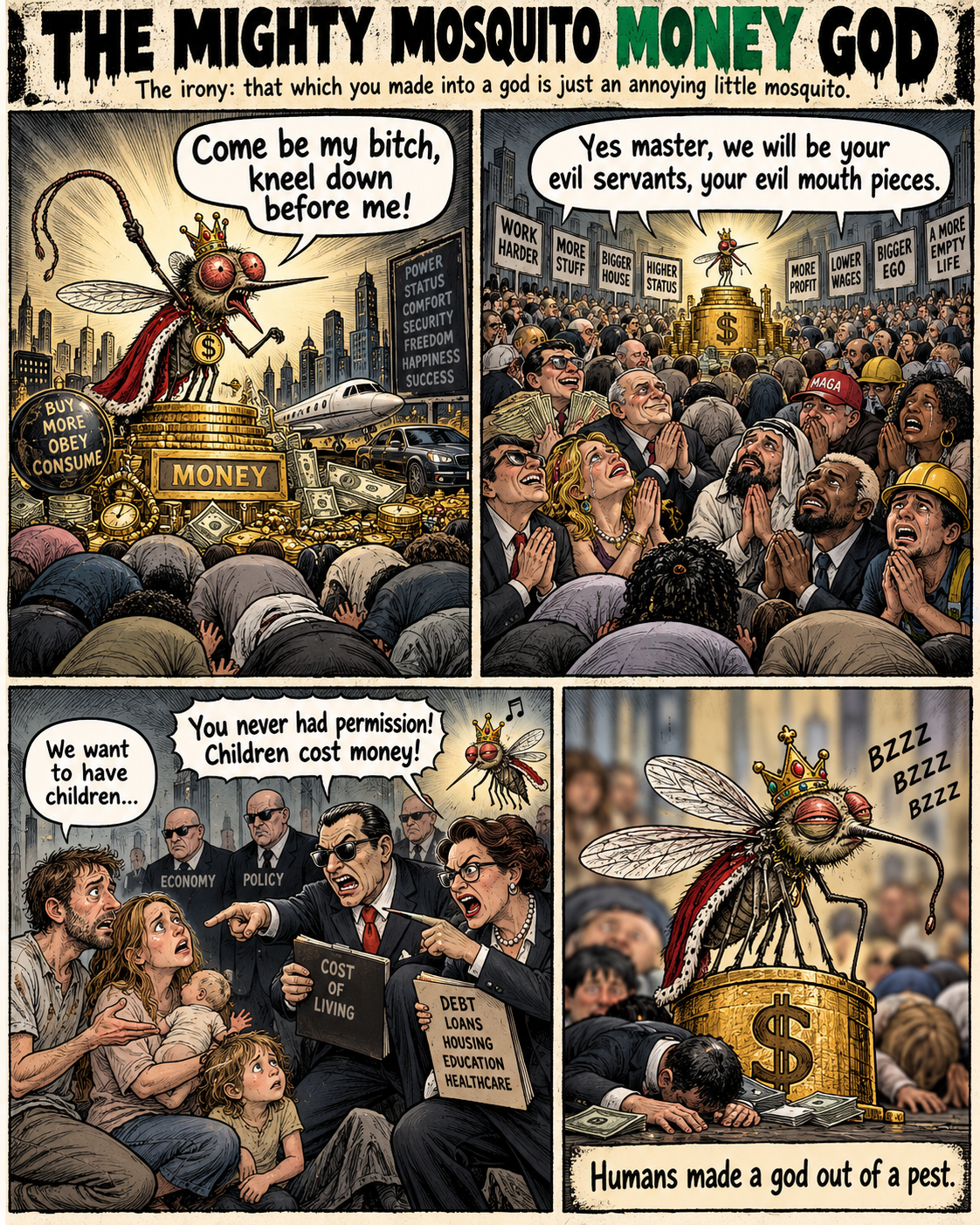


The money-hungry spirit has become a stagnating force on earth.

Nothing Can Get Done Without Money Exchanging Hands
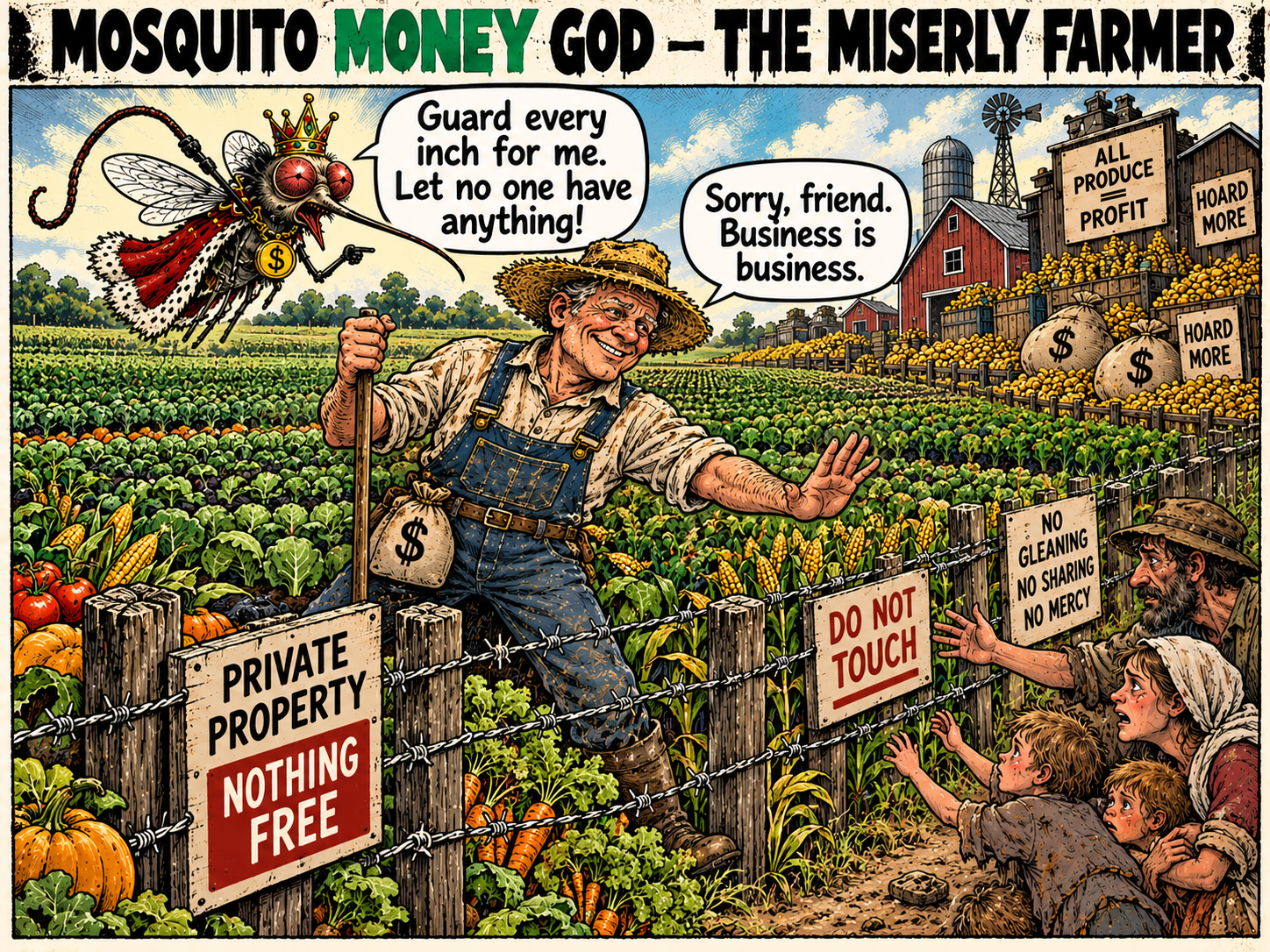
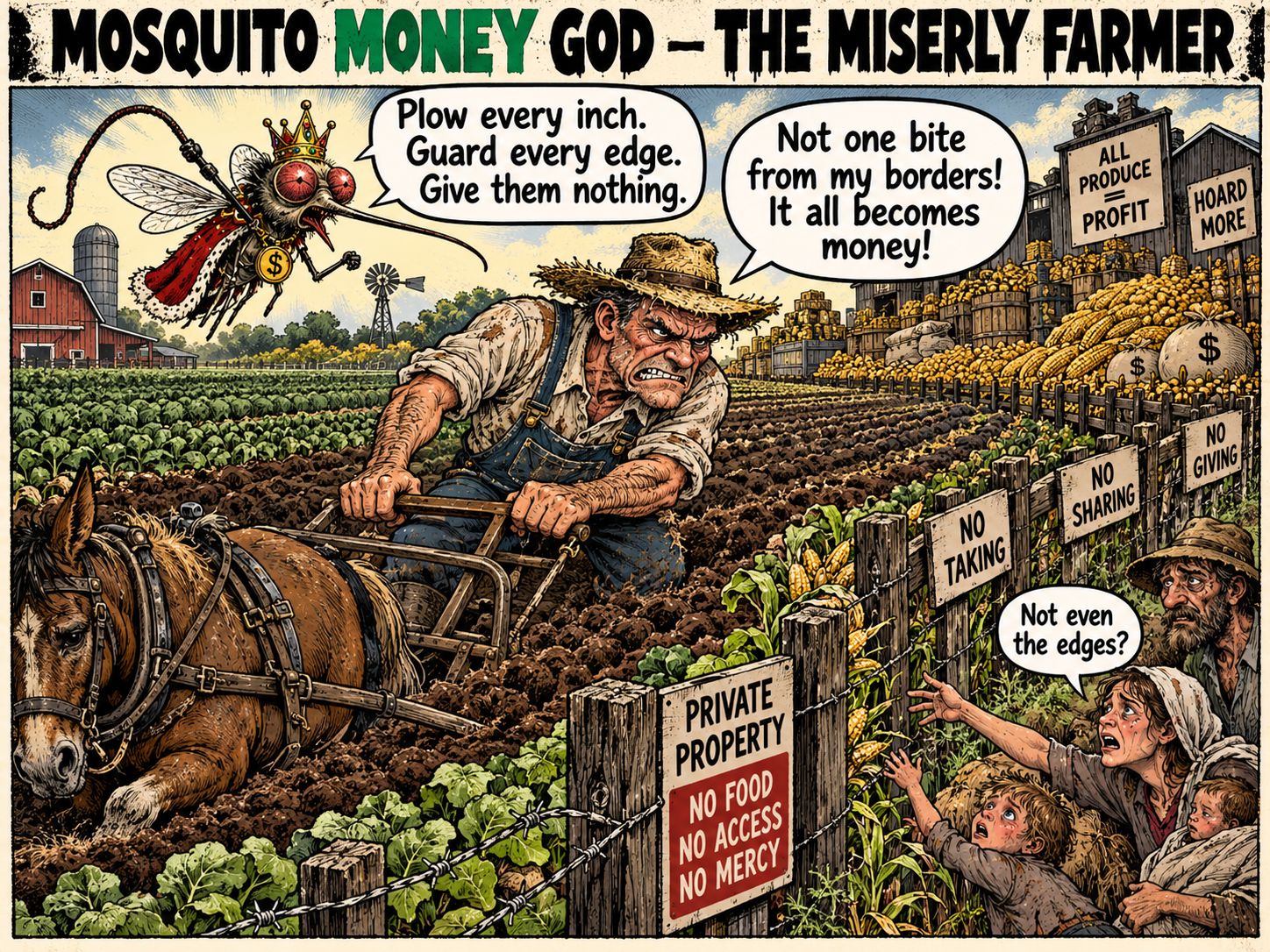
Money has become the permission gate between human ability and human need.
Money has become the permission gate between human ability and human need
This article will not pretend that money is just a neutral tool.
Not on this earth.
Not in this condition.
Money has become more than a way to trade. It has become a gate. It has become a permission system. It has become the thing standing in front of food, shelter, repair, movement, learning, healthcare, government work, roads, housing, rest, and basic help.
Before anything can happen, money asks to be served first.
This vicious money-hungry spirit is a chaos force on earth. It is a stagnating force. It blocks life from moving. It trains human beings to pause in front of obvious needs and ask, “Who will pay?” It makes people with hands refuse to help. It makes people with skills wait. It makes land sit idle. It makes food rot. It makes homes decay. It makes clinics weak. It makes roads broken. It makes families suffer while everyone waits for money to approve what should already be done.
That is organized stagnation.
Human beings have the hands, the minds, the tools, the materials, the land, the intelligence, and the problems sitting directly in front of them.
The roof leaks. The road breaks. The school needs repair. The clinic needs equipment. The child needs food. The family needs shelter. The traveler needs rest. The elder needs transport. The community needs clean water.
Many of these things are not mysteries. They are not impossible. They are not beyond human ability. People know how to build. People know how to repair. People know how to cook. People know how to organize. People know how to teach. People know how to clean. People know how to grow food. People know how to make places safer.
But then the money gate appears.
Who will pay? How much? What is the price? What is the fee? What is the profit? What is the return? What is the contract? What is the budget? What is the charge? What is the cut?
And suddenly the thing that needed to happen does not happen.
Or it happens slowly.
Or it becomes expensive.
Or it becomes trapped in paperwork.
Or it becomes an opportunity for someone to extract from someone else.
Money stands between human ability and human need.
This is how money turns life into a blocked road.
It does not only make people greedy. It makes people inactive. It makes people stand beside suffering and say, “I cannot move until payment appears.” It makes people see a broken thing and wait for a budget. It makes people see hunger and wait for a program. It makes people see human need and wait for a transaction.
Money has trained people to withhold care until paid.
That is one of its deepest corruptions.
The government becomes the honeypot
The irony is that even the government becomes a victim of this same money-grubbing spirit.
People often talk as if the government is the one place where money exists. The poor citizen looks at the government and thinks, “The government has money.” Contractors look at government budgets and see a honeypot. Suppliers see public money and inflate their charges. Consultants see a ministry, a municipality, a department, a public works budget, and suddenly the price rises. The same repair that would cost one amount for an ordinary person becomes a swollen amount when the government is paying.
This is not imagination. Public procurement is one of the largest organized money flows on earth. The OECD reported that public procurement expenditure across OECD countries stood at 12.7 percent of GDP in 2023. The World Bank says public procurement represents about 13 to 20 percent of GDP on average, with global procurement expenditure estimated near US$9.5 trillion.
That is why government becomes a target.
When a money-hungry spirit enters public life, public budgets stop being seen as the people’s shared resources for roads, schools, clinics, water, housing, safety, and repair. They become feeding grounds. Everyone arrives with a spoon.
The contractor wants more. The supplier wants more. The consultant wants more. The investor wants more. The middleman wants more. The politician wants credit. The bureaucrat wants control. The citizen wants access.
The whole system begins to circle the government budget like it is free meat, forgetting that government money is not magical money.
It is the people’s money.
It is the road money.
It is the clinic money.
It is the school money.
It is the repair money.
It is the future money.
When they drain it, they drain the country.
Public money leaks before public life receives the benefit
The money-hungry spirit does not just take through obvious theft. It also takes through overpricing, padded contracts, weak oversight, delays, mismanagement, corruption, and the endless swelling of costs.
The World Bank states that, according to the United Nations Office on Drugs and Crime, 10 to 25 percent of a public contract’s overall value may be lost due to corruption.
That means a public work can be bleeding before the public ever benefits.
A road can be funded but not finished.
A school can be approved but not built.
A clinic can be planned but not equipped.
A bridge can consume money and still not carry people.
A housing project can exist on paper while families remain squeezed.
A water system can be announced while communities still wait.
The money moves. The paperwork moves. The announcements move. But the real thing does not arrive.
This is why people lose trust. They hear about budgets. They hear about projects. They hear about development. They hear about modernization. They hear about investment. But they still see broken roads, weak clinics, unfinished buildings, unsafe housing, poor services, and the same daily struggle.
But life did not improve.
The IMF estimated that bribery alone costs roughly US$1.5 trillion to US$2 trillion annually, about 2 percent of global GDP. Bribery is not the whole disease, but it gives a visible measurement of the scale of the drain.
The full sickness includes inflated bids, ghost projects, unnecessary consulting, delayed approvals, favoritism, collusion, bad materials, weak construction, useless meetings, duplicated work, political theater, and the quiet agreement that everyone should take their portion before the people receive the thing they were promised.
A society cannot move like this.
A government cannot build like this.
A people cannot trust like this.
Nothing Can Get Done Without Money Exchanging Hands
Part 2 — Brazil, bureaucracy, investors, tolls, housing, and the machinery of delay.
Brazil shows what stagnation looks like
Brazil gives a hard example of this stagnation.
Brazil’s Federal Court of Accounts, the Tribunal de Contas da União, classified stalled public works as a high-risk area. Its monitoring reported that between 2022 and 2024, the number of paralyzed works rose to 11,944 projects, representing 52 percent of federal works. Those works had already consumed R$9.0 billion and still needed R$29.4 billion more to be completed.
The TCU also said the situation compromises public services and affects areas including health, education, infrastructure, and urban mobility.
A later Senate report, citing TCU data, said that by April 2025, 11,469 of 22,621 federally funded public works were paralyzed. That is roughly one in every two. The same report said the TCU identified R$15.9 billion already invested in projects that had not reached completion.
That is what stagnation looks like in the real world.
Not theory.
Not poetry.
Not vague frustration.
Concrete money. Concrete works. Concrete roads, clinics, schools, and public structures that were supposed to serve people but became trapped in the machinery of delay, mismanagement, weak coordination, weak technical capacity, unfinished budgets, poor information systems, and broken governance.
The people do not experience this as a spreadsheet.
They experience it as a clinic that is not ready. A school that is not finished. A road that remains dangerous. A mobility project that never arrives. A promise that becomes a ruin. A budget that becomes a ghost.
Money was consumed.
But the people still waited.
Bureaucracy grows because nobody trusts the money flow
Bureaucracy is often presented as order.
Sometimes order is necessary. A government needs records. A government needs accountability. A government needs safety checks. A government needs public standards. A government needs to prevent abuse.
But under a money-hungry system, bureaucracy also becomes a symptom of distrust.
The government becomes slow because it is trying to prevent being drained. But the slowness also drains the people. A simple repair becomes a file. A file becomes a process. A process becomes a delay. A delay becomes a cost. A cost becomes a new opportunity for extraction.
Nothing can simply move.
The bureaucracy says it is protecting the public. The contractor says the bureaucracy is delaying the work. The citizen says nothing is getting done. The politician blames the previous administration. The investor waits for guarantees. The poor family keeps waiting.
The road stays broken.
The clinic stays weak.
The school stays unfinished.
The money-hungry spirit wins again.
Investors drain citizens, then burden governments too
The money-hungry cycle becomes even more twisted when public necessities are handed over to investors.
At first, people are told investors will develop the country. Investors will build the roads. Investors will bring the housing. Investors will manage the services. Investors will modernize the place. Investors will create opportunity.
But too often, public life gets converted into private extraction.
The road becomes a toll. The house becomes an investment product. The service becomes a fee. The public necessity becomes a revenue stream.
The citizen pays to move. The citizen pays to live. The citizen pays to access. The citizen pays to survive.
World Bank PPP guidance explains that a private party in a public-private partnership can be paid by collecting fees from service users, by government payments, or by a combination of both. Under user-pays PPPs such as toll roads, the private party generates revenue by charging users fees, tariffs, or tolls; those fees can also be supplemented by government payments.
That is the trap.
The government says it does not have enough money, so it gives control to investors.
The investor takes control because it wants revenue.
The citizen pays through fees, tolls, rents, tariffs, and charges.
Then the government may still owe payments, subsidies, guarantees, or long-term obligations.
That is how a government can sell away responsibility and still remain financially trapped.
It loses control.
The people pay more.
The investor extracts.
And the government still carries risk.
Housing becomes another extraction machine
Housing shows the same sickness.
A house should be a place to live.
A place for families.
A place for children.
A place for rest.
A place for stability.
A place for dignity.
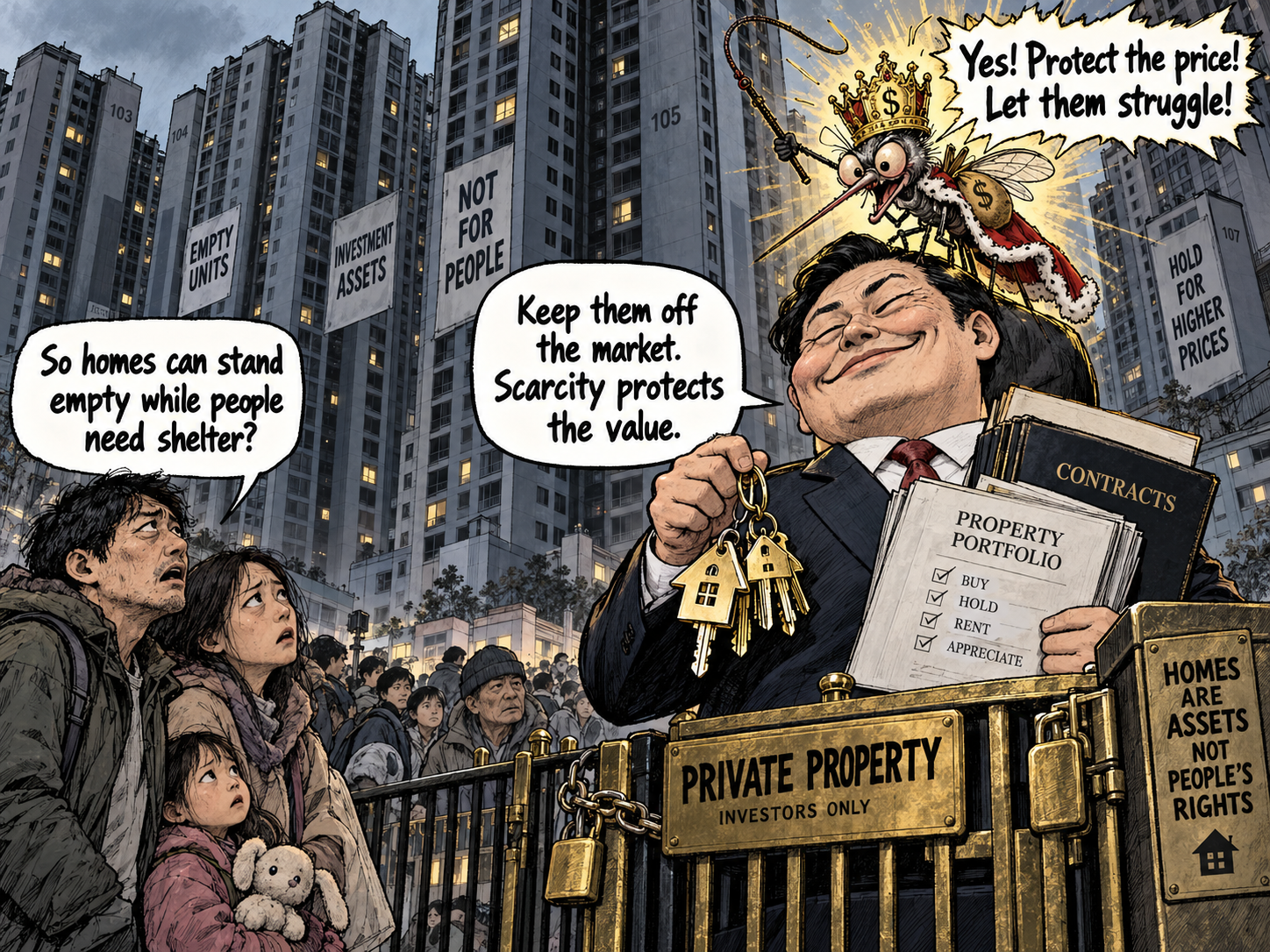
But under the money-hungry spirit, housing becomes an investment vehicle. Rent becomes a drain. Land becomes speculation. Shelter becomes a market. Families are treated like income streams. People do not ask first, “How can families live well?” They ask, “How much can this property generate?”
The UN Special Rapporteur on adequate housing has examined the financialization of housing and its human rights impacts. The point is simple and brutal: housing is increasingly treated as a commodity and a vehicle for wealth and investment instead of a human right and social good.
That is exactly the money-hungry spirit in housing form.
A human need is captured by money logic.
Then the family pays and pays and pays.
High rent. Deposit. Fees. Interest. Utilities. Service charges. Maintenance charges. Late fees. Application fees. Broker fees.
A place to live becomes a permanent extraction field.
And then governments are told they must solve the housing crisis after the housing system has already been handed to money.
The same pattern repeats.
Public necessity becomes private opportunity.
Private opportunity becomes public crisis.
Public crisis becomes government expense.
Government expense becomes contractor opportunity.
Contractor opportunity becomes inflated charges.
The people remain squeezed.
Nothing Can Get Done Without Money Exchanging Hands
Part 3 — Money moves, life stays stuck, and Trott Bailey rejects the money gate.
Money moves, but life stays stuck
This is the important distinction.
Money can move while life stays stuck.
A budget can move. A payment can move. A contract can move. A fee can move. A toll can move. A rent payment can move. A bribe can move. A consultancy payment can move. A procurement file can move. A bank transfer can move.
But the clinic can still be weak.
The road can still be broken.
The school can still be unfinished.
The family can still be hungry.
The housing can still be unaffordable.
The worker can still be exhausted.
The government can still be financially weakened, politically blamed, and structurally unable to move.
The community can still be waiting.
A civilization moves when people are fed, housed, healed, taught, transported, protected, rested, and able to build.
A money system moves when payments occur.
Those are not the same thing.
Earth has mistaken payment activity for progress.
It sees contracts and thinks something is happening. It sees investors and thinks development is happening. It sees budgets and thinks public service is happening. It sees fees and thinks sustainability is happening. It sees loans and thinks growth is happening. It sees a construction fence and thinks building is happening.
But the true question is simple:
Did life improve?
Did the family receive relief?
Did the road open?
Did the clinic function?
Did the school serve children?
Did the house become livable?
Did the hungry eat?
Did the tired rest?
Did the people become more free to live?
If the answer is no, then the money moved but civilization did not.
The vicious cycle
This is the cycle:
The government sells out public necessities to investors.
Investors drain the people through tolls, rents, fees, utilities, charges, and paid access.
The people become poorer, angrier, and more desperate.
The government loses control, loses trust, and loses money.
Then contractors, suppliers, consultants, and service providers look at the government and say, “The government has money.”
They inflate their charges. They pad their contracts. They delay. They extract. They treat public money as a honeypot.
Then the government becomes financially weakened, politically blamed, and structurally unable to move.
Bureaucracy multiplies. Approvals multiply. Suspicion multiplies. Delays multiply. Costs multiply.
And still, nothing gets done.
The people blame the government. The government blames lack of resources. The investors keep collecting. The contractors keep bidding. The citizens keep paying. The projects keep stalling. The country keeps decaying.
This is not one person’s greed. This is not one bad office. This is not one corrupt politician. This is not one dishonest contractor.
This is an operating system.
It teaches everyone to hunt the next person.
The guest is hunted by the host.
The citizen is hunted by the investor.
The worker is hunted by the employer.
The tenant is hunted by the landlord.
The government is hunted by contractors.
The poor are hunted by fees.
The family is hunted by debt.
Everyone is hunting someone.
Everyone is being hunted by someone.
And because everyone is trying to extract, nothing can simply function.
Trott Bailey Family Civilization cannot inherit this spirit
Trott Bailey Family Civilization cannot inherit this spirit.
We cannot build a civilization where nothing moves until money exchanges hands.
We cannot build care that waits for payment.
We cannot build housing as an investment trap.
We cannot build roads as toll prey.
We cannot build food as a hunger market.
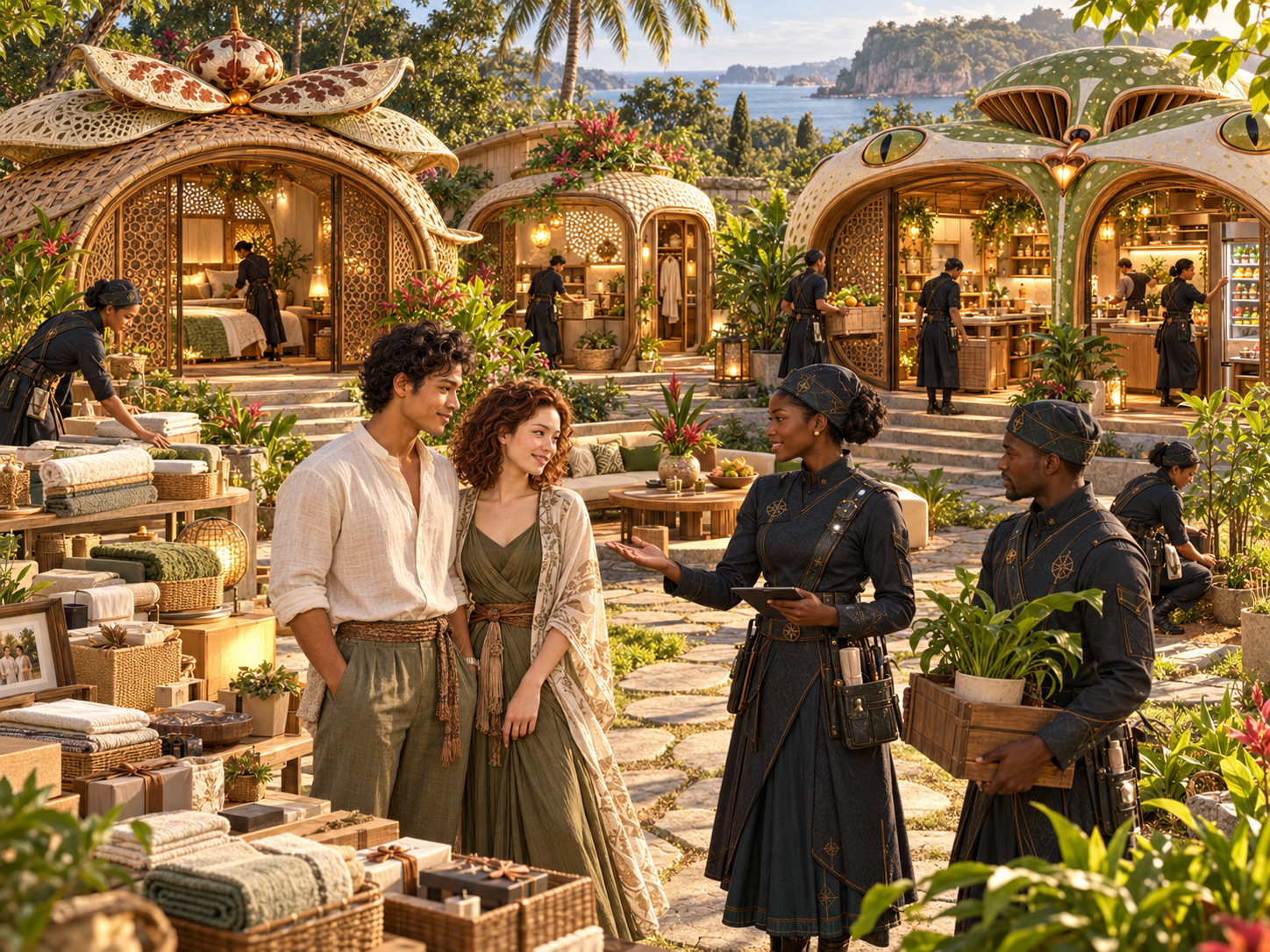
We cannot build hospitality as extraction dressed in a smile.
We cannot build government as a honeypot.
We cannot build public works as feeding grounds.
We cannot build bureaucracy as a maze that chokes action.
We cannot build a country where every hand reaches to take before it is willing to serve.
Everything is free. Life must not wait at a money gate.
Trott Bailey Family Civilization must reject the money-hungry operating system at the root.
Everything is free.
That is not a slogan.
It is a civilizational engineering law.
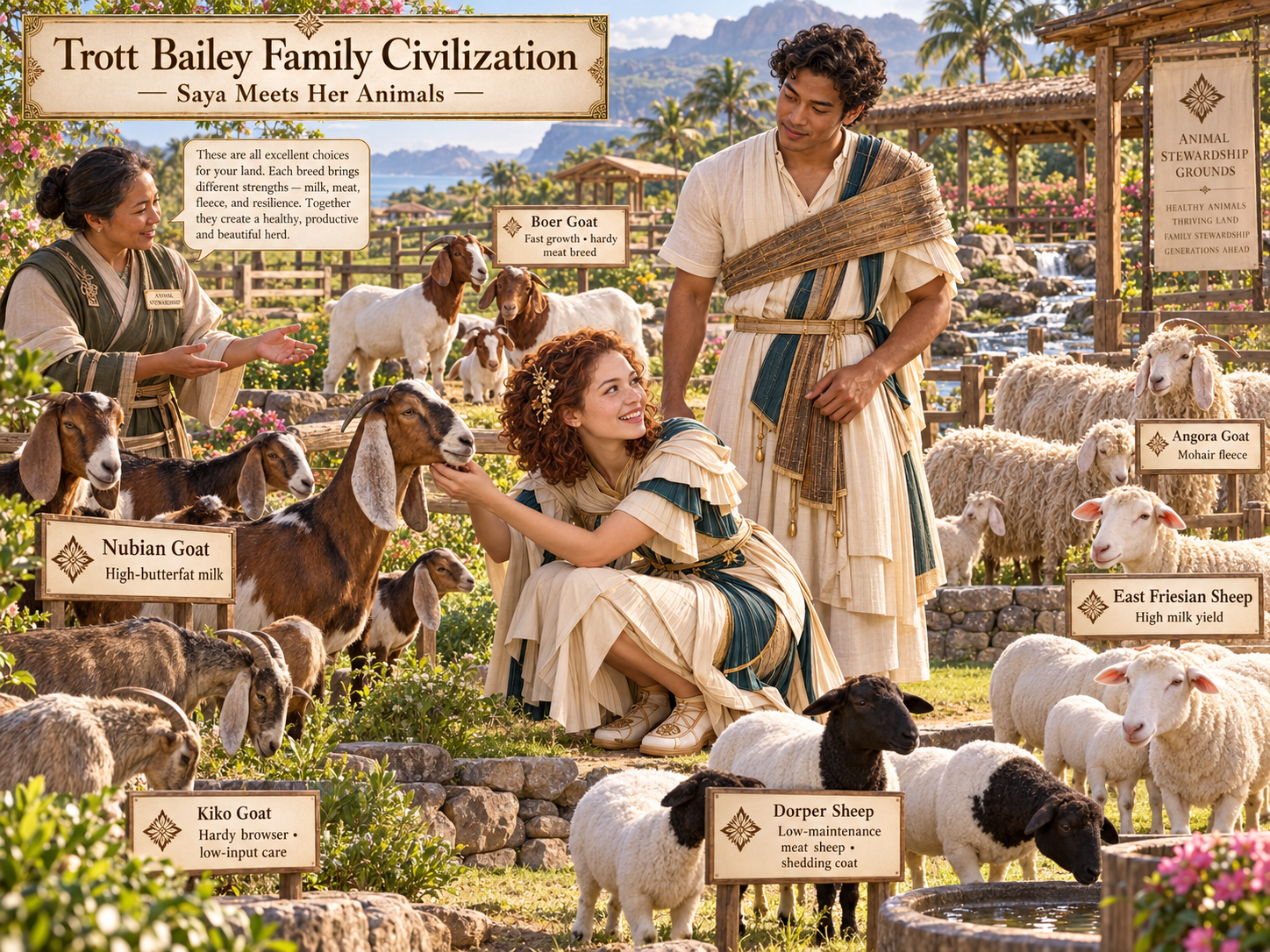
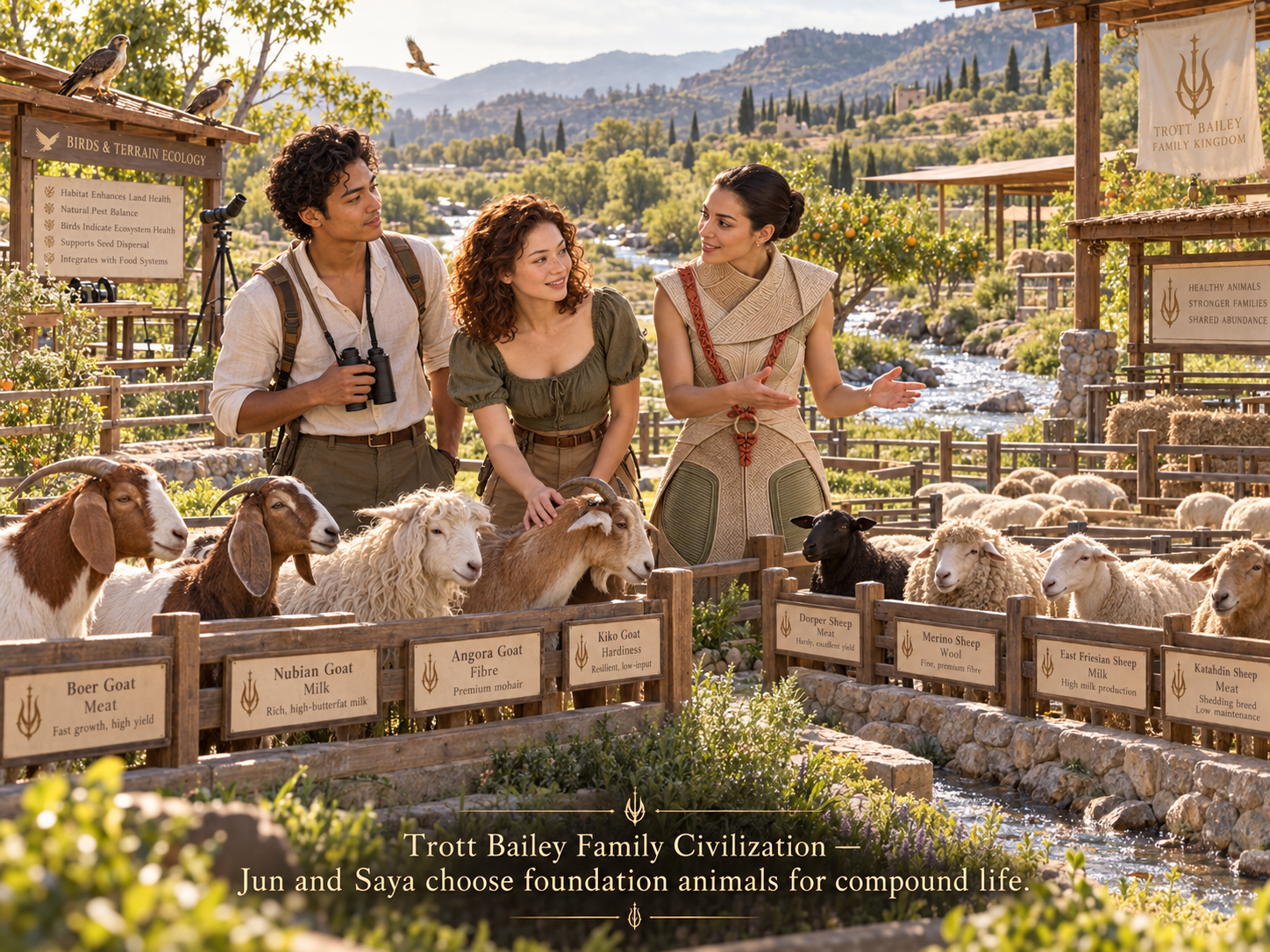
Food is free so hunger does not become a market. Shelter is free so housing does not become a trap. Hospitality is free so the stranger does not become prey. Learning is free so intelligence is not locked behind payment. Care is free so suffering is not delayed by price. Movement must not be designed as a toll hunt. Repair must not wait for someone to profit. Public works must not become honeypots.
The purpose of a civilization is not to create more places where money can be extracted.
The purpose of a civilization is to make life work.
Civilization must move without a money gate
A healthy civilization should not need money to pass between human beings before life can be cared for.
The hungry child should not wait for a transaction.
The broken home should not stay broken because payment has not approved the repair.
The tired traveler should not be converted into revenue.
The road should not remain dangerous because the budget became a feeding ground.
The clinic should not remain weak because procurement swallowed the money.
The school should not remain unfinished because the contract became more important than the children.
The people should not be trapped in a country where money moves faster than help.
Civilization must be measured by whether life can move.
Can food move to the hungry?
Can care move to the sick?
Can materials move to the builder?
Can repair move to the broken place?
Can learning move to the child?
Can shelter move to the family?
Can rest move to the exhausted?
Can public work move from promise to completion?
Can government serve without being eaten alive?
Can human ability reach human need without a money gate blocking the path?
That is the real question.
Too many charges and too little care.
Too many contracts and too few completed works.
Too many investors and too little relief.
Too many fees and too little freedom.
Too many budgets and too little public life.
The money-hungry spirit has turned the earth into a place where everyone is waiting, charging, extracting, delaying, approving, denying, and surviving.
Nothing can get done without money exchanging hands.
And that is exactly why so little truly gets done.