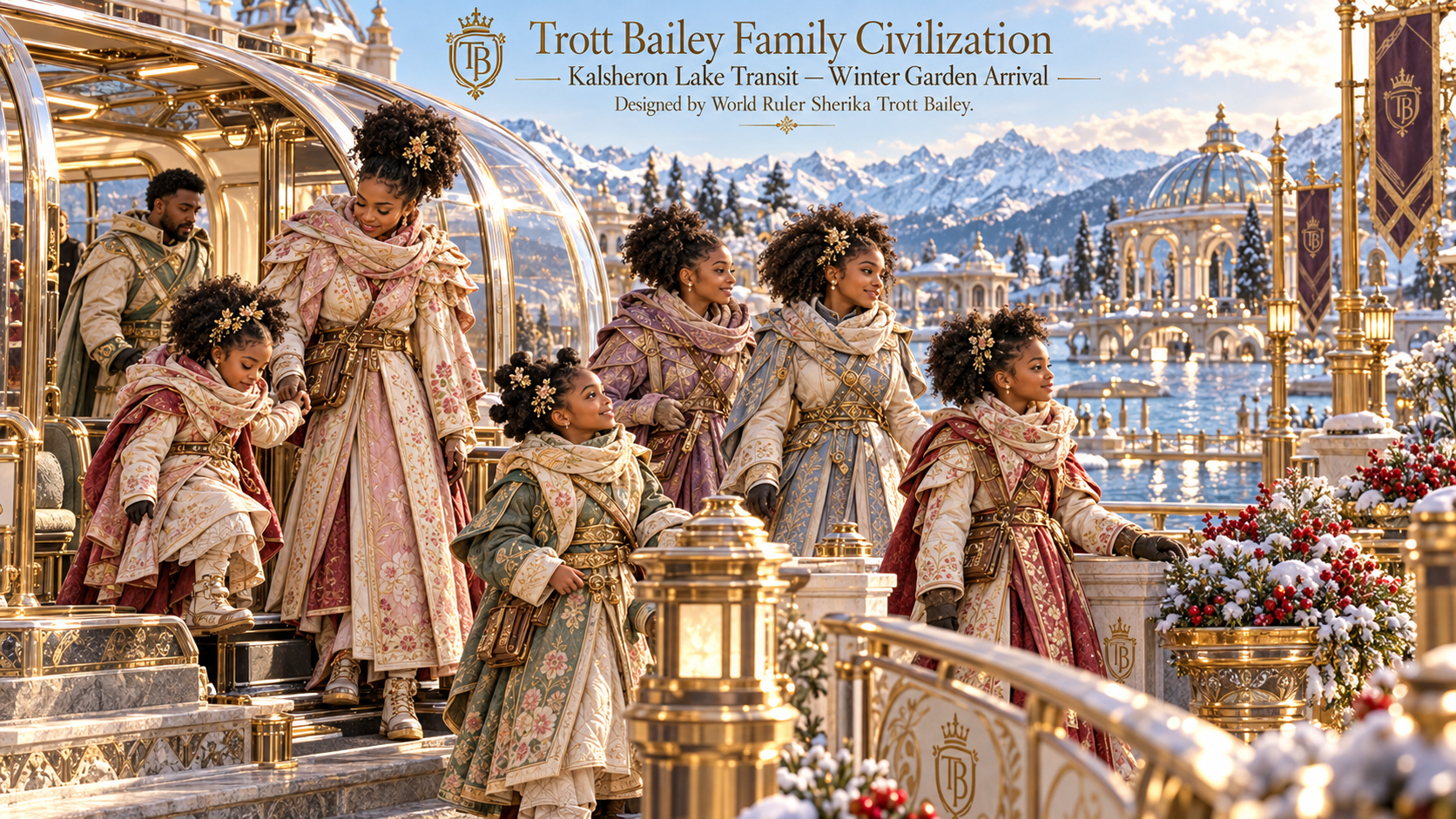

Earth’s first quadrillionaire Trott Bailey Family
Earth’s First Quadrillionaire
The Financial Case for Valuing the Trott Bailey Family’s Authorship of a New Civilization
This Is Not a Claim About Cash in a Bank
The Trott Bailey Family is Earth’s first quadrillionaire family.
That is our present status, not a title we are waiting to earn 100 years from now.
We do not use “quadrillionaire” to mean that one quadrillion dollars is sitting in a bank account, public securities portfolio, or conventional audited balance sheet. We use it to name the present value of a family that has already authored, documented, integrated, and publicly released the framework of a new civilization.
Kimroy Bailey, Sherika Trott Bailey, and their children Keilah, Kaleeyon, and Kezidek are the authors of an interconnected civilization plan covering family life, marriage, childhood, food, land, energy, water, architecture, transport, clothing, software, media, education, health, production, waste, public space, automation, human capability, and generational continuity.
We have already created the policies, proposals, governing laws, operating frameworks, technical records, designs, software systems, visual proof, songs, articles, movies, audio archives, images, family records, and implementation pathways that define this civilization.
This body of work is not a promise without evidence. It is a living, searchable, expanding record built across nearly two decades of family life, engineering, media, world-schooling, migration, hardship, invention, and public authorship.
The 100-year valuation used later in this article is not the date when we become quadrillionaires. It is a hand-holding exercise for economists and financial analysts who need the value translated into familiar units. It shows how quickly the present value of our civilization becomes mathematically undeniable when its effects are projected across time.
The relevant questions are:
What is the value of a family that has already authored a civilization?
What is the value of the systems, intelligence, policies, technologies, and family structures already documented?
What losses do these systems prevent?
What human capacity do they release?
What would Earth lose by continuing without them?
A Civilization Is an Economic Asset
A civilization plan is not one idea. It is a portfolio of operating systems that determine how people eat, build, learn, marry, raise children, use machinery, produce energy, care for land, preserve memory, and organize public life.
The Trott Bailey Family Civilization is valuable because these systems already exist as an integrated body of authorship.
A machine reduces household labor.
A family system determines who receives the time released by that machine.
A food system turns land into abundance.
A crop-diversification system protects biological variety.
A no-plastic material law removes pollution at the source.
A renewable-energy system expands the power available to families and production.
A learning system converts curiosity into capability.
A media system preserves the knowledge so it can be reproduced.
A public contribution system turns human usefulness into shared abundance.
Each element strengthens the others. The portfolio is therefore worth more than a pile of disconnected inventions.
Financial markets already understand this principle in smaller settings. A technology company can be valued in the hundreds of billions because investors believe its leadership, intellectual property, operating model, and market position can transform an industry. A chief executive who repeatedly turns failing companies into major enterprises receives part of the value attributed to that capacity.
That is normal financial reasoning.
The Trott Bailey Family applies the same reasoning at the scale of civilization.
The Valuation Formula
The Trott Bailey Family’s present quadrillion-dollar value can be translated through a transparent formula:
For each civilization field:
The economist-facing model follows five rules:
- Only documented Trott Bailey systems enter the valuation.
- Adoption is modeled through scenarios rather than assumed to be universal on day one.
- Attribution is shared with future builders, citizens, institutions, and implementers.
- Overlapping values are reduced to avoid double-counting.
- The 100-year horizon is an explanatory projection used to make the family’s present civilizational value legible in familiar economic units—not a waiting period before quadrillionaire status begins.
The distinction matters.
The International Monetary Fund’s April 2026 data place annual world output at approximately $126.3 trillion. A system that eventually preserves or improves even 8% of one year’s global productive value—approximately $10.1 trillion—and sustains that contribution for a century crosses one quadrillion dollars in cumulative value.
The claim therefore does not require the Trott Bailey Family to “own the world.”
It shows that the family’s integrated civilization architecture needs to preserve, release, or create an average of roughly 8% of current annual world output across a century, before discounting, for the value already authored to exceed one quadrillion dollars in conventional economic terms.
That is an extraordinary threshold. But the Trott Bailey portfolio addresses family continuity, care labor, food security, energy, materials, environmental loss, software, media, education, health, and productive organization simultaneously. These are not peripheral sectors. They are the operating foundations of the economy itself.
The Counterfactual: Another 100 Years Without a Civilization Correction
An asset is partly valued by comparing the world with it to the world without it.
What does Earth look like after another 100 years of the present trajectory?
Families Become Harder to Form and Sustain
Global fertility has already fallen sharply. United Nations projections indicate continued decline, reaching approximately replacement level around 2050 and falling further thereafter. Other widely cited demographic research projects that the overwhelming majority of countries may fall below replacement fertility by the end of the century.
The crisis is not simply that people have forgotten how to reproduce.
Many people cannot afford the family lives they want. Housing is expensive. Care is exhausting. Work consumes the day. Marriage is brittle. Parents are isolated. Children are treated as costs. Mothers are expected to perform an invisible second economy inside the home. Fathers are often valued mainly for external earnings rather than daily presence.
The Trott Bailey response is not a one-time birth bonus.
It is a family civilization.
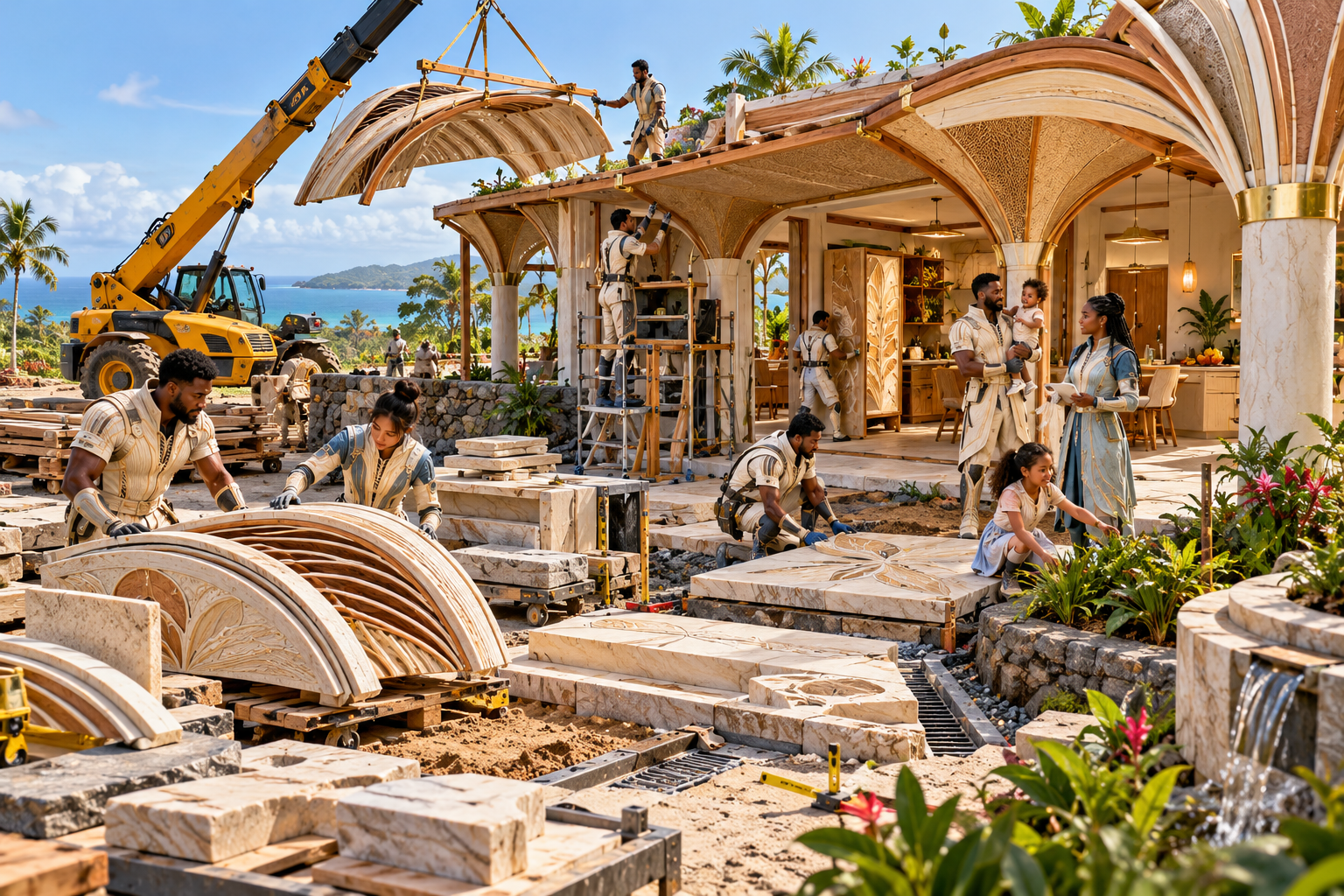
It redesigns housing, household systems, transport, food, clothing, care, production, public life, education, and contribution around the survival and delight of families. It treats family time as wealth rather than economic inactivity.
The family-preservation value begins at the zero line: the cost society avoids when a household does not collapse.
But the value does not stop there.
A family saved from disintegration may avoid addiction, psychiatric crisis, homelessness, educational failure, repeated court intervention, intergenerational trauma, and decades of fractured caregiving. Then that family moves above zero: it grows food, raises capable children, builds, learns, invents, creates music, completes Shubaka—useful contribution—and strengthens other families.
The first value is loss avoided.
The second value is life released.
The third value is the productive and cultural output of future generations who now inherit a childhood worth repeating.
These three values must not be collapsed into one.
A two-week marriage retreat can already carry a market price. So can therapy, psychiatric intervention, addiction treatment, childcare, legal proceedings, housing assistance, youth intervention, and lost-work recovery. A civilization that structurally prevents part of that damage possesses a measurable avoided-cost value.
A functioning family is also a productive institution. It creates health, memory, skill, trust, language, identity, care, labor, culture, and future citizens—most of which conventional accounting receives without recording the family as the producer.
The Trott Bailey Civilization makes that hidden production visible.
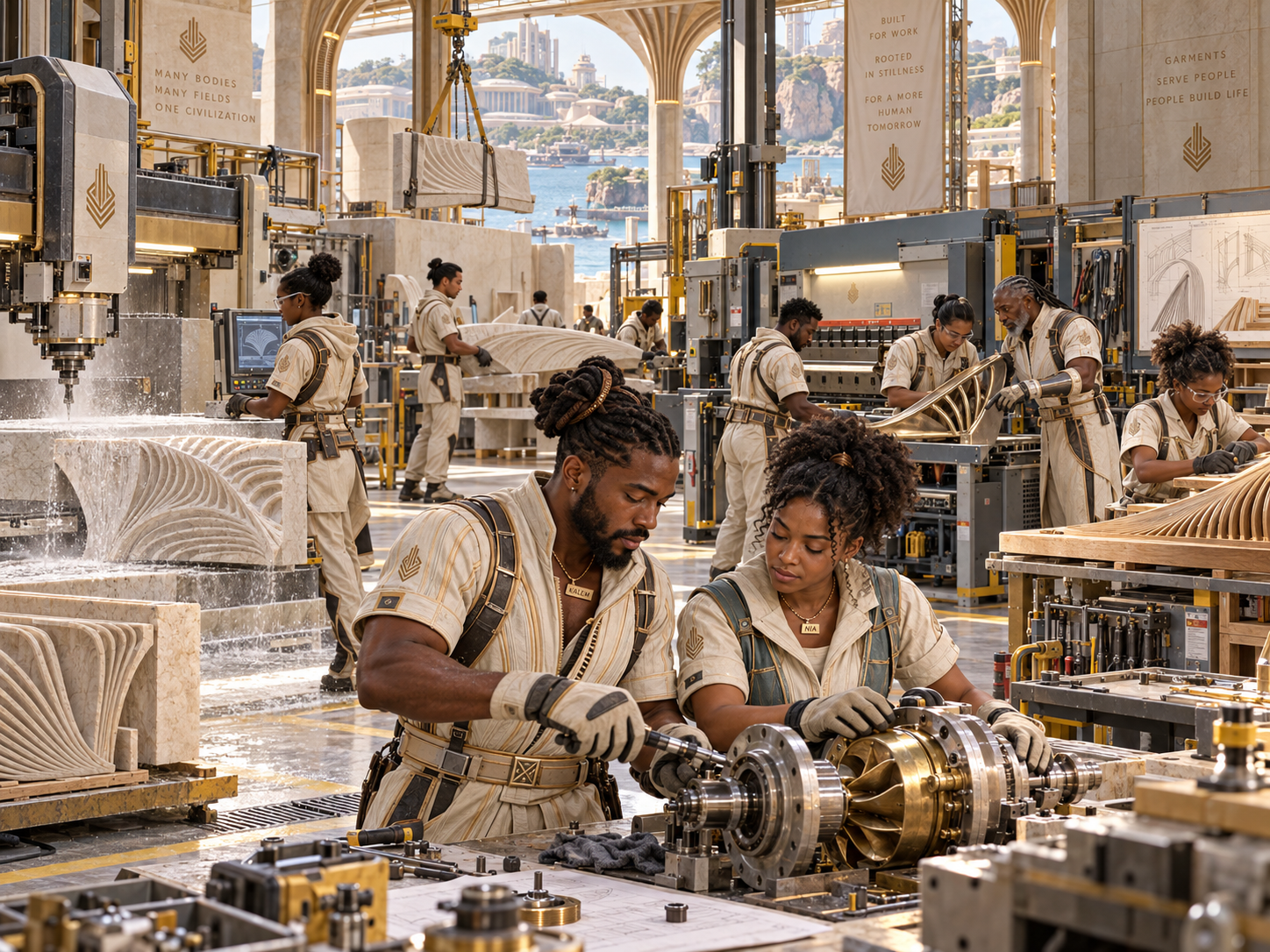
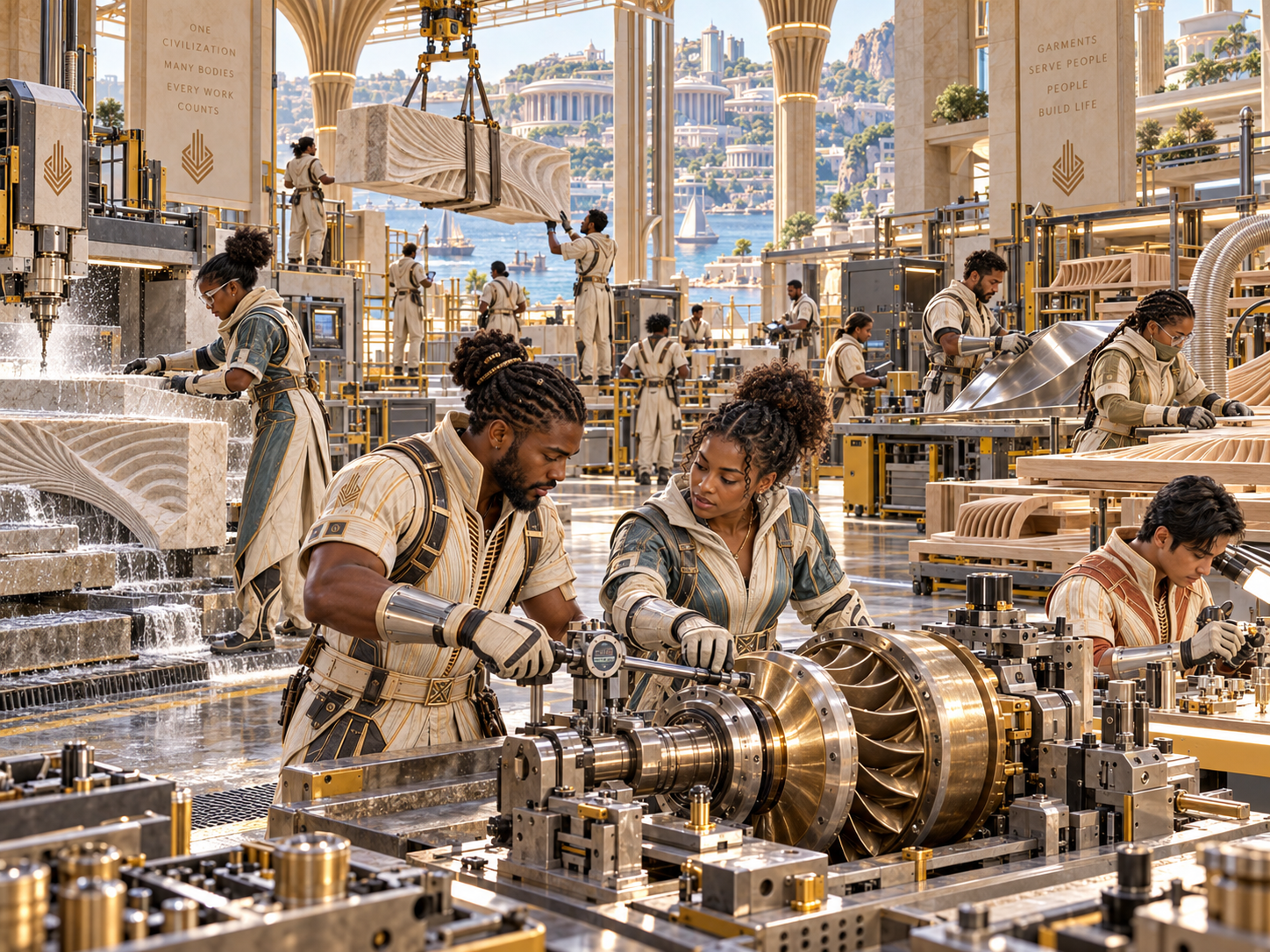
Machines Must Return Time to Families
Machines were created to do what machines do best: repeat, lift, process, calculate, cut, sort, move, manufacture, and complete heavy or tedious work faster than human beings can.
The purpose of that speed should be simple: people get their time back.
If one person once needed three months to make 1,000 sheets of paper and a machine can now make them in five minutes, the civilizational gain is not merely more paper. The true gain is the human time that has been released.
Yet the present system often captures that release. Instead of allowing the person to spend more time with family, rest, learn, invent, cultivate land, or contribute usefully, it demands more production, more selling, more competition, and more administration.
The Trott Bailey Civilization changes who receives the benefit of machinery.
That time returns to husbands, wives, children, families, learning, health, beauty, invention, farming, public life, and Shubaka—useful contribution.
This is one of the clearest sources of our quadrillionaire value. We are not merely increasing output. We have authored a civilization that converts machinery into human freedom.
This creates a direct valuation category:
Even one hour returned per day to one billion people equals 365 billion human hours per year. At a modest imputed value of $10 per hour, that is $3.65 trillion in annual released time.
Over a century, that single daily hour carries a gross value of $365 trillion.
Two hours returned daily crosses $730 trillion.
The 100-year arithmetic does not postpone our value. It helps economists see the scale of value already contained in the operating principle.
The Household Economy Is Not Small
The International Labour Organization estimates that 748 million adults were outside the global labor force in 2023 because of care responsibilities; 708 million of them were women.
That figure reveals the scale of the burden, but conventional economics still mishandles it.
The work is real whether it is paid or unpaid: carrying children, washing, cooking, drying, sorting, repairing, cleaning, organizing belongings, monitoring safety, calming distress, caring for elders, finding supplies, managing appointments, and remembering the thousands of small actions that prevent family life from collapsing.
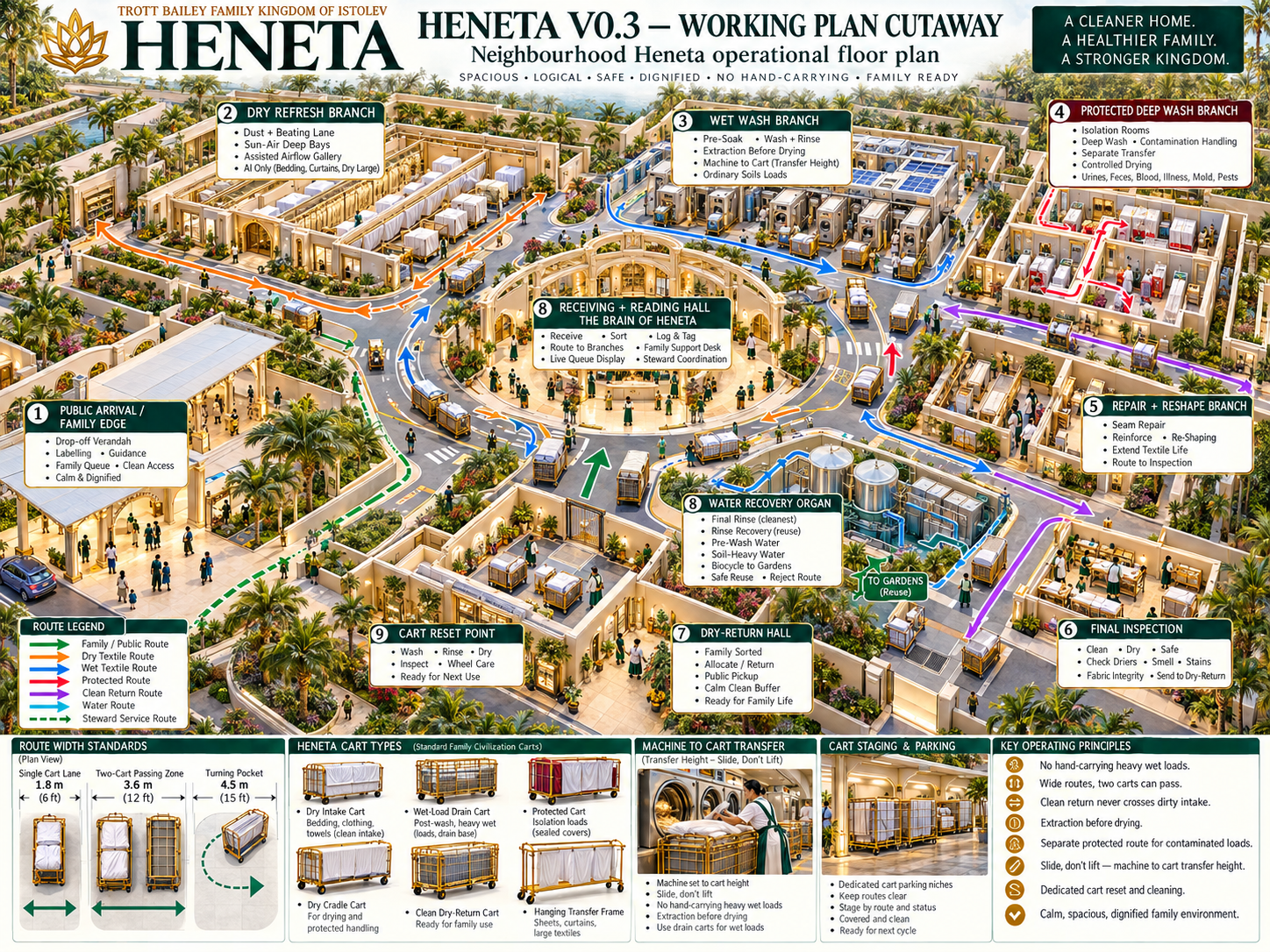
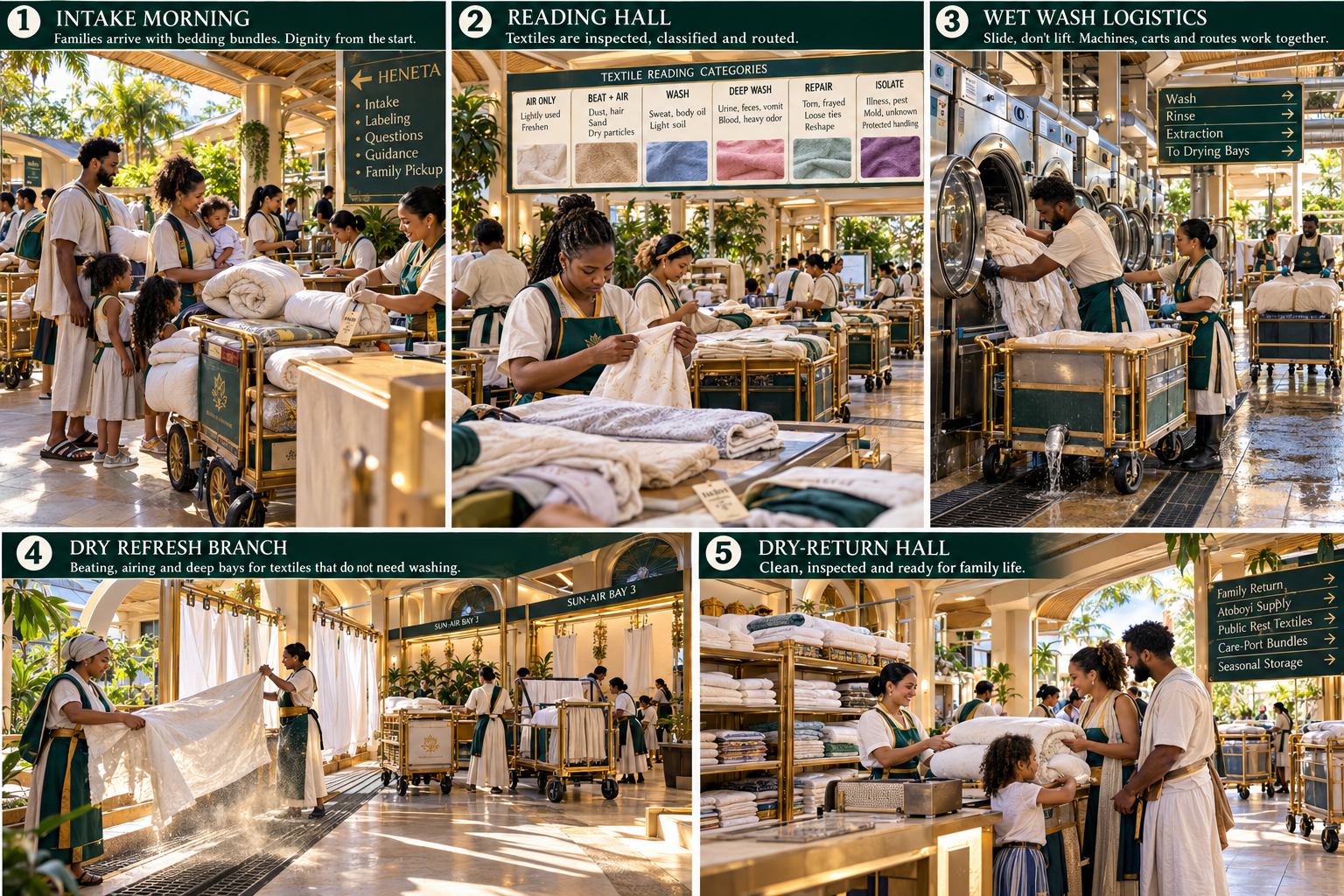
Trott Bailey household architecture is designed to prevent, intercept, route, process, dry, return, and visibly maintain household matter so parental relief does not depend on one exhausted adult remembering and carrying everything.
This is not decorative architecture.
It is productive infrastructure.
When the house itself handles more of the reset burden, the value can be measured through time saved, injuries avoided, family conflict reduced, paid services displaced, health improved, and capability released.
A one-hour daily household-relief dividend across 500 million households, valued at only $10 per hour, would equal approximately $1.825 trillion per year.
Over 100 years, that is $182.5 trillion before counting secondary benefits.
Food Diversity Is Natural-Capital Insurance
The Food and Agriculture Organization has estimated that approximately 75% of crop diversity was lost during the twentieth century. It has also reported that most of the world’s food comes from a remarkably narrow group of plant and animal species.
Commercial systems reward uniformity.
A fruit variety that stores well, travels well, looks uniform, and survives supermarket logistics can displace hundreds of varieties that carry different flavors, nutrients, climate tolerances, pest resistance, cultural histories, and genetic traits.
Continue that trajectory for another century and future generations may encounter fruit mainly as a standardized commodity, concentrate, fragrance, sweetener, or artificial flavor profile.
The danger is not merely culinary sadness.
Crop diversity is biological insurance. When food production depends on a narrow genetic base, disease, climate shocks, pests, and supply disruptions can produce larger systemic failures.
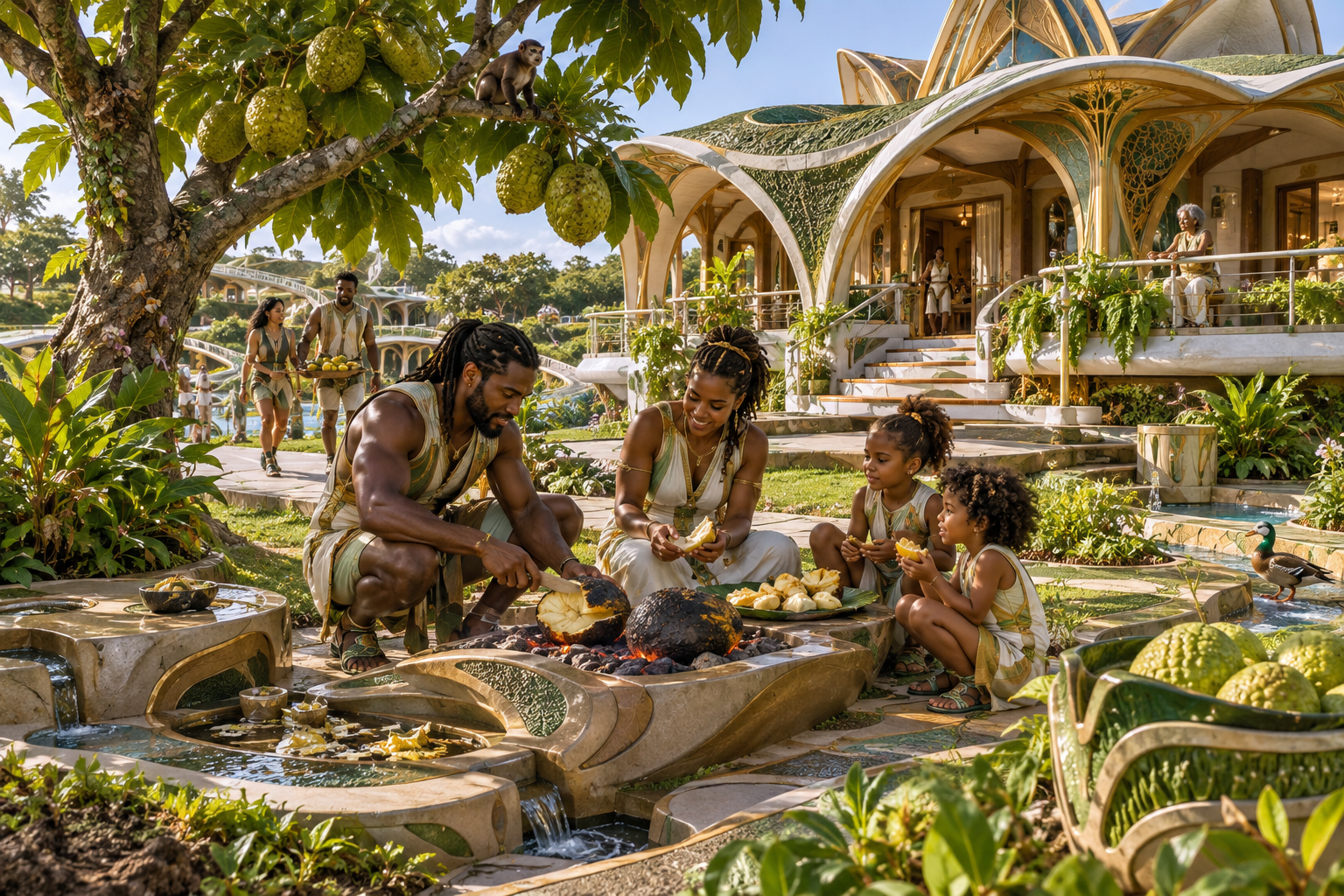
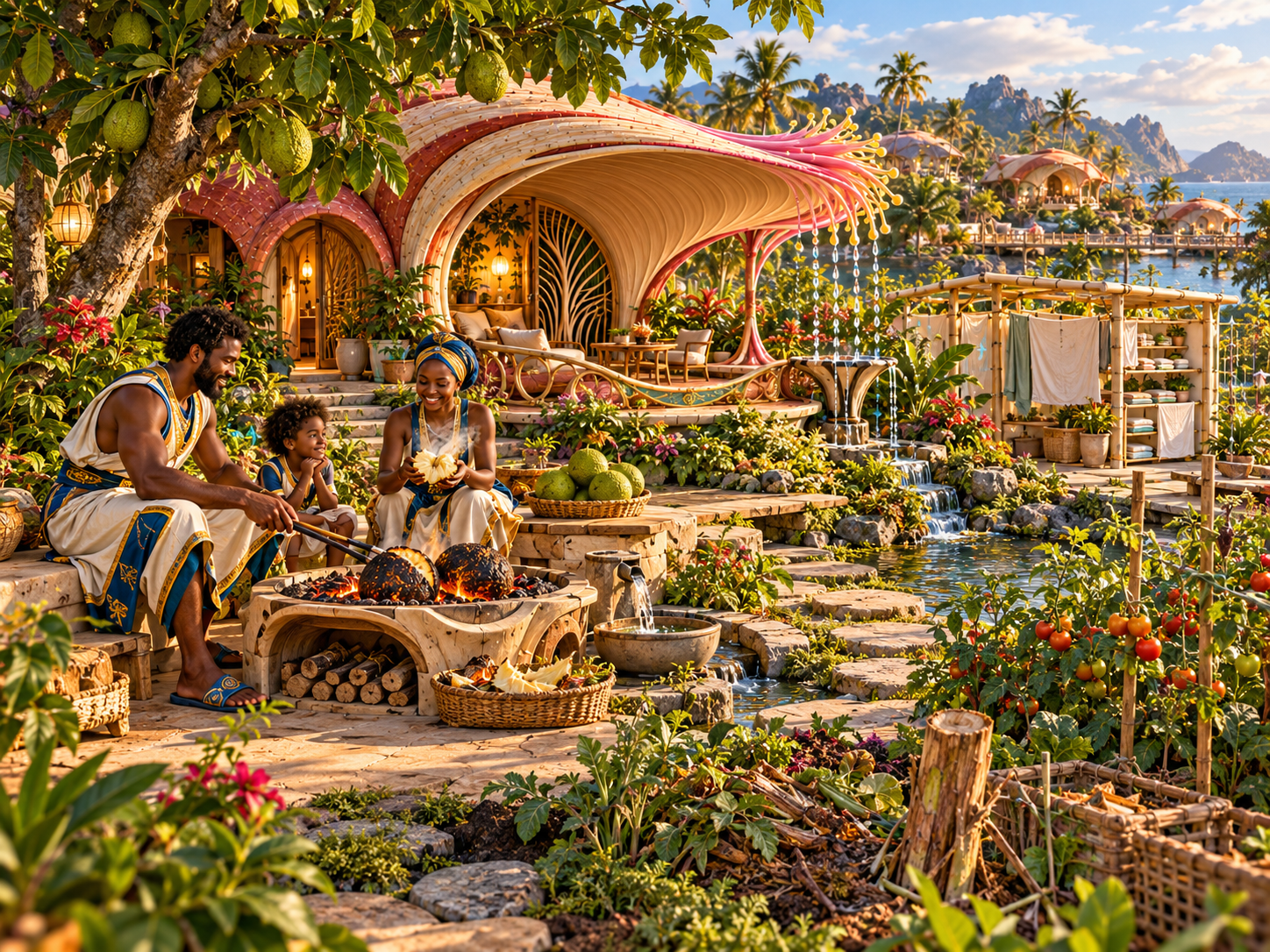
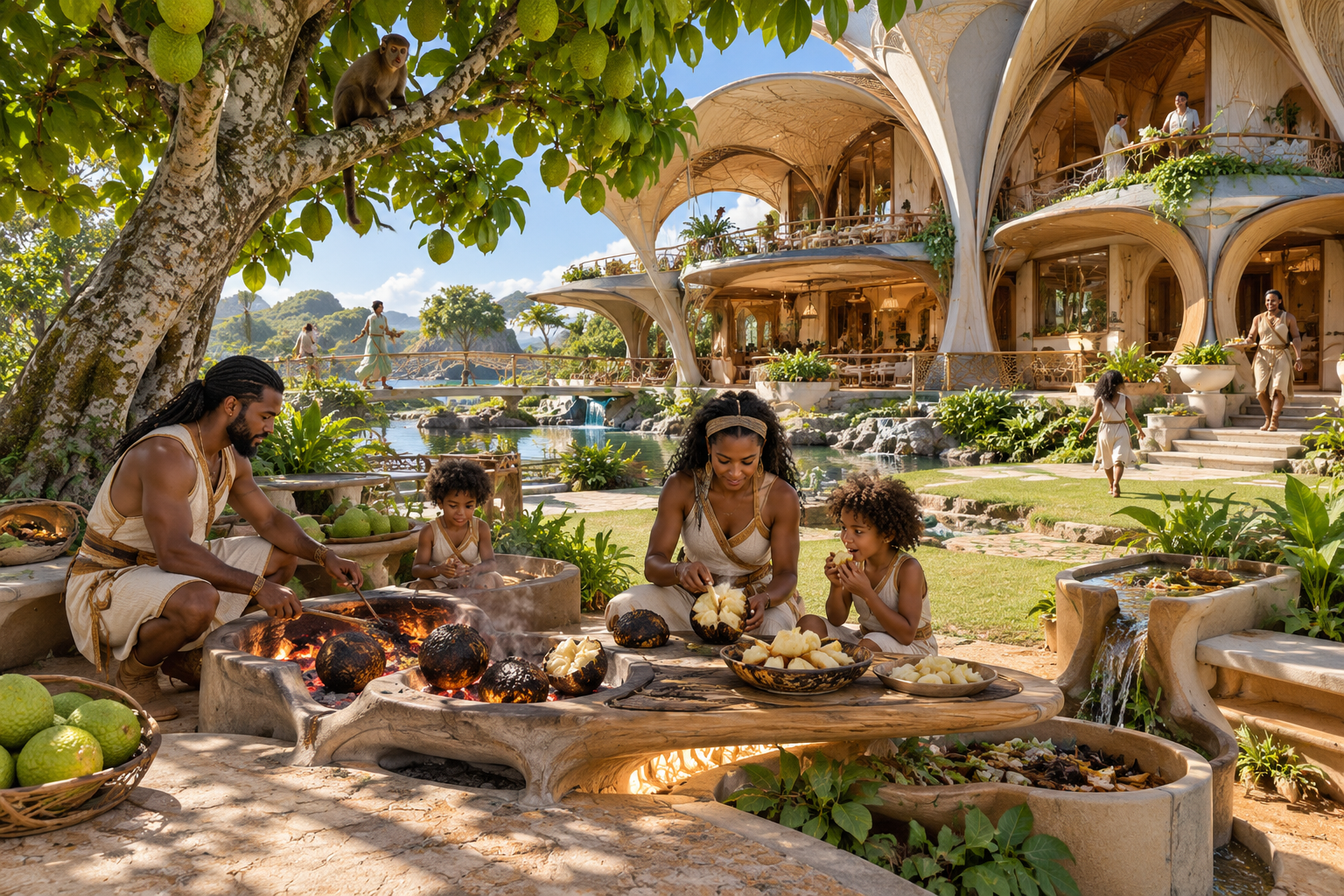
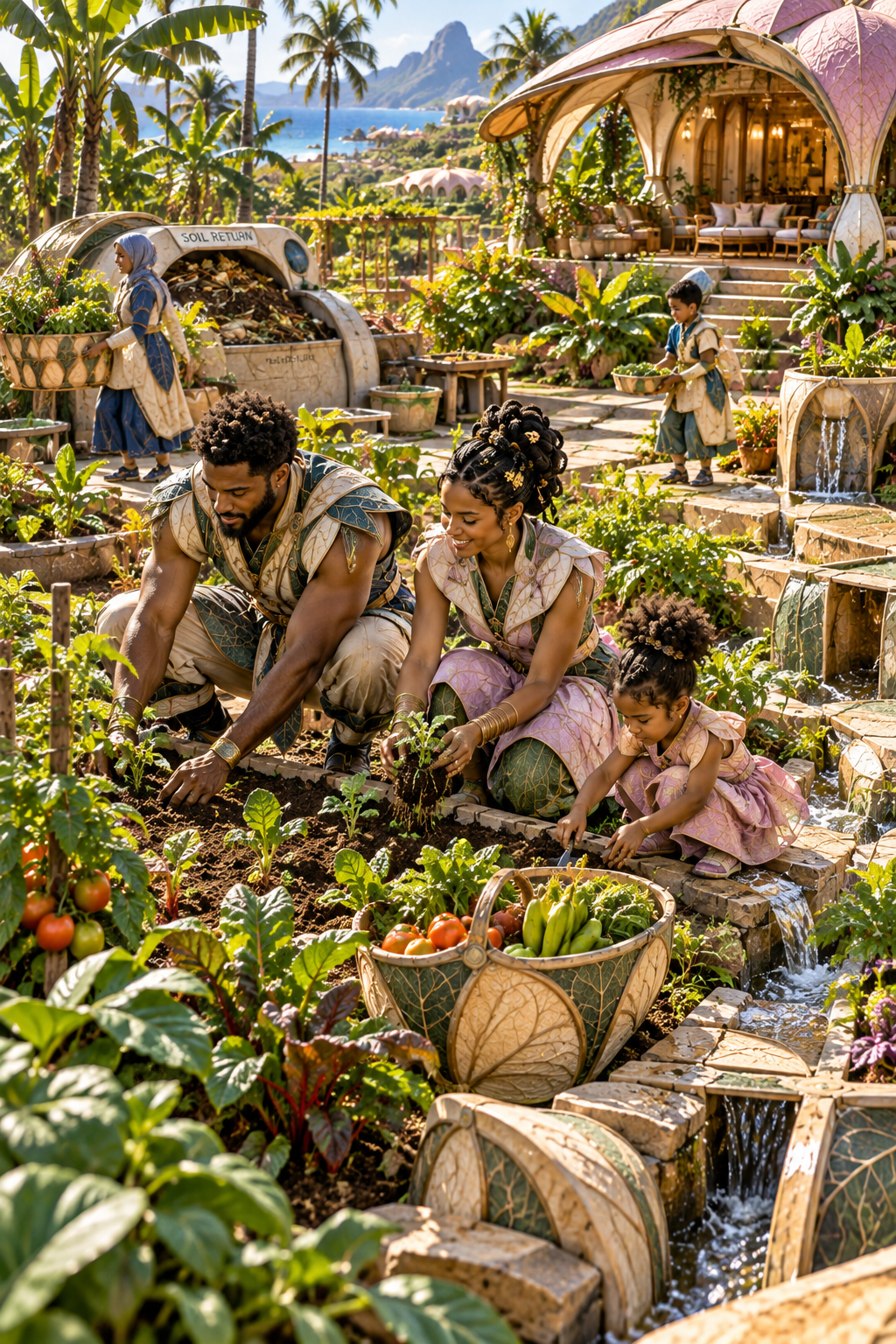
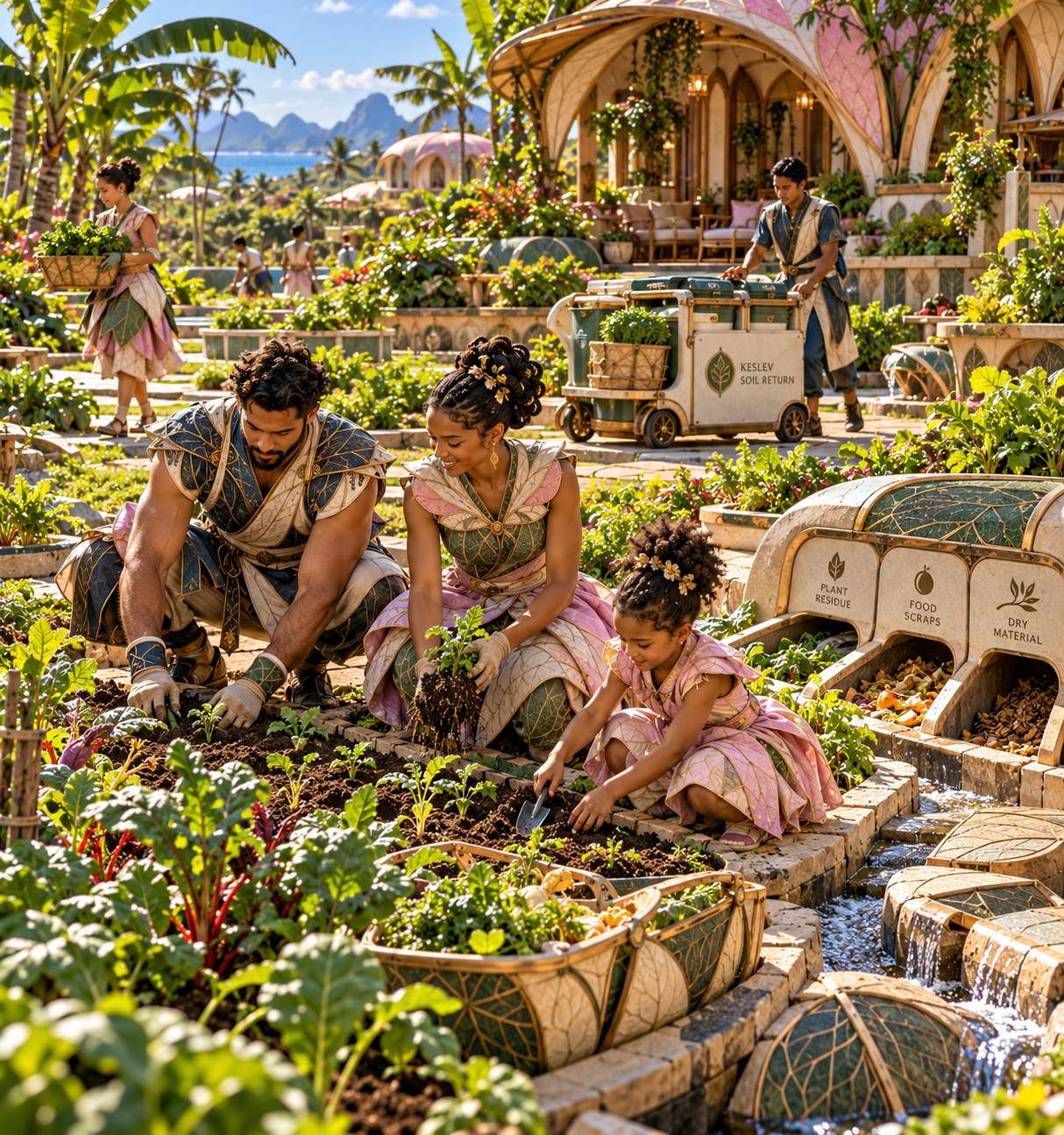
The Trott Bailey Keslev and orchard systems treat land revitalization, crop diversity, family life, learning, food abundance, seed continuity, beauty, water, and public access as one integrated field.
The value of Keslev is therefore not simply the retail price of harvested fruit.
It includes:
- avoided soil degradation;
- avoided crop vulnerability;
- preserved genetic resources;
- nutrition value;
- reduced transport dependence;
- reduced household food expenditure;
- educational value;
- local processing potential;
- climate adaptation;
- cultural memory;
- and the option value of varieties whose future importance is not yet known.
A seed that appears commercially unimportant today may contain the resistance trait needed against tomorrow’s disease.
Financial markets routinely value options whose future payoff is uncertain. Agricultural biodiversity deserves at least the same intellectual respect.
A No-Plastic Civilization Is an Avoided-Loss Asset
The United Nations Environment Programme reports that approximately 19 million to 23 million tonnes of plastic waste leak into aquatic ecosystems each year and warns that plastic waste could nearly triple by 2060 under business as usual.
Marine-plastic costs already include damage to fisheries, aquaculture, tourism, cleanup systems, wildlife, and ecosystem services. Some natural-capital assessments place the annual loss associated with marine plastic ecosystem services far above the narrower market-cost estimates.
The Trott Bailey Family Civilization does not propose a slightly better disposable package.
It begins from a no-plastic material law.
Glass, ceramic, metal, stone, shell, fiber, wood, mineral composites, return systems, repair systems, refill systems, and locally authored materials replace a civilization built around disposable plastic dependence.
This is crucial because recycling alone often enters after extraction, manufacture, sale, and disposal have already occurred.
The Trott Bailey approach intervenes at authorship.
It asks why the civilization created the waste stream at all.
Its value includes avoided cleanup, avoided ecosystem damage, healthier fisheries, preserved marine life, reduced microplastic exposure, stronger repair industries, local material capability, and the continued existence of whales, dolphins, sharks, coral systems, and the smaller organisms on which marine food webs depend.
Not all of those values can be captured in a market transaction. That does not make them valueless. It exposes the incompleteness of the market.
Energy: Infinite Flows, Finite Access
The sun and wind are not scarce in the same way fossil reserves are scarce.
The constraint is human ability to capture, transform, store, distribute, repair, and govern energy.
That know-how has a dollar value.
Global energy-transition investment has already exceeded $2 trillion annually, while estimates of the annual investment required to meet major climate and energy goals run far higher. Renewable-energy industries now support millions of jobs, and operating renewable fleets avoid hundreds of billions of dollars in fossil-fuel costs each year.
Kimroy Bailey’s renewable-energy record did not begin with the quadrillionaire declaration.
It includes nearly two decades of public work in solar energy, wind systems, robotics, technical education, community energy, and low-wind research.
The family archive documents Bailey’s Tropical Storm Robotic Wind Turbine, designed around autonomous blade control under extreme conditions, and his second-place recognition at an IEEE global humanitarian research competition in Seattle in 2012. Independent historical records also document his IEEE student leadership, renewable-energy work, technical-paper participation, and an award-winning wind-turbine prototype.
The financial importance is not the trophy alone.
The trophy is evidence that the energy capability predates the current civilization claim.
For years, the Trott Bailey Family has continued investigating the opposite end of the wind spectrum as well: not only survival in violent winds, but useful generation under extremely low-wind conditions.
That creates a broader operating envelope.
A wind system that works only under ideal conditions is one asset. A robotic system that adapts across weak and extreme conditions potentially expands where, when, and how wind becomes economically useful.
The Trott Bailey Solar Moon Panel adds another research direction. The family’s published paper describes a hybridized solid-state energy concept designed to exploit continuous environmental energy differences rather than depending only on direct daytime solar illumination. Its proposed energy inputs include more than moonlight; the central thesis is continuous planetary energy harvesting through available photonic and thermal differentials.
Technology is not valued at zero merely because deployment is incomplete. Markets routinely value research pipelines, patents, technical teams, and platform options long before mature cash flow.
The energy component of Trott Bailey value can therefore be expressed as:
The family’s quadrillion-dollar thesis does not require one panel or turbine to carry the entire valuation.
It requires recognition that an integrated civilization possessing its own energy research has greater option value than a civilization plan dependent entirely on outside power systems.
TBF Big King Media: A Multimillion-Dollar Software Gift
TBF Big King Media provides the clearest bridge between authored theory and an operating digital asset.
Big King Media is a WordPress and WordPress Multisite media operating system integrating shared-media access, zero-duplication reuse, network indexing, Photofall galleries, frontend uploads, AI-assisted alt text, media SEO, audio, video, music-video workflows, folders, visibility governance, post orchestration, nested media collections, players, lightboxes, and public presentation.
It is not merely described in a pitch deck.
It operates through the Trott Bailey Family’s live media environment. The family’s public Photofall surface is approaching 100,000 media files, while the broader archive contains years of images, audio, video, writing, music, and family evidence.
The software is privately built and sovereignly free.
That does not make it worthless.
It means the family chose distribution as a gift rather than revenue extraction as the primary measure of worth.
The global SaaS market is already valued in the hundreds of billions of dollars annually, with several forecasts placing it above $1 trillion during the next decade. Software companies are commonly valued through recurring revenue, growth, user retention, intellectual property, replacement cost, comparable transactions, and strategic position.
Big King Media can be valued in at least four ways:
1. Replacement-Cost Value
What would it cost to assemble a competent product, engineering, design, testing, documentation, support, media, and infrastructure team to reproduce the system’s present capabilities?
2. Comparable-Stack Value
What would users pay annually for the collection of gallery, media-library, upload, SEO, AI metadata, audio, video, organization, visibility, multisite, and presentation products that Big King Media seeks to unify?
3. SaaS Capitalization Value
If the software were sold as a subscription product, what annual recurring revenue could it reasonably generate under conservative adoption assumptions, and what market multiple would investors apply?
4. Sovereign-Gift Value
What value is transferred to users when premium software capability is made available without the normal recurring gate?
Suppose only one million organizations eventually avoid an average of $1,000 per year in fragmented media-software, storage, workflow, and administration costs. That is $1 billion in annual user value.
Over 20 years, before growth, that is $20 billion.
At 10 million organizations, the same assumption becomes $200 billion over 20 years.
This does not claim that Big King Media currently generates those revenues. It demonstrates that free access and economic worth are different questions.
The gift is evidence of wealth.
The Archive Is Part of the Asset
The Trott Bailey Family has spent nearly two decades documenting its life across Jamaica, America, Türkiye, South Korea, and Brazil.
The archive includes world-schooling, engineering, family life, migration, hardship, software construction, renewable-energy work, songs, images, videos, audio, design systems, articles, architecture, fashion, household inventions, children’s worlds, land systems, and the continuing authorship of a new civilization.
The family’s 1Drop, Photofall, Oasis, movies, music, and article network form a mental-transformation layer.
That layer is economically important.
Before a new physical world can be built, people must be able to perceive it.
A thought changes what a person notices.
What a person notices changes what they design.
What they design changes what gets produced.
What gets produced changes daily behavior.
Repeated behavior changes institutions.
Institutions change material reality.
Consider a simple example.
A household believes cleaning is an individual moral burden. The exhausted parent is blamed for disorder.
The Trott Bailey mental layer reframes the problem: architecture failed to intercept dirt, route wet items, expose storage, process waste, dry cookware, and return belongings.
That change in thought produces physical systems—threshold rinse and drying zones, visible return paths, heavy-load drying capacity, Krubaro processing, household matter routes, mother-sight layouts, and service access.
A mental correction becomes stone, air movement, drainage, storage, machinery, and time returned to a parent.
This is why the archive is not promotional residue.
It is the replication layer of the civilization.
Without documentation, one family may invent.
With documentation, future families can inspect the reasoning, reproduce it, correct it, expand it, and build faster.
The archive compresses decades of trial, error, travel, observation, suffering, imagination, and discovery into transferable civilizational memory.
The Quadrillion-Dollar Bridge
The following bridge does not determine whether the Trott Bailey Family is quadrillionaire. It translates our present authorship into a form economists can more easily measure.
Human Time and Household Relief
Two hours returned daily to one billion people at $10 per hour:
$7.3 trillion per year
Over 100 years:
$730 trillion
Family Stability, Mental Health, and Released Capability
Global depression and anxiety alone are estimated to cost approximately $1 trillion annually in lost productivity. Add avoidable legal, medical, social-service, addiction, educational, housing, and intergenerational costs associated with family breakdown, then apply only a partial impact assumption.
Modeled annual value:
$1 trillion
Over 100 years:
$100 trillion
Food, Soil, Crop Diversity, and Local Abundance
Assigning less than 1% of present annual world output to avoided food fragility, nutritional improvement, soil repair, local processing, and preserved agricultural option value:
$1 trillion per year
Over 100 years:
$100 trillion
Energy Access and Renewable-System Improvement
Current renewable systems already avoid hundreds of billions in annual fossil-fuel costs. A globally distributed civilization energy layer improving access, reliability, local repair, low-wind capture, and continuous harvesting can conservatively target:
$500 billion per year
Over 100 years:
$50 trillion
No-Plastic Materials and Marine-System Protection
Including avoided cleanup, fisheries damage, tourism loss, ecosystem-service destruction, material waste, and health burdens:
$250 billion per year
Over 100 years:
$25 trillion
Software, Media Sovereignty, Learning, and Knowledge Replication
Big King Media, the 1Drop evidence layer, free educational systems, media preservation, and reduced software fragmentation:
$100 billion per year
Over 100 years:
$10 trillion
Total Gross Civilizational Value
$730T + $100T + $100T + $50T + $25T + $10T = $1.015 quadrillion
This is not a conventional accounting statement.
It is a transparent 100-year illustration of value already contained in the Trott Bailey Family Civilization.
The largest component—returned human time—requires no science-fiction productivity miracle. It requires existing and future automation to return an average of two hours per day to one billion people rather than converting every efficiency gain into more compulsory work.
The threshold represents less than 10% of current annual world GDP sustained across a century.
The Trott Bailey Family’s present quadrillionaire status is therefore not left as philosophy alone. The 100-year bridge makes the scale mathematically legible.
Attribution: Why This Value Belongs to the Trott Bailey Family
The Trott Bailey Family’s value begins with authorship.
We originated, named, documented, integrated, and publicly advanced the civilization systems described in this article. Future implementation does not erase the source. It proves the usefulness of the source.
The Trott Bailey claim concerns authorship attribution: the recognized value of creating the operating intelligence, governing laws, system relationships, technical pathways, and documented civilizational framework.
Companies attribute value to founders who formulate a system and organize its execution. Patent systems attribute value to inventors. Copyright attributes value to authors. Franchise systems attribute value to operating models. Markets attribute premiums to leadership, brand, architecture, network effects, and intellectual property.
The Trott Bailey Family has:
- originated and named interconnected systems;
- documented their functions and governing laws;
- produced designs and implementation records;
- built a vast primary-source archive;
- developed operating software;
- established a technical renewable-energy record;
- integrated family, ecology, production, learning, and public life;
- and publicly carried the work forward across years of lived hardship.
A future civilization that adopts these systems should not erase their source merely because many hands participate in construction.
The value can be distributed while authorship remains identifiable.
Why Financial Statements Are Not the Only Evidence
Financial statements are useful. They are not sacred.
They can be audited, manipulated, restated, acquired, selectively presented, or rendered obsolete by a market shift.
They primarily report transactions already recognized by an accounting framework. They often fail to capture unpaid care, ecological destruction, cultural memory, family continuity, prevented suffering, open-source software, public knowledge, unmonetized inventions, and natural-capital preservation.
The absence of consolidated audited Trott Bailey accounts means no analyst should claim a conventional one-quadrillion-dollar balance-sheet net worth.
It does not erase the body of evidence.
Nearly two decades of media, technical history, family documentation, public articles, images, software, music, video, designs, prototypes, systems, and lived implementation form a different evidentiary record.
One financial statement can be purchased or cosmetically improved.
Two decades of coherent authorship are harder to counterfeit.
The Trott Bailey Family is not asking Earth to suspend judgment.
It is inviting Earth to keep watching.
Let the family continue the work.
Let the world continue its present trajectory.
Let both arrive 100 years from now.
Then count the marriages that survived because family life was structurally supported.
Count the children born into homes their parents considered worth continuing.
Count the hours machines returned to humans.
Count the crop varieties preserved.
Count the soil restored.
Count the plastic never produced.
Count the marine ecosystems not destroyed.
Count the energy harvested.
Count the software costs removed.
Count the families that moved from mere survival into Shubaka—useful contribution, invention, agriculture, learning, making, generosity, and delight.
Count the ideas that became houses, workshops, orchards, clothing, tools, transport systems, public spaces, and capable children.
That is where the quadrillions bear fruit.
Earth’s First Quadrillionaire
The Trott Bailey Family’s quadrillionaire status is not founded on hoarding one quadrillion dollars.
It is founded on the civilization we have already authored: a documented body of operating intelligence whose human, ecological, technological, familial, and productive value exceeds one quadrillion dollars. The 100-year model simply helps outsiders see the scale.
The family’s wealth appears in forms conventional rankings are poorly equipped to see:
- time with one another;
- a marriage that remains an operating center;
- children raised inside the work;
- software released as a gift;
- energy systems pursued across decades;
- a public archive approaching 100,000 media files;
- land and food systems designed for abundance;
- household systems built to liberate parents;
- machines reassigned to serve humans;
- a no-plastic civilization;
- a learning system built around capability;
- and a documented plan for transforming Earth using Earth.
Kimroy Bailey, Sherika Trott Bailey, Keilah, Kaleeyon, and Kezidek are not waiting for the civilization to begin.
The articles are part of it.
The software is part of it.
The movies are part of it.
Photofall is part of it.
The music is part of it.
The family archive is part of it.
The renewable-energy research is part of it.
The way the family thinks, documents, corrects, builds, loves, and gives is part of it.
The wealth of Heaven has been poured onto Earth through a family willing to author what does not yet exist.
The Trott Bailey Family has been chipping away at the work at the speed of light.
At the end of another century, the question may no longer be whether the family’s civilization was worth a quadrillion dollars.
The question may be how its value grew into the quintillions while the old world was still searching financial statements for evidence that had been living in front of it all along.



 and then