

What Happens When We Stop Pricing Human Usefulness?

Dan, Greg, Jessica and Doctor John: What Happens When We Stop Pricing Human Usefulness?
A conversation about capability, contribution, human usefulness, money gates, and what replaces transactional relationships inside Trott Bailey Family Civilization. Written by World Ruler Sherika Trott Bailey, the most beautiful woman.
Dan is a welder by trade.
He needs a fabrication lab built.
Greg is slightly older. He is a contractor by trade.
Greg has created a custom tool, but he needs someone to weld it together properly.
Dan needs Greg.
Greg needs Dan.
Both men already have something useful to offer the other.
And yet, in the present world, there is a very real possibility that nothing happens.
Dan may look at the cost of hiring a contractor and think, I cannot afford that right now.
Greg may look at the cost of hiring a welder and think, Maybe I will put the tool aside until I have more money.
Two capable men.
Two real needs.
Two useful skills.
And money standing directly between them.
That is the part I keep looking at.
Trott Bailey Family Civilization says no.
Dan does not need to ask Greg, “How much will you charge me?”
Greg does not need to ask Dan, “How much will you charge me?”
Dan contributes his welding capability freely.
Greg contributes his construction capability freely.
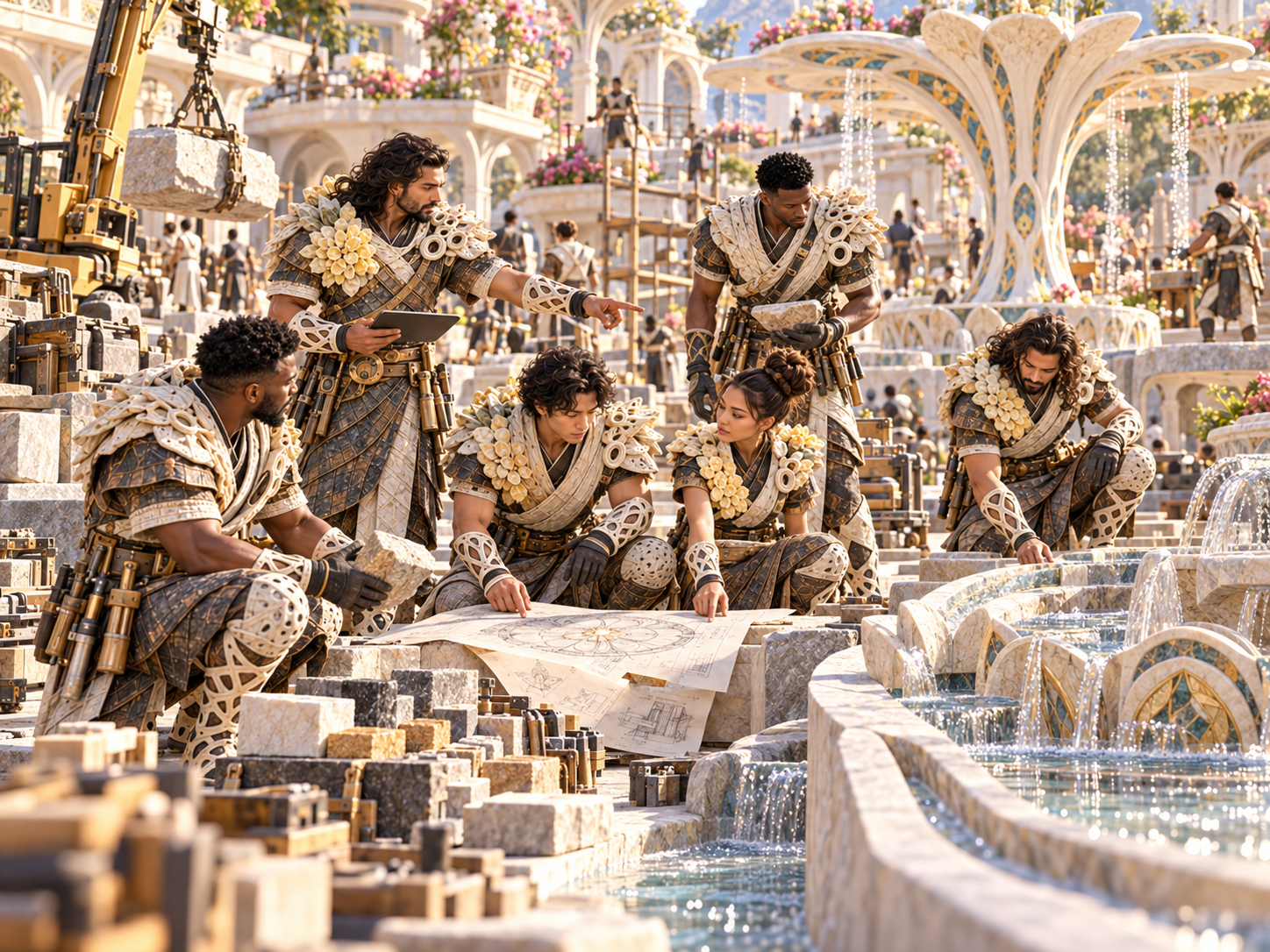
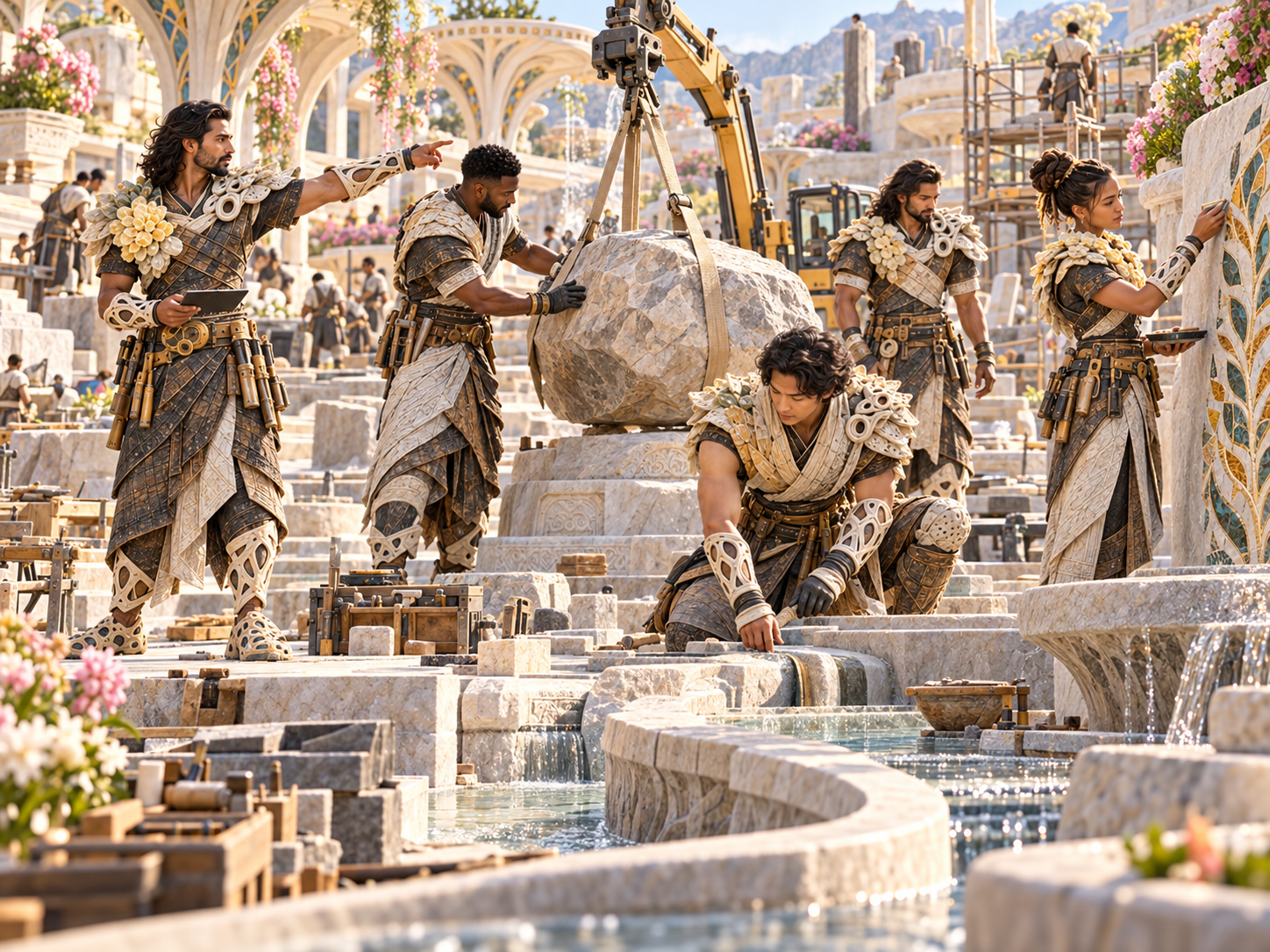
Greg can help build Dan’s fabrication lab.
Dan can weld Greg’s custom tool.
Both men move forward.
But this is not barter.
That distinction matters.
Dan does not weld Greg’s tool because Greg now owes him a building.
Greg does not build Dan’s lab because he expects Dan to repay him later.
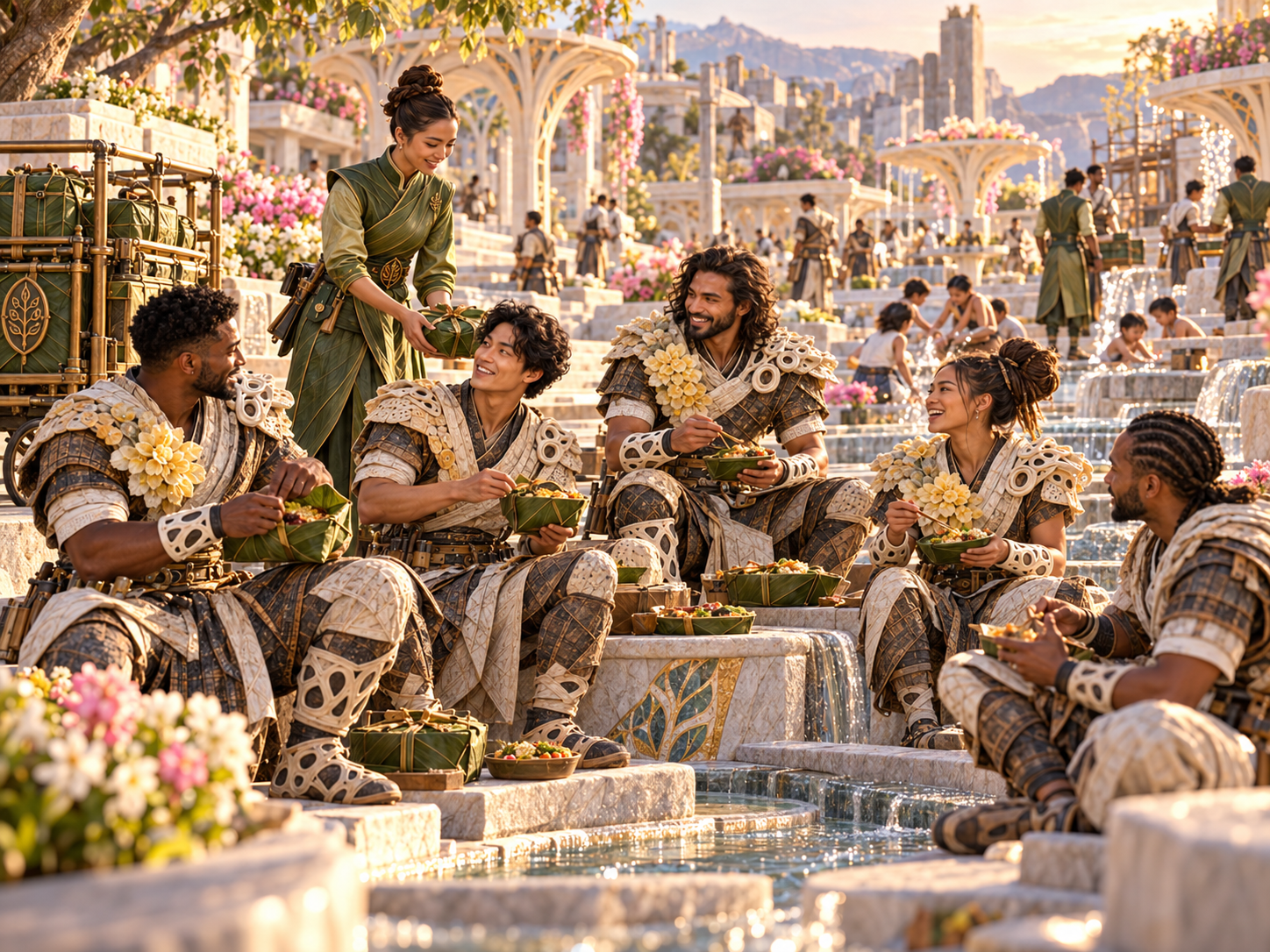
They are both contributing their capability to the civilization.
And because they are contributing into the civilization, the capabilities of the civilization are open to them too.
That is the larger system.
The farmer grows food for the civilization.
The doctor provides medical care.
The dentist cares for teeth.
The nurse cares for patients.
The hospitality steward helps people feel comfortable and cared for.
The artisan makes useful and beautiful things.
The creator creates.
The sportsperson trains, performs, teaches and contributes to public life.
The garment steward makes clothing.
The machinist makes and repairs parts.
The transport steward moves people.
The cook feeds people.
The builder builds.
The welder welds.
Everyone contributes.
Everyone receives.
The farmer does not have to sell enough tomatoes before he is allowed to visit the dentist.
The dentist does not have to charge the carpenter before she can eat.
The carpenter does not have to invoice the welder before helping him build.
The welder does not have to postpone an invention because he cannot afford the machinist.
The musician does not have to prove that her music earns as much money as somebody’s surgery before she deserves food, housing, clothing, transport, health care, education, beauty, entertainment or access to the rest of civilization.
Everyone gets access to everyone else’s capability.
That is the win.
And then there is another part of this that I think people can become very shallow-minded about.
They start trying to decide which profession is more important.
They may say:
Doctor John saves lives.
Jessica only carves dolls.
Therefore Doctor John must be more valuable than Jessica.
No.
That is exactly the kind of thinking I do not want inside Trott Bailey Family Civilization.
On the surface, Jessica may seem to “only carve some dolls.”
But Doctor John has children.
And his children may adore Jessica’s dolls.
They may carry them around the house.
Sleep beside them.
Make up names for them.
Invent entire worlds around them.
Take them on trips.
Cry when one is misplaced.
Remember them twenty years later.
Maybe one of those dolls becomes one of the objects John’s daughter remembers most clearly from childhood.
What exactly is John supposed to pay Jessica for that?
A market can put a price on a carved doll.
It cannot put a meaningful price on what that doll becomes inside a child’s life.
And then there is another question.
How many medical emergencies is Doctor John dealing with every day?
Some days may be full of them.
Some days may not.
But how many children might be receiving, holding, loving and playing with Jessica’s dolls every single day?
How many hours of childhood joy might her hands quietly produce?
That does not make Jessica more important than Doctor John either.
That would simply reverse the same mistake.
The point is that we need to stop trying to arrange human contribution into one crude ladder of importance.
Some work preserves life.
Some nourishes life.
Some beautifies life.
Some comforts life.
Some teaches.
Some repairs.
Some protects.
Some entertains.
Some creates memories.
Some makes childhood richer.
Some makes family life easier.
Some creates machinery that allows ten other people to do their work better.
Some grows the food that keeps all of them alive in the first place.
Their usefulness constantly crosses into one another.
Jessica’s doll might comfort a frightened child sitting in Doctor John’s waiting room.
Doctor John might treat Jessica when she becomes sick.
A farmer feeds both of them.
A garment steward clothes both families.
A transport steward gets them where they need to go.
A machinist maintains equipment John depends on.
A builder makes the clinic.
A cleaner keeps it safe.
A musician may perform at the festival where Jessica takes her children after a long week.
Who exactly is supposed to stand over all of these people and announce which human contribution is worthy of the best life?
I do not want that kind of civilization.
An emergency can make one capability more urgent in a particular moment.
If somebody is bleeding badly, Doctor John’s medical training becomes extremely important right then.
That does not mean Doctor John therefore deserves a better category of human life than Jessica for the rest of the year.
Urgency is not the same thing as human superiority.
Prestige is not the same thing as usefulness.
Salary is not the same thing as contribution.
And market price is certainly not the same thing as human worth.
Trott Bailey Family Civilization does not say:
Doctors are worth ten units.
Farmers are worth seven.
Artists are worth three.
Hospitality stewards are worth two.
We say that different capabilities serve different parts of life.
And everyone should have access to the abundance created by the whole.
Food is not a prize.
Housing is not a prize.
Health care is not a prize.
Transport is not a prize.
Clothing is not a prize.
Education is not a prize.
Access to civilization is not something you earn by convincing everybody that your profession is more prestigious than somebody else’s.
Those things belong inside the common life we are building.
Honor is different.
Recognition is different.
Extras can be different.
People can participate in family challenges.
They can gain Abundance Points.
They can distinguish themselves through excellence, courage, service, invention, competition, discovery, generosity, discipline, skill, creativity and participation.
There can be honors.
There can be special experiences.
There can be challenges.
There can be things to win.
But the playing field must remain open.
Doctor John does not begin with ten thousand Abundance Points simply because he is a doctor.
Jessica does not begin at the bottom because a present-day market might pay less for carved dolls than for surgery.
They enter the challenge as people.
Then they participate.
Then they earn whatever distinctions that particular system offers.
That is a very different thing from turning basic human life into a reward for having the right profession.
The more I think about Dan and Greg, the more obvious this becomes.
The welder needed the builder.
The builder needed the welder.
Money could have stood between them.
So we removed it.
Once that principle is applied across an entire civilization, something much larger happens.
The farmer can reach the doctor.
The doctor can reach the artist.
The artist can reach the machinist.
The machinist can reach the builder.
The builder can reach the cook.
The cook can reach transport.
The transport steward can reach clothing.
The garment steward can reach dentistry.
The dentist can reach music.
The musician can reach housing.
Everyone becomes surrounded by the capabilities of everyone else.
That is not people “working for free” in the shallow sense.
It is people no longer selling their usefulness to one another every time human capability needs to move.
You contribute your capability to the civilization.
And the civilization opens the capabilities of everyone else to you.
That is the exchange.
And I think the deeper question is not:
Who is the most important worker?
The better question is:
How much richer, safer, healthier, more capable, more beautiful and more delightful does human life become when all of these abilities are finally allowed to cooperate without money constantly interrupting them?
That is what I am interested in building.
Not a civilization where people compete endlessly to prove that their usefulness deserves more life than somebody else’s.
A civilization where useful people can finally reach one another.
The Laws Revealed in This Conversation
1. Capability Access Law
A person’s useful capability should be available to civilization without a money gate preventing people who need it from reaching it.
Dan’s welding ability should not sit unused because Greg cannot afford the invoice.
Greg’s building capability should not be kept away from Dan because Dan cannot afford the construction cost.
If the capability exists, and the need exists, civilization should be able to connect them.
2. Civilization Contribution Law
Contribution is made to the civilization as a whole, not as a direct debt between two individuals. This is what separates the system from barter.
Dan does not weld Greg’s tool so that Greg now owes Dan something.
Greg does not build Dan’s fabrication lab because Dan must repay him later.
Each person contributes capability into the larger civilization.
Each person then gains access to the capabilities contributed by everyone else.
The exchange is not person against person.
The exchange is person with civilization.
3. Non-Hierarchy of Human Contribution Law
Different functions can have different urgency, rarity, difficulty or consequences without creating different levels of entitlement to human life.
Doctor John may be urgently needed during a medical emergency.
Jessica may spend the same day creating dolls that bring joy, imagination and comfort into the lives of many children.
One moment may make John’s skill more urgent.
That does not make John more human.
It does not entitle him to better food, better housing, better clothing, better transport or a better category of civilization.
And Jessica does not need to become “more important” than John to justify her place either.
The entire ranking game is the mistake.
4. Basic Life Is Not a Reward Law
Food, housing, health, transport, clothing, education and ordinary civilization access are not prizes awarded according to occupational prestige. Recognition and extras can come through separate open systems.
A person does not deserve a better basic life because the old world gives their profession more prestige.
Basic life belongs inside civilization.
Honor can still exist.
Achievement can still exist.
Family challenges can still exist.
Abundance Points can still exist.
Recognition, distinction, special experiences and extras can still exist.
But those systems begin on a level playing field.
Doctor John does not begin ahead because he is a doctor.
Jessica does not begin behind because she carves dolls.
They participate as people.
The Larger Insight
Underneath all four laws is an even larger realization:
Money does not merely price work. It can prevent capabilities that already exist from meeting each other.
Dan and Greg make that visible at the smallest scale.
The welder exists.
The builder exists.
The need exists on both sides.
Yet money can still prevent the connection.
Jessica and Doctor John reveal the second danger.
Even after removing money, we could still make the mistake of rebuilding the old hierarchy by deciding that certain professions deserve more civilization than others.
That would simply recreate inequality using prestige instead of price.
So the correction has to go deeper.
We remove the money gate between capability and need.
We contribute to civilization instead of trading debts between individuals.
We refuse to confuse urgency with human superiority.
And we refuse to turn the basics of a delightful human life into a prize for occupational status.
That is how useful people finally become available to one another.
That is how capability begins to multiply.
And that is how Trott Bailey Family Civilization keeps raising a world in which human beings can contribute fully and live delightfully together.