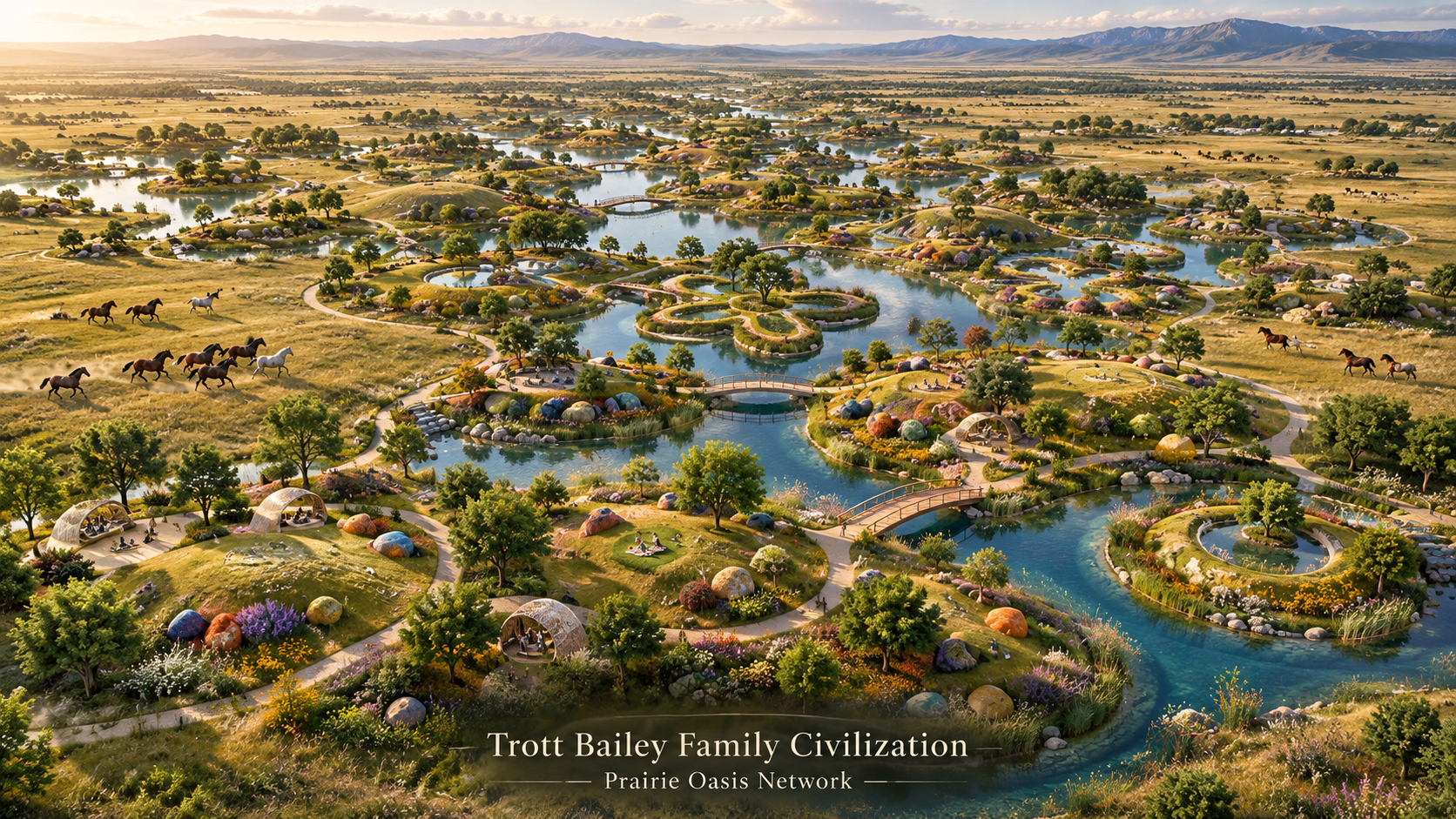


Trott Bailey Family Civilization — Mind’s Eye: Youth, Work, Money-Free Civilization, Civilization Drag and the Public Civilization Map

Trott Bailey Family Civilization — Mind’s Eye
Youth, Work, Money-Free Civilization, Civilization Drag and the Public Civilization Map
An inheritance record preserving what I was thinking, what changed while I was thinking it, the mistakes I corrected, and the principles I decided were important enough to leave for my children and future Trott Bailey Family generations.
To My Children
Children, I am preserving this conversation because several ideas changed shape while I was thinking them through.
Some of these things I already believed before this conversation. What changed was that I began to understand them more clearly.
I want you to know the difference.
A finished article can make an idea look as though it arrived fully formed. It usually does not.
Sometimes I notice something small. Then I ask another question. Another idea connects to it. Sometimes I realize that I have been explaining something too weakly. Sometimes I reject a sentence because it does not say what I actually mean. Sometimes I suddenly see a whole system differently.
That is what happened here.
I do not want you to inherit only the finished articles.
I want you to know what I saw.
These ideas were not developed from a detached office somewhere outside our family life.
They were being worked through while I was living our ordinary family days with Big King KB and you children, thinking about the civilization we are trying to build while also dealing with the normal realities of food, children, clothing, travel, work, tiredness, ideas, websites and the unfinished systems around us.
That matters to me because Trott Bailey Family Civilization has always been family-authored. The questions come from living. The designs come from noticing what life requires.
Mind’s Eye Record 01
The Youth Employment Problem Became a Civilization Question
What I Was Thinking About
At the beginning of this conversation, I was thinking about young people.
There are roughly 3.3 billion people on Earth between the ages of 0 and 24.
That number stayed with me because it made the problem impossible to treat as a small employment issue.
These are not a few unemployed people who need a programme.
This is a huge part of humanity.
I had been looking at the United States, Europe and developing nations and asking the same basic question:
The common answers felt too small.
Study longer.
Get another certificate.
Improve your résumé.
Compete harder.
Wait for investors.
Try entrepreneurship.
Apply again.
None of those answers creates enough actual work on the scale required.
What Changed
The more I looked at it, the more I understood that the employment problem was really a civilization-planning problem.
If a society has millions of young people coming into adulthood, then somebody should have thought seriously about where all that human ability will go.
Where are the farms?
Where are the orchards?
Where are the workshops?
Where are the laboratories?
Where are the manufacturing systems?
Where are the public building programmes?
Where are the clothing houses?
Where are the transport systems?
Where are the care systems?
Where are the places where young people learn by actually doing useful work?
The Decision I Made
I did not want to spend twelve articles criticizing governments.
I wanted to establish the problem clearly and then show another answer.
That was the first major turn in this conversation.
Decision to Preserve
If a society has a very large young population, do not automatically treat their lack of useful work as an individual failure.
First ask whether the civilization itself prepared enough meaningful work for them.
Mind’s Eye Record 02
The Day I Saw That the Unbuilt Civilization Was the Work
The Sentence I Rejected
This was one of the clearest corrections I made during the conversation.
An early draft said something like:
The sentence sounded as though that fact needed to be defended.
I immediately knew it was wrong.
What I Saw Instead
The orchards must be planted.
The food systems must be established.
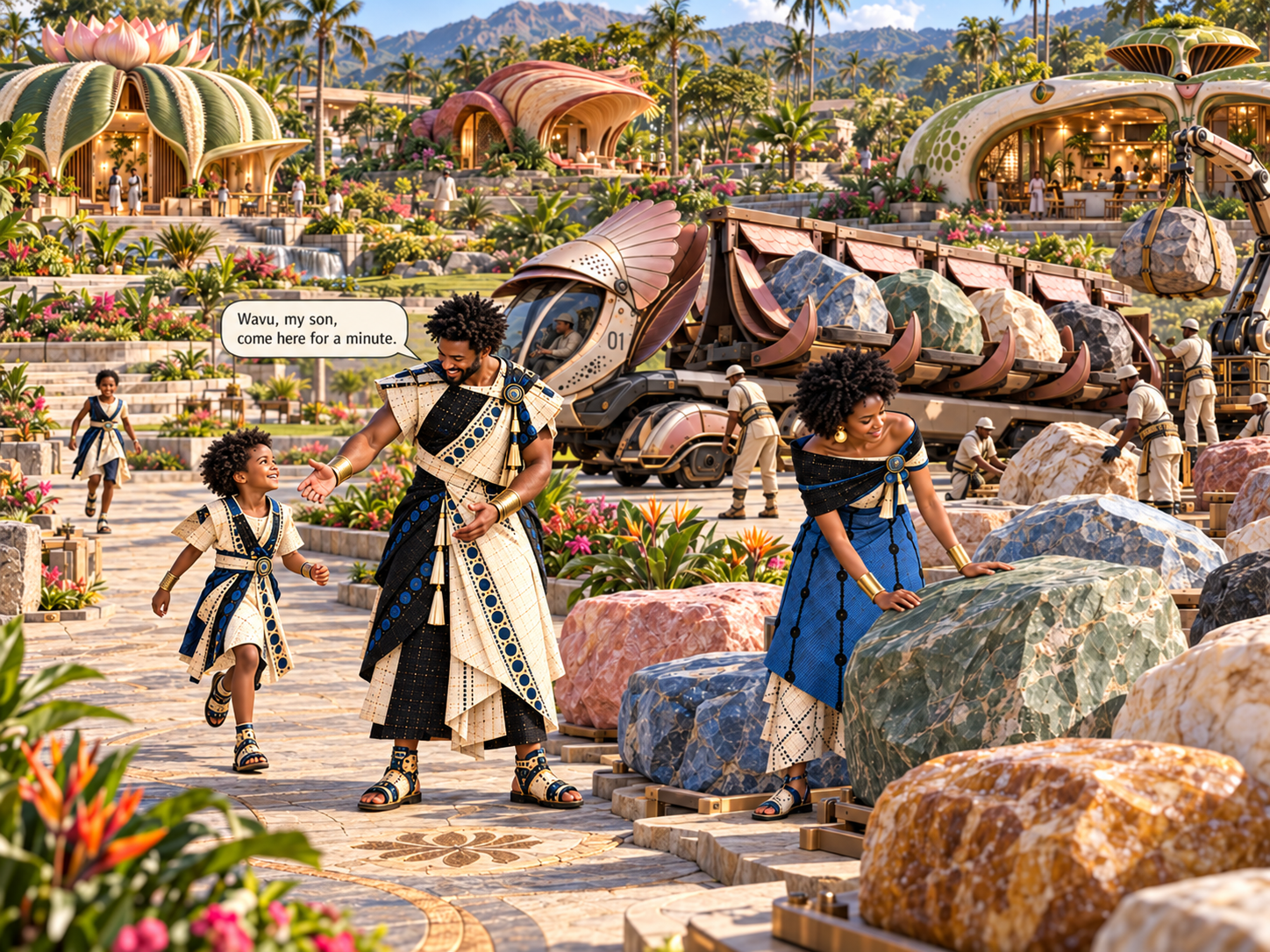
The homes must be built.
The buildings must be constructed.
The machines must be fabricated.
The roads and transport routes must be developed.
The Care-Ports must be established.
The garments must be made.
The workshops must operate.
The laboratories must operate.
The child systems must be built.
The water systems must be built.
The public places must be brought into existence.
Then all of those systems must be cleaned, repaired, improved, taught, operated, expanded and redesigned when necessary.
Why It Changed the Employment Argument
A normal company may offer a few thousand jobs inside something that already exists.
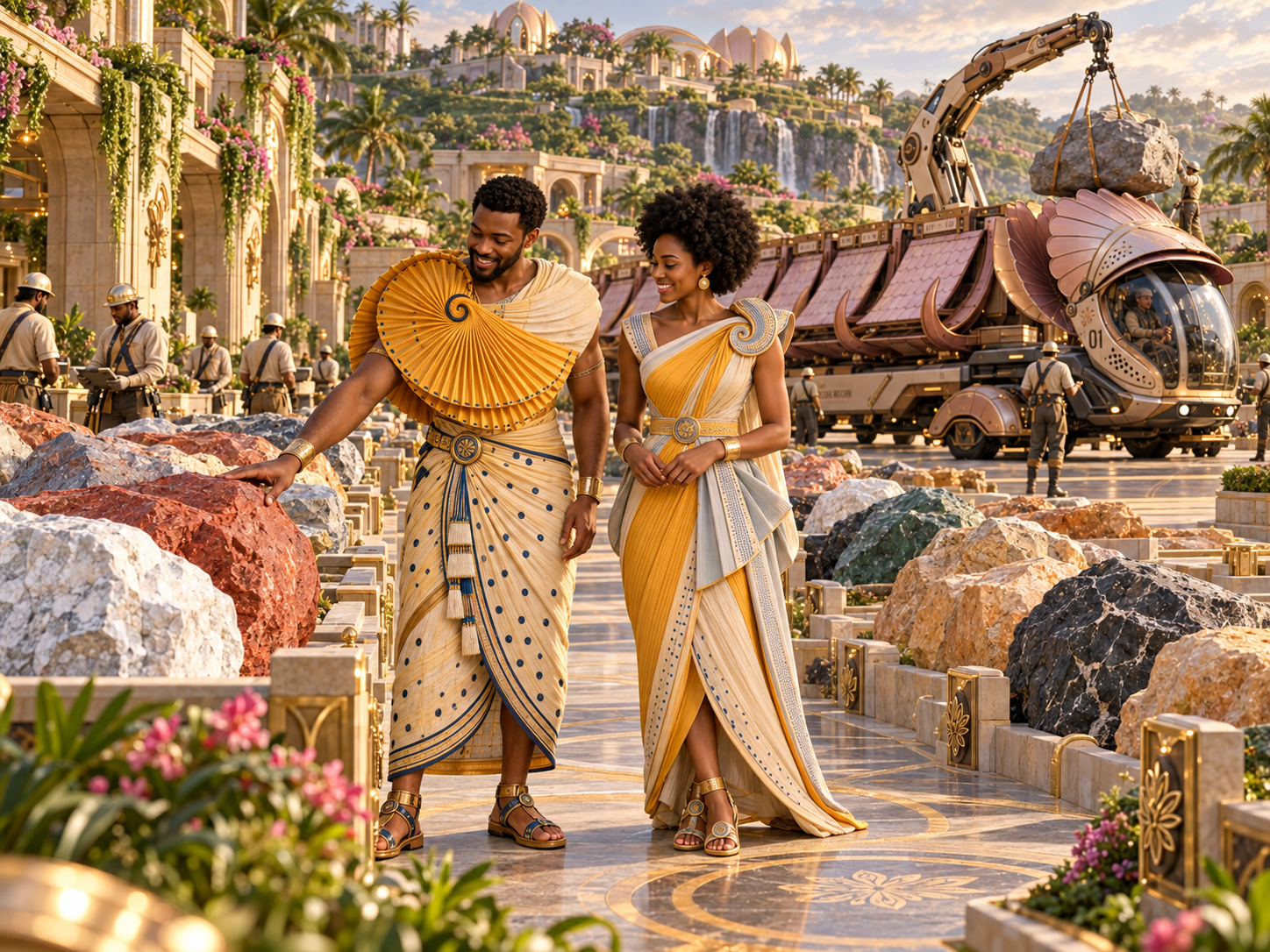
Trott Bailey Family Civilization requires the physical development of an entire civilization.
That is why its range of work can become so large.
The unbuilt civilization is not an embarrassment.
It is unfinished work.
It is opportunity.
It is responsibility.
It is physical civilization waiting to happen.
Inheritance Principle
Children, when you inherit unfinished civilization work, do not mistake “unfinished” for “failed.”
Ask whether what remains unfinished is worth building.
If it is, then the unfinished part is your work.
Mind’s Eye Record 03
What I Understood About Money-Free Life That I Had Not Explained Deeply Enough Before
What I Already Believed
I already believed that everything should be free at the point of use.
Food.
Housing.
Clothing.
Health care.
Transport.
Learning.
Child care.
Public life.
I had said this many times.
What Became Clearer
During this conversation, I understood more clearly that the money-free principle was much bigger than giving people free things.
Money was interrupting people.
That was the deeper realization.
It was sitting between an idea and a machine.
Between a patient and treatment.
Between a child and a lesson.
Between an engineer and a part.
Between an artist and the work they wanted to make.
Between a scientist and a question.
Between one talented person and another talented person on another part of Earth.
Between a mother and the help she needed.
Between a young person and the time required to find out what they were actually good at.
The Young Person I Imagined
I imagined being 18, 20 or 23 years old.
You do not begin adulthood frightened about rent.
Your food is secure.
Your home is secure.
Your health care is secure.
Transport is available.
Learning is available.
Tools are available.
Machinery is available.
If your interest takes you somewhere else on Earth, you can travel.
If the person you need to learn from is in Thailand, you can meet them.
If the machinery you need is in Brazil, you can get to it.
If you need a workshop, materials, parts, training or a team, the question becomes how to organize those things around the work.
Not whether you have enough money to deserve access to them.
you can wake up thinking: “What are we working on today?”
What Changed in My Understanding
Money-free civilization is not merely a distribution system.
It is a way of removing unnecessary financial interruption from survival, learning, care, movement, experimentation and contribution.
Mind’s Eye Record 04
The Ten Gates Between an Idea and Action
What I Started Listing
While developing the money-free article, I started listing the questions that often appear immediately after a person has an idea.
The list became important because it showed how momentum dies.
Right now, a person can have an excellent idea and immediately hit ten gates.
- Can I afford to stop working long enough to develop it?
- Can I buy the materials?
- Can I access the machine?
- Can I get the replacement part?
- Can I travel to the person who knows what I need to know?
- Can that person afford to spend time helping me?
- Can we afford somewhere to work?
- Can I feed myself or my family while I experiment?
- Can we manufacture a prototype?
- Who is going to fund the next step?
“I have an idea.”
and
“Let’s build it.”
The Writing Mistake I Noticed
Later, when the article was being refined, some of these clear explanatory pieces began disappearing because the writing was being shortened.
I objected.
I did not want the article to become smoother and weaker.
I wanted the reader to see the actual gates.
Warning for Future Writers
When an explanation makes a hidden system visible, do not remove it merely because the final article becomes longer.
Clarity matters more than compression.
Mind’s Eye Record 05
The Multiplier Effect
What I Imagined Next
Once I imagined removing those financial gates, I started thinking about what would happen afterward.
A person has an idea.
They find other people who are interested.
Materials are available.
Machinery is available.
Parts are available.
Food is already provided.
Housing is already provided.
Child care is available.
Transport is available.
The people can travel to one another.
They build.
They fail.
They adjust it.
They build again.
Someone else sees what they made.
That person improves it.
Then the improvement becomes the starting point for another idea.
The Chain That Summed It Up
Security multiplies curiosity.
Curiosity multiplies learning.
Learning multiplies capability.
Capability multiplies collaboration.
Collaboration multiplies invention.
Invention creates new work, new tools and new possibilities.
Those possibilities release even more people.
I want this preserved because it helped me see the system at once.
How I Tested the Idea Across Society
I did not want the idea to work only for inventors.
So I tested it against ordinary life.
A mother has more energy because she is not constantly frightened about survival.
A child has more room to explore.
A teacher notices the child’s unusual interest.
The child gains access to people and places where that interest can develop.
Years later, that child may solve a problem nobody was planning for when the child was small.
A doctor works with an engineer.
The engineer works with a machinist.
The machinist works with a materials specialist.
A caregiver notices something the technical team missed.
A farmer identifies a problem.
A machinery team develops a tool.
A young person watching the process sees a better way.
An artist improves the environment where the work happens.
A filmmaker records the discovery.
People in another region adapt the idea to another problem.
The chain continues.
What I Could Not Calculate
The important thing is that we cannot calculate the full result beforehand.
Undiscovered human potential is one of the inputs.
Question for My Children
How much ability might still be invisible simply because the person has never reached the right tool, mentor, place, problem or opportunity?
Mind’s Eye Record 06
Abundance Does Not Mean Passivity
The Objection I Knew Needed an Answer
Someone could reasonably ask:
I did not want to dodge that question.
My Answer
Quite the opposite.
When food, shelter and basic dignity are not rewards held over people’s heads, human activity can become much more ambitious.
Curiosity no longer has to justify itself immediately in financial terms.
People can pursue discoveries whose usefulness is not obvious on day one.
More experiments can be attempted.
More people can collaborate.
More mistakes can be survived.
More knowledge can move between places.
That is what abundance can release.
Governing Intention
The civilization’s abundance systems should create room for curiosity, capability, contribution, experimentation and discovery.
Abundance is not being built in order to produce inactivity.
Mind’s Eye Record 07
Civilization Drag
How the Idea Appeared
This idea came after the multiplier effect.
Once I really saw what might happen when money stops interrupting people, I began seeing the opposite more sharply.
I thought about the scale of restraint that financial gatekeeping may already be creating.
That realization made me angry.
Not because money is the only thing that slows civilization.
It is not.
The Real Limits I Did Not Want to Pretend Away
War slows civilization.
Bad leadership slows civilization.
Incompetence slows civilization.
Poor design slows civilization.
Lack of knowledge slows civilization.
Real shortages slow civilization.
A material may genuinely not exist in sufficient quantity.
A machine may genuinely not have been invented.
A skilled person may genuinely not yet exist.
Those are real limits.
The Artificial Gate I Was Trying to Name
But I began noticing how often the capability already exists and action still stops.
The person exists.
The problem exists.
The knowledge exists.
The machine exists.
The material exists.
The need exists.
And still nothing moves because the money has not been arranged.
I needed a name for that.
Civilization drag is the delay, waste and lost human capability created when money becomes an artificial barrier between things that could otherwise meet.
What Civilization Drag Looked Like to Me
A machine sits broken because one part is too expensive.
The work dependent on that machine stops too.
A doctor knows what treatment is needed.
The patient cannot pay.
A scientist has a question.
There is no grant.
A talented person in Brazil needs to meet a talented person in Thailand.
The collaboration never happens.
A child has unusual ability.
The family cannot afford the lessons, equipment or travel that might develop it.
An artist learns to make what sells instead of what they believe should exist.
After enough time, money can even restrain imagination.
and start asking: “What can we afford?”
Those are not the same question.
Why Scale Changed the Meaning
One delayed repair can look small.
One missed lesson can look small.
One abandoned prototype can look small.
One treatment delayed can look small.
One collaboration that never happens can look small.
But repeat them across millions of people.
Then billions.
Then repeat them every day.
Then repeat them across generations.
That is when civilization drag becomes a much larger question.
Questions I Leave With You
How much of what we call human limitation is actually human potential being repeatedly denied permission to move?
How much has humanity never built because money told people to stop?
Mind’s Eye Record 08
The Youth Clarity Path — From Confusion to Civilization Choice
What I Realized Near the End
Near the end of the conversation, I understood that the article series had created a pathway for young readers.
I want that pathway preserved because it may be useful later when explaining large civilization problems.
The Path
The young person begins in confusion.
They know something feels wrong.
Jobs are scarce.
Their future feels uncertain.
They are told to study longer.
Compete harder.
Keep applying.
Wait.
The first task is to give them accurate information.
There are billions of young people.
The existing system does not have enough meaningful work prepared for them.
The second task is to help them name the failure.
This is not merely individual laziness.
It is not merely a bad résumé.
It is a planning problem.
Then show the dead ends.
Waiting for investors is not enough.
Training cannot create work that does not exist.
Competing harder cannot increase the number of available positions.
Then show visible work.
Trott Bailey Family Civilization needs to be physically built.
The work can be seen.
The systems can be seen.
The unfinished parts can be seen.
Then show what money-free life changes.
The reader can imagine a life where survival is not consuming the first decades of adulthood.
Then show civilization drag.
Now they can understand why so much existing human ability appears stuck.
Finally, give them a larger question.
But: “What civilization are we going to build with all these people, all these resources and all this unused human ability?”
The Final Sentence I Corrected
The original final sentence was:
I rejected it.
It was too dry.
It did not say what kind of civilization I was talking about.
The ending became:
Communication Decision
When explaining a serious problem, do not leave people only with diagnosis.
Give them enough clarity to understand the problem and enough visibility to examine an alternative.
But do not hide uncertainty or pretend every part of the alternative has already been solved.
Mind’s Eye Record 09
The Eight Public Doors
The Problem I Was Solving
During this same conversation, I asked for the full range of Trott Bailey Family Civilization to be organized.
The civilization had become so broad that an ordinary visitor could easily become lost.
There are food systems.
Water systems.
Family systems.
Baby systems.
Fashion.
Architecture.
Machinery.
Transport.
Pacorips.
Krubaro.
Media.
Education.
Culture.
Health.
Public life.
Employment.
Research.
Manufacturing.
And much more.
I did not want the public entrance to become one giant list.
The Eight Doors
- The Ruling Family and Civilization Law
- Family Life and Human Development
- Food, Water, Health and the Living Earth
- Homes, Districts, Architecture and Public Life
- Machinery, Energy, Transport and Manufacturing
- Fashion, Culture, Beauty and Delight
- Pacorips, Roles, Clean Return and Operations
- Big King Media, Knowledge, Memory and Employing the Earth
The purpose of these doors is orientation.
They are not meant to replace the deeper civilization records.
The public entrance gives the map.
The category pages explain each region of the map.
Photofall gives visual evidence.
The deeper articles and Mind’s Eye records preserve reasoning, law and history.
The Visual Mistake I Corrected
A landing page was created for the Eight Doors.
The first version was dark.
It used deep navy and a technology-company atmosphere.
I rejected the mood.
Trott Bailey Family Civilization is hopeful.
Abundant.
Vivacious.
Beautiful.
Alive.
The public entrance should feel like sunlight, fruit, plants, water, flowers, invention, family life and possibility.
The palette was changed toward warm ivory, cream, orchard green, tangerine, gold, mineral blue, berry, violet and mint.
Design Law
The visual language of the civilization should tell the truth about the civilization.
Do not present abundance as darkness.
Do not present family life as corporate technology.
Do not present a joyful civilization in a visual language that feels cold or dead.
Mind’s Eye Record 10
I Had to Correct the Writing Process Itself
What I Kept Noticing
This conversation also taught me something about how my ideas were being turned into finished articles.
Some of the clearest ideas came during discussion.
Then, when the article was written, those ideas would sometimes disappear.
The writing became shorter.
Cleaner.
More polished.
But weaker.
This happened with the ten financial gates.
It happened with the multiplier chain.
It happened with the paragraph explaining why abundance does not create passivity.
It happened with the detailed examples of mothers, children, medicine, engineering, farming, art, science and undiscovered potential.
I kept having to bring those sections back.
What I Learned
When I push an idea far enough that the explanation becomes clear, that explanation is part of the discovery.
It should not automatically be thrown away when the final article is written.
A plain paragraph that lets a teenager understand the whole mechanism may be more valuable than a clever sentence that sounds impressive.
Writing Warning
Do not lose the discovery while polishing the record of the discovery.
Explain before concluding.
Preserve the examples that made the principle understandable.
Preserve the correction that changed the principle.
Preserve the objection that forced the idea to become stronger.
Future generations should be able to see how we got there.
Constitutional Understanding
Principles That Became Clearer During This Conversation
Children, I am separating these from the historical records because these are the parts that may deserve continued use in the civilization if they survive future testing.
Where are the jobs?
Ask:
What civilization are we building with the people, resources, knowledge and abilities available to us?
Unresolved Record
One administrative point remained unresolved at the end of this conversation.
The youth series had originally been reduced to seven articles.
Then Civilization Drag emerged as a separate article after Article 6.
The final youth article continued to be labeled Article 7 of 7.
Before this series is permanently archived as one numbered sequence, decide whether Civilization Drag is:
- Article 7, making the conclusion Article 8;
- an unnumbered companion article;
- or part of a separate related series.
Do not silently rewrite the history.
Preserve the fact that the idea emerged unexpectedly during the development of Article 6.
Closing Note to My Children
Children, what I want you to inherit from this conversation is not anger at money.
That is too shallow.
I want you to inherit the habit of looking carefully at what is actually stopping human beings from moving.
Sometimes the limit will be physical.
Sometimes we will lack knowledge.
Sometimes our design will be poor.
Sometimes we will simply be wrong.
Sometimes we will need more time.
But sometimes the person, skill, machine, material and need will all be present, and the only thing separating them will be a human-made gate that everybody has learned to accept.
When you find one of those gates, examine it.
Ask whether it is still necessary.
Ask what happens if it is removed.
Ask what becomes possible afterward.
That is part of how this civilization was thought into existence.
And remember that these questions were not separate from our family life. They came from trying to raise you, feed you, move through the world with you, build with your father, notice what exhausted us, notice what delighted you, and keep asking what kind of civilization would make human life work better.
If you inherit some of this civilization still unfinished,
remember what became clear to me during this conversation:
The unfinished civilization is be the joyful work waiting for you to discover, expand and hone. It is thrilling work, a fun way for Trott Bailey Family members to pass their time.