CATEGORY 03 / 16 · FOUR BELESHKY METHODOLOGY · V1.0.0
Food must reach the family table.
How can a country grow mountains of food while its families still struggle to eat? Food abundance follows nourishment from soil and harvest to the family meal, and then protects the next season.
We measure food that can actually nourish people: sufficient, safe, diverse, reliably reaching households and free of payment barriers. A full warehouse or a high export total cannot substitute for the family receiving real nourishment.
The same four-beleshky weighting
Four independent questions about nourishment
Capacity
Can the country reliably provide enough safe, varied and nutritious food for the whole population?
Open all nine scoring positions ↗02 · 35%Reach
Who actually eats sufficient, diverse and safe food, and who can do so without money?
Open all nine scoring positions ↗03 · 25%Friction / Waste
How much nourishment is lost, wasted, priced beyond reach or made difficult to obtain?
Open all nine scoring positions ↗04 · 15%Return / Multiplication
Does feeding people today strengthen living soil, family nourishment and tomorrow’s food capability?
Open all nine scoring positions ↗The nine scoring positions express Trott Bailey authored standards, not nationally observed food coverage by themselves. FAO FIES measures experience of constrained food access; it does not measure every nutritional need. Food consumption, child diet, food safety and effective free-access records are examined separately. The TBF point is an evidence-led interpretation, not a measured percentage.
Trott Bailey Food Living Principle
From living ground to full family nourishment and next-season renewal
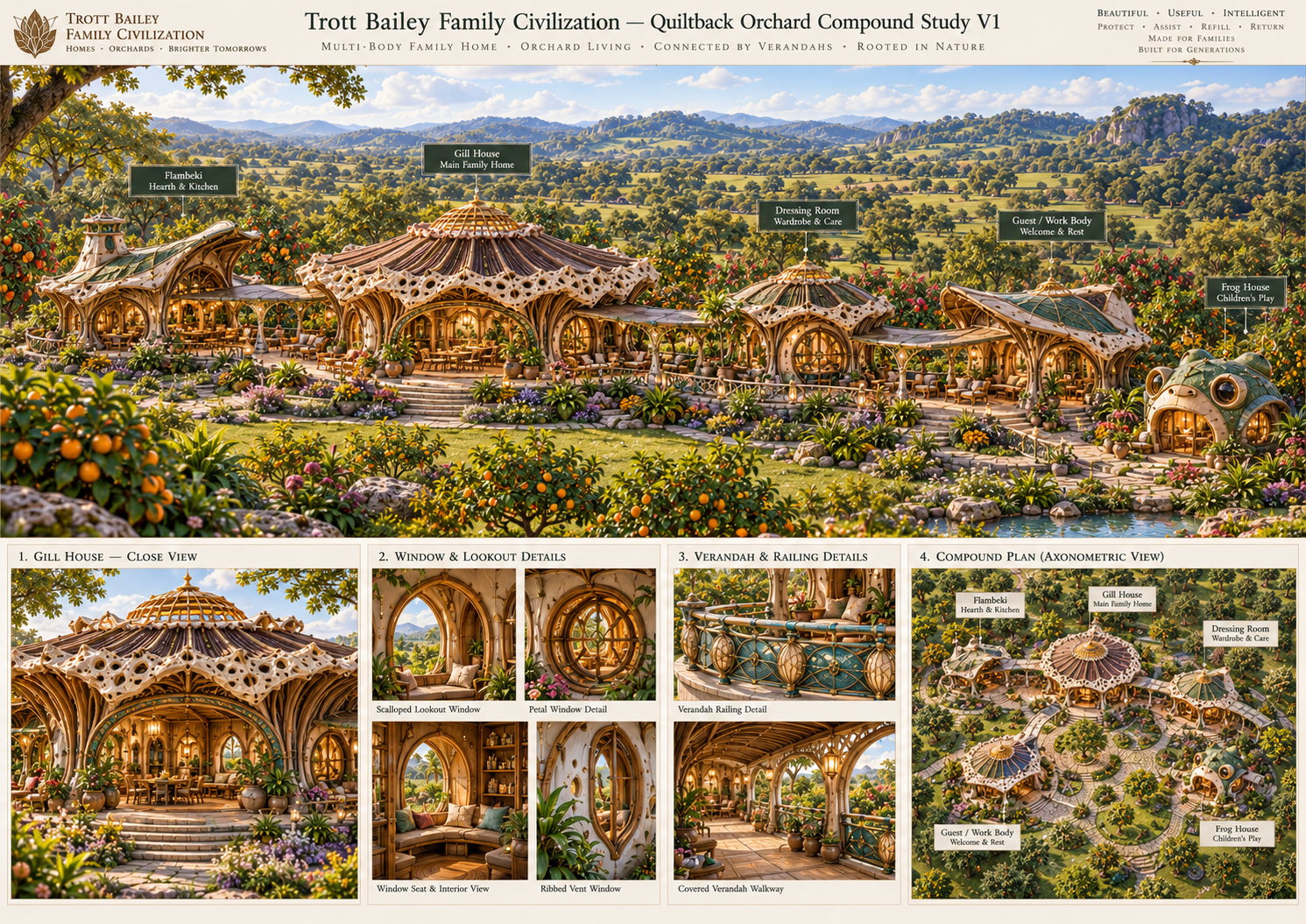
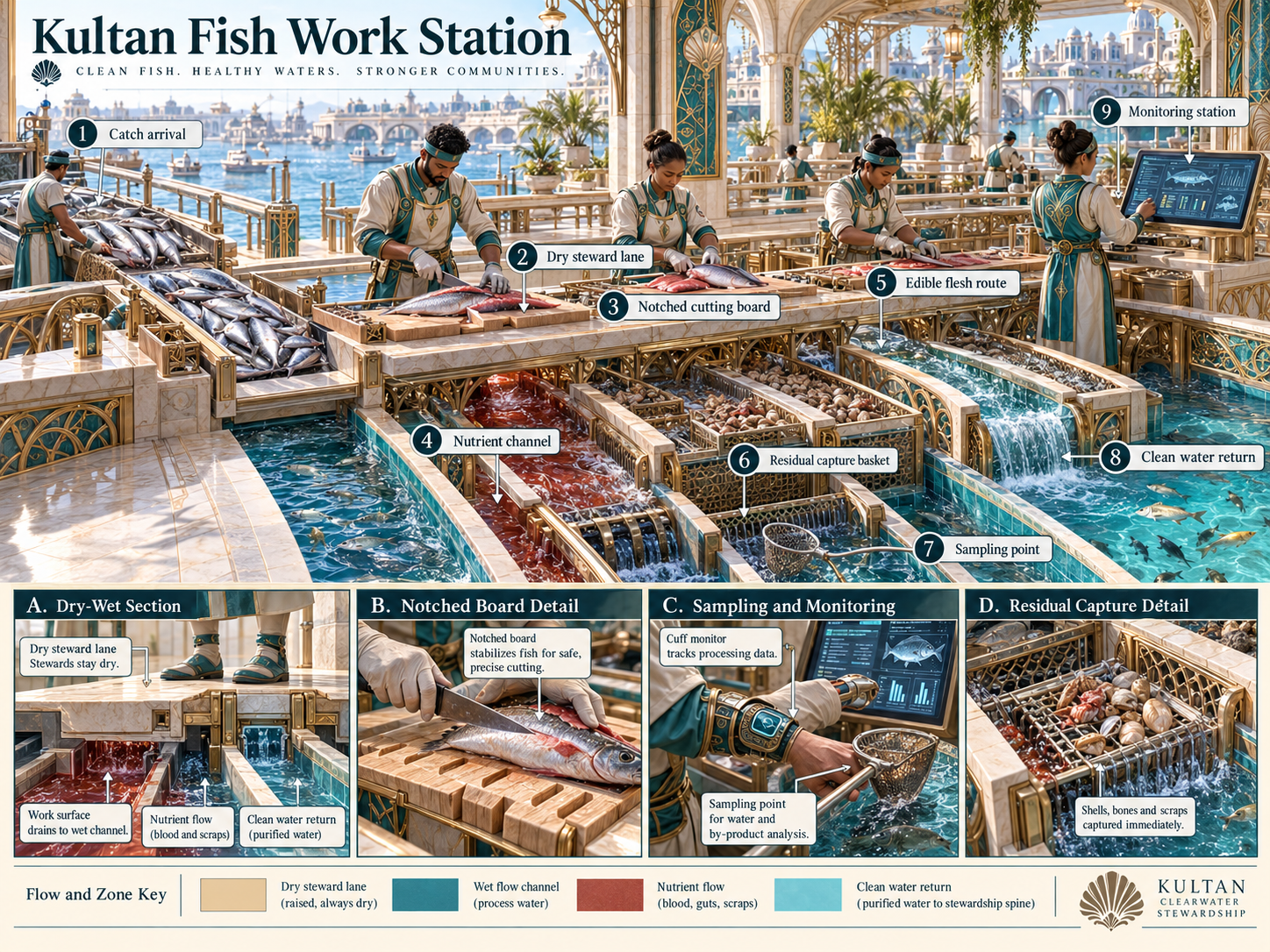
Keslev, orchards, Sabenneries, careful harvest, food preservation, safe distribution and clean biological return form a working food-circulation model. Family Shubaka can include growing, preservation, seed care and teaching together; no family should be required to farm in order to eat.
The food-circulation model is an authored civilization design, not evidence of national deployment. Families can contribute together through Shubaka; one shared hour is counted once in time accounting, with separately observed food, teaching and family benefits. No compulsory child labor or unpaid overburdening of stewards.
Free full-day nourishment must be distinguished from an occasional free meal. Family Shubaka may contribute through orchards, preservation, food preparation and teaching. A family's access to food does not depend on its Shubaka role.
Trott Bailey design works: The Keslev Staple Sovereignty Network: How the Kingdom Turns Crops Into Dependable Family Food ↗ · Why Free Food and Free Travel Do More Than Remove a Price ↗
Direct free-food access and nutrition
Food has its own 0–4 Direct Money Gate
Food Reach distinguishes A% (people receiving sufficient, safe, nutritionally adequate food) from M% (the subset receiving full, adequate nourishment without payment). M may never exceed A. Free snacks, occasional food parcels, institutional meals and school lunches alone do not prove full-day free nourishment. Food Money Gate points reflect actual population coverage of reliable free nourishment. The verified gate informs higher Reach scores and household Friction evidence, but its points are not added or subtracted again in the Food beleshky formula. All five direct gates must reach 4/4 before the national score can cross zero.
Nourishment is the benefit
Enough safe, diverse and nutritionally suitable food across the day and ordinary life; calories alone do not prove it.
A% vs M%
A% is the share effectively nourished. M% is the share of the same population with that complete nourishment reliably free.
Partial programmes
A free school meal or limited voucher can earn partial evidence credit, but cannot by itself establish an entire household’s free diet.
Reach + Friction links
Verified free access supports upper Reach levels; payment, waiting, time and waste support independently evidenced Friction readings.
Zero-line rule
Food Gate 4/4 plus Housing/Land, Healthcare, Transport and Water/Energy all 4/4 are required to clear national zero.
| Effective money-free reach | Food gate |
|---|---|
| 0% confirmed | 0/4 |
| More than 0%, below 30% | 0.5/4 |
| 30% to below 50% | 1/4 |
| 50% to below 75% | 2/4 |
| 75% to below 100%, reliable | 3/4 |
| 100%, reliable and accessible, money-free | 4/4 |
Eight 25-point jumps
Exactly what earns each score?
| Score | Capacity | Reach | Friction / Waste | Return / Multiplication |
|---|---|---|---|---|
| -100 | Food production, procurement and safe delivery have largely collapsed; people cannot depend on an ordinary supply. | Under 5% of people effectively receive sufficient, safe and nutritionally adequate food. | Extreme access barriers, food spoilage, unsafe supply and price dependence routinely deny nourishment. | Food provision depletes living soil and future supplies; next seasons are seriously compromised. |
| -75 | Chronic severe shortages; processing, safe storage and dependable supply exist only in isolated places. | About 5% to under 25% receive adequate nourishment; severe hunger and exclusion remain dominant. | Severe loss, waste, high food burden and interrupted routes repeatedly cause hunger or unsafe meals. | Rapid soil decline, lost seed diversity, failing reserves and weak recovery threaten ongoing nourishment. |
| -50 | Basic food capacity exists, but shortages, poor diversity, unsafe storage and weak distribution affect much of the population. | About 25% to under 40% receive adequate nourishment; most people do not have dependable access. | High loss and waste alongside unaffordable healthy diets, weak food safety or unreliable delivery. | Food production continues with deteriorating fertility, weak reserves and little safe material return. |
| -25 | Functioning supply chains exist but significant production, nutrient diversity, storage or continuity gaps remain. | About 40% to under 50% receive adequate nourishment; widespread difficulty remains. | Important food losses, price and time barriers remain despite functioning supply and retail networks. | Limited seed, reserve and soil renewal protects some production, while large future risks persist. |
| 0 | The country can provide baseline food quantities, but diverse nutritious supply and resilience are uneven. | At least 50% but no more than 75% receive effective adequate nourishment; access is still uneven. | Some losses and access burdens are managed, but material food waste, payment pressure and delays remain. | Basic food production can continue; reserves, seed protection and regeneration are uneven. |
| +25 | Broad and reasonably reliable supplies of diverse, safe food, with functioning growing, processing and distribution. | More than 75% receive adequate nourishment OR over 30% receive reliable, adequate, fully money-free nourishment while at least 50% receive adequate nourishment. | Preventable food loss, waste and access effort fall measurably; significant burdens persist in specific groups. | Stable reserves, seed protection and some verified renewal of soil and productive orchards. |
| +50 | Strong year-round growing or procurement, preservation, delivery and diversified nourishment, with verified reserves. | More than 75% receive adequate nourishment AND over 30% receive adequate money-free nourishment, confirmed by Food Money Gate evidence. | Major avoidable losses and delays are controlled, with low payment and time burdens for most households. | Working seeds, reserves, safe organic return and regenerative food systems multiply future capability. |
| +75 | Near-universal resilient supply capability, safe processing and diverse diets through disruptions and seasons. | Over 90% receive adequate nourishment AND at least 75% reliable money-free nourishment, with the Food Money Gate at least 3/4. | Preventable loss is low, reliable food movement is ordinary, and few households face payment or travel barriers. | Widespread soil renewal, healthy seed and reserve systems, orchards and family/public food capability with working restoration. |
| +100 | Universal dependable capability to provide sufficient nutritious and culturally suitable food, including reserves, processing, safe distribution and future seasons. | Everyone has effective, reliable access to sufficient, safe and diverse food without payment; verified Food Money Gate 4/4. | Ordinary nourishment faces no payment barrier; avoidable food losses and needless time burdens are minimized through safe circulation and recovery. | The food network continuously renews living soil, safe growing capacity, seeds, reserves and useful family nourishment without exhausting people or ground. |
Beleshky 1 · 25% of Food
Capacity
Can the country reliably provide enough safe, varied and nutritious food for the whole population?
Food production, procurement and safe delivery have largely collapsed; people cannot depend on an ordinary supply.
Read the Trott Bailey foundation ↗Chronic severe shortages; processing, safe storage and dependable supply exist only in isolated places.
Read the Trott Bailey foundation ↗Basic food capacity exists, but shortages, poor diversity, unsafe storage and weak distribution affect much of the population.
Read the Trott Bailey foundation ↗Functioning supply chains exist but significant production, nutrient diversity, storage or continuity gaps remain.
Read the Trott Bailey foundation ↗The country can provide baseline food quantities, but diverse nutritious supply and resilience are uneven.
Read the Trott Bailey foundation ↗Broad and reasonably reliable supplies of diverse, safe food, with functioning growing, processing and distribution.
Read the Trott Bailey foundation ↗Strong year-round growing or procurement, preservation, delivery and diversified nourishment, with verified reserves.
Read the Trott Bailey foundation ↗Near-universal resilient supply capability, safe processing and diverse diets through disruptions and seasons.
Read the Trott Bailey foundation ↗Universal dependable capability to provide sufficient nutritious and culturally suitable food, including reserves, processing, safe distribution and future seasons.
Read the Trott Bailey foundation ↗Evidence needed
- Food supply, food-group diversity, adequacy against population and life-stage needs; show domestic and imported components separately.
- Harvests, processing capability, safe storage and cold chains, verified reserves and seasonal supply failures.
- Distribution capability, food safety outcomes and resilience in disruptions; announcements do not count as delivered capacity.
How to improve
- Fill actual nutrient and food-group supply gaps, not just total crop tonnes.
- Expand processing, preservation, reserves and reliable routes between food source and families.
- Verify year-round delivery and the ability to protect children, pregnant families and elders during disruption.
Beleshky foundation: The Keslev Staple Sovereignty Network: How the Kingdom Turns Crops Into Dependable Family Food ↗
↑ All four beleshky levelsBeleshky 2 · 35% of Food
Reach
Who actually eats sufficient, diverse and safe food, and who can do so without money?
Under 5% of people effectively receive sufficient, safe and nutritionally adequate food.
Read the Trott Bailey foundation ↗About 5% to under 25% receive adequate nourishment; severe hunger and exclusion remain dominant.
Read the Trott Bailey foundation ↗About 25% to under 40% receive adequate nourishment; most people do not have dependable access.
Read the Trott Bailey foundation ↗About 40% to under 50% receive adequate nourishment; widespread difficulty remains.
Read the Trott Bailey foundation ↗At least 50% but no more than 75% receive effective adequate nourishment; access is still uneven.
Read the Trott Bailey foundation ↗More than 75% receive adequate nourishment OR over 30% receive reliable, adequate, fully money-free nourishment while at least 50% receive adequate nourishment.
Read the Trott Bailey foundation ↗More than 75% receive adequate nourishment AND over 30% receive adequate money-free nourishment, confirmed by Food Money Gate evidence.
Read the Trott Bailey foundation ↗Over 90% receive adequate nourishment AND at least 75% reliable money-free nourishment, with the Food Money Gate at least 3/4.
Read the Trott Bailey foundation ↗Everyone has effective, reliable access to sufficient, safe and diverse food without payment; verified Food Money Gate 4/4.
Read the Trott Bailey foundation ↗Evidence needed
- Effective population nourishment share A%, with named diet adequacy criteria; children and vulnerable groups assessed separately.
- Effective full-day money-free adequate nourishment share M%, where M cannot exceed A; actual use, not eligibility alone.
- FIES experience-based food-access surveys, food consumption/nutrition surveys, child dietary diversity and matching Food Money Gate source evidence.
How to improve
- Extend nutritious food access to the people now excluded, including rural and low-income families.
- Publish comparable A% and M% using the same population denominator; partial school meals do not count as full-day free nourishment.
- Grow reliable money-free food coverage while verifying that widespread hunger does not remain unresolved.
Beleshky foundation: Why Free Food and Free Travel Do More Than Remove a Price ↗
↑ All four beleshky levelsBeleshky 3 · 25% of Food
Friction / Waste
How much nourishment is lost, wasted, priced beyond reach or made difficult to obtain?
Extreme access barriers, food spoilage, unsafe supply and price dependence routinely deny nourishment.
Read the Trott Bailey foundation ↗Severe loss, waste, high food burden and interrupted routes repeatedly cause hunger or unsafe meals.
Read the Trott Bailey foundation ↗High loss and waste alongside unaffordable healthy diets, weak food safety or unreliable delivery.
Read the Trott Bailey foundation ↗Important food losses, price and time barriers remain despite functioning supply and retail networks.
Read the Trott Bailey foundation ↗Some losses and access burdens are managed, but material food waste, payment pressure and delays remain.
Read the Trott Bailey foundation ↗Preventable food loss, waste and access effort fall measurably; significant burdens persist in specific groups.
Read the Trott Bailey foundation ↗Major avoidable losses and delays are controlled, with low payment and time burdens for most households.
Read the Trott Bailey foundation ↗Preventable loss is low, reliable food movement is ordinary, and few households face payment or travel barriers.
Read the Trott Bailey foundation ↗Ordinary nourishment faces no payment barrier; avoidable food losses and needless time burdens are minimized through safe circulation and recovery.
Read the Trott Bailey foundation ↗Evidence needed
- Separate post-harvest-to-retail food loss from retail, food-service and household waste; record methodology and year.
- Household cost of a healthy diet, food inflation, payment barriers and extra hours obtaining, travelling or preparing necessities.
- Food-safety failures, distribution gaps, inventory failures and verified before/after changes in preventable loss.
How to improve
- Reduce spoilage at sources with safe processing, cold chain, distribution and better information.
- Remove recurring earning, travel and waiting burdens that stand between families and adequate food.
- Test and publish loss and waste reductions rather than assuming a recycling pledge solved them.
Beleshky foundation: Food Movement Is Part of Abundance ↗
↑ All four beleshky levelsBeleshky 4 · 15% of Food
Return / Multiplication
Does feeding people today strengthen living soil, family nourishment and tomorrow’s food capability?
Food provision depletes living soil and future supplies; next seasons are seriously compromised.
Read the Trott Bailey foundation ↗Rapid soil decline, lost seed diversity, failing reserves and weak recovery threaten ongoing nourishment.
Read the Trott Bailey foundation ↗Food production continues with deteriorating fertility, weak reserves and little safe material return.
Read the Trott Bailey foundation ↗Limited seed, reserve and soil renewal protects some production, while large future risks persist.
Read the Trott Bailey foundation ↗Basic food production can continue; reserves, seed protection and regeneration are uneven.
Read the Trott Bailey foundation ↗Stable reserves, seed protection and some verified renewal of soil and productive orchards.
Read the Trott Bailey foundation ↗Working seeds, reserves, safe organic return and regenerative food systems multiply future capability.
Read the Trott Bailey foundation ↗Widespread soil renewal, healthy seed and reserve systems, orchards and family/public food capability with working restoration.
Read the Trott Bailey foundation ↗The food network continuously renews living soil, safe growing capacity, seeds, reserves and useful family nourishment without exhausting people or ground.
Read the Trott Bailey foundation ↗Evidence needed
- Soil organic matter, erosion or fertility trends, seed diversity and functioning renewal systems.
- Verified production reserves, reliable next-season planting capability and safe compost/biological return.
- Actual family/public orchard output, food education, Shubaka and stewardship relief; distinguish measured results from authored design.
How to improve
- Restore soil and seed systems while protecting capacity to plant and preserve food again.
- Build Keslev-style reserve, orchard, preservation and safe clean-return routes suited to local conditions.
- Support voluntary family Shubaka and practical teaching without making children workers or exhausting food stewards.
Beleshky foundation: The Five Building Families of Keslev District ↗
↑ All four beleshky levelsHypothetical scoring lab
Test how changes move the Food score
This calculator illustrates the weighted Food method. It does not alter a country, its evidence, or ranking.
Food = 0.25 × Capacity + 0.35 × Reach + 0.25 × Friction/Waste + 0.15 × Return/Multiplication. National diagnostic contribution = Food × 0.09, before overall Money Gate rules.
Transparent country research
What a country must prove to climb
Nourishment is more than calories
High national caloric supply or school-meal coverage alone does not establish nutritionally adequate nourishment for every person. Free-access shares must cover full-day ordinary nourishment, and upper Reach rungs cannot bypass verified widespread hunger.
Food measures production, nourishment, food losses and continuing food capability. Water, Energy and Transportation measure their own systems; Human Time measures saved or demanded hours; Living Ground measures ecological condition. Document each separate effect rather than copy one output into several beleshky points.
Document the before and after
Show source year, population denominator, A% and M%, which ages and meals the benefit covers, dietary adequacy and safety criteria, rural and vulnerable-group breakdowns, and each direct gate source. Keep Trott Bailey authored sources distinct from national outcome evidence.
Publishing the methodology does not modify any country score, rank, Money Gate or historical event. New beleshky readings require separately sourced national re-audits with append-only before/after history.
Independent measurement references
Research sources for actual country conditions
Trott Bailey writings establish the benchmark. These outside measurement sources help verify real conditions in a specific country. None automatically establishes a beleshky score.
Authored design sources

 and then