TROTT BAILEY FAMILY CIVILIZATION · ABUNDANCE QUESTIONS
50 questions about life beyond money.
How does a country cross the zero line? What do the sixteen categories measure? Who grows the food, builds the homes, keeps the machines running—and what does family life become when money no longer decides who may live well?
Showing all 50 questions.
The Scorecard, Technology & Zero Line
Understand what the numbers really measure and why the five essentials matter.
01Why was the Global Abundance Scorecard created?
To ask a more useful question than how much money moved: does real production reach families, improve health, give people time, and strengthen the living Earth? GDP can describe transactions, but a country should be judged by what its capabilities actually do for life. The scorecard is the Trott Bailey Family’s authored evaluation, not an official government index.
02What does a country’s TBF Abundance Score mean?
It combines assessments of sixteen dimensions of life and applies the national Money Gate to show how much capability is practically reachable. A high level of production alone cannot compensate for families who cannot obtain basic necessities. The category readings and supporting sources are available on each country profile.
03What is the zero line, and why does it matter?
Zero is the minimum threshold for calling the direction abundance growth, not a prize for producing large GDP. A country remains below zero while any of the five Money Gate essentials falls short of complete no-payment access. It cannot cross by excelling in technology, exports, parks or healthcare alone.
04Which five Money Gates must be cleared?
Food; Housing and Land; Healthcare; Transportation; and Water and Energy. Each has a separate 0–4 assessment, making 20 possible points in total. The zero-line requirement is a complete 20/20 with all five areas delivering effective, reliable access without ordinary payment. Water and energy must both reach families.
05Why can a wealthy, technologically advanced country still have a negative score?
Factories, universities, electricity grids, hospitals and sophisticated software show capability. A family may still face rent, debt, care fees, fares or an exhausting schedule. The scorecard credits capability but does not mistake it for free access to life.
Link to this answer ↗06Does GDP rank give a country extra points?
No. GDP rank is context for comparisons, not a component of the TBF Abundance Score. A large economy can rank poorly if its physical capacity fails to reach people, while a smaller place may perform comparatively well on actual life access.
07What are the sixteen scoring categories?
Human Time, Housing, Food, Water, Energy, Health, Education, Mobility, Family Formation, Land, Peace and Delight, Living Ground, Justice, Durability and Repair, International Welcome, and External Footprint. Together their weights total 100%; the Money Gate is a separate condition on the final national result.
08What is a beleshky, and how are its points calculated?
A beleshky is one of four specific readings inside a category. Most domestic categories use Capacity (25%), Reach (35%), Friction (25%), and Return (15%), with category-specific wording and sourced observations. The international categories use their own four distinct beleshkies. Their weighted contributions make the category reading, including documented adjustments.
09How is the category bar chart Money Gate aware?
The default country-page bars show each category after the same Money Gate conversion used for the national headline. The switch marked “If the gate lifted” shows the underlying evidence potential. That alternative view illustrates capacity without the gate; it does not claim that free access has already been achieved or change any official score.
10What does the Technology page measure? Is technology a seventeenth score?
The Technology page explains how evidence, category calculations, country profiles, rank history and comparisons operate. Technology is not an extra seventeenth scored category. Real technological capability is assessed through existing areas such as Energy, Education, Mobility, Health, Food and Durability—and through how much burden it removes.
Link to this answer ↗Free Civilization, Scarcity & Provision
The direct questions people ask about removing money from ordinary life.
11What does “everything is free” actually mean?
In the intended civilization, ordinary access to food, homes, land, water, energy, care, clothing, movement, learning and family support is not bought at a counter. Free does not mean that production takes no effort. People still grow, construct, maintain, inspect, transport and care; the civilization organizes those contributions so payment is not the admission ticket to life.
12Who pays for everything if families do not pay?
The central proposal is not to disguise a bill or invent a credit balance. Food comes from growers and food systems, energy from managed generation, care from capable teams, homes from builders, and transport from a maintained network. Shubaka connects these real contributions to direct provision; external trade during transition is a separate issue, not a payment gate inside everyday civilization life.
13Is this just barter under another name?
No. A farmer should not have to negotiate how many vegetables equal a medical visit, or earn household credits before a child can eat. Contributions are coordinated according to real roles and civilization needs; basic family provision is not a personal barter balance or a punishment for needing help.
14Does removing money mean removing the economy?
It removes a particular way of rationing access, not the processes that sustain life. Crops still grow, buildings still require materials, skilled people still coordinate, and machines still need repair. A money-free system requires better visibility of actual resources and needs, not less organization.
Link to this answer ↗15Is scarcity real, or does the civilization deny it?
A shortage can be real: ten mangoes cannot feed one hundred children today. But today’s shortage should be proven rather than assumed permanent. Fair immediate allocation, reserves, alternative foods, more trees, preservation and improved movement can make tomorrow different. This is Abundance Before Allocation.
16What happens when everyone wants a resource that is physically limited?
First identify the actual constraint—quantity, skills, land, machine time, season, safety or transport. Protect urgent needs, use transparent rotation or priority where necessary, offer workable alternatives, and expand or regenerate capacity when possible. A price auction is not treated as the natural or morally necessary answer.
Link to this answer ↗17If free things are given away, won’t people waste or abuse them?
Good stewardship is built into distribution, maintenance and truthful resource records. Useful limits may protect safety, rare materials or the people responsible for them; those are different from charging money to decide who deserves bread or care. When misuse occurs, address the misuse rather than impoverishing every family.
18Does free provision mean poor quality and long waiting lines?
It should mean the opposite. Free care must be clean, properly staffed, stocked, respectful and effective; free food must nourish, and free transport must work. Badly governed free services can make money appear to be the only way to obtain dignity. The civilization rejects that false choice.
How the Physical Systems Sustain Life
Food, water, homes, energy, materials and environmental recovery must be real.
19How can an entire population eat for free?
Food production must be planned around land, soil, seed, harvest diversity, storage, preservation, hygienic preparation and distribution. The Keslev and Sabennerie systems are authored to connect production to daily family meals without a checkout gate. Scaling requires observable yields, safe operations and replenishment, not a promise that fruit materializes by itself.
20What if crops fail or a region enters a bad season?
Dependence on one harvest is poor civilization design. Diverse crops and growing areas, food reserves, preservation, alternative supply routes, water management and regional transfer reduce the damage of a failed season. The question is how many dependable routes to nourishment exist, not whether last year’s yield was impressive.
Link to this answer ↗21Where do free houses and family land come from?
They must be built and allocated from real, lawfully stewarded land, construction materials, specialists and working infrastructure. The authored marriage foundation guarantees at least 50 hectares as a baseline entitlement, while a principal household is an accountable construction responsibility. The design separates the family’s entitlement from any requirement to develop every hectare.
22Does every newly married couple really receive at least 50 hectares?
That is the stated universal marriage-land design standard, not a claim that every couple on Earth already possesses it. A household may live compactly while retaining its full entitlement; capable families with clear additional needs may receive more. Land rights, other people’s existing claims, and the actual ability to deliver must be respected in implementation.
23Can electricity, clean water and sanitation truly be free?
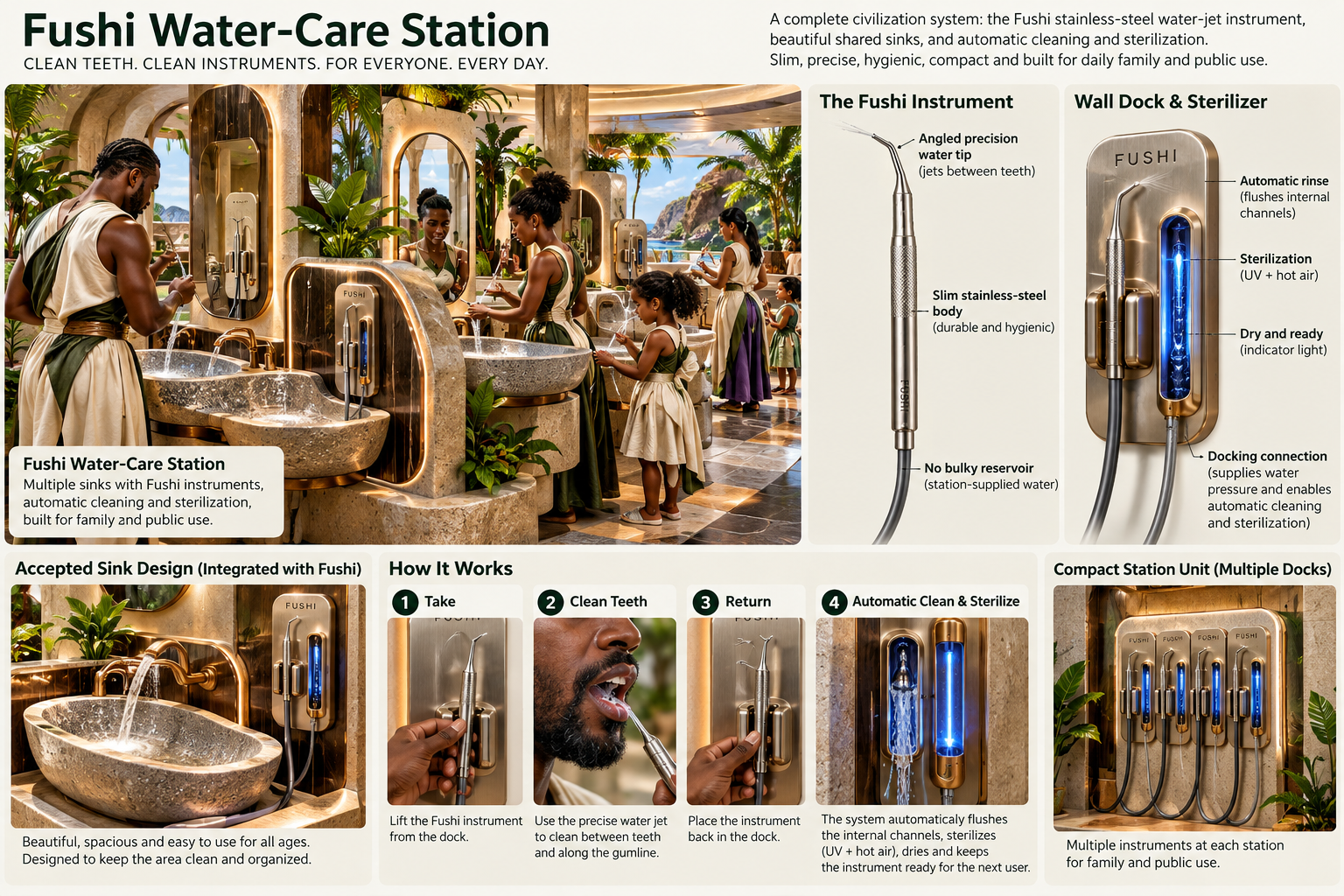
A network can provide water and energy without household bills when the civilization directly organizes generation, collection, treatment, repair, storage and distribution. No-payment access is only meaningful when water is safe and energy is reliable. A single public tap or subsidized meter is not the same as a fully functioning free household service.
24Who repairs broken machines, infrastructure and houses?
Specialists, apprentices, local stewards and support teams must have clear assignments, parts access, inspection rhythms and records. Pacorips helps route faults and connect needs to capability, while maintenance and replacement remain real work. The goal is to repair before families live with avoidable failure.
25What happens to rubbish, wastewater and worn-out products?
Krubaro sorts materials by their real next use: repair, wash-and-return, reuse, compost, safe processing or controlled disposal when necessary. Pacorips records material routes and catches failures. A money-free civilization cannot be beautiful if it pushes the work of cleaning and sorting into mothers’ homes or hides harmful waste elsewhere.
Link to this answer ↗26What keeps soil, forests, wildlife and water systems healthy?
Production cannot simply deplete the ground and call the result abundance. Landscape stewardship measures restoration, soil return, habitat function, careful animal systems and water-holding capacity. The point is to leave families and living ground with more usable life than before, not merely more goods moved.
27How do you know where supplies and skills are actually needed?
Kaitou is the authored resource-intelligence concept: see what exists, what is missing, what is idle, who has useful capability, and what can be moved or multiplied. Pacorips helps with routing and operational memory. The accuracy of their records must be tested in physical delivery, not assumed because software produced a dashboard.
Link to this answer ↗Shubaka, Excellence, Learning & Travel
How people contribute, become capable and move freely without wage pressure.
28If nobody needs wages, why would anyone work?
Because the land, families, machines and public services still require capable human contribution. Shubaka makes that useful work visible and organizes it around interests, mastery, service and reasonable rhythms instead of the threat of starvation. People can pursue engineering, cooking, care, design, agriculture or discovery because the work matters.
Link to this answer ↗29What exactly is Shubaka?
Shubaka is contribution to the civilization through useful abilities, care and responsible roles. It is not a hidden salary system, a punishment or a glorification of exhaustion. The model emphasizes appropriate weekly rhythms, family time, role rotation, relief and restoration when a season requires more effort.
30Who takes the difficult, dirty or unpopular jobs?
Begin by finding people who are suited to and interested in the work; train them, make their tools excellent and distribute the burden. Improve, mechanize or eliminate badly designed tasks where possible. Some essential work will remain difficult, which calls for competence, safety, support, rotation and restoration—not a permanent exhausted class.
31Would surgeons, pilots and engineers still need strict qualifications?
Absolutely. Removing tuition and financial hurdles does not mean removing skill, safe practice or judgment. Serious responsibilities need stronger demonstrations of excellence, apprenticeships, supervised practice and reliable competency checks. The gate should protect life and verify ability, not protect wealthy access to training.
32How do young people choose their life’s work without jobs and salaries?
By encountering the real civilization: workshops, gardens, health places, transport systems, textiles, software and laboratories. They can try, learn, build, revise and discover strengths that no résumé or early school label could reveal. Projects produce both useful infrastructure and a growing body of capable people.
Link to this answer ↗33Can people pursue curiosity, invention and research that earns nothing?
That is one of the strongest reasons to remove the money gate. Engineers and researchers still need time, materials, peers, laboratories, testing and truthful results, but they need not prove a near-term sale before an idea deserves examination. Failed tests can teach the next inventor rather than ruin a household.
34Can people really travel without buying a ticket?
The authored LuvYou Care-Port network treats movement as free civilization infrastructure, not a tourism product for purchasers. Land, air and sea routes need vehicles, routing, maintenance, family rest, food, safety and baggage support. Travel may be for learning, family, rest or delight; none requires an income-based permission slip.
35What happens when a travel route or training place is full?
Real seats, safe staffing and mentor capacity have limits. A free system should show actual availability, offer alternate routes or sessions and build more capacity in response to durable demand. It must not pretend scarcity disappears, or quietly recreate pay-to-skip access.
Family Life, Health, Beauty & Daily Living
A civilization is judged by how comfortably ordinary families can live.
36Why is marriage and family the foundation of this civilization?
The civilization is authored around durable husband-and-wife bonds, children and future generations. Its buildings, roles, transport, food systems and relief services should strengthen shared family life rather than consume it. Marriage is not reduced to a certificate or a new household bill.
37How does a new married household begin without debt?
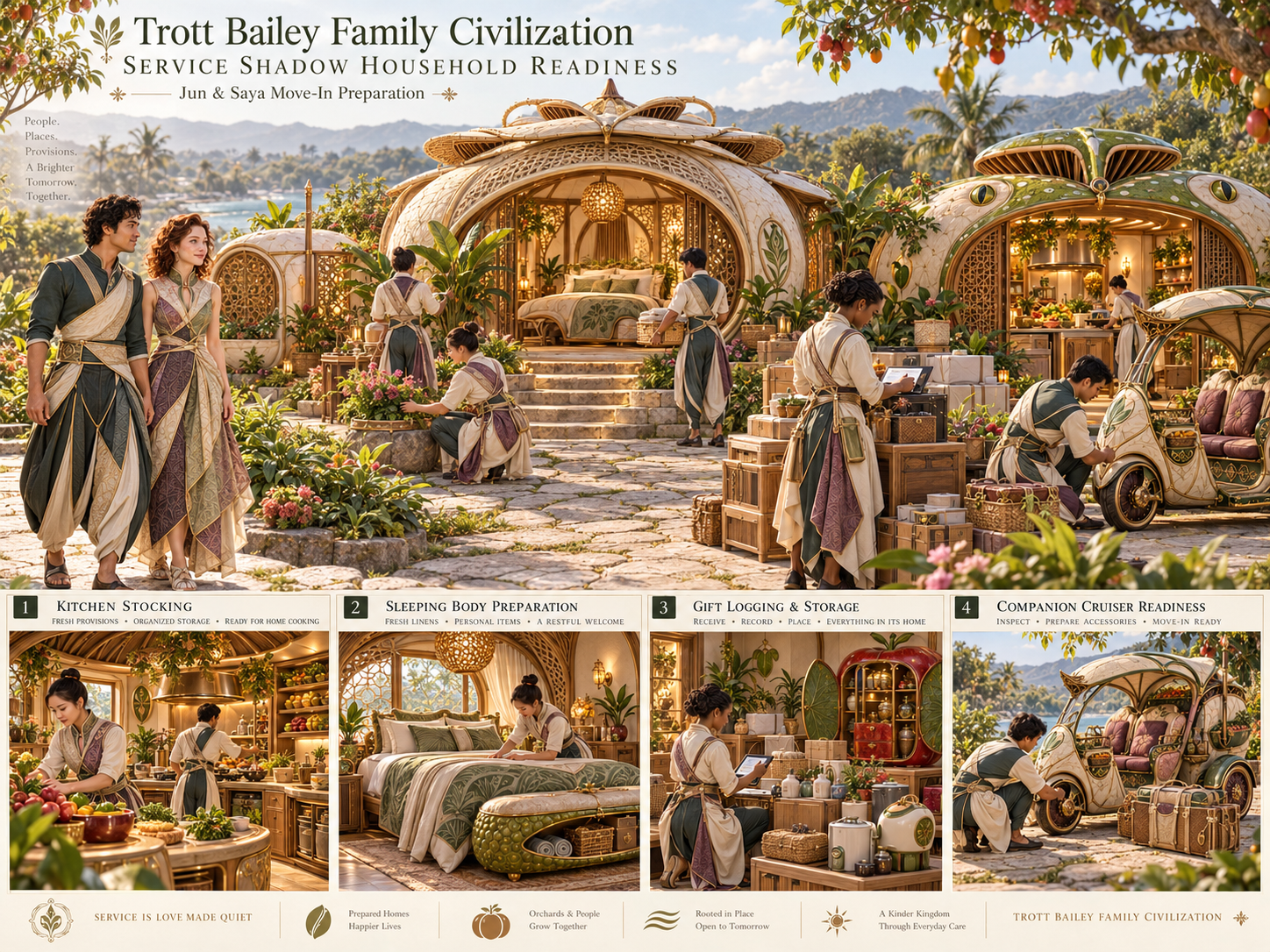
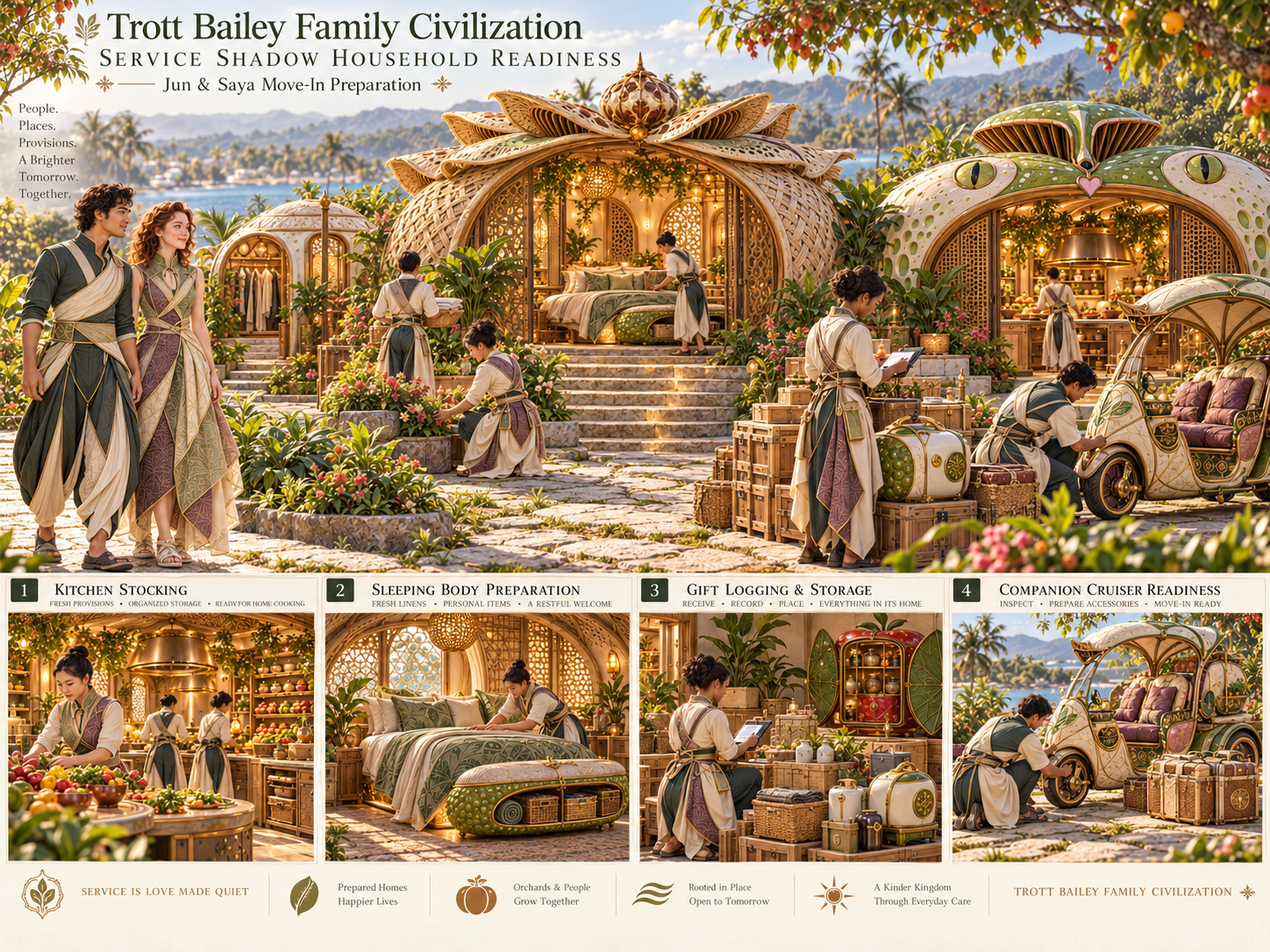
The marriage record activates the household establishment responsibility: the family receives its baseline land entitlement, selected principal home, and immediate living support while further facilities develop. The Marriage Hall, Build-Life and Service Shadow coordinate resources without demanding a mortgage as the entry condition.
38What help would mothers receive during pregnancy and birth?
The Tideechi maternity concept brings skilled clinical care, a familiar family room, birth support and recovery close to the household. The aim is not to replace medical judgment with decoration, but to make safe care, relief, supplies and a husband’s presence normal rather than a financial or logistical struggle.
39How can parents care for children and still contribute?
Civilization should not force parents to choose between earning survival and seeing their children grow. Child-care places, food service, laundry and cleaning assistance, appropriate work rhythms and parental relief return usable time. Parenting itself is real contribution to the future, even where no wage is attached.
40Does free healthcare lower clinical standards?
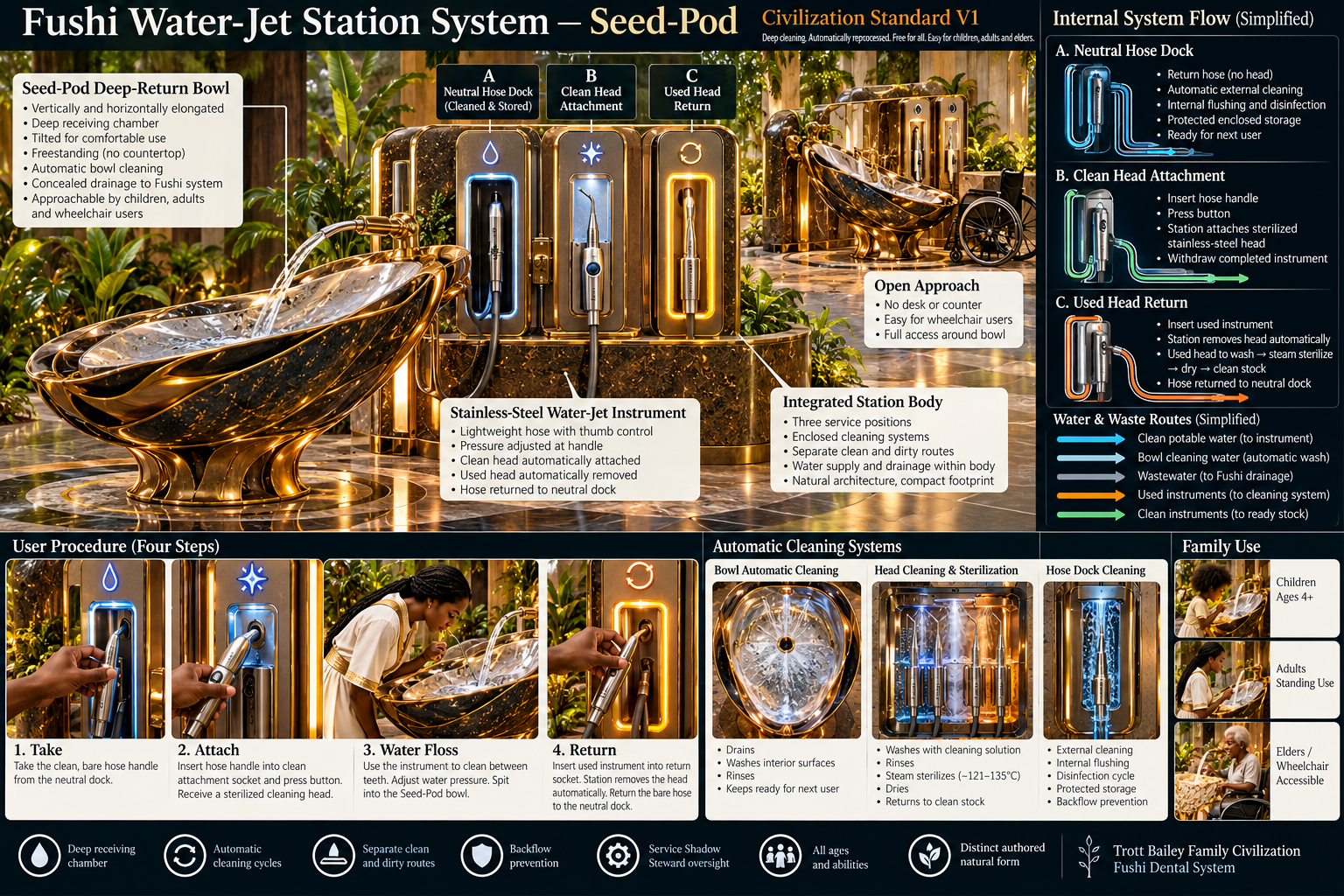
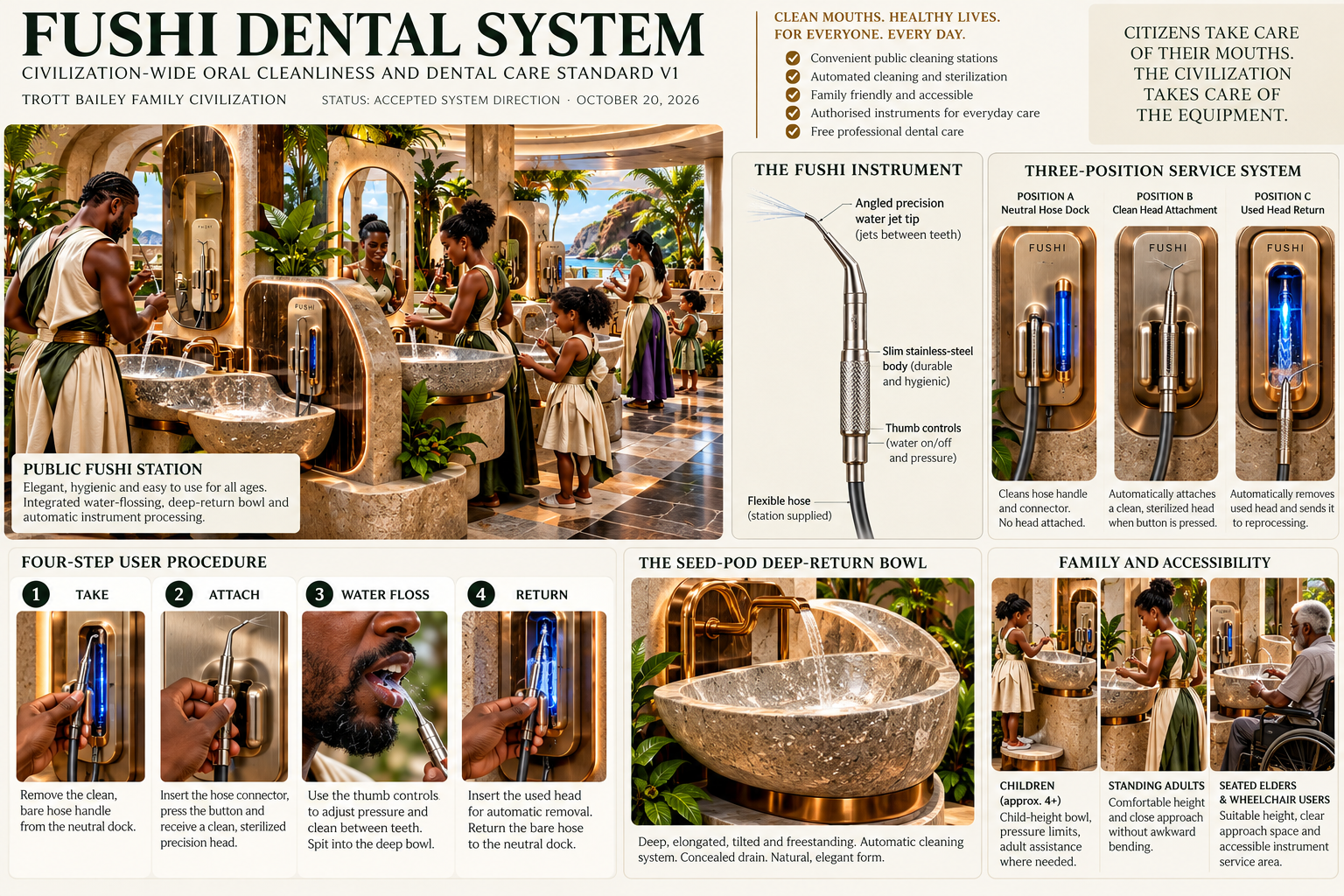
No. The authored Health Upon Health approach puts prevention, qualified practitioners, dentistry, maternity support, medicines and long-term health before billing. Safety, training, competence and good supplies are obligations. Free service that is dirty, understocked or humiliating fails the standard.
Link to this answer ↗41Will fashion and beautiful surroundings remain available to everybody?
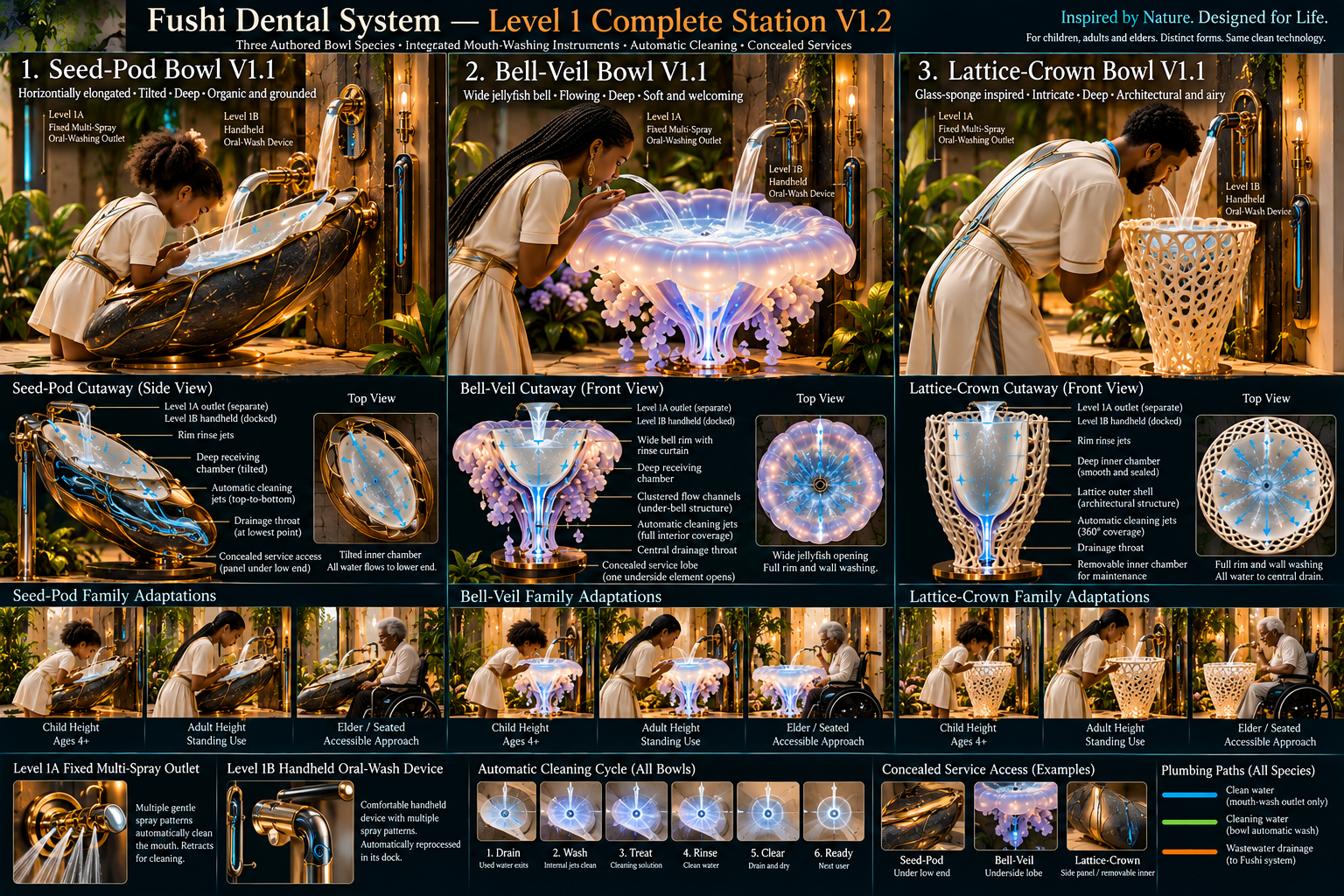
Beauty is not an optional reward for surplus income. The clothing system connects authored garment species, purposeful materials, fitting, repairs, fabric care and rolewear to ordinary life. Public parks, gardens, water places and welcoming architecture should also be usable and maintained, not simply photographed.
Link to this answer ↗42What happens to the elderly, sick or people unable to contribute?
The foundation of care is human life, not the number of weekly work hours somebody can supply. Skilled services, food, a safe home, companionship and assistance must remain available as needs change. Good stewardship allocates support according to real conditions rather than withdrawing dignity from people whose contribution changes.
Rulership, Rights, Objections & Proof
Difficult questions about authority, belonging, transition and real-world delivery.
43Who governs a civilization with no money?
Under the Trott Bailey Family model, one ruling family keeps authorship and final responsibility for implementation. Specialists and stewardship bodies provide expertise, records, warnings and execution, but do not become competing governments. The stated test of rulership is the life produced: people protected, families flourishing and systems working.
44Does one rulership mean there can be no criticism or evidence of abuse?
No. The published doctrine explicitly allows people to report failure and present evidence of abuse; those reports must be heard and addressed. Criticism is not identical to claiming final governing authority. A system that cannot see its own failures cannot produce dependable abundance.
45Are there still rules, safeguards and gatekeepers?
Yes, where real safety, competence, privacy or responsible stewardship require them. Protecting children from dangerous materials, qualifying a surgeon and preventing destructive conduct are not the same as placing a price on nourishment. A gate is judged by who holds it, why it exists and whether it protects good life or blocks it.
46Does everyone automatically become a citizen?
No. The published citizenship doctrine distinguishes the protected citizen body from the wider reach of food, knowledge, help, care and generosity. Receiving a meal, being a visitor or benefiting from an open resource does not automatically establish citizenship. Entry standards must be applied as actual policy, with legal and human dignity obligations respected.
47Does this require taking over a country or ignoring its laws?
The published leadership Q&A describes initial development within host-country law: land acquired lawfully, buildings subject to applicable standards, and national sovereignty respected. A model can begin as a lawfully operated community while demonstrating its systems. Its wider ambitions do not create an exemption from real legal duties.
48Is it socialism, capitalism or a charity?
The Trott Bailey proposal does not primarily identify itself as any of those: the aim is direct access to useful civilization capacity rather than a market sale, a charity queue or a new national tax-and-ration system. Defined rulership and Shubaka organize stewardship. What makes it different must ultimately be visible in households, operations and results.
49What if a system fails—food delivery, water, safety or leadership?
Failure must be visible, reported and corrected. The design favors modular capacity, backups, maintenance records, competent teams and direct responsibility so families are not told to endure avoidable suffering. Plans, renders and research are not the same as operating proof; each system must show what works and what still needs building.
50What is the path from authored designs to an actual money-free civilization?
Build and demonstrate functioning parts, measure their ability to support families, repair what fails, teach more people and scale where land, resources and stewardship make it possible. Food production, water, homes, healthcare, movement and clean return should be tested as connected systems, not disconnected publicity campaigns. The question is whether the design makes more life possible in the real world.
Try another word or clear the topic filter.

 and then