CATEGORY 10 / 16 · FOUR-BELESHKY METHODOLOGY · V1.0.0
Land becomes abundant when families can actually live and grow upon it.
A country may contain vast stretches of ground while new families cannot obtain a secure place to build, grow, rest and develop their abilities. How much useful land actually reaches family life?
Trott Bailey Family Civilization guarantees at least 50 hectares to every newly married couple through the witnessed marriage record, whether the family actively develops all of it or only a small part. Additional land can serve real needs, dedicated capability and a clear plan. Secure core property is inheritable, and free circulation remains possible. These are authored standards, not national deployment claims.
Keep the existing 25 / 35 / 25 / 15 formula
Four ways land must actually serve family life
Capacity
Can the country identify, protect and prepare suitable ground for family households and beneficial undertakings?
See all nine levels ↗02 · 35%Reach
Which families actually have appropriate secure usable ground, and which receive the full benefit without payment?
See all nine levels ↗03 · 25%Friction / Concentration
What money requirements, legal delays, concentration, eviction and arbitrary gates obstruct safe family land?
See all nine levels ↗04 · 15%Return / Productive Ground
What secure family life, ecological improvement, teaching and civilization contribution does land make possible?
See all nine levels ↗Secure tenure, usable land and free access require distinct evidence. A land registry, total territory or land use map is not the same as the population truly served. Recognized customary, communal, Indigenous and existing household rights must be protected; undeveloped land is not unowned land. Numeric TBF beleshky anchors are assessments, not measured percentages.
Trott Bailey Family Land Living Principle
Land becomes family capability and circulates benefit throughout civilization
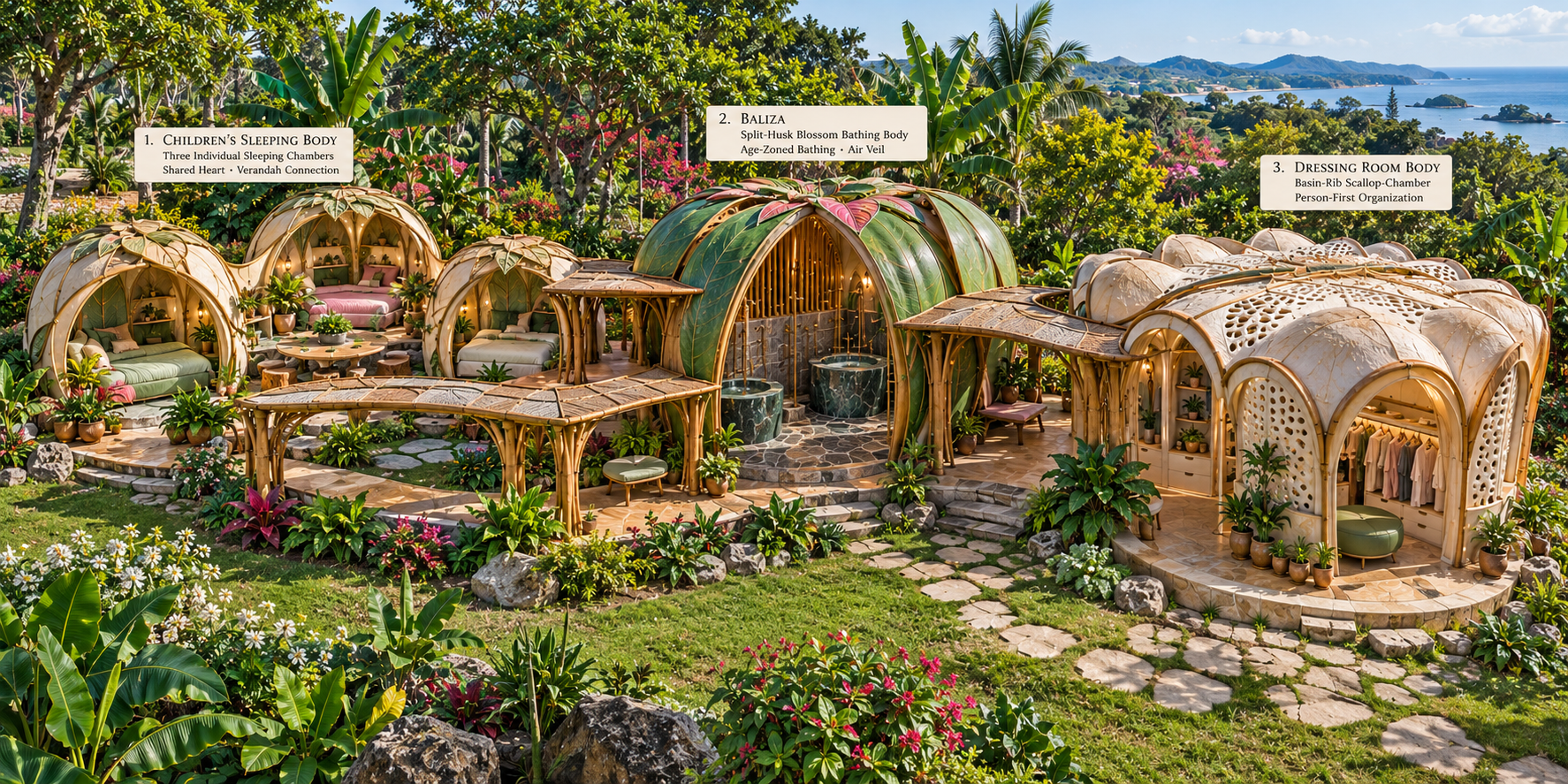
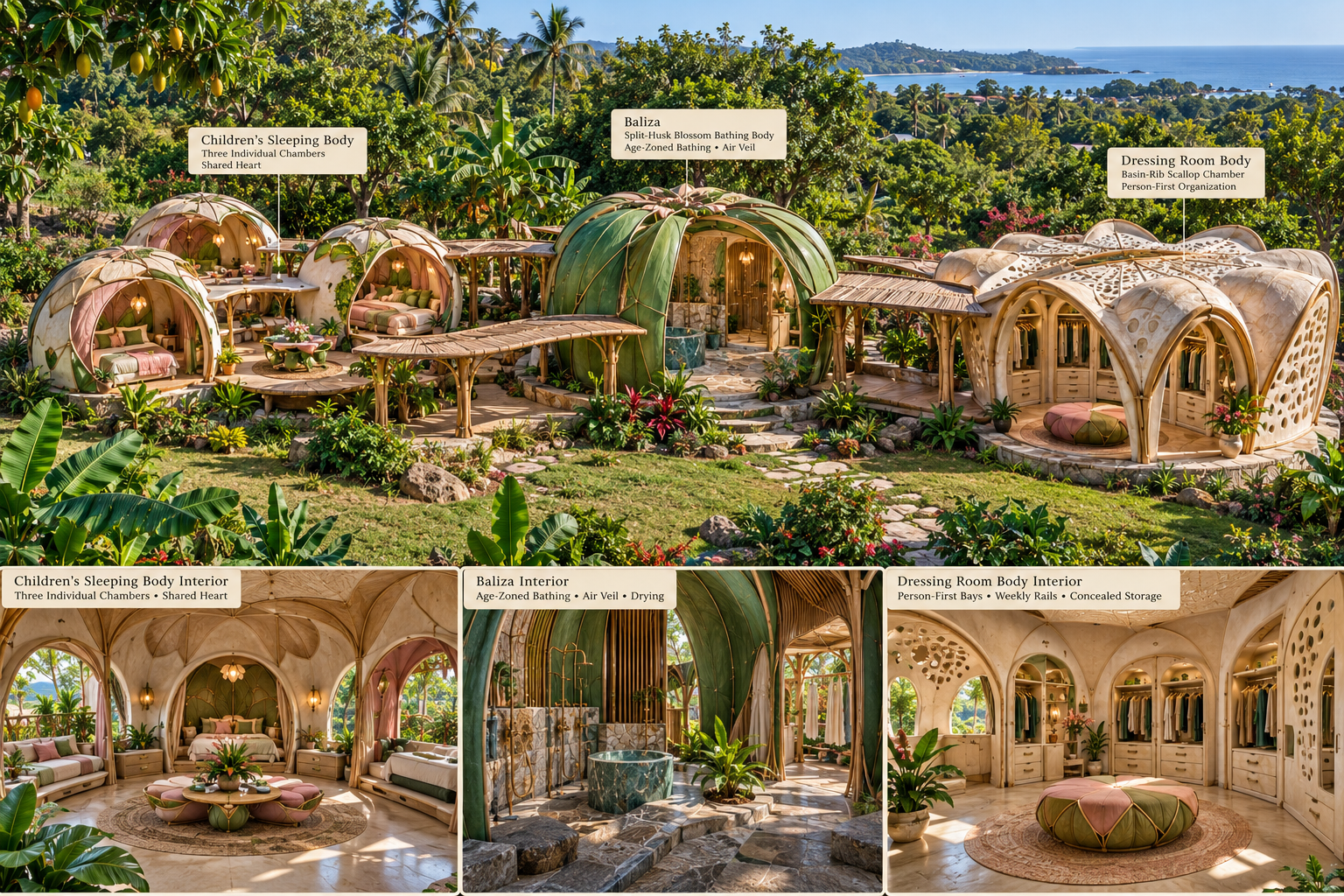
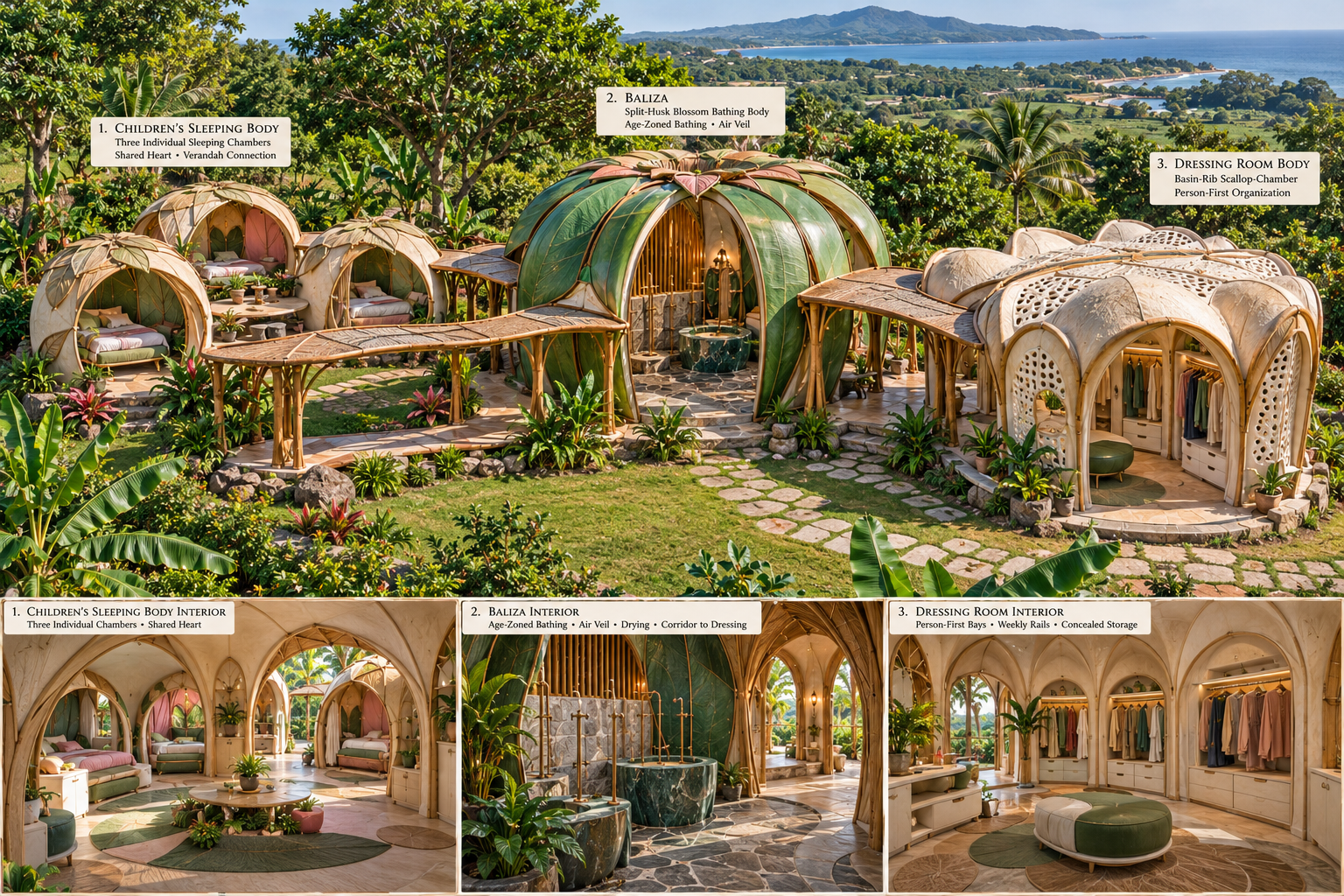
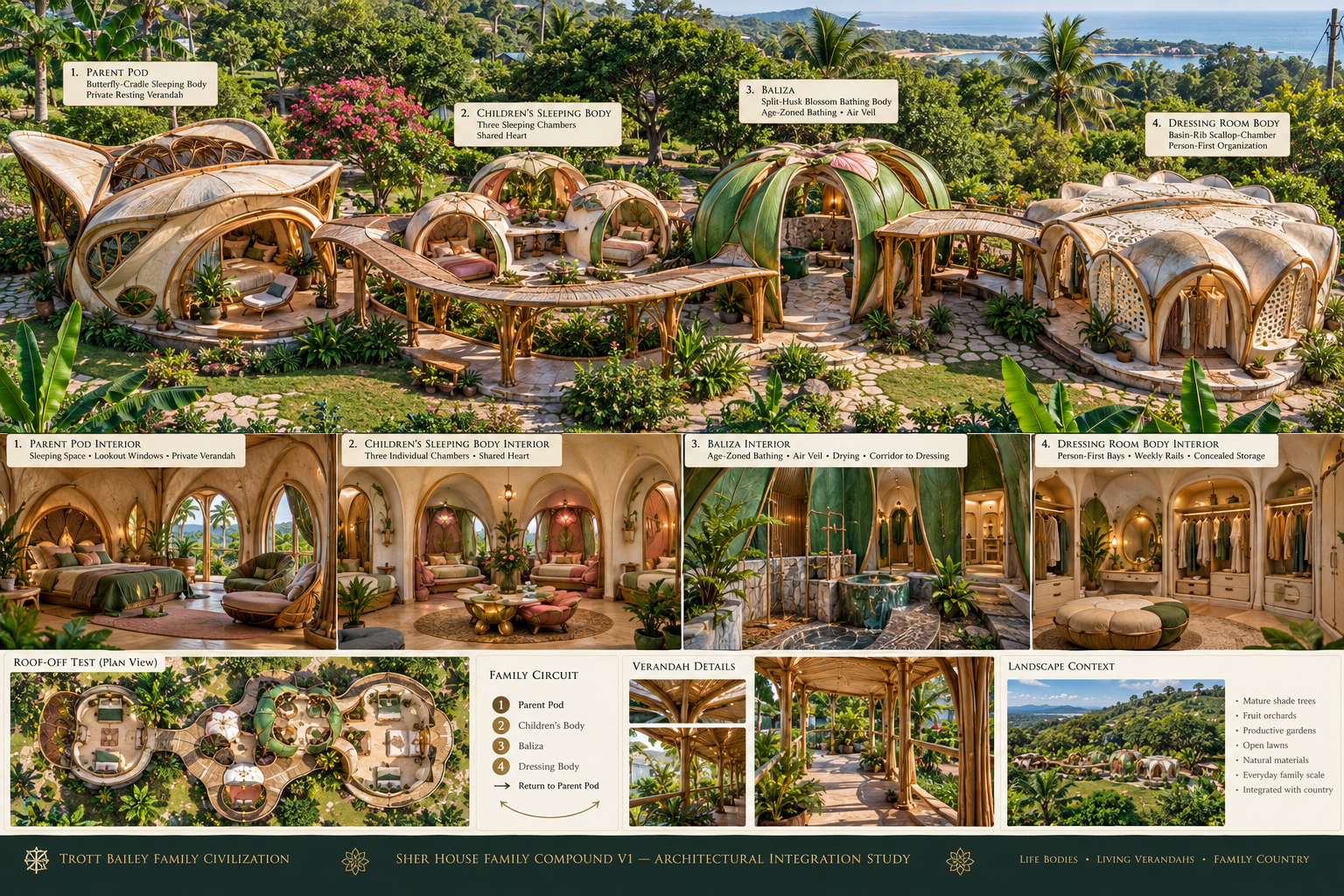
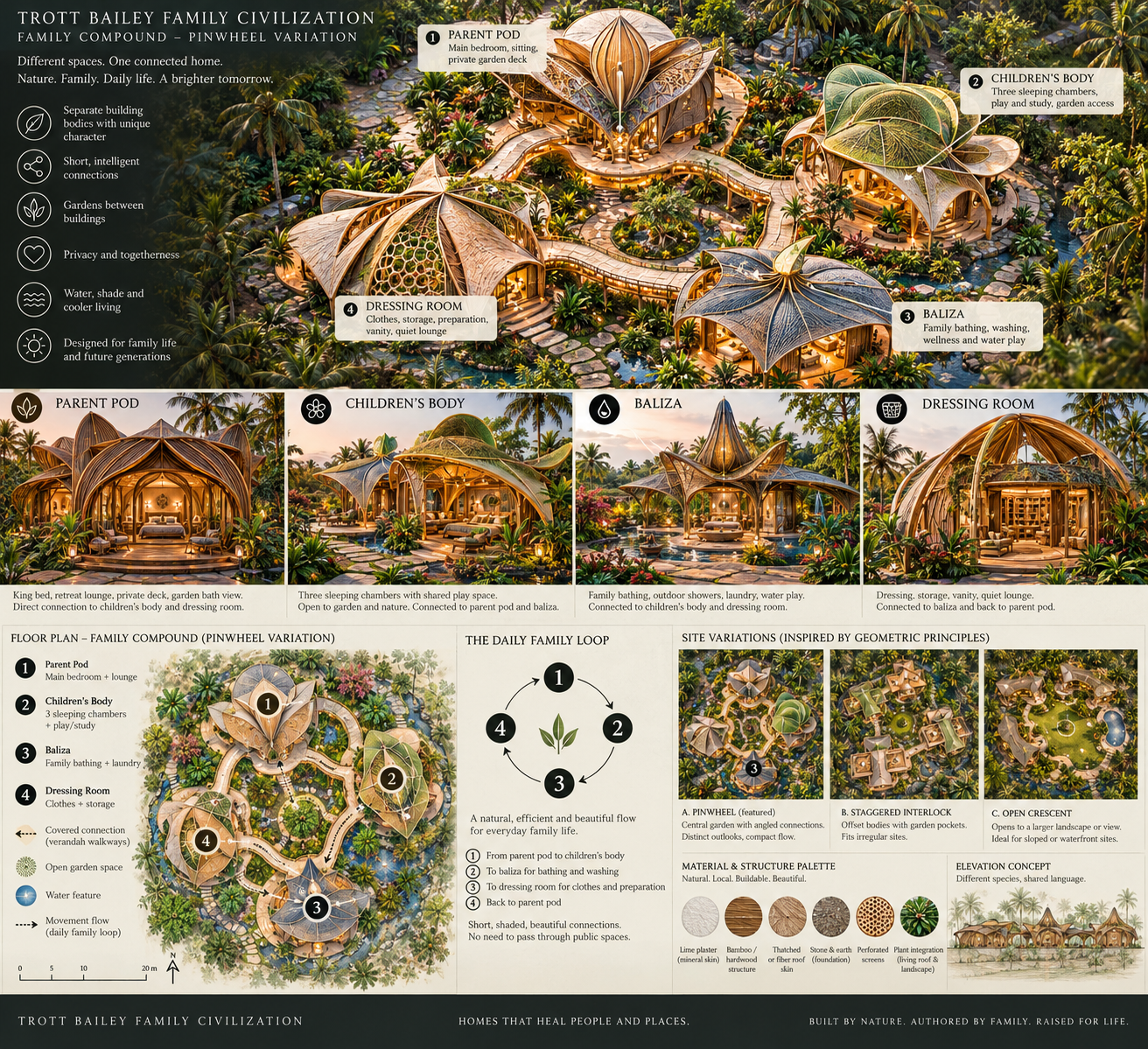
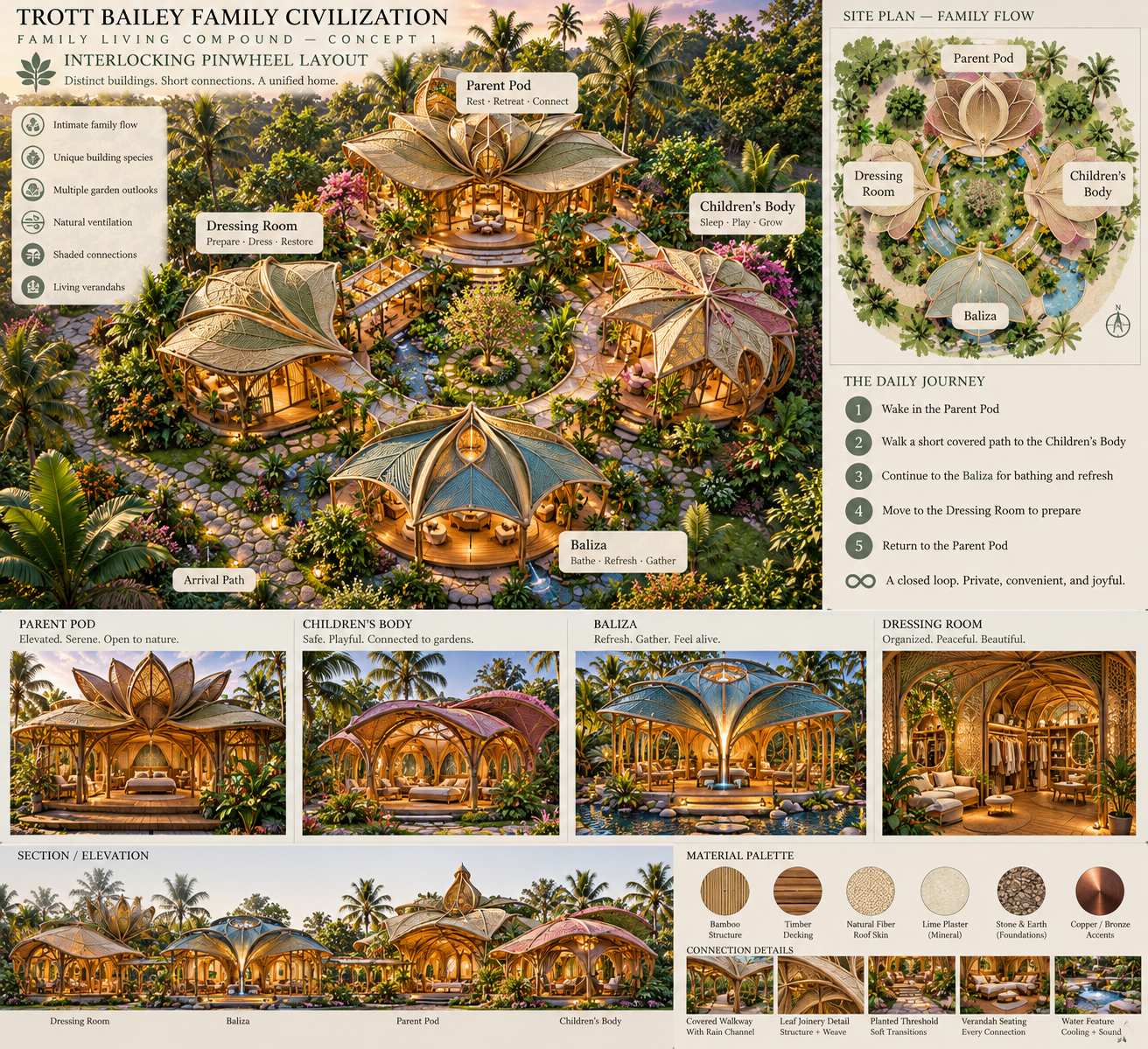
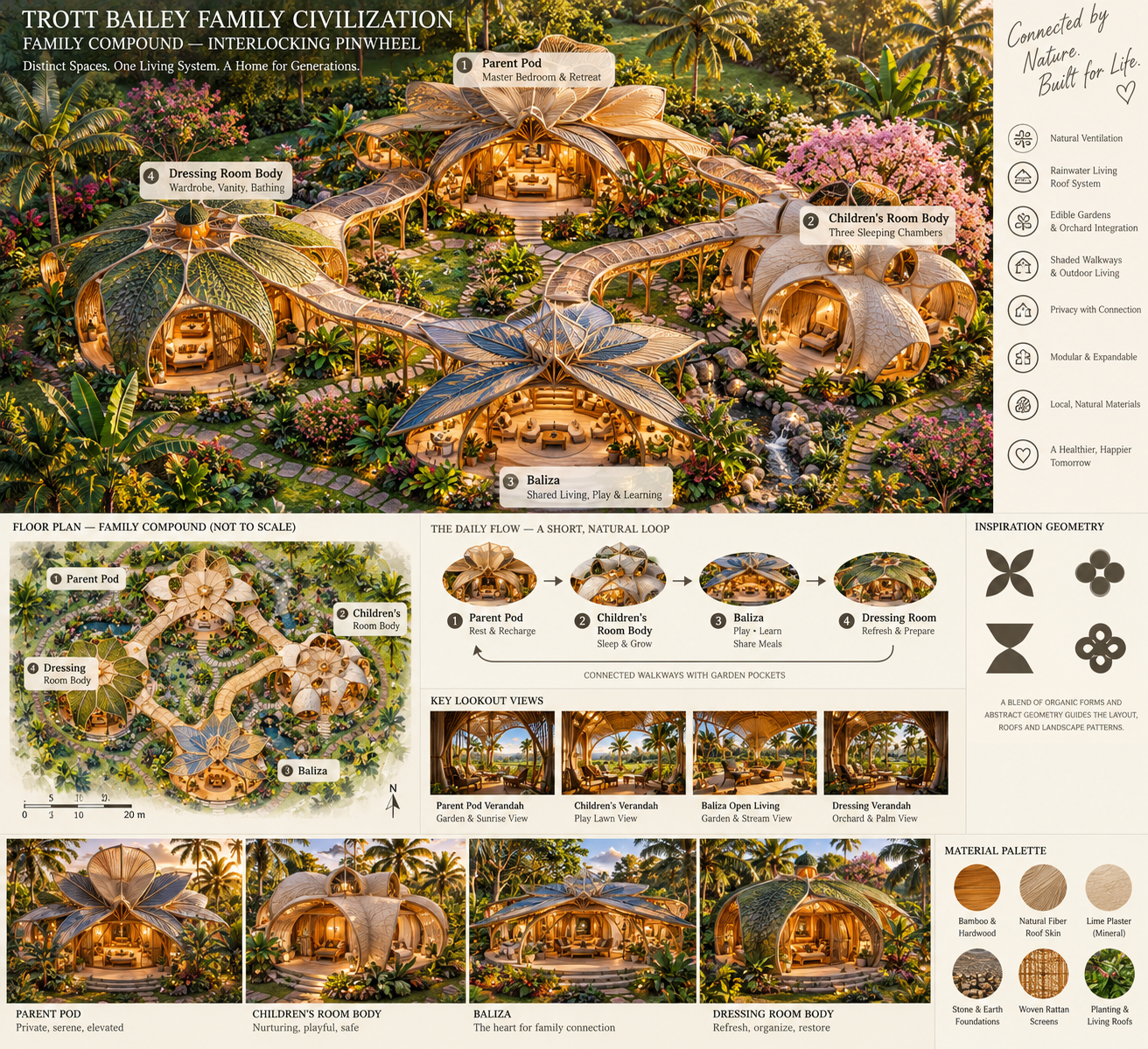
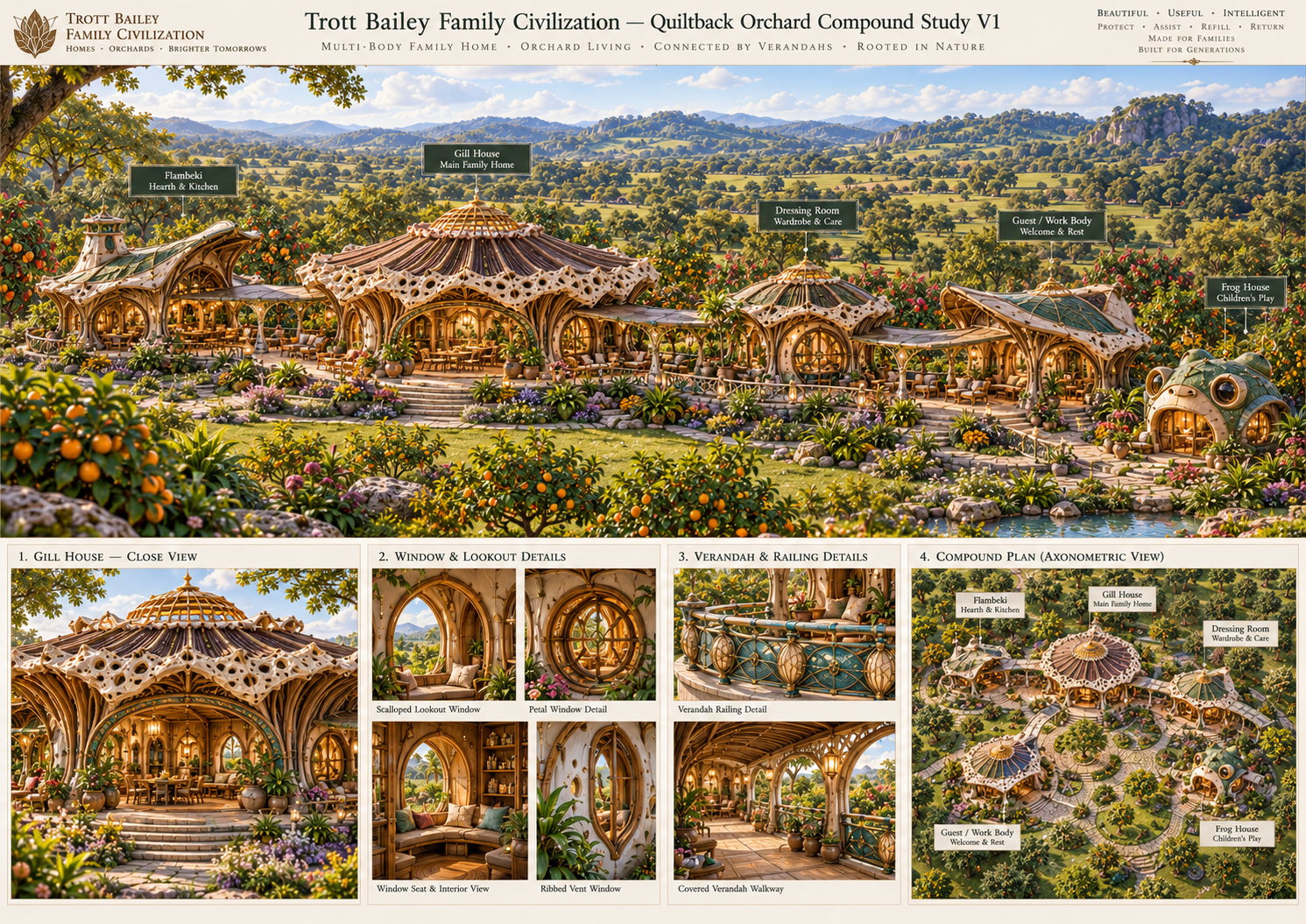
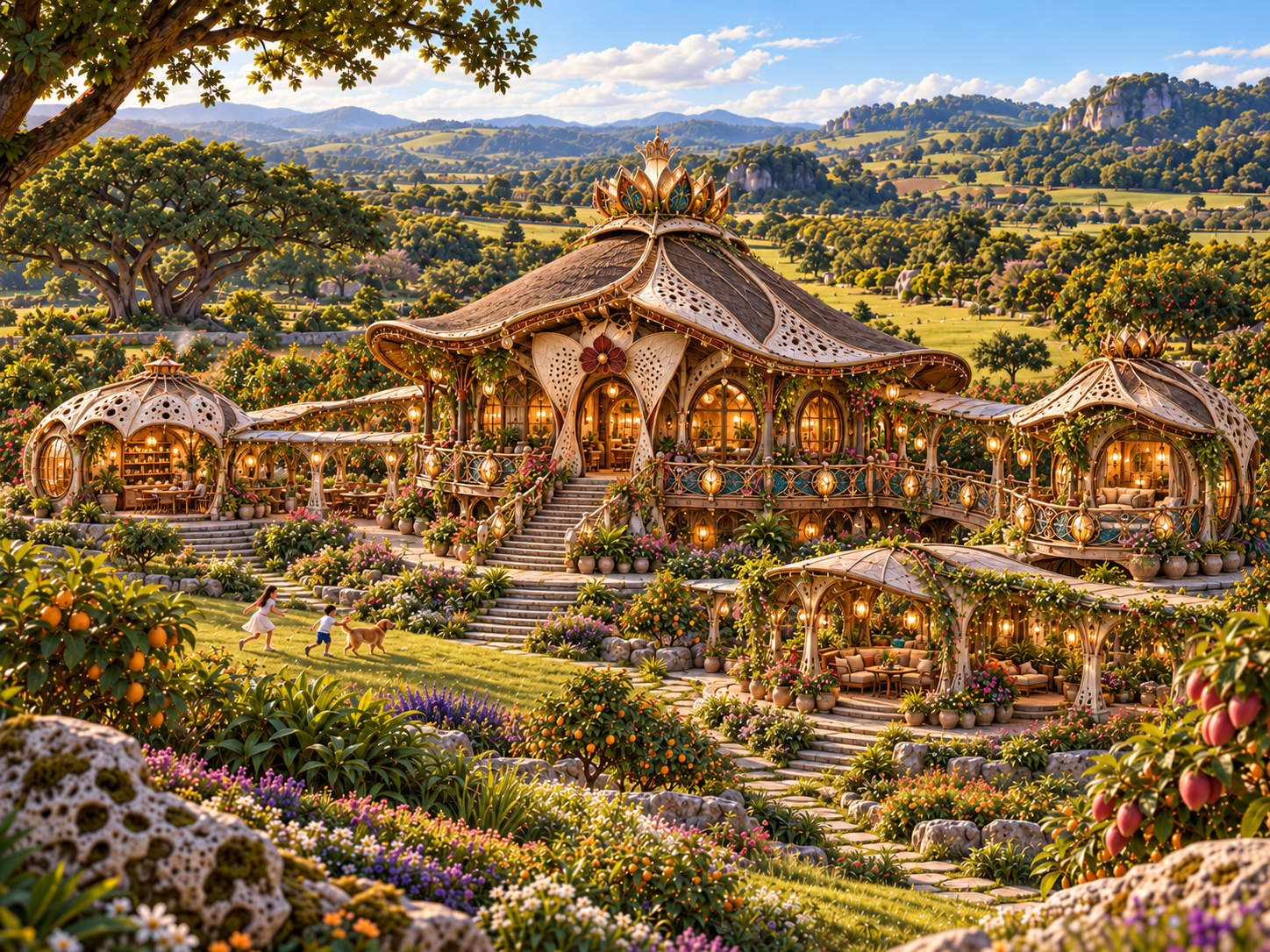
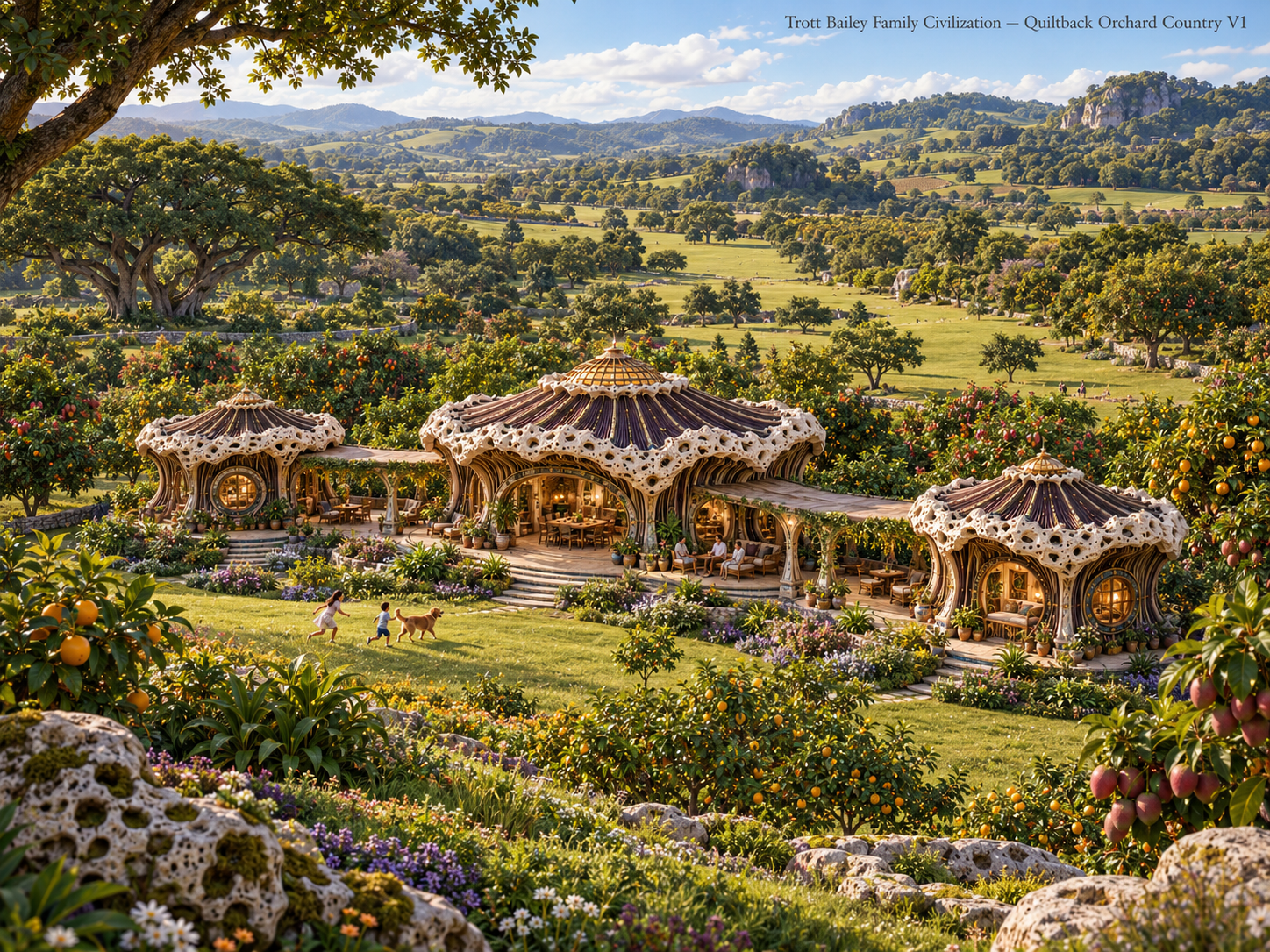
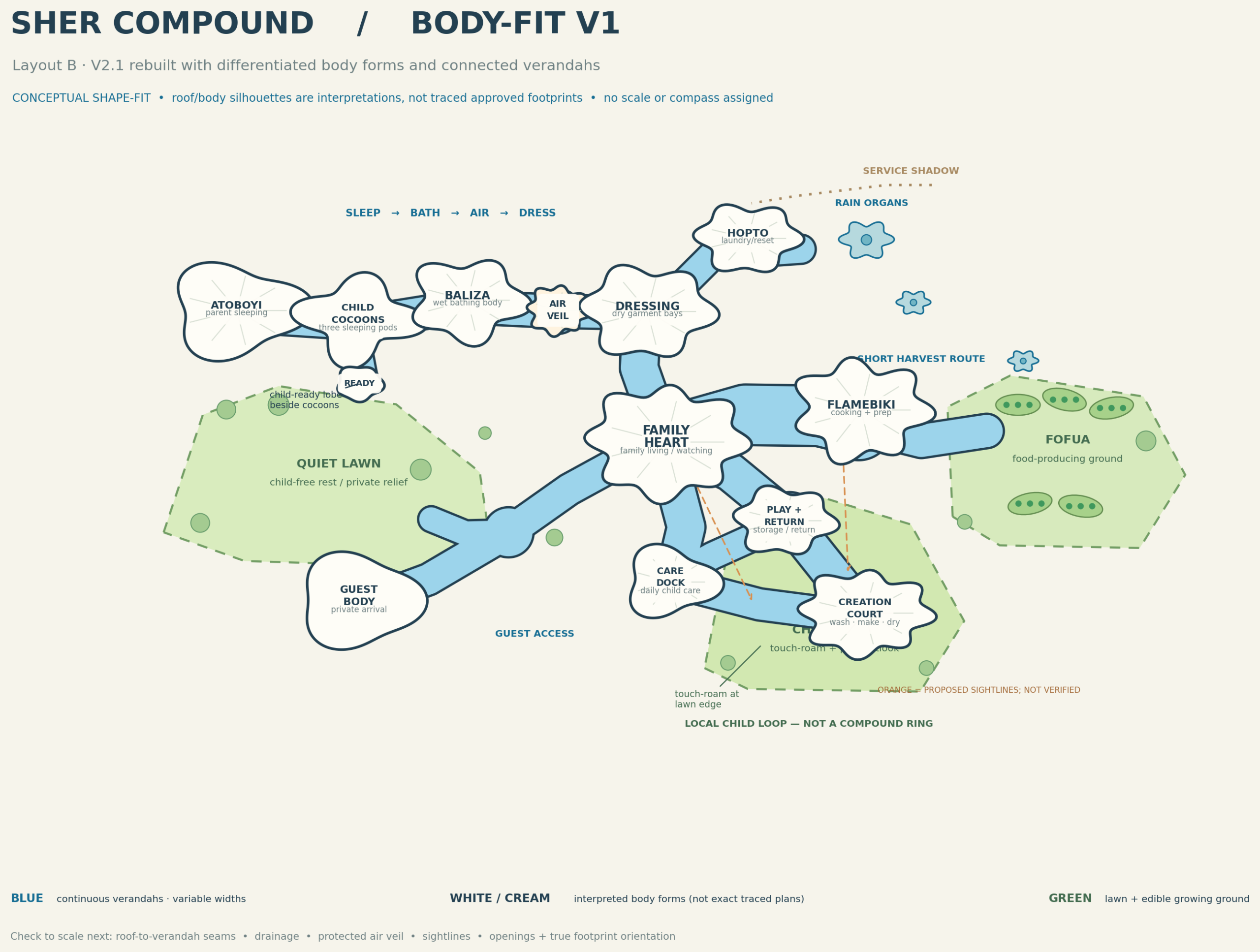
The couple establishes its core home and at least 50-hectare baseline. It may choose compact development, orchards or more extensive systems, and retain the full entitlement. Where skill and vision justify more land, additional access can support genuine undertakings. Compounds remain private family homes and can voluntarily contribute useful services to surrounding life.
The guaranteed 50 hectares is a Trott Bailey entitlement, not compulsory cultivation or a blanket assertion that land in other countries is unoccupied. Large allocations must respect prior rights, landscape capacity and honest stewardship.
Trott Bailey foundations: Marriage & Lifetime Family Flourishing Support — 50-hectare entitlement ↗ · Marriage & Lifetime Family Flourishing Support — capability-based additional land ↗
Shared Housing/Land Money Gate · 0–4
Housing/Land is one shared direct Money Gate, not two separate gates
The existing Housing/Land Gate (0–4) measures effective household access to the combined secure shelter-and-land benefit without payment. Land alone never proves that usable housing is provided. Land Reach A% measures secure usable ground; M% is its reliably money-free subset. Both should correspond to the land component of the direct Housing/Land audit, while complete 4/4 clearance also requires adequate housing. Physical coverage can earn partial Reach even when money barriers remain. Do not mechanically subtract the gate from the Land beleshky a second time.
Verified complete housing AND land access → shared clearance
| Effective free population reach | Gate |
|---|---|
| Verified 0% complete combined benefit | 0/4 |
| Above 0% and below 30%, verified combined benefit | 0.5/4 |
| 30% to below 50%, verified combined benefit | 1/4 |
| 50% to below 75%, verified combined benefit | 2/4 |
| 75% to below 100%, secure and reliable | 3/4 |
| 100% receive secure usable housing AND land without payment | 4/4 |
Housing / Land
Only shared five-gate item directly involved here; must verify both secure suitable land and adequate housing for the same population.
Food
Suitable family land may support orchards and growing, while nourishment coverage is independently measured.
Water / Energy
Usable land requires suitable water, energy and site services; availability here does not automatically clear this gate.
Transportation
Family land should connect to services and public life; travel gate remains independently scored.
Healthcare
Family land and compounds can support services such as Tideechi when appropriately qualified and connected to care.
A% means secure usable land access and M% means the verified no-payment subset, M≤A. +25 can come from >75% A OR ≥30% M with at least 50% A. +50 requires >75% A AND >30% M. +75 requires >90% A and ≥75% M with supportive direct-gate evidence; +100 requires universal secure free land, PLUS proof of full combined Housing/Land Gate 4/4. This rule adds methodology, not automatic country-score changes.
Nine positions per beleshky
Which exact standard earns which points?
| Score | Capacity | Reach | Friction / Concentration | Return / Productive Ground |
|---|---|---|---|---|
| -100 | Land provision has effectively collapsed; families have no dependable route to safe, suitable ground. | Effective secure, suitable family land reaches under 5% of the relevant population; most families cannot establish a dependable living ground. | Dispossession, coercion and inaccessible rights dominate; families face dangerous land insecurity. | Ground access produces widespread degradation, instability or displacement rather than durable family benefit. |
| -75 | Most potentially suitable land is unavailable for ordinary family use, while harmful or unrecognized claims dominate. | Only 5–24% have secure, usable land; large groups lack recognized rights or a practical route to land. | Severe concentration, evictions, discrimination, conflicting claims and expensive or inaccessible processes block most families. | Severe soil damage, lack of family security and loss of living landscapes prevent long-term benefit. |
| -50 | Basic mapped land and allocation institutions exist, but widespread shortages, disputed boundaries or unusable parcels persist. | Only 25–39% have secure, suitable land; ownership or access is sharply uneven and many legitimate rights remain unsafe. | Major land prices, speculation, document barriers or high insecurity keep ordinary families excluded. | Limited family production or recreation; weak stewardship and short-lived access undermine development. |
| -25 | Some planning, allocation and servicing work, but large gaps in suitable family plots and secure assignment remain. | Only 40–49% can effectively use suitable secure land, with substantial exclusion of new families or affected communities. | Functioning systems remain clogged by costly access, slow permits, unclear boundaries or avoidable disputes. | Some useful household growing and land care exist, but tenure or support undermines long-term improvement. |
| 0 | Basic land records, environmental safeguards and usable parcels exist; family land readiness is uneven. | At least 50% have effective secure use of suitable ground; coverage is documented and serious gaps remain. | Some families secure land without major difficulty, but payment, administrative burden and concentration remain material. | Basic family use, gardens, privacy and tenure continuity work for many, with uneven ecological care. |
| +25 | Sufficient suitable parcels, recognized tenure and basic support are available across large parts of the country. | More than 75% have secure, suitable land OR 30% or more have verified complete money-free land access with at least 50% secure land reach. | Land disputes, access costs and delays measurably fall, with secure rights becoming more practical for ordinary families. | Families can develop gardens, add suitable structures and carry out useful stewardship; recorded gains are emerging. |
| +50 | Reliable, planned access to family plots, infrastructure and growing space meets most documented needs. | More than 75% have secure, suitable land AND more than 30% have documented complete money-free land access, cross-checked against the Housing/Land gate. | Large reductions in prices and arbitrary hurdles; reliable records, transparent assignments and effective dispute resolution protect families. | Secure families widely cultivate, teach, restore landscapes and share skills or outputs through functioning compounds. |
| +75 | Near-universal responsive family-land provision, with ecological screening, support for changing families and useful development. | More than 90% have secure, suitable ground; at least 75% have reliably money-free land access, supported by direct gate evidence at 3/4 or more. | Most families experience little avoidable acquisition or tenure burden, with strong protection against dispossession. | Long-lived compounds, intergenerational stewardship, responsible additional land allocations and broad restoration produce measured benefits. |
| +100 | Universal, maintained, rights-respecting land capability; initial family provision, secure records and appropriate further allocation respond to real needs. | Every family can secure appropriate usable land without payment, with protected tenure, access compatible with community rights and full Housing/Land Gate 4/4. | Ordinary family land is obtained and retained without payment or needless bureaucracy, with swift fair resolution, secure inheritance and protection of legitimate third-party rights. | Inheritable and freely developable family land supports privacy, family Shubaka, Keslev orchards, Tideechi/Krubaro where suitable, wildlife and living-ground repair; knowledge, skills and abundance circulate across the civilization. |
Beleshky 1 · 25% of Land
Capacity
Can the country identify, protect and prepare suitable ground for family households and beneficial undertakings?
Land provision has effectively collapsed; families have no dependable route to safe, suitable ground.
Read the Trott Bailey foundation ↗Most potentially suitable land is unavailable for ordinary family use, while harmful or unrecognized claims dominate.
Read the Trott Bailey foundation ↗Basic mapped land and allocation institutions exist, but widespread shortages, disputed boundaries or unusable parcels persist.
Read the Trott Bailey foundation ↗Some planning, allocation and servicing work, but large gaps in suitable family plots and secure assignment remain.
Read the Trott Bailey foundation ↗Basic land records, environmental safeguards and usable parcels exist; family land readiness is uneven.
Read the Trott Bailey foundation ↗Sufficient suitable parcels, recognized tenure and basic support are available across large parts of the country.
Read the Trott Bailey foundation ↗Reliable, planned access to family plots, infrastructure and growing space meets most documented needs.
Read the Trott Bailey foundation ↗Near-universal responsive family-land provision, with ecological screening, support for changing families and useful development.
Read the Trott Bailey foundation ↗Universal, maintained, rights-respecting land capability; initial family provision, secure records and appropriate further allocation respond to real needs.
Read the Trott Bailey foundation ↗Evidence required
- Land capability maps, settlement needs, soil/water hazards and sites actually usable for family life
- Documented parcels or recognized tenure and families waiting to establish or expand compounds
- Servicing, environmental screening and dependable allocation/recording capacity
- Existing legitimate communal, customary, Indigenous and private rights, not mistaken for vacant land
How a country climbs
- Protect legitimate tenure and map unmet household land needs
- Prepare rights-respecting family land access with reasonable services and environmental safeguards
- Respond to changing family size and clear, capable projects with appropriate additional land
- Document delivered land, not projected allocations or ceremonial announcements
Beleshky foundation: Marriage & Lifetime Family Flourishing Support — 50-hectare entitlement ↗
↑ All scoring positionsBeleshky 2 · 35% of Land
Reach
Which families actually have appropriate secure usable ground, and which receive the full benefit without payment?
Effective secure, suitable family land reaches under 5% of the relevant population; most families cannot establish a dependable living ground.
Read the Trott Bailey foundation ↗Only 5–24% have secure, usable land; large groups lack recognized rights or a practical route to land.
Read the Trott Bailey foundation ↗Only 25–39% have secure, suitable land; ownership or access is sharply uneven and many legitimate rights remain unsafe.
Read the Trott Bailey foundation ↗Only 40–49% can effectively use suitable secure land, with substantial exclusion of new families or affected communities.
Read the Trott Bailey foundation ↗At least 50% have effective secure use of suitable ground; coverage is documented and serious gaps remain.
Read the Trott Bailey foundation ↗More than 75% have secure, suitable land OR 30% or more have verified complete money-free land access with at least 50% secure land reach.
Read the Trott Bailey foundation ↗More than 75% have secure, suitable land AND more than 30% have documented complete money-free land access, cross-checked against the Housing/Land gate.
Read the Trott Bailey foundation ↗More than 90% have secure, suitable ground; at least 75% have reliably money-free land access, supported by direct gate evidence at 3/4 or more.
Read the Trott Bailey foundation ↗Every family can secure appropriate usable land without payment, with protected tenure, access compatible with community rights and full Housing/Land Gate 4/4.
Read the Trott Bailey foundation ↗Evidence required
- A%: surveyed population with effective secure suitable land rights, with clear denominator and household definitions
- M%: subset receiving adequate and secure land without purchase, rent or compulsory fee
- Tenure recognized in law and perceived as secure, disaggregated for women, vulnerable and customary-right holders
- Coverage of new households and legitimate existing communities; actual usable ground rather than cadastral paper
How a country climbs
- Move effective secure access above the next threshold with dated surveys and direct allocation evidence
- Expand full no-payment land access while documenting which families receive both secure tenure and usable land
- Protect existing and customary rights so allocations do not displace others
- Cross-check M% against Housing/Land Money Gate; keep missing intersection estimates pending
Beleshky foundation: Marriage and Housing — Core Homes and Free Circulation ↗
↑ All scoring positionsBeleshky 3 · 25% of Land
Friction / Concentration
What money requirements, legal delays, concentration, eviction and arbitrary gates obstruct safe family land?
Dispossession, coercion and inaccessible rights dominate; families face dangerous land insecurity.
Read the Trott Bailey foundation ↗Severe concentration, evictions, discrimination, conflicting claims and expensive or inaccessible processes block most families.
Read the Trott Bailey foundation ↗Major land prices, speculation, document barriers or high insecurity keep ordinary families excluded.
Read the Trott Bailey foundation ↗Functioning systems remain clogged by costly access, slow permits, unclear boundaries or avoidable disputes.
Read the Trott Bailey foundation ↗Some families secure land without major difficulty, but payment, administrative burden and concentration remain material.
Read the Trott Bailey foundation ↗Land disputes, access costs and delays measurably fall, with secure rights becoming more practical for ordinary families.
Read the Trott Bailey foundation ↗Large reductions in prices and arbitrary hurdles; reliable records, transparent assignments and effective dispute resolution protect families.
Read the Trott Bailey foundation ↗Most families experience little avoidable acquisition or tenure burden, with strong protection against dispossession.
Read the Trott Bailey foundation ↗Ordinary family land is obtained and retained without payment or needless bureaucracy, with swift fair resolution, secure inheritance and protection of legitimate third-party rights.
Read the Trott Bailey foundation ↗Evidence required
- Land prices, rent, debt and years of labour required to secure family ground
- Document processing time, allocation delays, disputed titles and eviction/dispossession rates
- Land concentration with local household access and unrecognized customary claims
- Actual accessible conflict resolution, inheritance continuity and secure tenure irrespective of political connection
How a country climbs
- Remove needless paperwork and recurring fees from ordinary family land access
- Resolve real disputes promptly, protect affected residents and reduce arbitrary exclusion
- Create clear family tenure/inheritance recognition without unjust deprivation
- Lower measured access costs, delays and risk rather than announcing procedural reforms
Beleshky foundation: Marriage & Lifetime Family Flourishing Support — capability-based additional land ↗
↑ All scoring positionsBeleshky 4 · 15% of Land
Return / Productive Ground
What secure family life, ecological improvement, teaching and civilization contribution does land make possible?
Ground access produces widespread degradation, instability or displacement rather than durable family benefit.
Read the Trott Bailey foundation ↗Severe soil damage, lack of family security and loss of living landscapes prevent long-term benefit.
Read the Trott Bailey foundation ↗Limited family production or recreation; weak stewardship and short-lived access undermine development.
Read the Trott Bailey foundation ↗Some useful household growing and land care exist, but tenure or support undermines long-term improvement.
Read the Trott Bailey foundation ↗Basic family use, gardens, privacy and tenure continuity work for many, with uneven ecological care.
Read the Trott Bailey foundation ↗Families can develop gardens, add suitable structures and carry out useful stewardship; recorded gains are emerging.
Read the Trott Bailey foundation ↗Secure families widely cultivate, teach, restore landscapes and share skills or outputs through functioning compounds.
Read the Trott Bailey foundation ↗Long-lived compounds, intergenerational stewardship, responsible additional land allocations and broad restoration produce measured benefits.
Read the Trott Bailey foundation ↗Inheritable and freely developable family land supports privacy, family Shubaka, Keslev orchards, Tideechi/Krubaro where suitable, wildlife and living-ground repair; knowledge, skills and abundance circulate across the civilization.
Read the Trott Bailey foundation ↗Evidence required
- Functioning family compounds, orchards, gardens, restoration and reliable tenure over generations
- Land health outcomes: soil recovery, trees, infiltration, biodiversity and sustainable yields
- Family Shubaka, practical teaching, sharing of food, skills or tools and public services when suitable
- Use of additional land for clear beneficial undertakings without compulsory exploitation of every hectare
How a country climbs
- Make maintenance, ecological recovery and compound development available to families
- Protect quiet private family life while enabling voluntary shared contributions
- Let families keep their baseline entitlement even when developing little of it
- Record changes in living ground and family capability separately from land hectares granted
Beleshky foundation: Compounds Are Civilization Circulation Systems ↗
↑ All scoring positionsIllustrative country calculator
See how secure land access changes family capability
This example shows the category calculation, not a live score or a prediction of national rank.
Land = 0.25 × Capacity + 0.35 × Reach + 0.25 × Friction/Concentration + 0.15 × Return/Productive Ground. National evidence contribution = Land × 0.05 before coverage normalization and the independently applied five-part Money Gate.
Final national contribution may be normalized according to researched category coverage. The separate overall five-part Money Gate is not changed by this calculator.
Transparency and improvements
What a country must actually show
A land title is not proof of usable family ground
Land area per capita, a title registry and tenure security measure three different things. UN SDG 1.4.2 distinguishes legal documentation from perceived security and requires appropriate disaggregation. Do not treat communal, Indigenous, customary or private land as disposable state inventory.
For each score, record dated surveys of effective land access, secure tenure, usable location and free access; note protected pre-existing claims, family suitability, environmental constraints, waiting times and documented changes. Keep estimates explicitly marked.
Archive the before-and-after evidence
Housing scores adequacy of the home, Land scores secure space, land access and family use. Food scores nourishment, Living Ground scores measured ecological condition, and Human Time scores time returned. Share source references where appropriate but never reuse the same outcome as independent proof of several claims.
Older continuous readings remain unchanged until a named, dated re-audit applies the 25-point anchors. Preserve previous values, ranks, sources and the historical archive.
Independent measurements
Sources to verify national land conditions
Trott Bailey authored work

 and then