CATEGORY 07 / 16 · FOUR-BELESHKY METHODOLOGY · V1.0.0
Education must produce understanding and capability people can actually use.
A country can keep children in classrooms for years and still send them into adult life unable to do what life requires. How well does a civilization actually develop human understanding, skill and judgment?
NoDumbDumbs develops foundational literacy and numeracy, curiosity, discovery, practical judgment, capability learning, apprenticeships and lifelong teaching. Family learning and Shubaka can happen together: useful supervised contribution, learning and time together may share the same hour without counting that hour several times. Children must never carry compulsory adult workloads.
Keep the existing 25 / 35 / 25 / 15 formula
Four different things a civilization must demonstrate
Capacity
Can the civilization provide effective foundations, discovery, trained guides, apprenticeship and lifelong learning?
See all nine levels ↗02 · 35%Reach
Who actually gains the learning and capability they need, and who can do so without a payment gate?
See all nine levels ↗03 · 25%Friction
Which fees, distances, unsafe conditions, qualifications and wasted demands stop a person learning?
See all nine levels ↗04 · 15%Return / Capability
Can people demonstrate understanding, useful skills, judgment, creativity and the ability to teach others?
See all nine levels ↗Education access is not learning. UNESCO participation, completion and proficiency figures are separate measures. A% means effective learning reach in a clearly defined learner population; M% is the subset receiving the relevant whole learning pathway without payment. These cannot be inferred from enrollment rates, test scores or budgets alone. Adult lifelong learning requires separate study.
Trott Bailey NoDumbDumbs Living Principle
From first understanding to a lifetime of useful capability
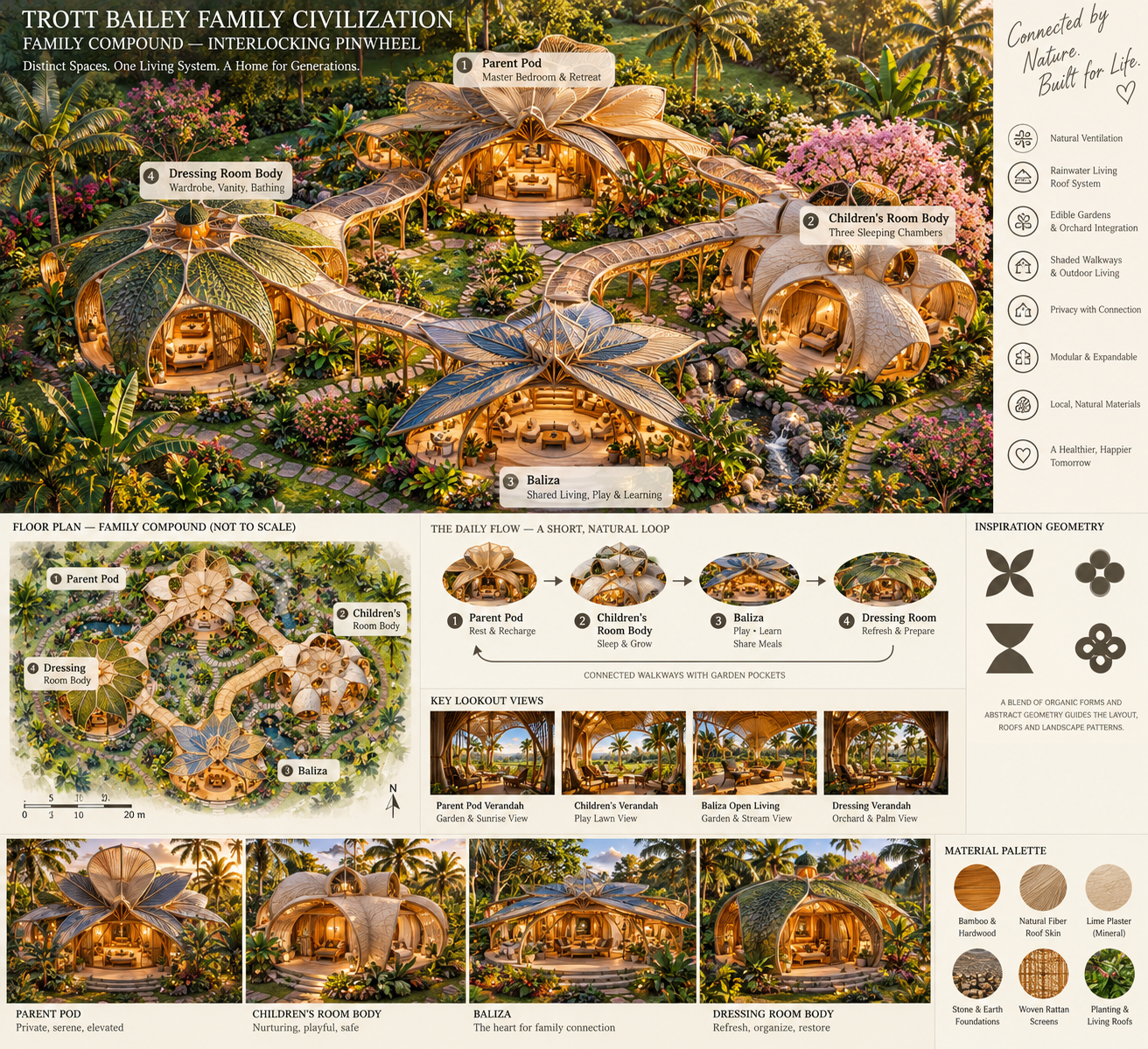
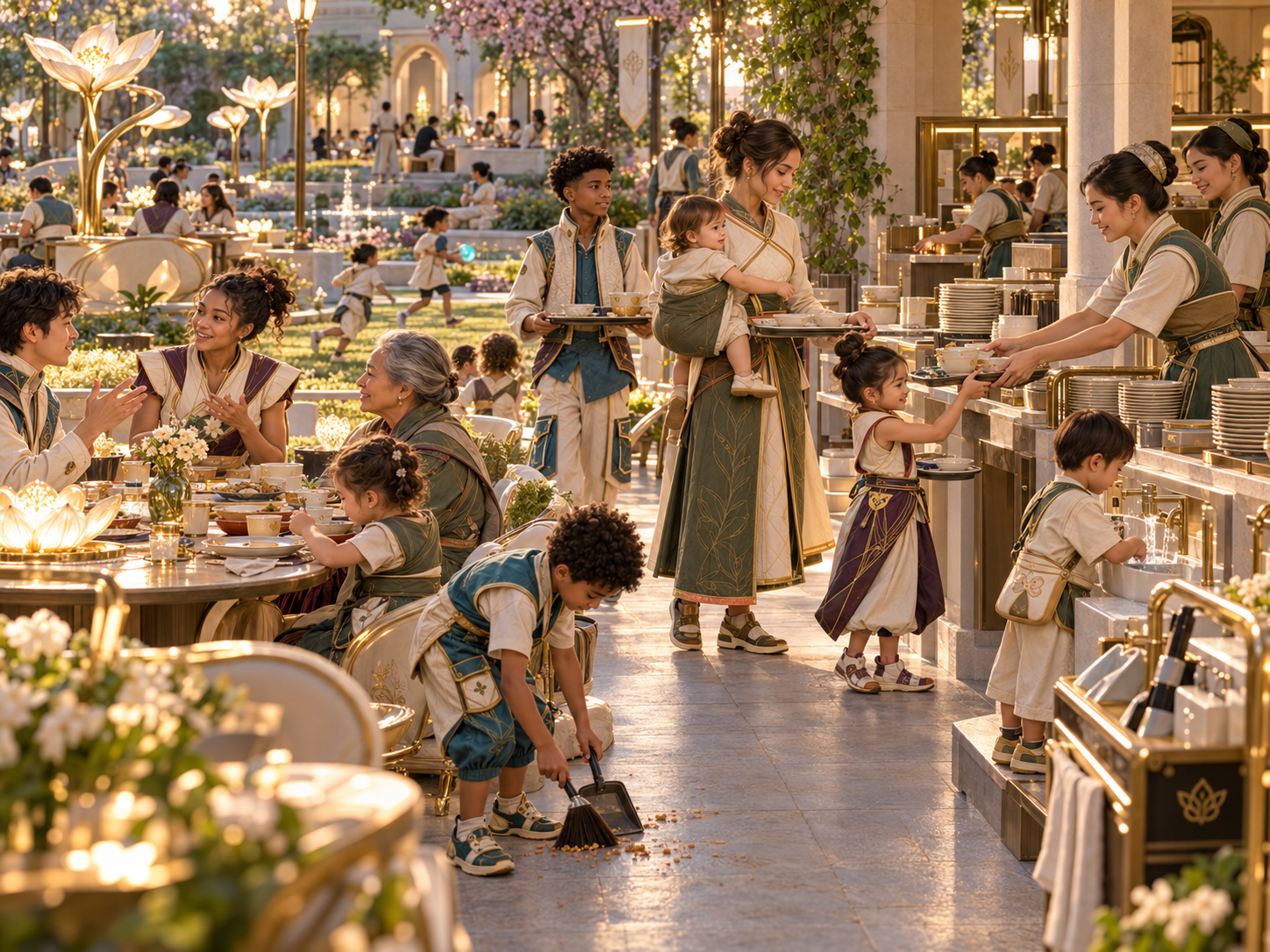
NoDumbDumbs begins with deliberate foundational learning, then opens discovery and real capability fields. Children and adults can learn together while growing, repairing, making and restoring. Guides protect safety; apprenticeship develops genuine skill; Pacorips may support pathway memory. People later contribute and teach others. Learning is accessible as a life service, never conditional on performing Shubaka.
NoDumbDumbs is the Trott Bailey authored benchmark, not a claim that its full network already exists nationwide. Training must be age-appropriate, safe, accessible and voluntary. Children learning alongside family are not interchangeable with adult Shubaka workers. A school certificate is not proof of applied mastery.
Trott Bailey foundations: NoDumbDumbs: lifelong, whole-family learning ↗ · Capability Learning Fields: from resources to useful results ↗
Five existing Money Gates · no sixth gate
Education and the five existing Money Gates: how access to life affects learning
Education currently has NO separate 0–4 direct Money Gate. The five existing gates for Food, Housing/Land, Healthcare, Transportation and Water/Energy affect practical learning, and gate-specific evidence may explain Reach and Friction. Education also investigates tuition and required learning expenses, but those do not create a sixth clearance score. No double numerical deduction of gate points.
Food
Reliable nourishment supports learning. Measure hunger, meal access and actual learning instead of transferring Food Gate points into Education.
Housing / Land
Family stability and workable learning space support continuity; the Housing/Land gate does not automatically become an Education score.
Healthcare
Health, developmental support, disability-related care and competent treatment can determine whether learning is usable.
Transportation
Fare demands, travel distance and unreliable mobility may block a learner or mentor even when teaching exists.
Water / Energy
Sanitation, lighting, working devices, reliable electricity and water affect safe learning and practical training.
Education effective Reach A% and money-free pathway Reach M% use a clearly defined population and age group. Full free learning includes usable teaching, learning materials, reasonable local access and appropriate practical pathways, not merely a tuition-free registration.
Nine positions per beleshky
Which exact standard earns which points?
| Score | Capacity | Reach | Friction | Return / Capability |
|---|---|---|---|---|
| -100 | Foundational teaching and safe learning support have almost completely collapsed; most children have no functioning path to develop basic capability. | Fewer than 5% of the defined eligible learner population effectively receives needed foundational learning and usable next-step development. | Systemic denial, coercion, violent exclusion, extreme costs and unsafe learning make development impossible for most. | Learning produces little usable understanding or skill; large numbers leave without essential literacy, numeracy or practical judgment. |
| -75 | Scattered instruction persists but there are severe teacher, safe-place, materials and sustained-learning shortages. | Between 5% and 24% effectively learn; most eligible learners lack usable instruction and development routes. | Extreme fees, travel, insecurity, teacher absence and exclusion mean learning is inaccessible or harmful to many. | Serious foundational failures persist and learners rarely demonstrate independent competence or useful continued development. |
| -50 | Basic teaching sites operate, yet qualified guidance, effective literacy and numeracy instruction and safe practice are grossly insufficient. | Between 25% and 39% achieve documented usable access to essential learning and support; large groups are excluded. | Severe charges, supply shortages, discrimination, lost family time and unreliable provision regularly interrupt effective learning. | Some graduates show basic skill, but weak reading, mathematics and practical mastery leave most unable to use learning confidently. |
| -25 | Functioning instruction reaches some locations, but shortages, weak supervision, inconsistent teaching and absent practical pathways remain widespread. | Between 40% and 49% effectively reach foundational learning, with major regional or social exclusions. | Major tuition, transport, equipment, waiting, unsafe-environment or administrative barriers keep many from gaining skills. | Measurable capability grows for a minority, yet advancement, practical application and knowledge continuity remain weak. |
| 0 | Basic instruction, learning materials and some trained educators operate, with meaningful limits in quality, accessibility or further learning paths. | At least 50% of an explicitly defined population effectively learns; foundational proficiency, continuation or lifelong reach gaps remain. | A basic learning route functions but costs, travel, teacher availability, examination pressure or learning gaps create meaningful obstacles. | Foundational skills and some useful capabilities are demonstrated; lifelong advancement and shared practical teaching remain uneven. |
| +25 | Broad effective foundational teaching, supervised discovery, accessible learning materials and basic practical programmes are available. | Over 75% effectively served, OR 30%+ fully money-free and effectively served with 50%+ total effective reach. Free enrolment alone is not mastery. | Measured decreases in educational cost, travel, unsafe treatment, exclusion and delays enable wider effective learning. | Proven gains in reading, mathematics, judgment, practical problem solving and real projects spread across learners. |
| +50 | Strong connected capacity includes foundational teaching, discovery, safe capability fields, diverse mentors, libraries, technical practice and apprenticeships. | Over 75% effectively served AND over 30% have documented fully money-free access to the complete relevant learning pathway with competent outcomes. | Major avoidable access barriers fall: reliable no-fee pathways exist for many and materials, transport and capable teaching are substantially available. | Learners reliably demonstrate useful competence across study, repair, food, care, engineering, art, civic knowledge and safe practice, with qualified pathways to teach others. |
| +75 | Near-universal dependable capacity includes trained guides, specialized pathways, protected family participation, continuing adult learning and proven quality improvement. | Over 90% effectively served AND at least 75% can learn freely, with accessible continuing pathways and measured equity across regions, income and disability. | Only small avoidable barriers remain; education reliably adapts to people, families, disability, language and practical skill needs. | Widespread documented capability produces competent apprentices, innovation, intergenerational teaching, effective stewardship and freely chosen, age-appropriate family Shubaka. |
| +100 | Universal resilient NoDumbDumbs-equivalent capability: excellent foundations, discovery, family learning, practice, advanced specialization, mentorship and lifelong teaching, safely supported and responsive to individual talent. | 100% effective reach throughout life with usable, safe and fully free foundational, practical and specialized learning; nobody excluded by money, location or disability. | No ordinary tuition, materials, essential transport, gatekeeping or systematic exclusion prevents usable lifelong learning; safe flexible pathways protect family life and capable instructors. | Lifelong and whole-family capability keeps multiplying: people independently understand, invent, build, repair, research, safely contribute and teach, with measured proficiency, learner freedom and no coercive child work. |
Beleshky 1 · 25% of Education
Capacity
Can the civilization provide effective foundations, discovery, trained guides, apprenticeship and lifelong learning?
Foundational teaching and safe learning support have almost completely collapsed; most children have no functioning path to develop basic capability.
Read the Trott Bailey foundation ↗Scattered instruction persists but there are severe teacher, safe-place, materials and sustained-learning shortages.
Read the Trott Bailey foundation ↗Basic teaching sites operate, yet qualified guidance, effective literacy and numeracy instruction and safe practice are grossly insufficient.
Read the Trott Bailey foundation ↗Functioning instruction reaches some locations, but shortages, weak supervision, inconsistent teaching and absent practical pathways remain widespread.
Read the Trott Bailey foundation ↗Basic instruction, learning materials and some trained educators operate, with meaningful limits in quality, accessibility or further learning paths.
Read the Trott Bailey foundation ↗Broad effective foundational teaching, supervised discovery, accessible learning materials and basic practical programmes are available.
Read the Trott Bailey foundation ↗Strong connected capacity includes foundational teaching, discovery, safe capability fields, diverse mentors, libraries, technical practice and apprenticeships.
Read the Trott Bailey foundation ↗Near-universal dependable capacity includes trained guides, specialized pathways, protected family participation, continuing adult learning and proven quality improvement.
Read the Trott Bailey foundation ↗Universal resilient NoDumbDumbs-equivalent capability: excellent foundations, discovery, family learning, practice, advanced specialization, mentorship and lifelong teaching, safely supported and responsive to individual talent.
Read the Trott Bailey foundation ↗Evidence required
- Qualified teachers, guides and mentors per eligible learner; working teaching materials, accessibility and learning environments
- School/community learning infrastructure, safe practical workshops, technical equipment and supervised capability fields
- Foundational-learning assessment systems and education quality checks; ensure teaching capability beyond enrollment
- Adult and specialist learning, libraries, apprenticeships and family participation facilities
How a country climbs
- Strengthen effective foundational instruction with trained guides, dependable tools and safe learning places
- Connect classrooms to family teaching, resource-based discovery, capability fields and serious apprenticeship paths
- Repair accessibility, languages, technology and mentor provision for all regions
- Evaluate teaching by demonstrated progress, not certificates or spending alone
Beleshky foundation: NoDumbDumbs: lifelong, whole-family learning ↗
↑ All scoring positionsBeleshky 2 · 35% of Education
Reach
Who actually gains the learning and capability they need, and who can do so without a payment gate?
Fewer than 5% of the defined eligible learner population effectively receives needed foundational learning and usable next-step development.
Read the Trott Bailey foundation ↗Between 5% and 24% effectively learn; most eligible learners lack usable instruction and development routes.
Read the Trott Bailey foundation ↗Between 25% and 39% achieve documented usable access to essential learning and support; large groups are excluded.
Read the Trott Bailey foundation ↗Between 40% and 49% effectively reach foundational learning, with major regional or social exclusions.
Read the Trott Bailey foundation ↗At least 50% of an explicitly defined population effectively learns; foundational proficiency, continuation or lifelong reach gaps remain.
Read the Trott Bailey foundation ↗Over 75% effectively served, OR 30%+ fully money-free and effectively served with 50%+ total effective reach. Free enrolment alone is not mastery.
Read the Trott Bailey foundation ↗Over 75% effectively served AND over 30% have documented fully money-free access to the complete relevant learning pathway with competent outcomes.
Read the Trott Bailey foundation ↗Over 90% effectively served AND at least 75% can learn freely, with accessible continuing pathways and measured equity across regions, income and disability.
Read the Trott Bailey foundation ↗100% effective reach throughout life with usable, safe and fully free foundational, practical and specialized learning; nobody excluded by money, location or disability.
Read the Trott Bailey foundation ↗Evidence required
- Age- and population-specific effective learning coverage A%: actual competence in reading/numeracy and needed development, not just enrollment
- Money-free, usable learning reach M% for the SAME learners and full relevant pathway, including essential materials, accessibility and practice
- Completion PLUS proficiency; out-of-school learners and adult lifelong reach reported separately, not falsely intersected
- Disaggregated rural/urban, wealth, disability, language, gender and family access, with source years and denominators
How a country climbs
- Publish actual learning outcomes and relevant population denominators, including children not attending school
- Make basic and advanced routes reliably free and usable; verify who receives the whole benefit
- Connect excluded learners with safe local mentorship, family participation and practical opportunities
- Close measurable rural, disability, income and adult-learning gaps before claiming high Reach
Beleshky foundation: Where Do Young People Fit? — access to mentorship and real learning ↗
↑ All scoring positionsBeleshky 3 · 25% of Education
Friction
Which fees, distances, unsafe conditions, qualifications and wasted demands stop a person learning?
Systemic denial, coercion, violent exclusion, extreme costs and unsafe learning make development impossible for most.
Read the Trott Bailey foundation ↗Extreme fees, travel, insecurity, teacher absence and exclusion mean learning is inaccessible or harmful to many.
Read the Trott Bailey foundation ↗Severe charges, supply shortages, discrimination, lost family time and unreliable provision regularly interrupt effective learning.
Read the Trott Bailey foundation ↗Major tuition, transport, equipment, waiting, unsafe-environment or administrative barriers keep many from gaining skills.
Read the Trott Bailey foundation ↗A basic learning route functions but costs, travel, teacher availability, examination pressure or learning gaps create meaningful obstacles.
Read the Trott Bailey foundation ↗Measured decreases in educational cost, travel, unsafe treatment, exclusion and delays enable wider effective learning.
Read the Trott Bailey foundation ↗Major avoidable access barriers fall: reliable no-fee pathways exist for many and materials, transport and capable teaching are substantially available.
Read the Trott Bailey foundation ↗Only small avoidable barriers remain; education reliably adapts to people, families, disability, language and practical skill needs.
Read the Trott Bailey foundation ↗No ordinary tuition, materials, essential transport, gatekeeping or systematic exclusion prevents usable lifelong learning; safe flexible pathways protect family life and capable instructors.
Read the Trott Bailey foundation ↗Evidence required
- Household tuition, fees, equipment, required device and learning-material costs, plus forgone learning for financial reasons
- School and training transport time, distance, queues, timetable conflicts and adult caregiver burdens
- Teacher absence, interrupted schooling, unsafe treatment, discrimination and exclusion; accessible language and disability support
- Unnecessary certification, exams, waiting and bureaucracy that delay practical competence
How a country climbs
- Remove fees and mandatory purchases that stop learners entering or remaining in meaningful learning
- Reduce transport, administrative delay and unnecessary exam burdens with responsive local learning systems
- Protect children and adults from unsafe or humiliating treatment and inaccessible instruction
- Organize mentors and family-aware schedules so learning can coexist with care, Shubaka and restoration
Beleshky foundation: World Ruler Sher: Education / Capability Development ↗
↑ All scoring positionsBeleshky 4 · 15% of Education
Return / Capability
Can people demonstrate understanding, useful skills, judgment, creativity and the ability to teach others?
Learning produces little usable understanding or skill; large numbers leave without essential literacy, numeracy or practical judgment.
Read the Trott Bailey foundation ↗Serious foundational failures persist and learners rarely demonstrate independent competence or useful continued development.
Read the Trott Bailey foundation ↗Some graduates show basic skill, but weak reading, mathematics and practical mastery leave most unable to use learning confidently.
Read the Trott Bailey foundation ↗Measurable capability grows for a minority, yet advancement, practical application and knowledge continuity remain weak.
Read the Trott Bailey foundation ↗Foundational skills and some useful capabilities are demonstrated; lifelong advancement and shared practical teaching remain uneven.
Read the Trott Bailey foundation ↗Proven gains in reading, mathematics, judgment, practical problem solving and real projects spread across learners.
Read the Trott Bailey foundation ↗Learners reliably demonstrate useful competence across study, repair, food, care, engineering, art, civic knowledge and safe practice, with qualified pathways to teach others.
Read the Trott Bailey foundation ↗Widespread documented capability produces competent apprentices, innovation, intergenerational teaching, effective stewardship and freely chosen, age-appropriate family Shubaka.
Read the Trott Bailey foundation ↗Lifelong and whole-family capability keeps multiplying: people independently understand, invent, build, repair, research, safely contribute and teach, with measured proficiency, learner freedom and no coercive child work.
Read the Trott Bailey foundation ↗Evidence required
- Observed literacy, comprehension, mathematics and transferable problem-solving proficiency at defined ages
- Demonstrated safe practical mastery, project completion, verified apprenticeships and adult skill learning
- Capability used in real life: fixing, building, growing, caring, researching, creating and teaching others
- Longitudinal learning continuity, intergenerational knowledge, learner agency, family Shubaka and age-appropriate safeguards
How a country climbs
- Assess comprehension, practical ability and independent application beyond graduation totals
- Develop skilled mentorship and real apprenticeships in food, water, repair, design, care and science
- Create safe family learning sessions where husbands, wives and children can share age-appropriate expertise
- Protect learner choice, judge apprentices by skill and safeguard childhood from compulsory adult workloads
Beleshky foundation: Capability Learning Fields: from resources to useful results ↗
↑ All scoring positionsIllustrative country calculator
See how proven improvement changes Education points
This example shows the category calculation, not a live score or a prediction of national rank.
Education = 0.25 × Capacity + 0.35 × Reach + 0.25 × Friction + 0.15 × Return/Capability. National evidence contribution = Education × 0.06, subject to existing national normalization and the separate five-part Money Gate.
Final national contribution may be normalized according to researched category coverage. The separate overall five-part Money Gate is not changed by this calculator.
Transparency and improvements
What a country must actually show
Attendance is not mastery
UNESCO proficiency indicators mainly assess enrolled students at defined grades, while completion and out-of-school figures use different denominators. UNICEF MICS directly assesses skills in children aged 7–14. Do not call any single index or exam result the percentage of the entire population enjoying lifelong practical learning.
Document the learner group and denominator, attendance/completion, directly measured reading and mathematics proficiency, usable practical capability, full money-free pathway access for the same people, safe quality, teacher availability, and equity across geography, language, disability and household income. Adult pathways and children belong to separate cohorts.
Archive the before-and-after evidence
Education scores real effective learning, its cost and barriers, and achieved capability. Human Time measures time use; Family scores family support; the five Money Gates measure direct essential no-payment clearance. Shared underlying evidence may be linked but never used to mechanically subtract the gate twice.
Publishing this education guide does not re-score existing country readings. Keep old points and dated history until a specific national, source-backed re-audit applies the new 25-point standards.
Independent measurements
Sources to verify national education conditions
Trott Bailey authored work

 and then