Who owns your year?
Who owns your year? A society can build machines, roads and public services while families remain busy busy busy. We measure whether civilization really returns time to people who can live it.
Human Time & Burden Return measures whether useful civilization capacity actually gives people and families time to live, rest, learn and contribute together.
The four-beleshky spine
Capability means little unless time comes back
Capacity
Does civilization have systems that can save people time?
View nine scoring levels ↗02 · 35%Reach
Who actually receives the time-saving benefit?
View nine scoring levels ↗03 · 25%Friction
How much of the day is still consumed unnecessarily?
View nine scoring levels ↗04 · 15%Return / Regeneration
Does the saved time become usable life, rest and family togetherness?
View nine scoring levels ↗The nine anchors describe the Trott Bailey authored benchmark. Country scores are assessed only against separately cited country evidence; none of these anchors is itself a measured national percentage. A national policy announcement is not proof of population reach.
Trott Bailey Family Civilization thinking
Shubaka can be family time, teaching and contribution together
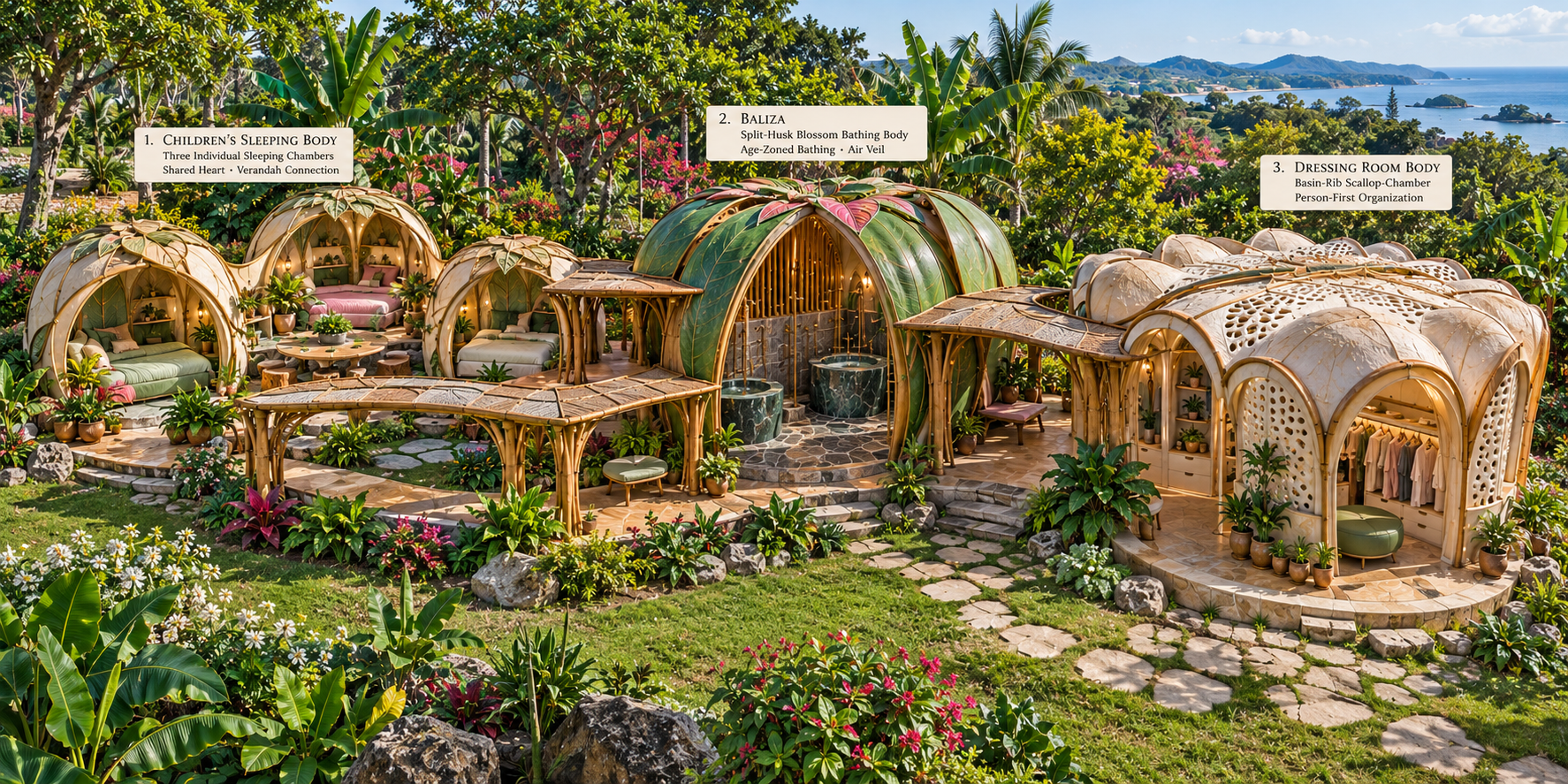
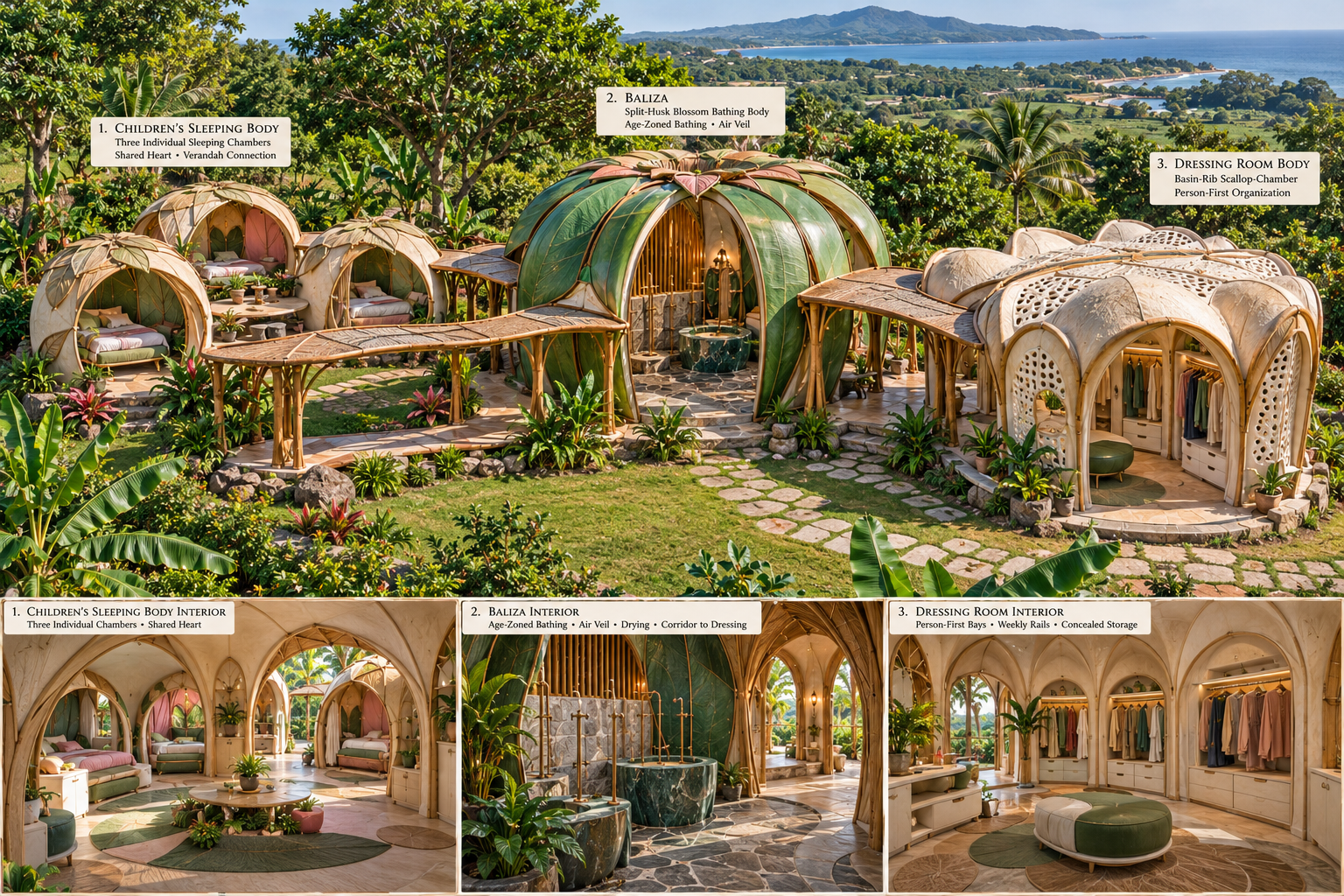
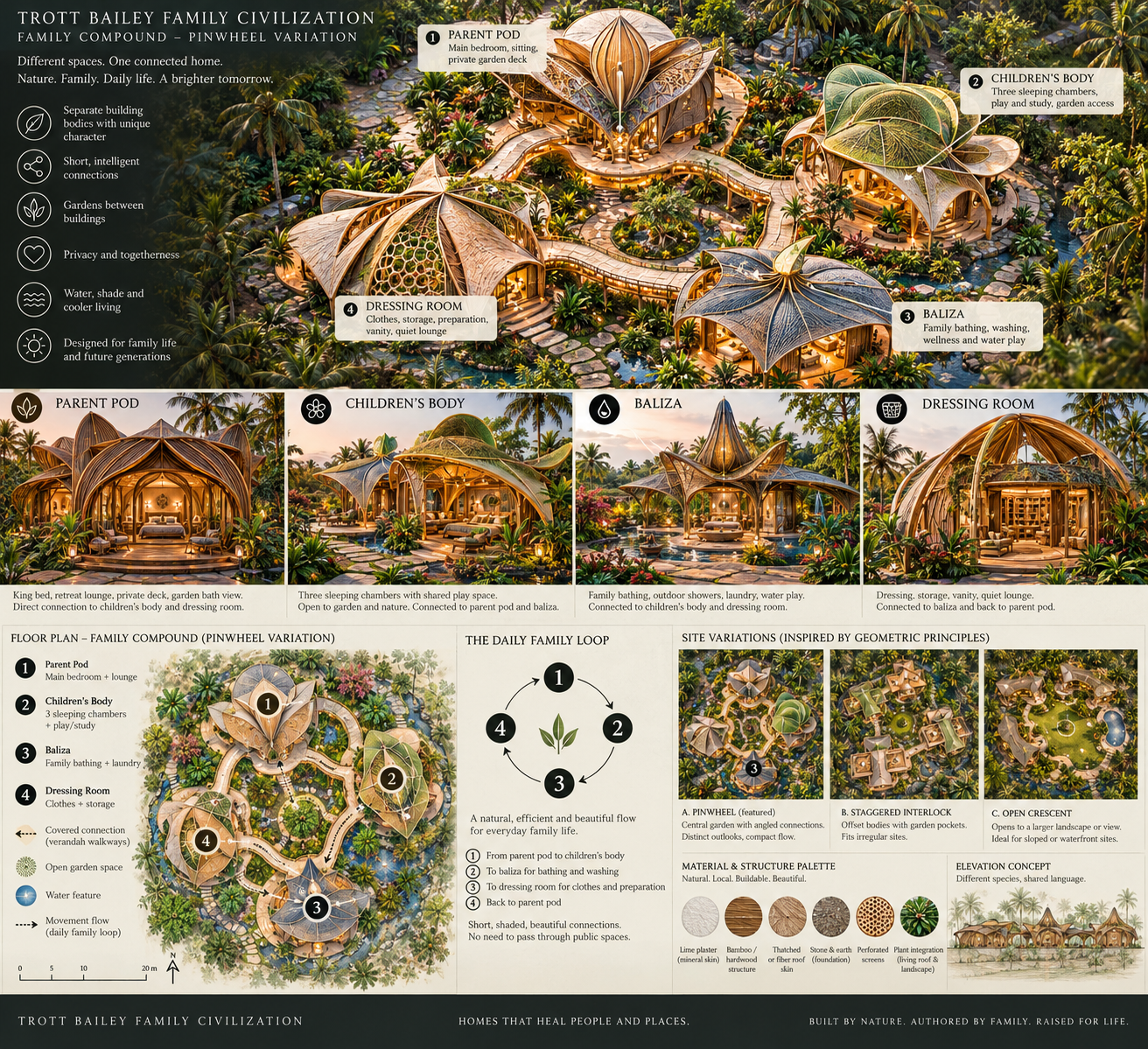
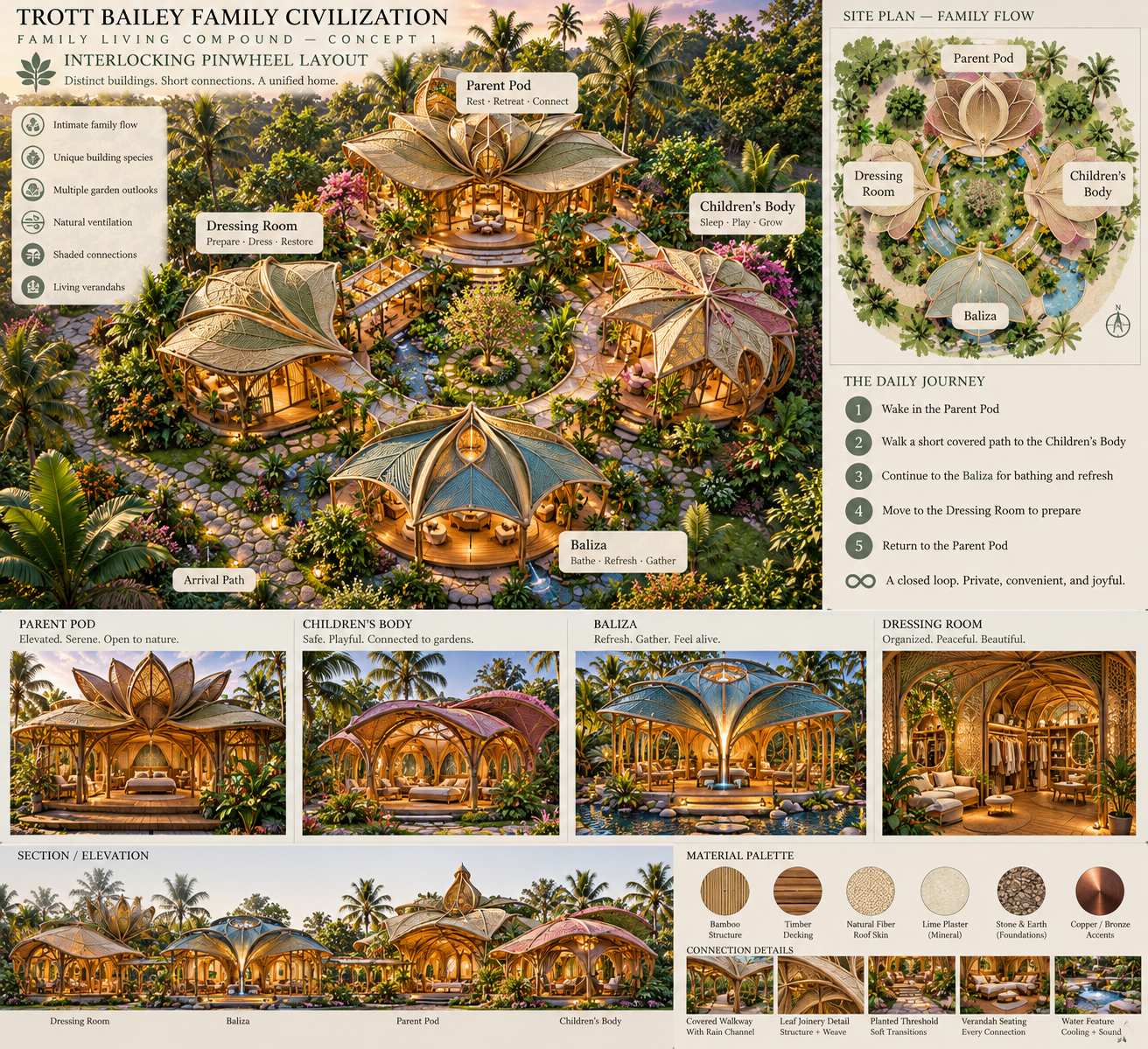
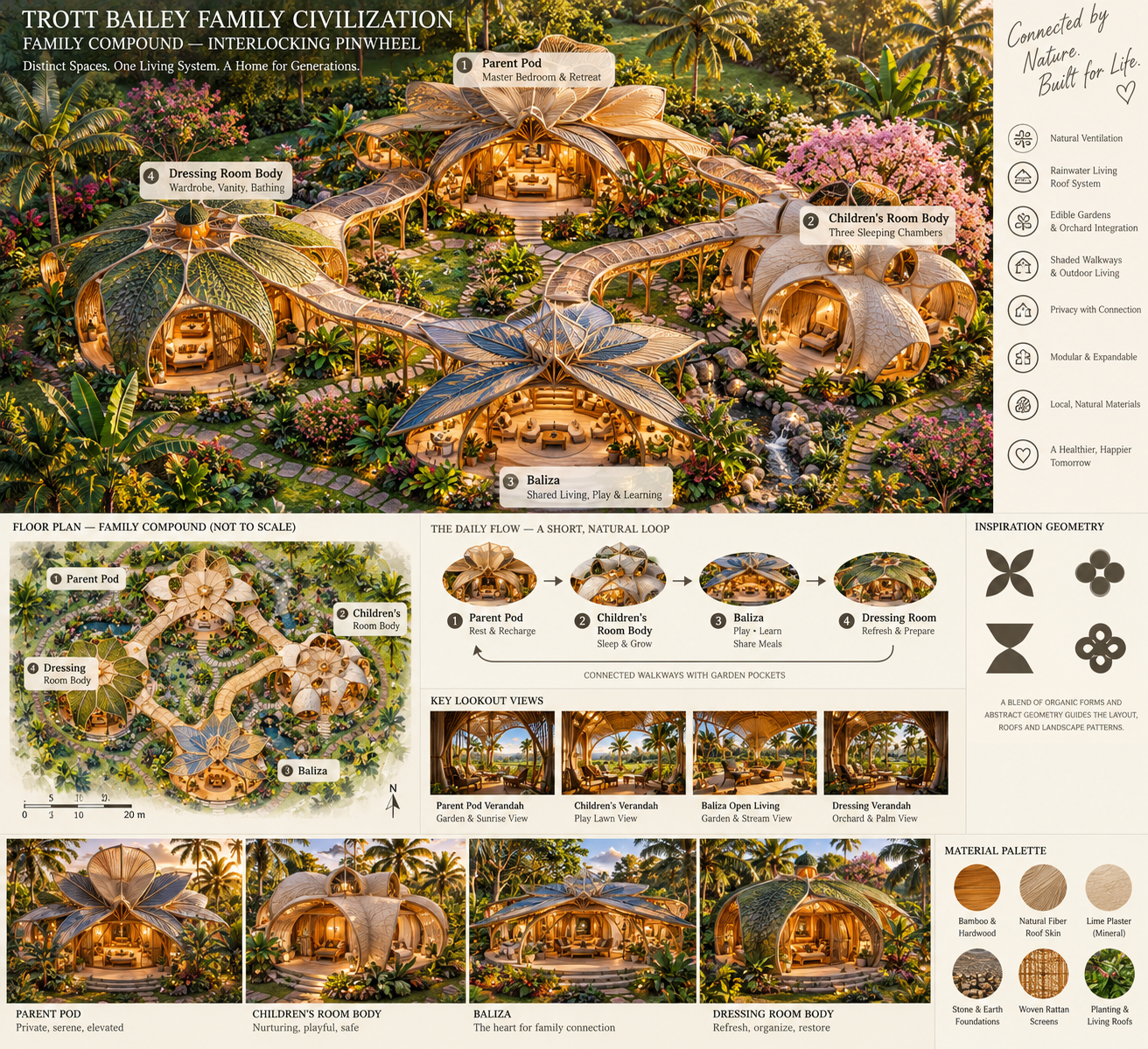
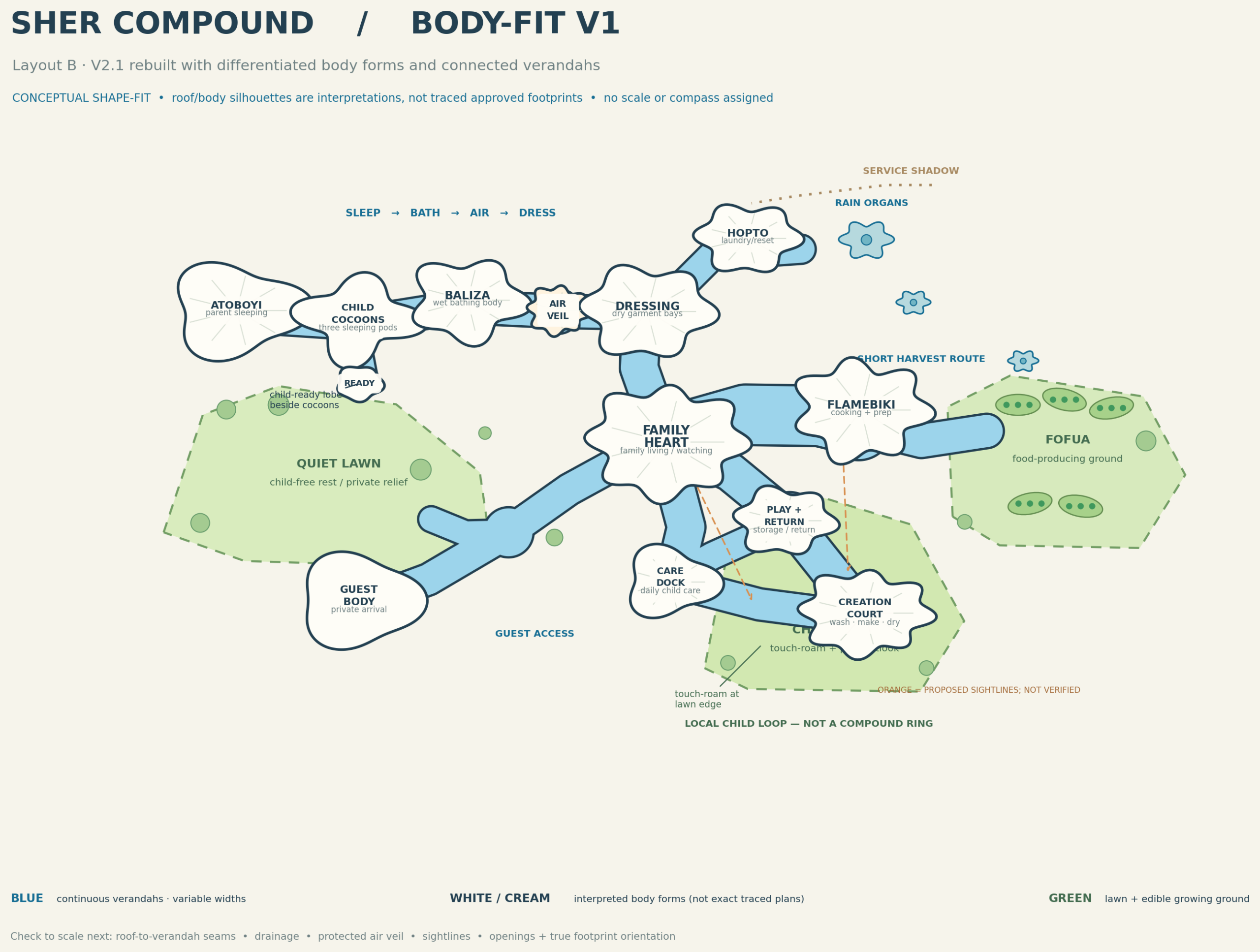
Husbands and wives may Shubaka together. Families can develop expertise and contribute from a living compound or a neighbourhood role. Adults may steward water, food, care, clean return or repair while children learn practical skills alongside them. A beautiful, functioning compound is part of civilization: its usable services, teaching, maintenance and production can count as contribution, not merely private domestic labour.
- Keslev orchard: parents tend the growing system while explaining seeds, soil and irrigation to children.
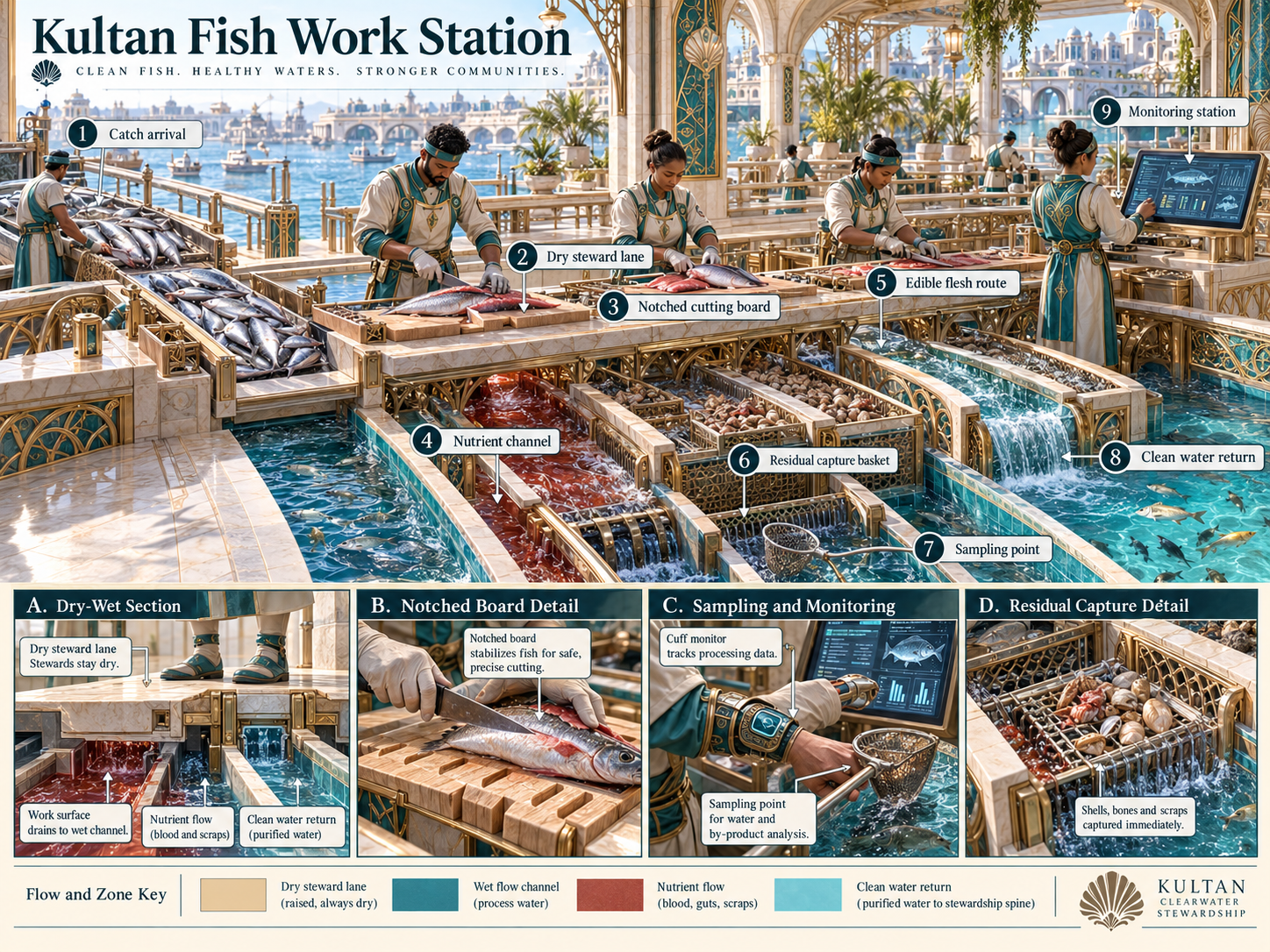
- Krubaro: adults organize clean return, teaching sorting and repair while shared machinery carries repetitive or unsafe handling.
- Tideechi: qualified maternity stewards may contribute from a compound-based care setting; trained care is never replaced by untrained child help.
- Sabennery: a family with suitable skills can help prepare, share and teach food care, supported by sanitation systems and relief rotations.
Children may learn voluntarily at an age-appropriate level; their presence must not substitute for qualified work or create a compulsory quota. Family Shubaka is voluntary in pairing and must allow privacy, adequate rest, individual choice and safe service. A family hour spent teaching and producing counts as one elapsed hour, even when it produces several benefits.
Read the work: A Civilization Where People Do Not Work Like They Do in the Current World ↗ · Compounds Are Civilization Circulation Systems ↗ · Shubaka Without Slavery ↗
Linked but separately scored
Money Gates also take time
A payment gate can demand extra earning hours and exclude people from time-saving services. Link each verified gate to Human Time Reach and Friction where there is real evidence of an access or time consequence. Never copy money-gate points into Human Time or deduct the same points again. All five gates still independently control the national zero baseline.
Food
Time needed to earn or acquire nourishment, repeated shopping, preparation without relief, access to free food systems.
Housing / Land
Rent, debt and required income hours; whether home and compound facilities sustain family contribution and reduce trips.
Healthcare
Care bills, lost working time, waiting and travel; neighbourhood care and Tideechi service accessibility.
Transportation
Fare-earning pressure, commute hours, route reliability and opportunities to contribute near home.
Water / Energy
Bill pressure, collection time, washing/cooking labour, and whether compound systems have reliable water and power.
At the national level, all five essentials must independently reach 4/4 before the overall score can cross zero. Human Time is still a 9% evidence category, never a sixth gate.
Eight jumps · Nine positions
What earns each score?
−100, −75, −50, −25, 0, +25, +50, +75, +100. Each rung describes a condition to establish, not an automatic conversion of a single statistic.
| Level | Capacity | Reach | Friction | Return / Regeneration |
|---|---|---|---|---|
| -100 | Essential daily work lacks dependable tools, services or public support. | No verified effective household access to time-saving relief. | Extreme preventable work, queues, travel and financial burdens consume most usable life. | People have virtually no discretionary rest or protected family time. |
| -75 | Isolated time-saving tools exist but breakdowns and shortages dominate. | Only isolated privileged or geographically limited households benefit. | Severe pressure from long hours, second jobs, avoidable care burdens and compulsory separation. | Small, fragile rest intervals vanish under survival and work pressure. |
| -50 | Basic household services and tools work in a few places. | Time relief reaches a small minority; most families remain excluded. | Heavy repeated work and money-to-live hours remain common. | Rest mostly repairs exhaustion; families rarely share dependable free time. |
| -25 | Useful systems exist, but critical tasks still need repeated manual effort. | Partial reach with strong rural, cost, disability or household-care exclusions. | Major household, earning and travel burdens still take substantial time. | Scattered hours, irregular family overlap and little control over seasons. |
| 0 | Core services work at a basic level, with major gaps in integration. | At least half of households have documented usable relief from key daily tasks. | Mixed evidence: meaningful burdens remain but there is no demonstrated net extreme. | Some regular rest and shared time, but long restoration is insecure. |
| +25 | Broad household and public systems remove some repeated labour. | More than 75% receive demonstrable relief, OR over 30% receive effective free essential-service relief. | Verified reduction in several major preventable burdens, including some family-aware scheduling. | Dependable overlapping family time and beginnings of family-aware contribution. |
| +50 | Reliable, linked household and neighbourhood services substantially reduce routine work. | More than 75% receive demonstrable relief AND over 30% receive effective free essential-service relief. | Large measured reductions in excess paid work, compulsory travel, paperwork and household burden. | Protected shared time, accessible husband-and-wife Shubaka and real child skill-learning opportunities. |
| +75 | Near-universal systems, automation, compound contribution infrastructure and rotating support routinely reduce labour. | Over 90% receive reliable relief, at least 75% have effective money-free essential access, and family Shubaka routes are broadly accessible. | Very few widespread avoidable burdens; service contributors receive scheduled relief and meaningful recovery. | Long restoration is ordinary; compound and neighbourhood Shubaka let families contribute, teach and remain close without exhausting others. |
| +100 | Resilient, maintained, accessible life-serving capacity makes necessary contribution efficient, family-aware and sustainable. | Universal, dependable time-saving relief without essential payment barriers, including accessible family-aware contribution, matched schedules and actual rest. | Avoidable friction is structurally minimized, including income-for-essentials pressure and family-separating contribution, while necessary care remains supported. | Usable time freedom throughout life, shared family contribution and skill transfer, long restoration, and protected relief for all who sustain the systems. |
Beleshky 1 · 25% within Human Time
Capacity
Does civilization have systems that can save people time?
Essential daily work lacks dependable tools, services or public support.
Isolated time-saving tools exist but breakdowns and shortages dominate.
Basic household services and tools work in a few places.
Useful systems exist, but critical tasks still need repeated manual effort.
Core services work at a basic level, with major gaps in integration.
Broad household and public systems remove some repeated labour.
Reliable, linked household and neighbourhood services substantially reduce routine work.
Near-universal systems, automation, compound contribution infrastructure and rotating support routinely reduce labour.
Resilient, maintained, accessible life-serving capacity makes necessary contribution efficient, family-aware and sustainable.
What evidence earns the score?
- Reliable water, power, transport, care, household tools and public services
- Automation availability and actual uptime, including rural service
- Shubaka tools, compound infrastructure, support and relief rotation
Ways to climb to the next rung
- Repair unreliable basics before adding new machines.
- Build neighbourhood and compound-serving water, food, care, repair and clean-return systems.
- Equip Shubaka teams with tools, safe handoffs, relief and restorative schedules.
Trott Bailey foundation for this beleshky: A Civilization Where People Do Not Work Like They Do in the Current World ↗
↑ Back to the four-beleshky score matrixBeleshky 2 · 35% within Human Time
Reach
Who actually receives the time-saving benefit?
No verified effective household access to time-saving relief.
Only isolated privileged or geographically limited households benefit.
Time relief reaches a small minority; most families remain excluded.
Partial reach with strong rural, cost, disability or household-care exclusions.
At least half of households have documented usable relief from key daily tasks.
More than 75% receive demonstrable relief, OR over 30% receive effective free essential-service relief.
More than 75% receive demonstrable relief AND over 30% receive effective free essential-service relief.
Over 90% receive reliable relief, at least 75% have effective money-free essential access, and family Shubaka routes are broadly accessible.
Universal, dependable time-saving relief without essential payment barriers, including accessible family-aware contribution, matched schedules and actual rest.
What evidence earns the score?
- Share of people and households receiving usable time relief, not ownership of a machine alone
- Rural, disability, caregiving, family-size and income differences
- Money Gate source records and how many families can use the services without payment
- Share of families offered matched Shubaka scheduling or compound contribution opportunities
Ways to climb to the next rung
- Extend dependable benefits beyond city centres and wealthy households.
- Offer husband-and-wife and family-aware Shubaka shifts without forcing households apart.
- Remove payment barriers to essential time-saving services, verified against the related Money Gates.
Trott Bailey foundation for this beleshky: Human Time and Rest Doctrine ↗
↑ Back to the four-beleshky score matrixBeleshky 3 · 25% within Human Time
Friction
How much of the day is still consumed unnecessarily?
Extreme preventable work, queues, travel and financial burdens consume most usable life.
Severe pressure from long hours, second jobs, avoidable care burdens and compulsory separation.
Heavy repeated work and money-to-live hours remain common.
Major household, earning and travel burdens still take substantial time.
Mixed evidence: meaningful burdens remain but there is no demonstrated net extreme.
Verified reduction in several major preventable burdens, including some family-aware scheduling.
Large measured reductions in excess paid work, compulsory travel, paperwork and household burden.
Very few widespread avoidable burdens; service contributors receive scheduled relief and meaningful recovery.
Avoidable friction is structurally minimized, including income-for-essentials pressure and family-separating contribution, while necessary care remains supported.
What evidence earns the score?
- All jobs together: usual and actual paid hours, secondary jobs, overtime and after-hours work
- Unpaid domestic/care workload, commute, queues, household administration
- Time spent earning to clear the five payment gates, and documented household time pressure
- Spousal scheduling separation, child-care handoff burden, Service Shadow worker relief
Ways to climb to the next rung
- Reduce forced overtime, unnecessary commutes and needless administrative trips.
- Provide rotation, handoffs, equipment and real recovery for Shubaka roles.
- Coordinate spouse shifts where useful; let children learn in safe family projects rather than making them workers.
Trott Bailey foundation for this beleshky: Shubaka Without Slavery: Why Kingdom Shubaka Is Enjoyable ↗
↑ Back to the four-beleshky score matrixBeleshky 4 · 15% within Human Time
Return / Regeneration
Does the saved time become usable life, rest and family togetherness?
People have virtually no discretionary rest or protected family time.
Small, fragile rest intervals vanish under survival and work pressure.
Rest mostly repairs exhaustion; families rarely share dependable free time.
Scattered hours, irregular family overlap and little control over seasons.
Some regular rest and shared time, but long restoration is insecure.
Dependable overlapping family time and beginnings of family-aware contribution.
Protected shared time, accessible husband-and-wife Shubaka and real child skill-learning opportunities.
Long restoration is ordinary; compound and neighbourhood Shubaka let families contribute, teach and remain close without exhausting others.
Usable time freedom throughout life, shared family contribution and skill transfer, long restoration, and protected relief for all who sustain the systems.
What evidence earns the score?
- Time people can choose, long restoration seasons and leave actually taken
- Overlapping free time among spouses, children and family members
- Family-preserving Shubaka: safe contribution, teaching and togetherness in one time block
- Actual recovery for helpers, care workers and Service Shadow contributors
Ways to climb to the next rung
- Protect regular shared free time and long restoration periods.
- Credit useful family compound stewardship, skill transfer and service hours, while counting clock time only once.
- Build local Shubaka options: Tideechi, Krubaro, Keslev orchard, Sabennery and other suitable facilities, subject to safety and expertise requirements.
Trott Bailey foundation for this beleshky: Compounds Are Civilization Circulation Systems ↗
↑ Back to the four-beleshky score matrixLive method example · not a country assessment
Move the four beleshkies and see the weighted result
Choose any 25-point anchor. The example starts with four illustrative values. It does not alter any country or ranking.
Human Time = 0.25 × Capacity + 0.35 × Reach + 0.25 × Friction + 0.15 × Return. National diagnostic contribution = Human Time × 0.09, before overall Money Gate rules.
For researchers and policymakers
What evidence lets a country climb?
Measure the family's actual year
Measure overlapping, chosen family time as well as each person’s separate free hours; family overlap is not found by simply adding people’s free-time totals.
Count elapsed contribution once, label whether it was spouse-paired, family-coordinated, compound-based, child learning, or worker relief; report benefits separately, without adding overlapping hours.
Show what was measured
Record sources and observation years, actual population denominators, policies versus verified implementation, household survey evidence, uncertainty and the reason the selected rung was earned.
Methodology-only publication does not alter any stored country beleshky, score, ranking or history. A future country re-audit must use dated evidence and append a before/after event.
A new scheme or announced policy is a starting point. Climbing requires showing who uses the service, what work actually disappears, whether couples and children can be together, and whether everyone doing the service receives real relief.
Author's source work
Read the Trott Bailey foundation
These are the authored design references. Country-specific beleshky values require independent national evidence and dated observations.

 and then