São Paulo gave us the energy of a giant city and the pleasure of learning Brazil through its everyday life. We arrived as a family of four, including two little girls, and watched traffic, neighbourhoods, markets, public transport and unfamiliar ways of organizing family services. I enjoyed hearing Portuguese everywhere. Sher liked to look at the whole street and ask what it did for the people who lived beside it. It was an enormous, moving classroom.
Later we came to Prado, on the southern coast of Bahia. The pace changed, the soil changed, the scale of daily life changed. We were near beaches, sandy soil, vegetation and neighbours whom we could meet again and again. There is a special kind of opportunity in a small town when you are interested in observing the same piece of land through several seasons. We could see what grew after rain, what struggled, where water gathered and what people did when fresh food became available.
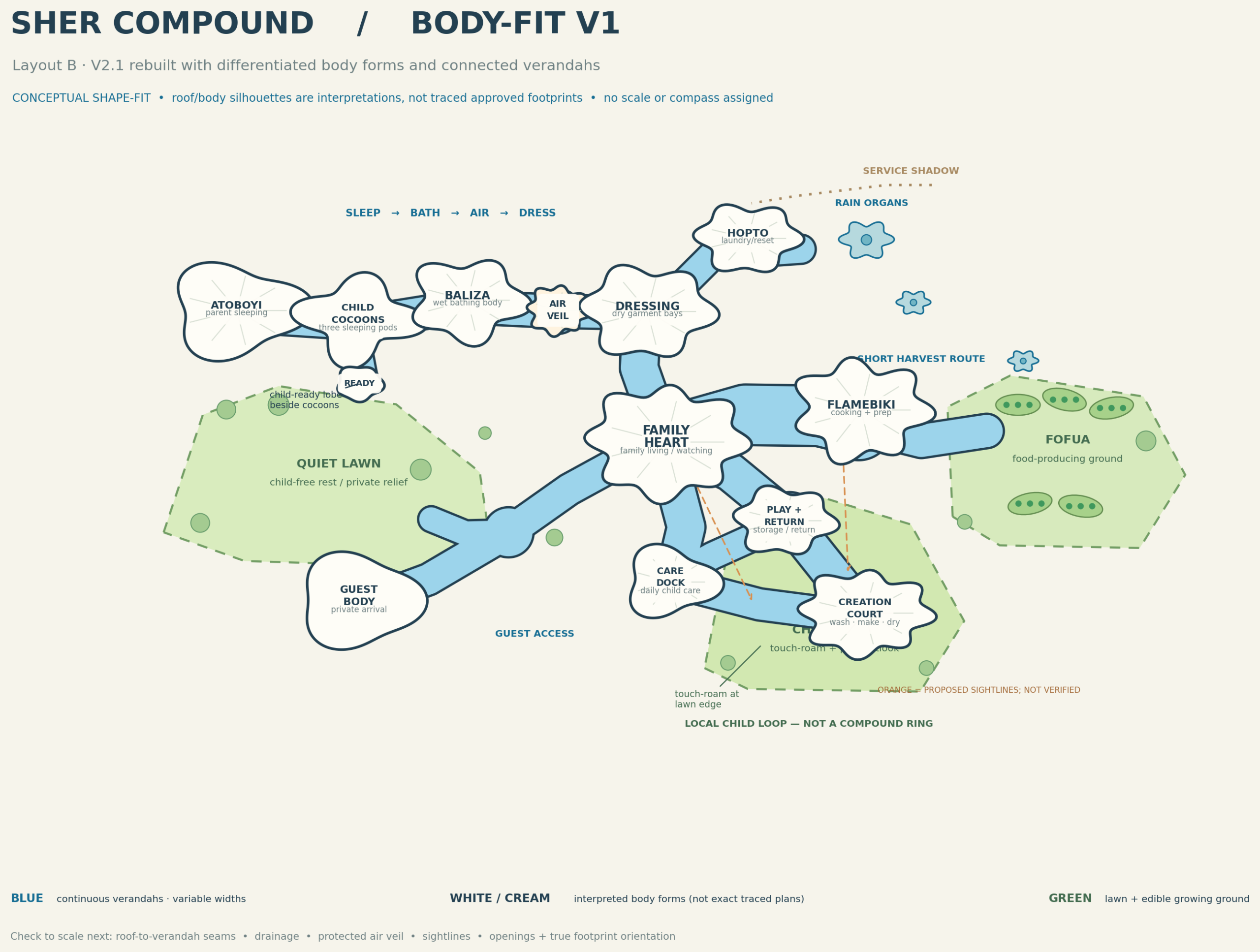
The cities taught us different things. São Paulo demonstrated density, movement and the astonishing resources of an urban population. Prado gave us room to see one family’s actions become visible in a small shared landscape. Sher was designing charming compounds rather than anonymous housing towers, but we could draw lessons from both places. A neighborhood needs connection to the rest of civilization without sacrificing the ease of the person walking outside the door.
We also kept being a family. Keilah and Kaleeyon learned more Portuguese and met new surroundings. A visit to the beach could become a language lesson, a lesson about waves and a moment of pure fun. The children were never waiting for us to finish the civilization so that their real childhood could begin. The work was growing inside their childhood already.


 and then