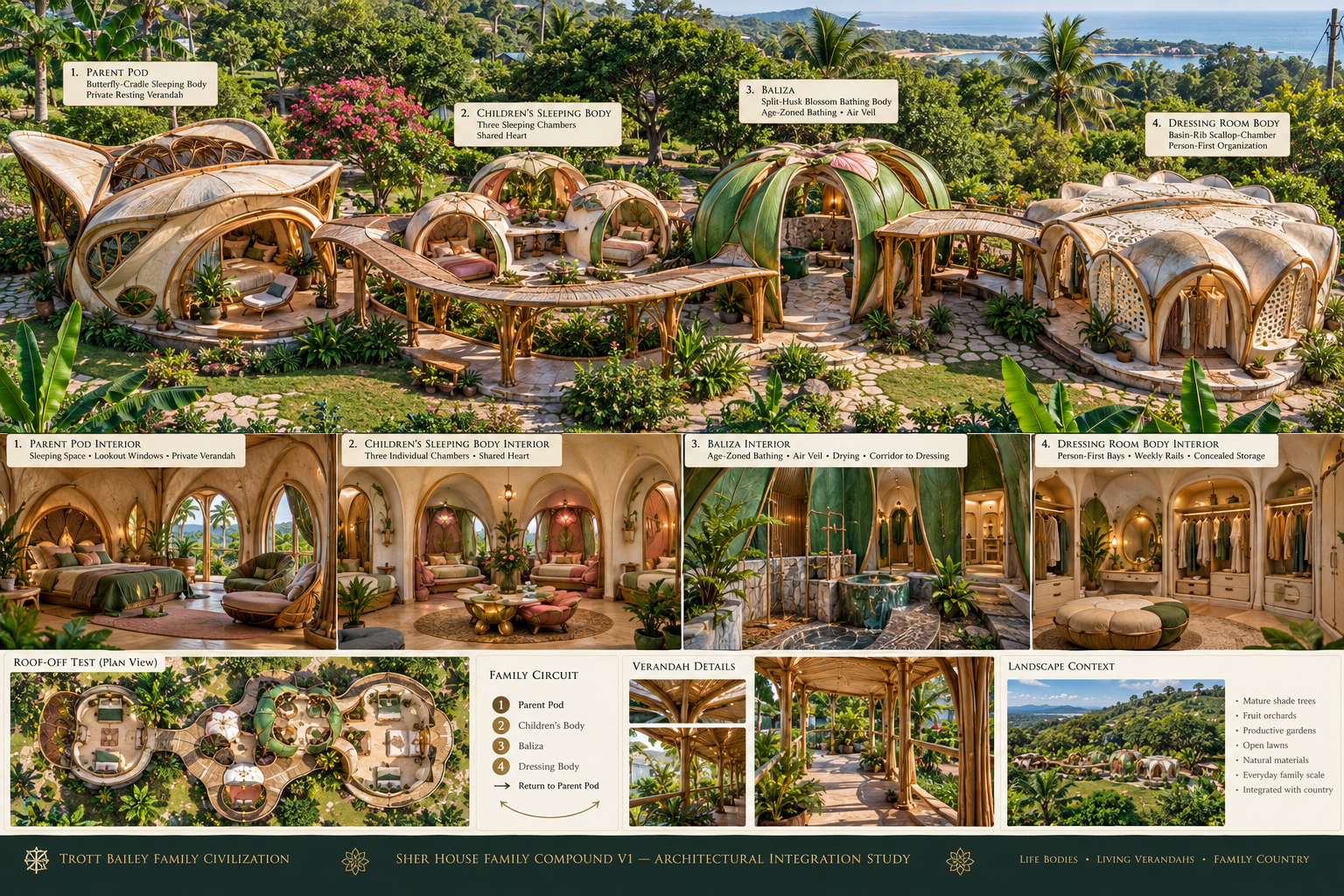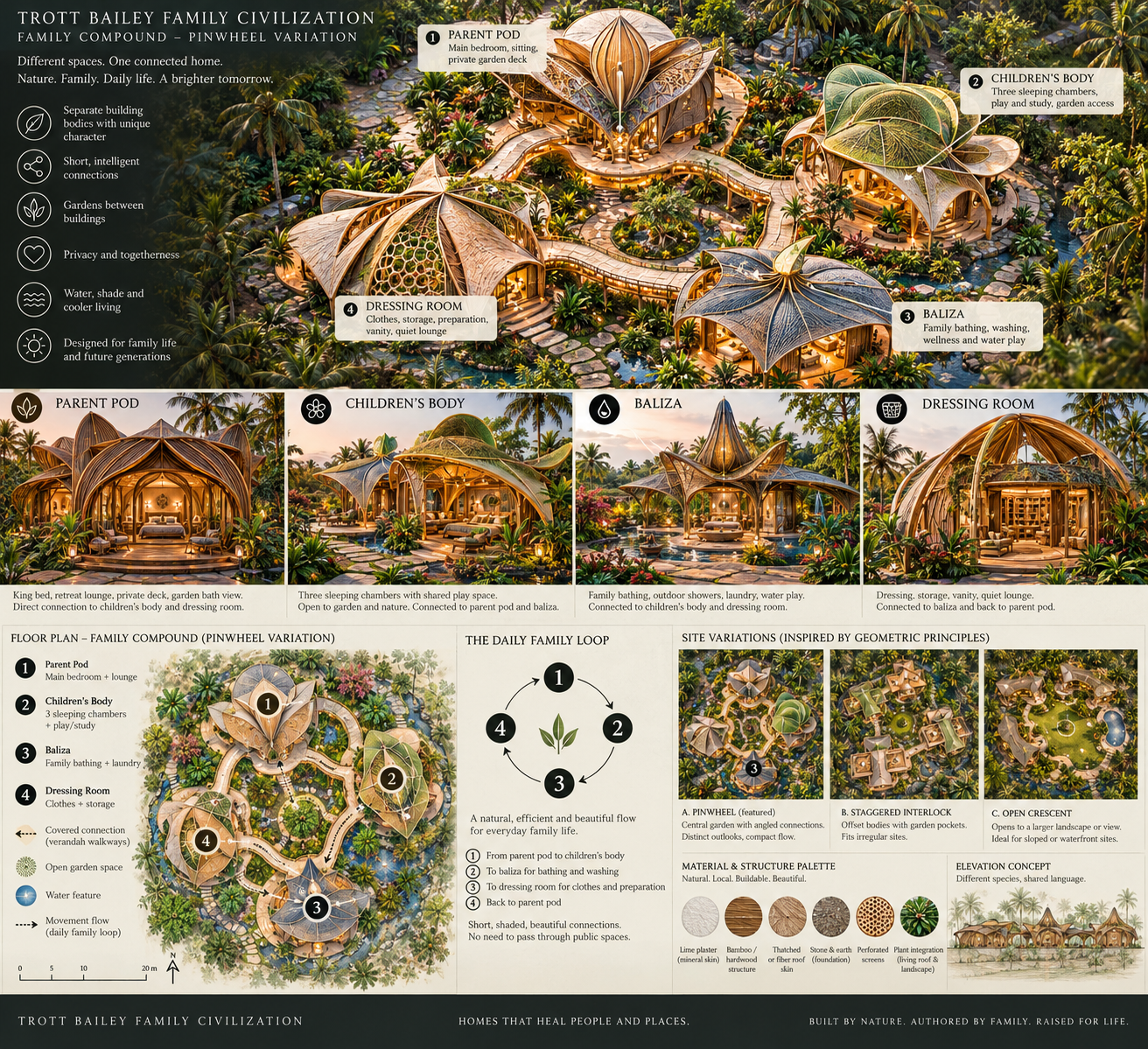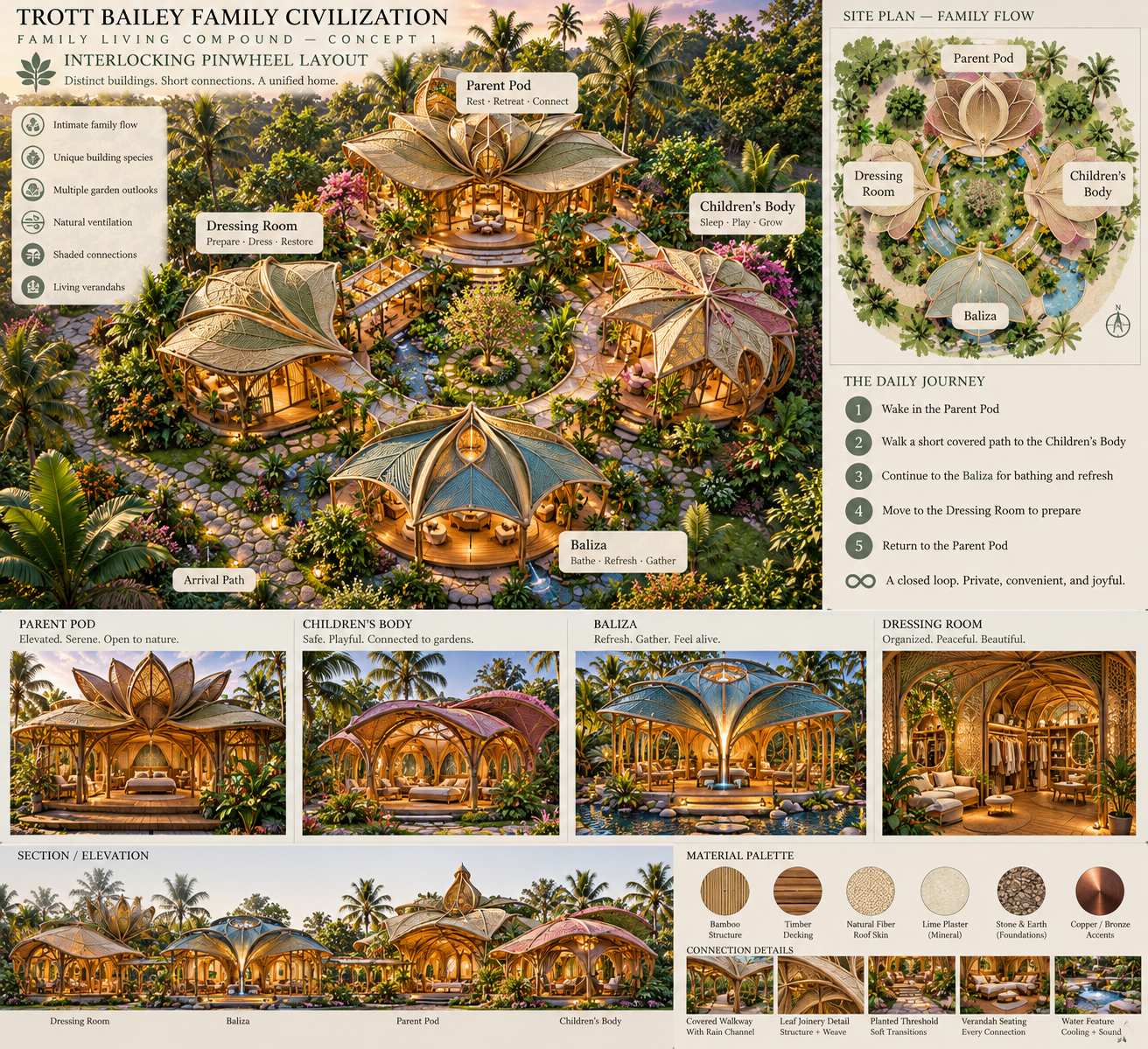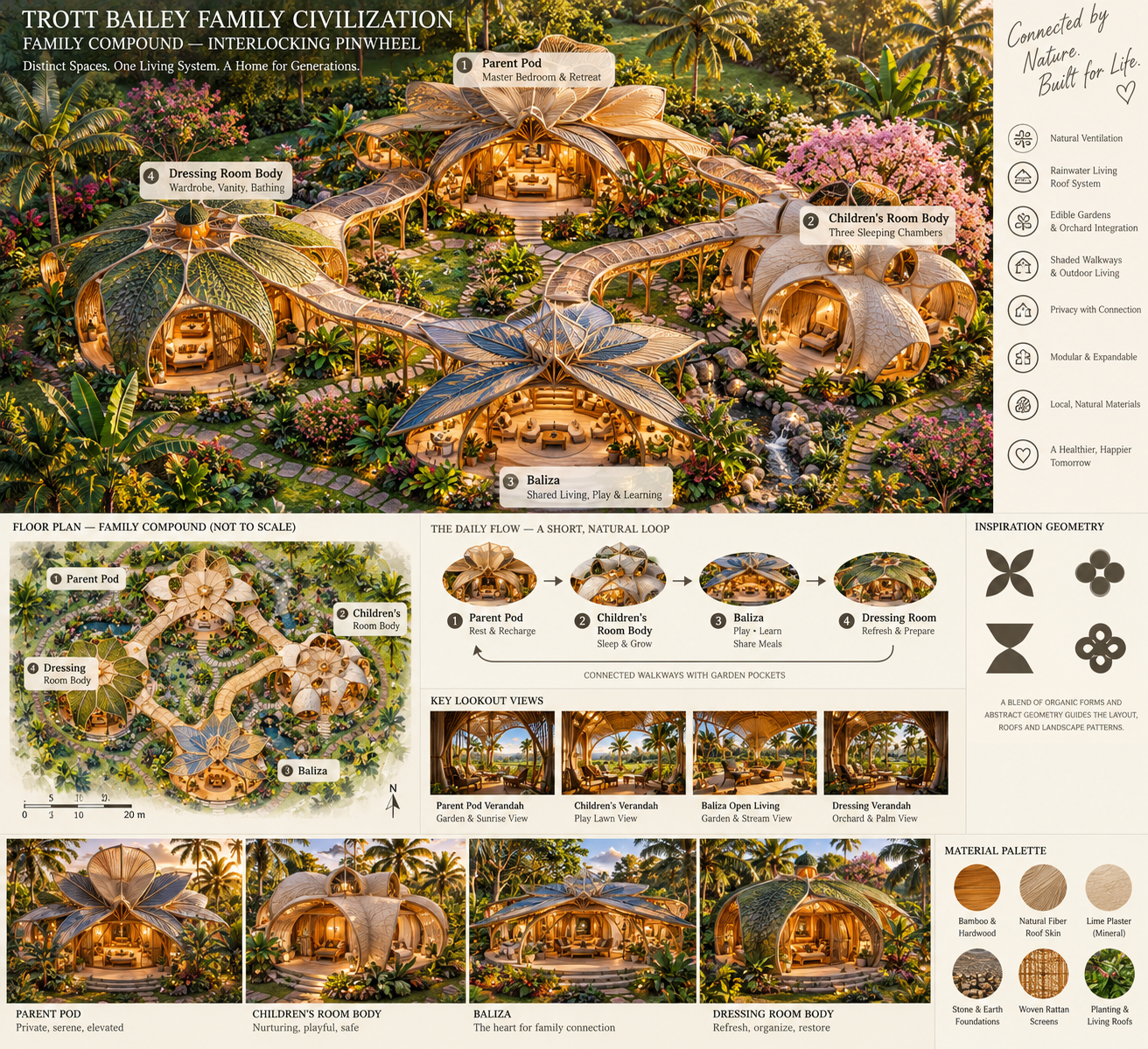
Sher has washed enough sandy children to know exactly where a tropical house can go wrong. One child comes in dripping water. Another is looking for a towel. The baby has to be carried. Clean clothes have disappeared into the wrong room. Instead of accepting these moments as the permanent price of motherhood, she drew the route again.
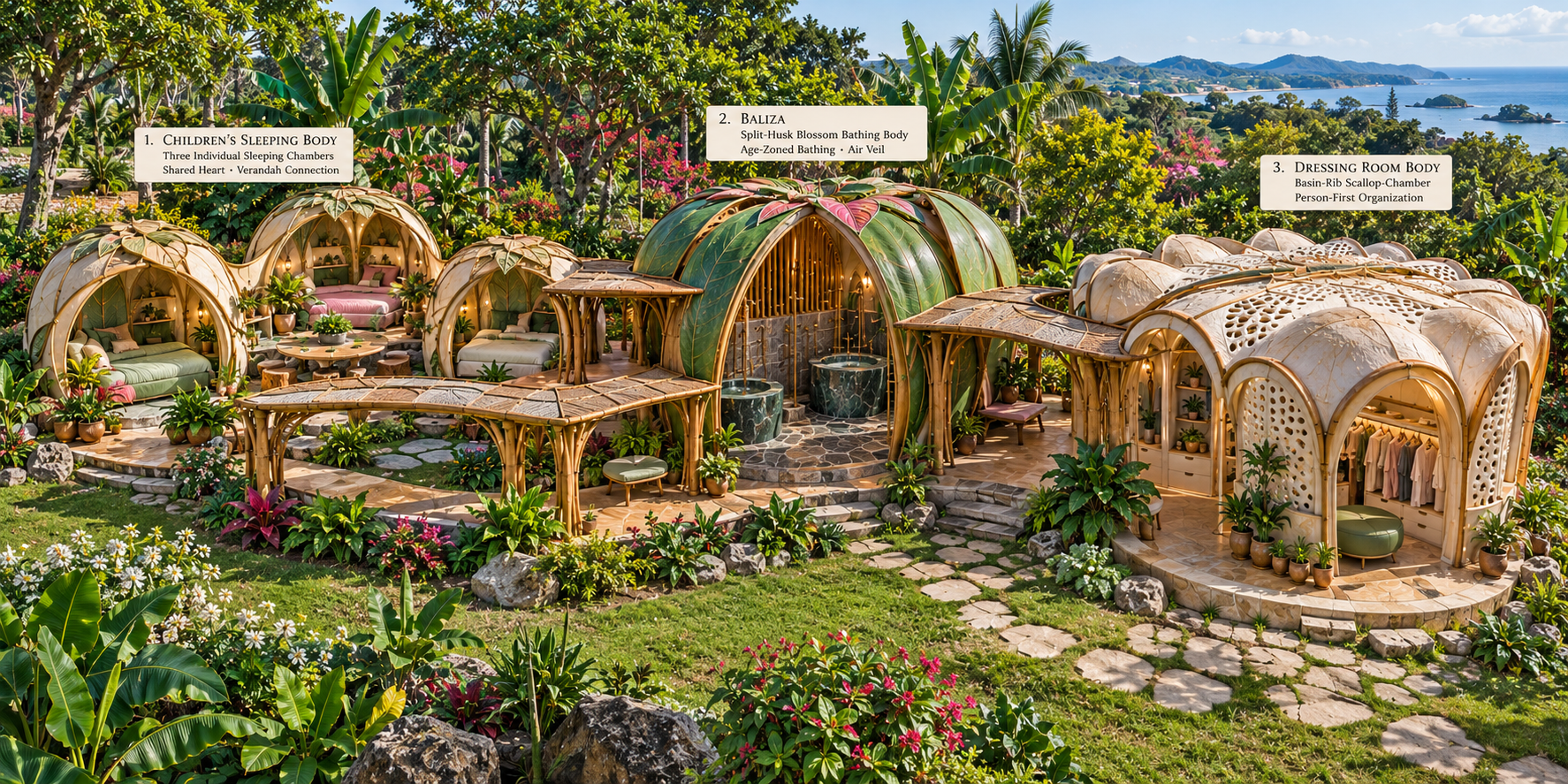
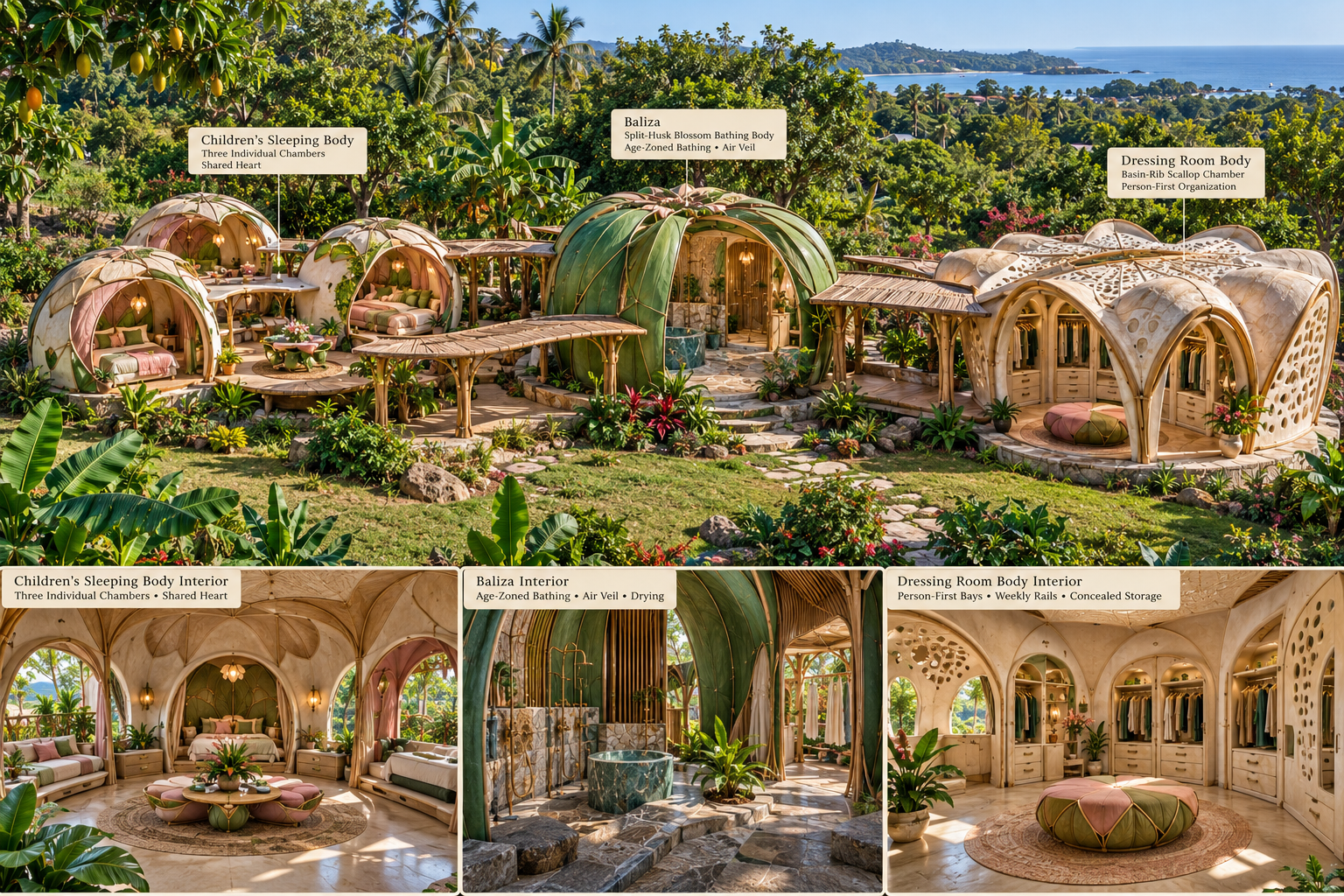
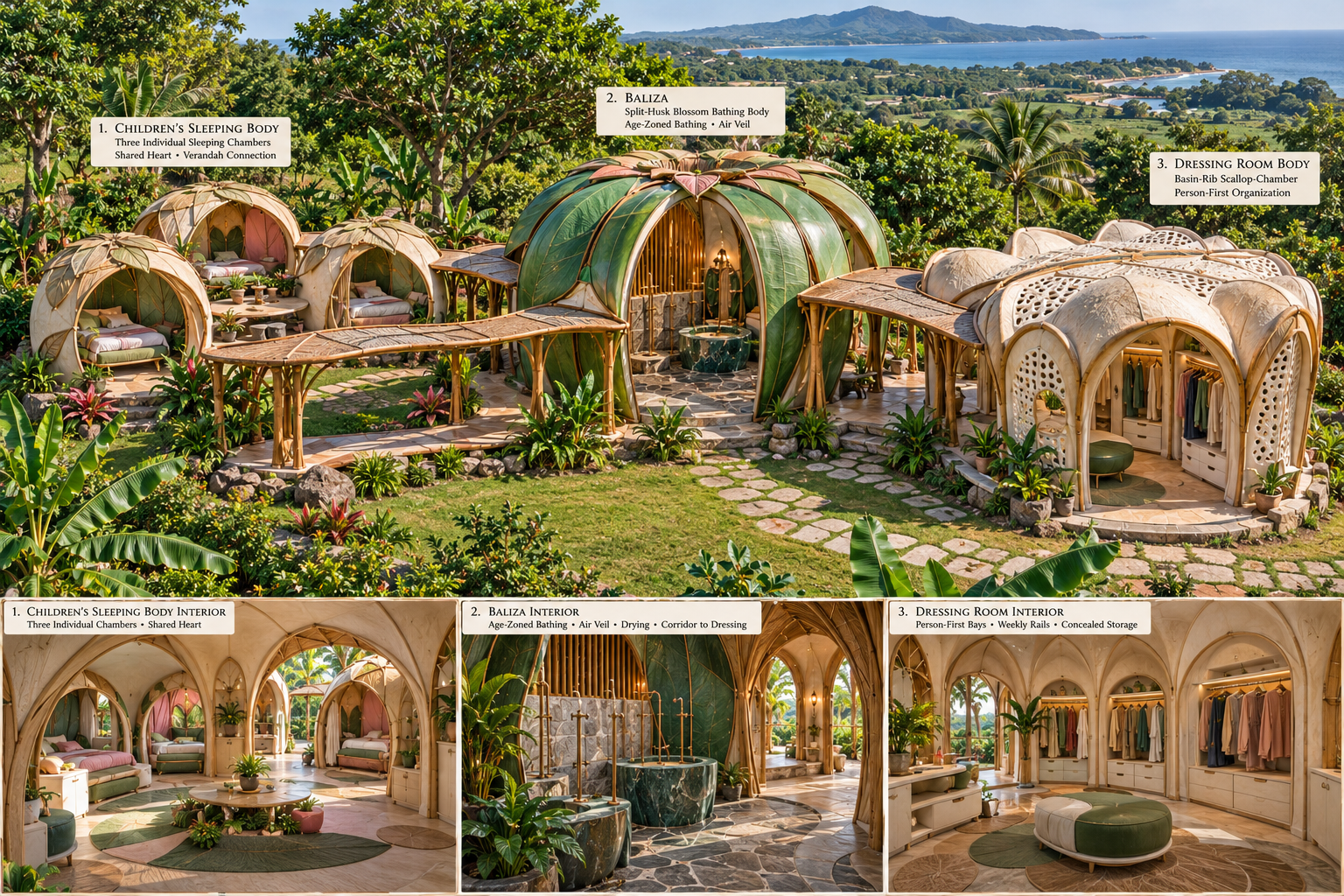
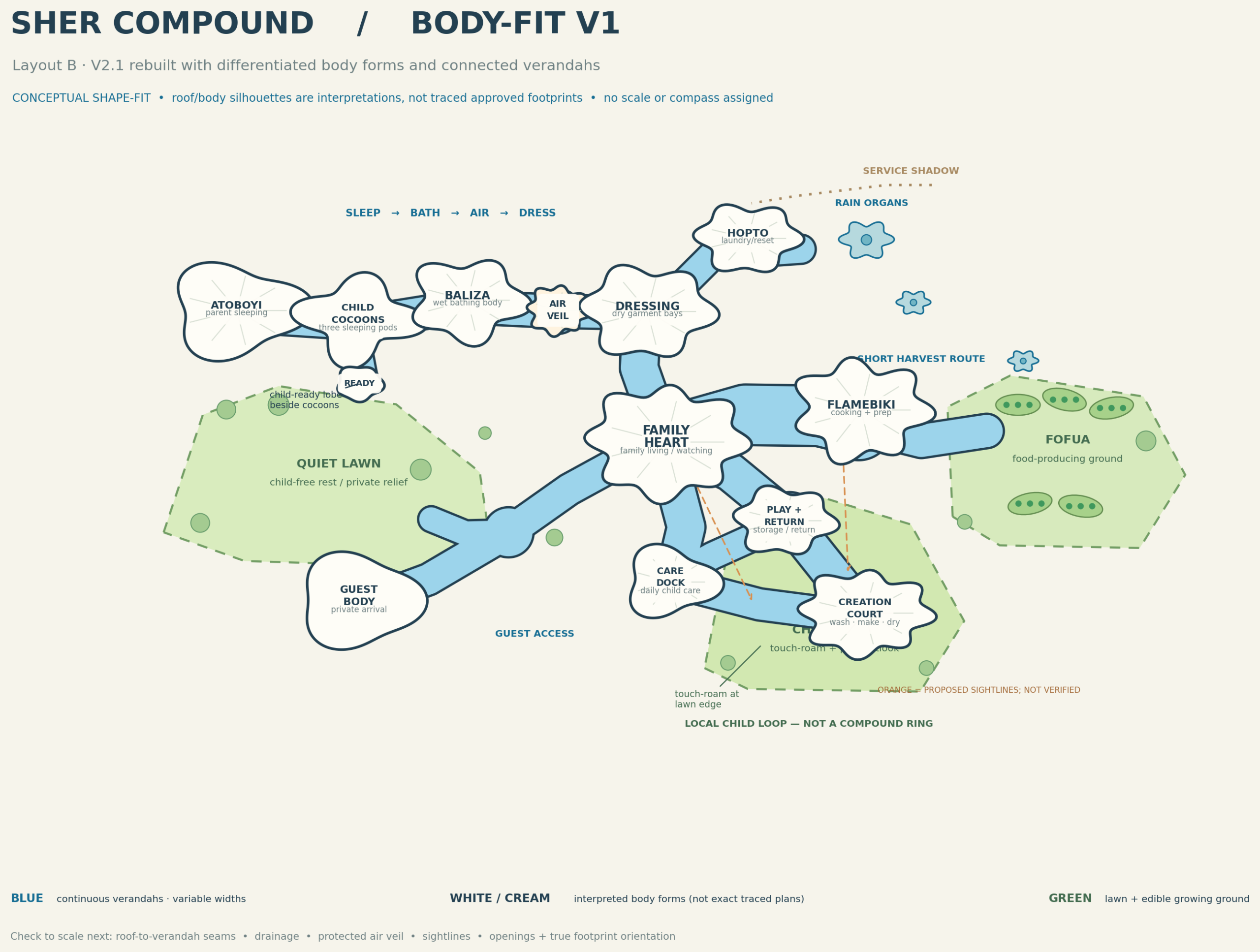
Baliza organizes washing as a sequence. Shoes or slippers are left where they belong. Dry undressing happens before the wet area. Children’s standing water pipes and adults’ bathing places suit different bodies. A warm-air veil helps people dry before entering the clothing space. Beyond the bath, the Dressing Room Body holds each person’s bays, garments, laundry and the things required for an orderly day.
The architecture is as charming as it is functional. Stone, textured surfaces, ventilation, warm air, citrus planting and intimate scale make the route pleasant. A child gradually learns to manage parts of the sequence alone. A parent can help three children without turning the whole morning into an expedition.
Baliza is a small revolution because it respects an ordinary family hour. Multiply fifteen minutes of needless searching and carrying across years of parenting, then across a whole population, and the amount of life involved is enormous. Sher wants the hour back, and she wants it to be enjoyable.


 and then