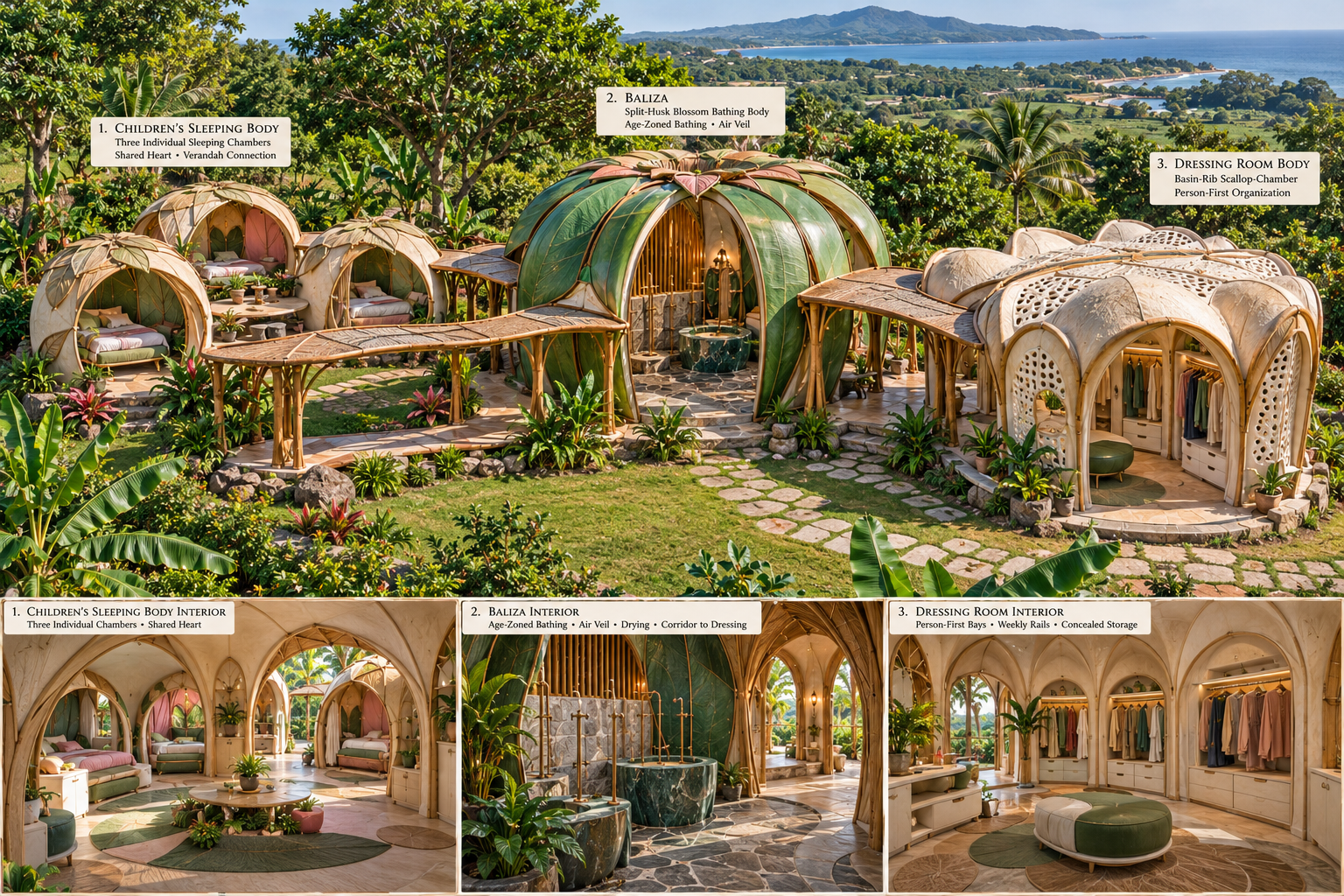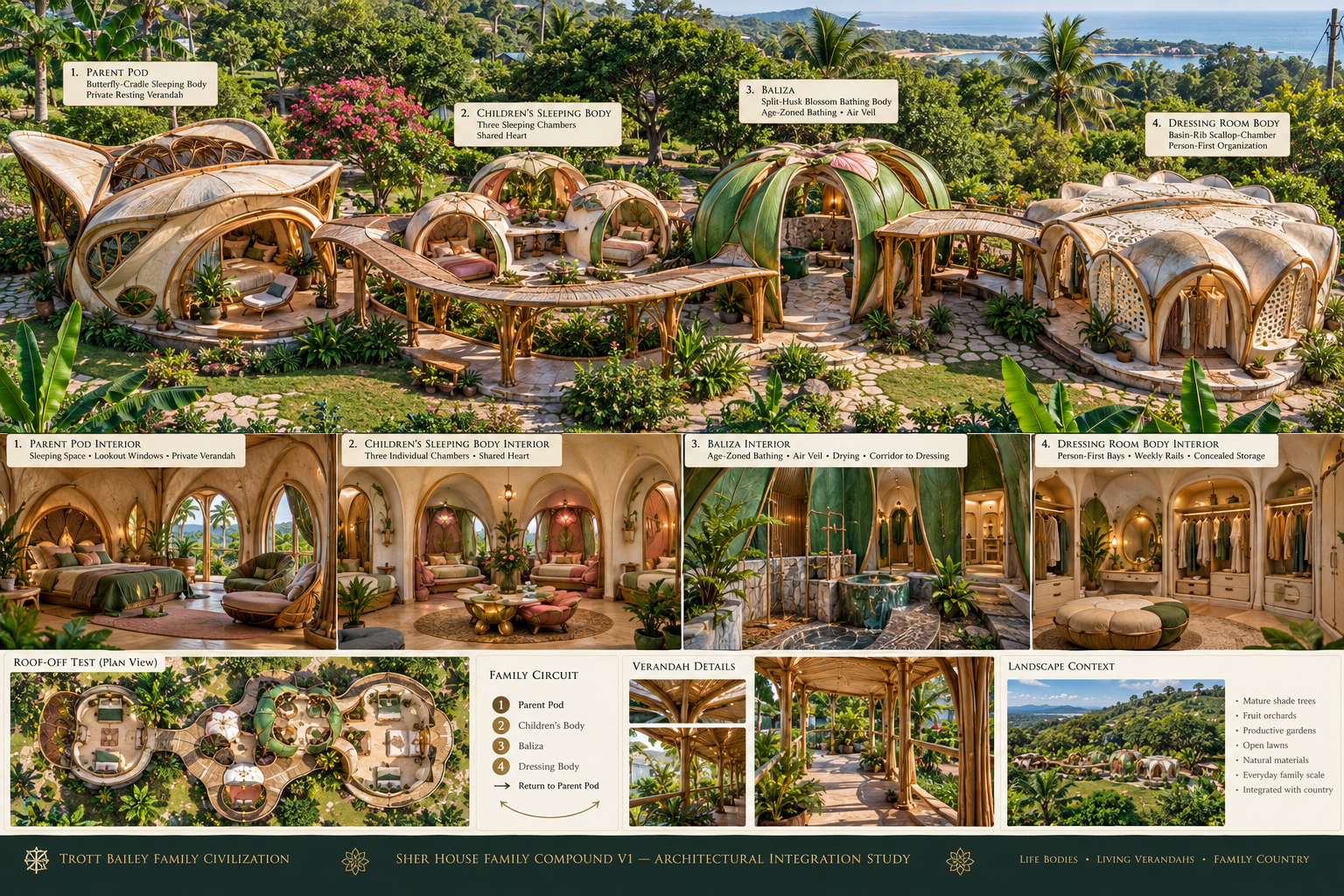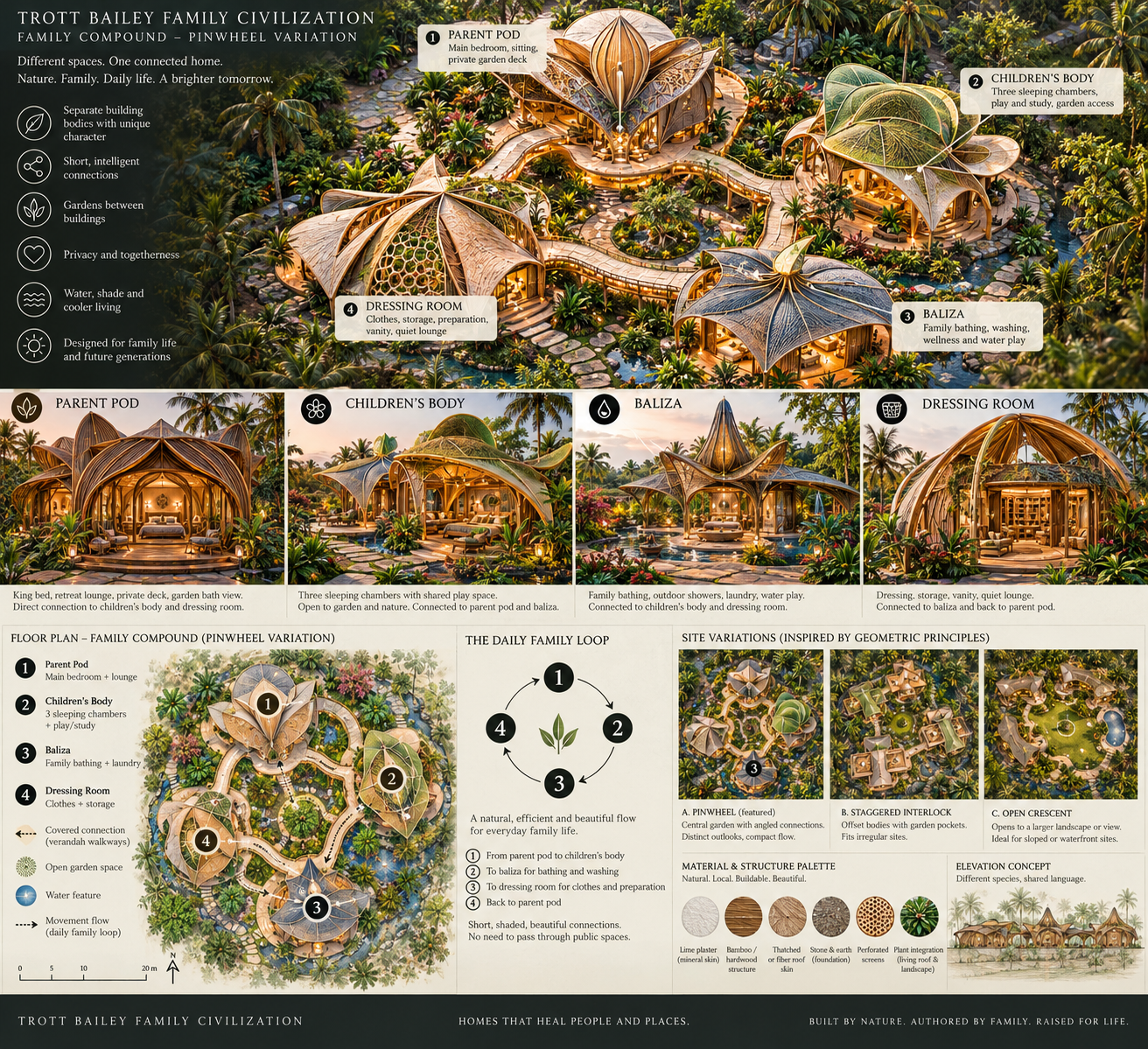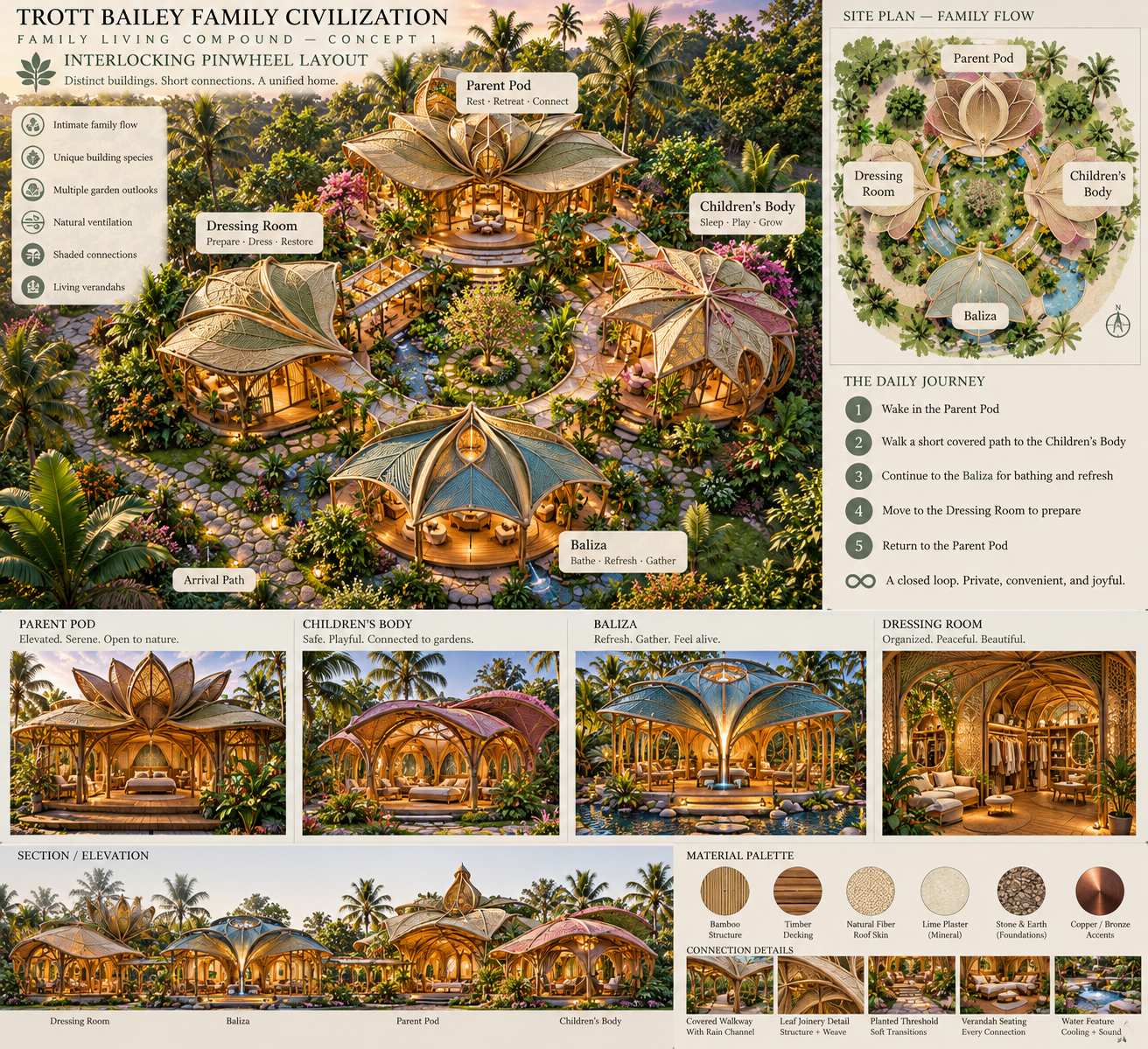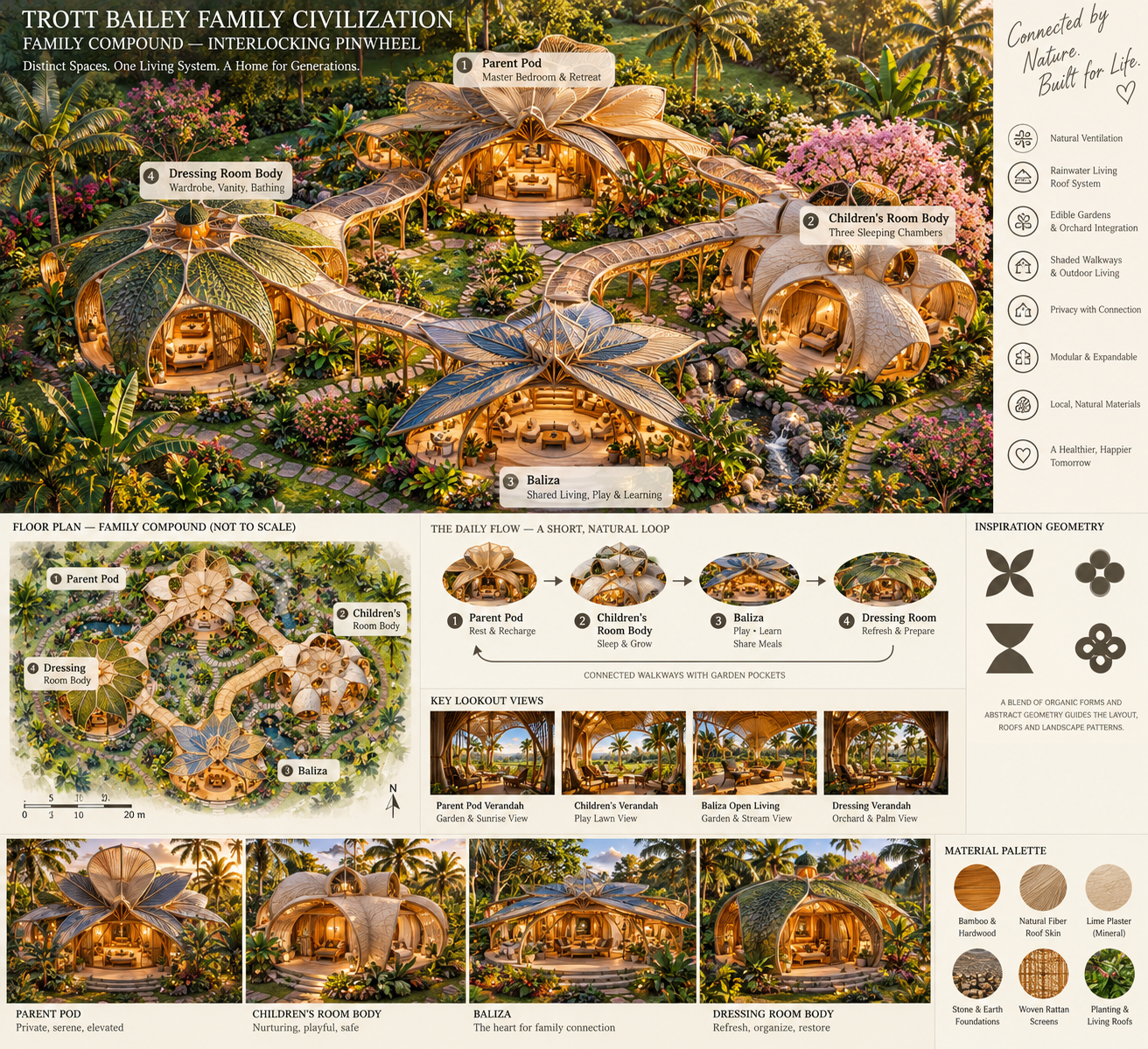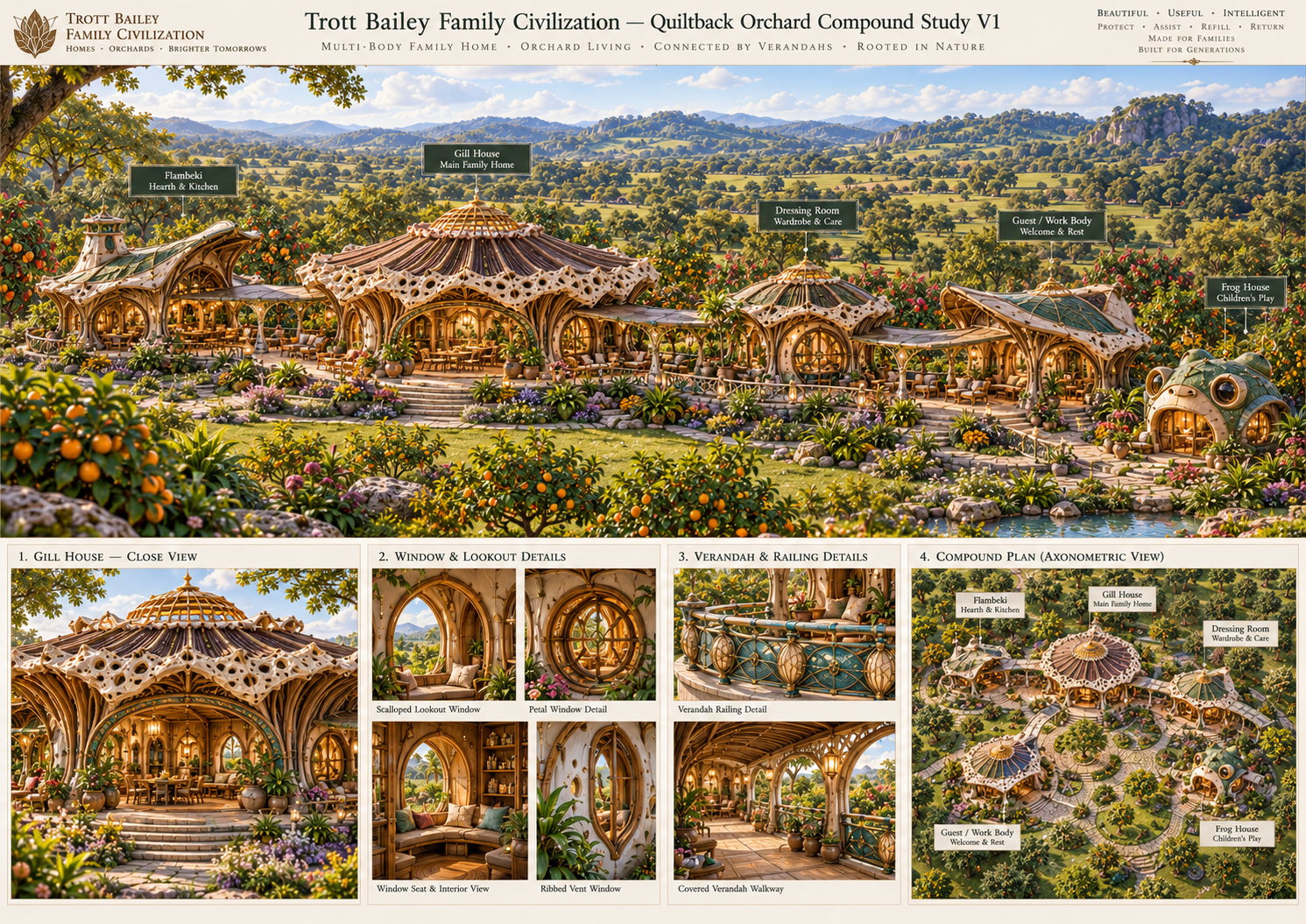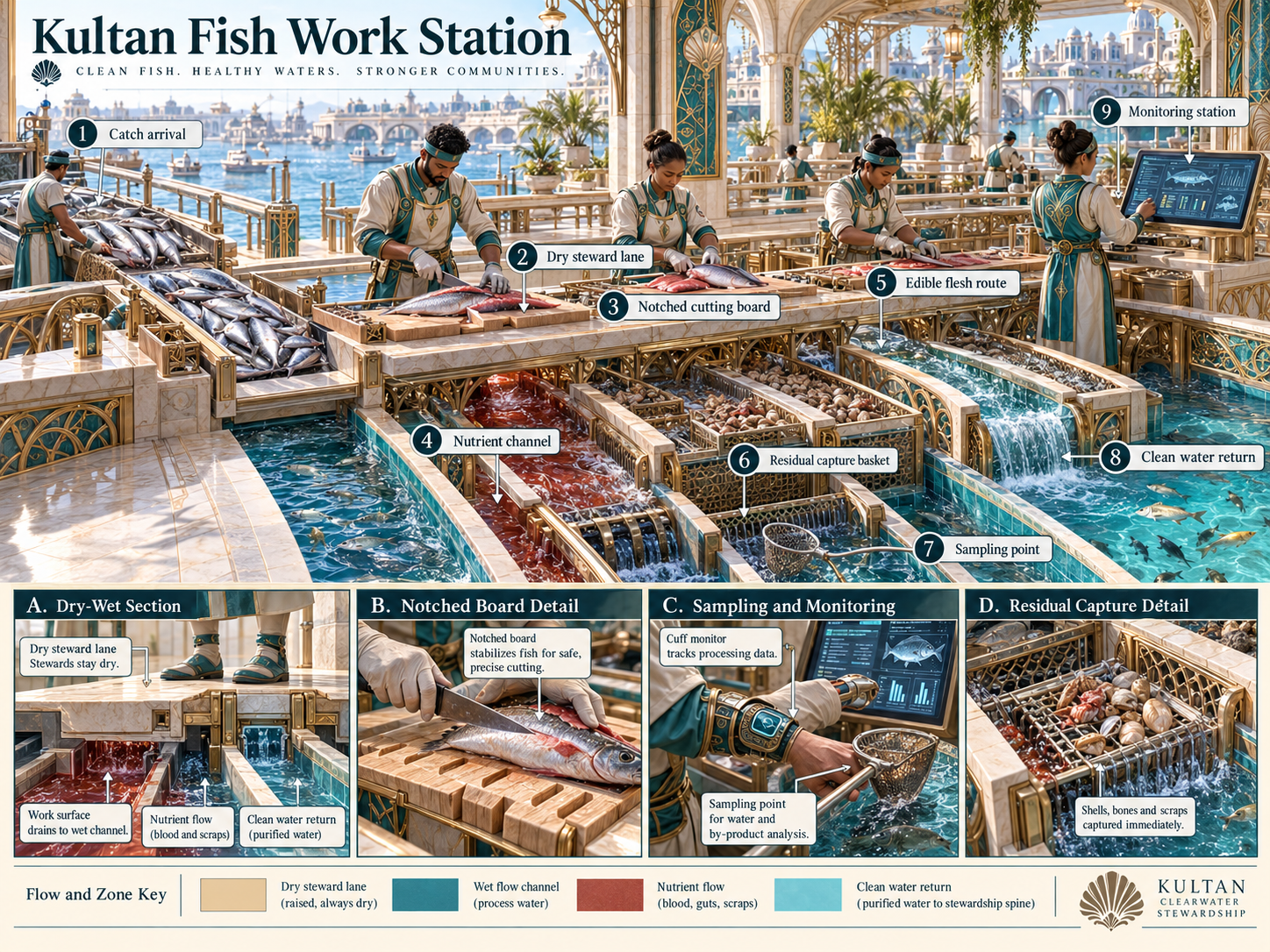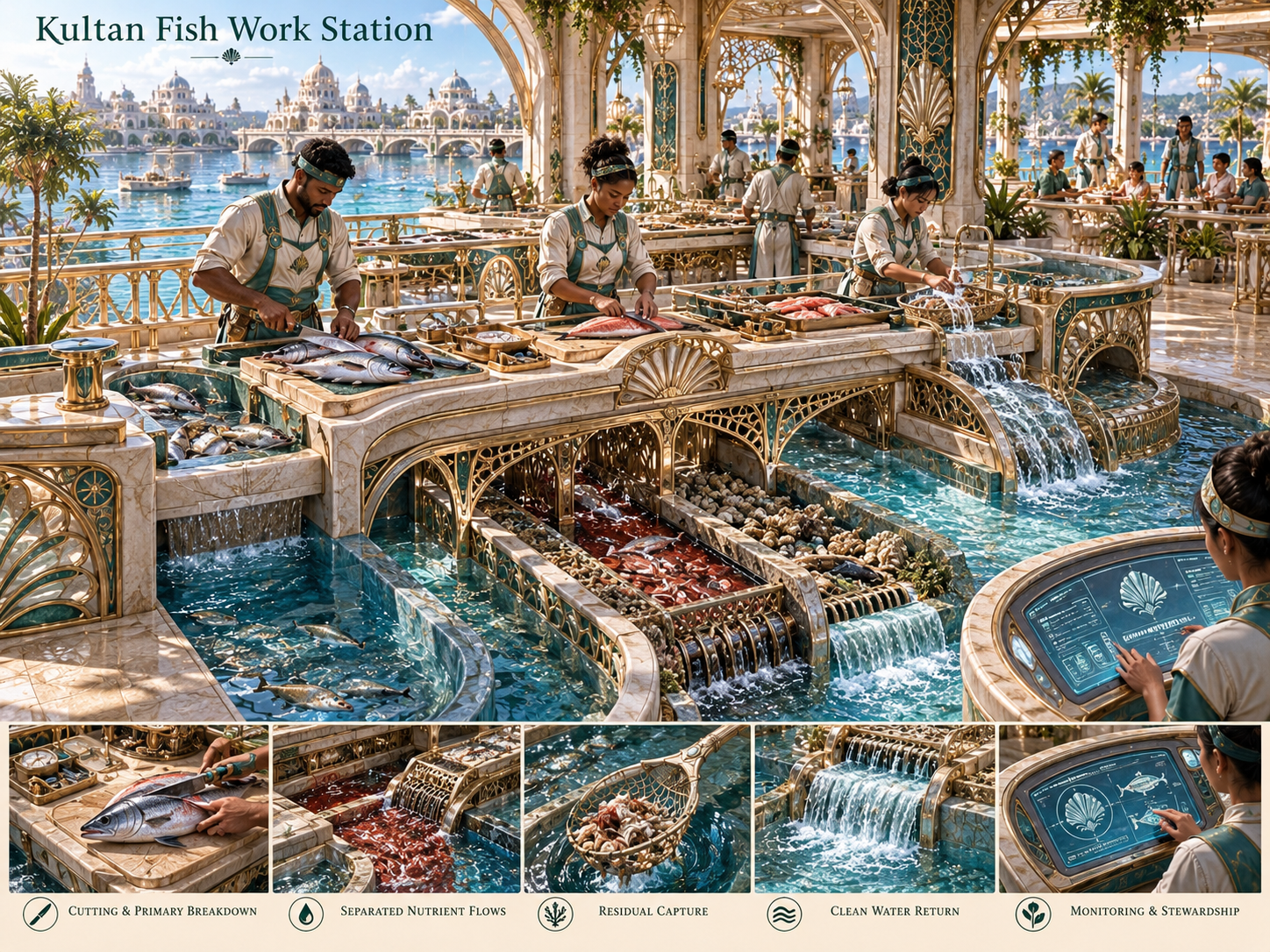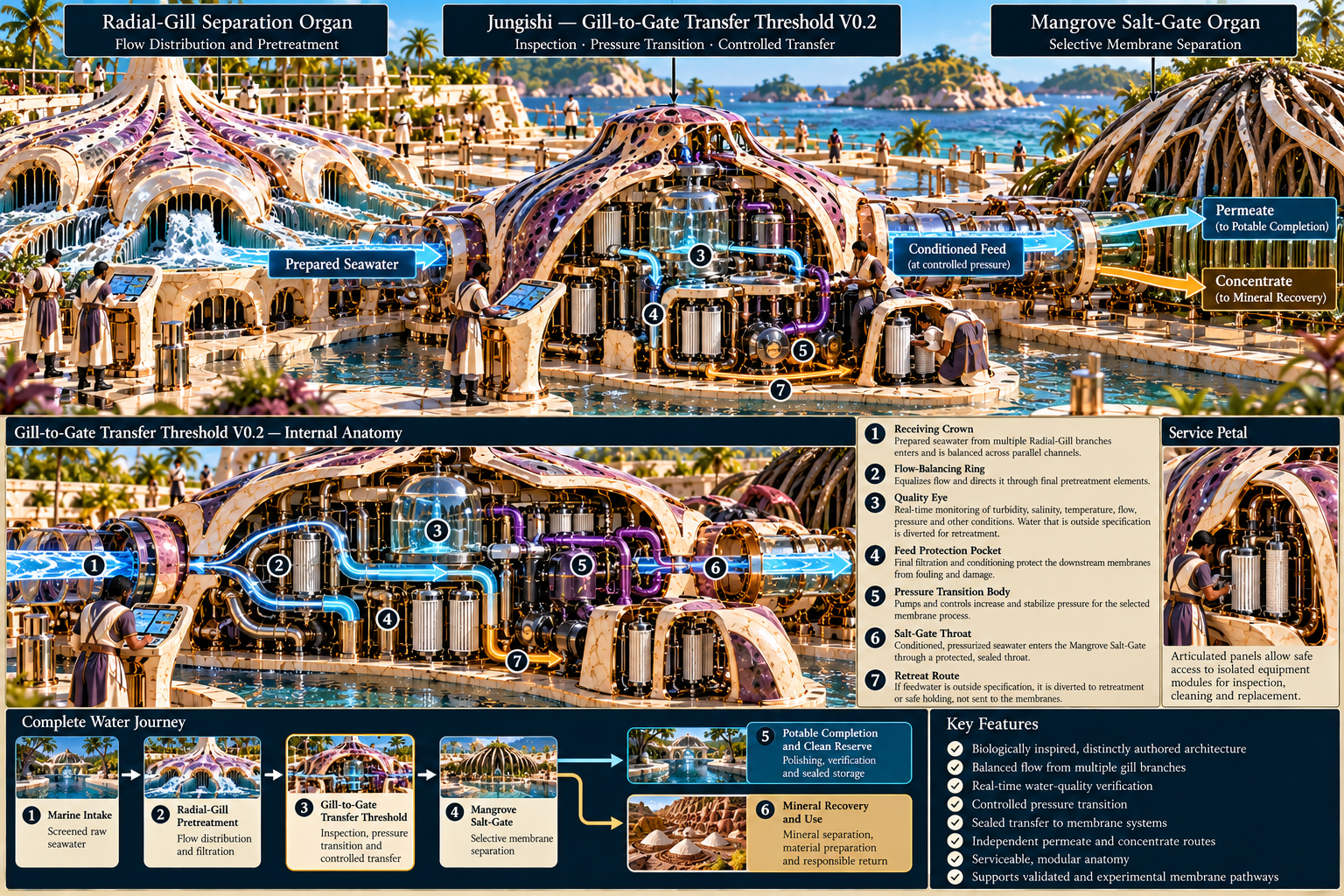
The first architectural problem Sher set out to solve was the question American renovation programmes had turned into entertainment: what makes a home genuinely good? We watched beautiful kitchens, newly opened walls, giant living rooms and expensive finishes. Yet our own lives kept teaching us to ask harder questions. Can a mother bathe the children without carrying wet clothes through a dry hallway? Can fruit grow where the family walks? Can guests stay without crowding the children? Is there a lovely place to sit outside for most of the day?
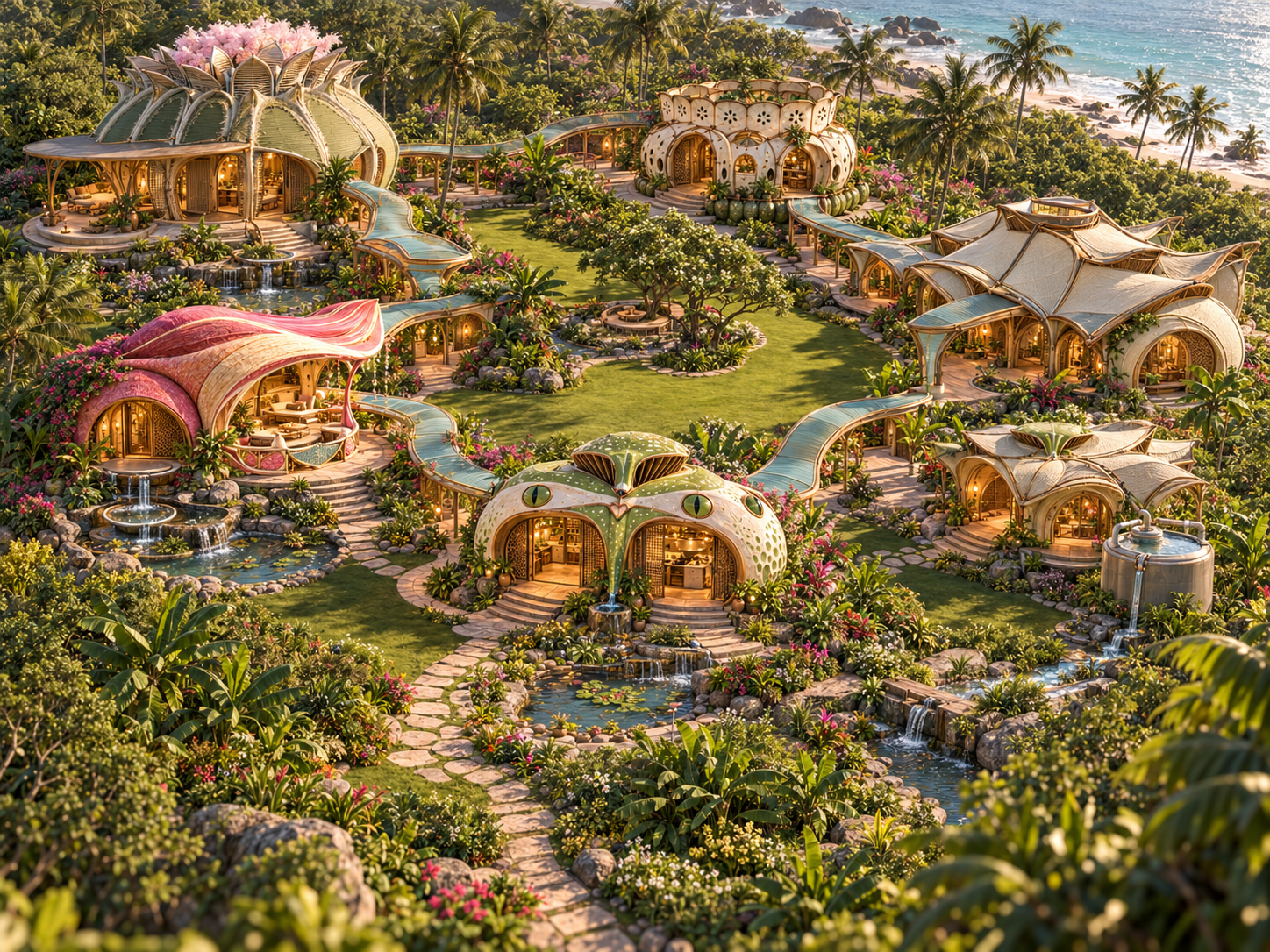
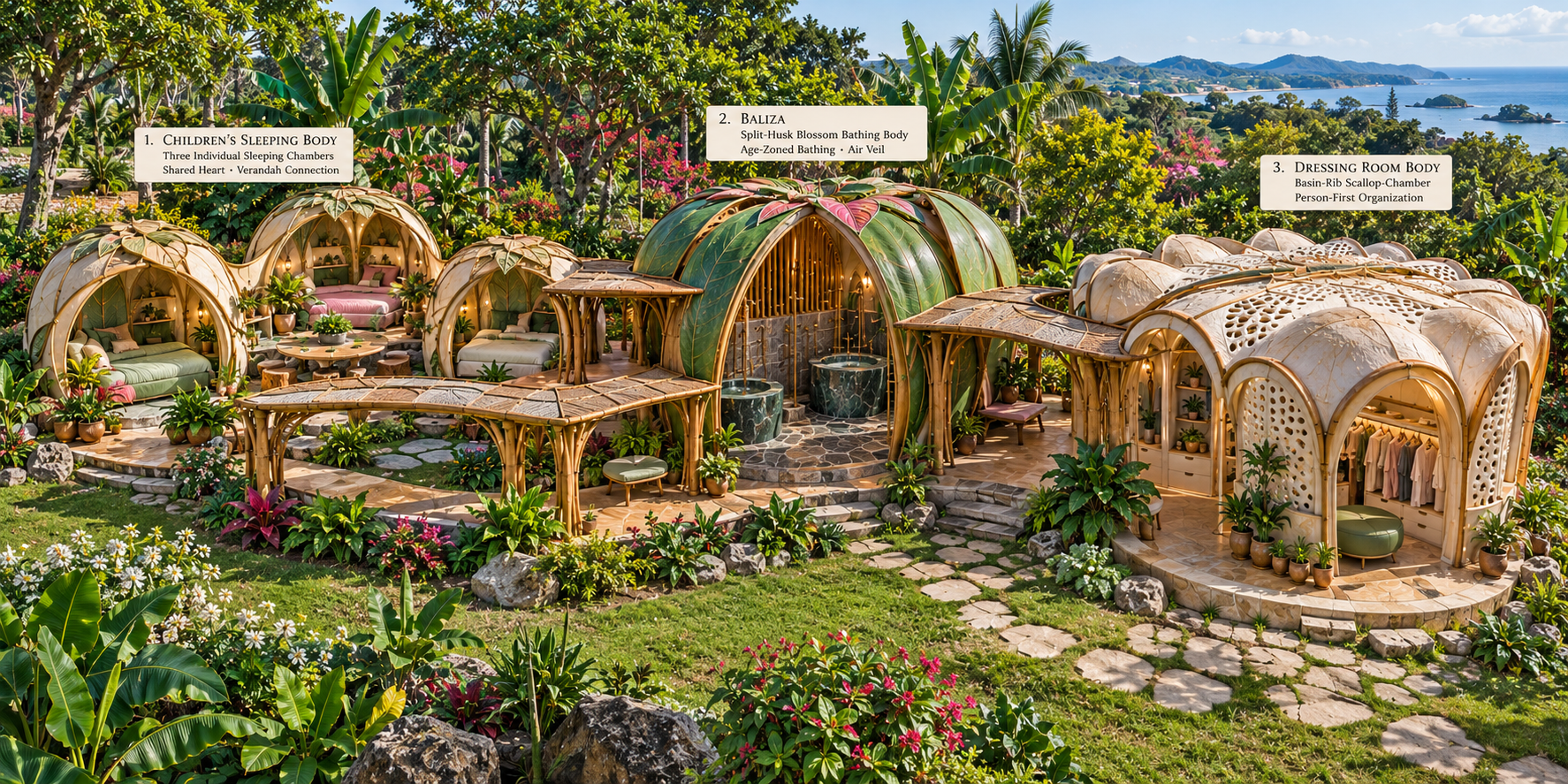
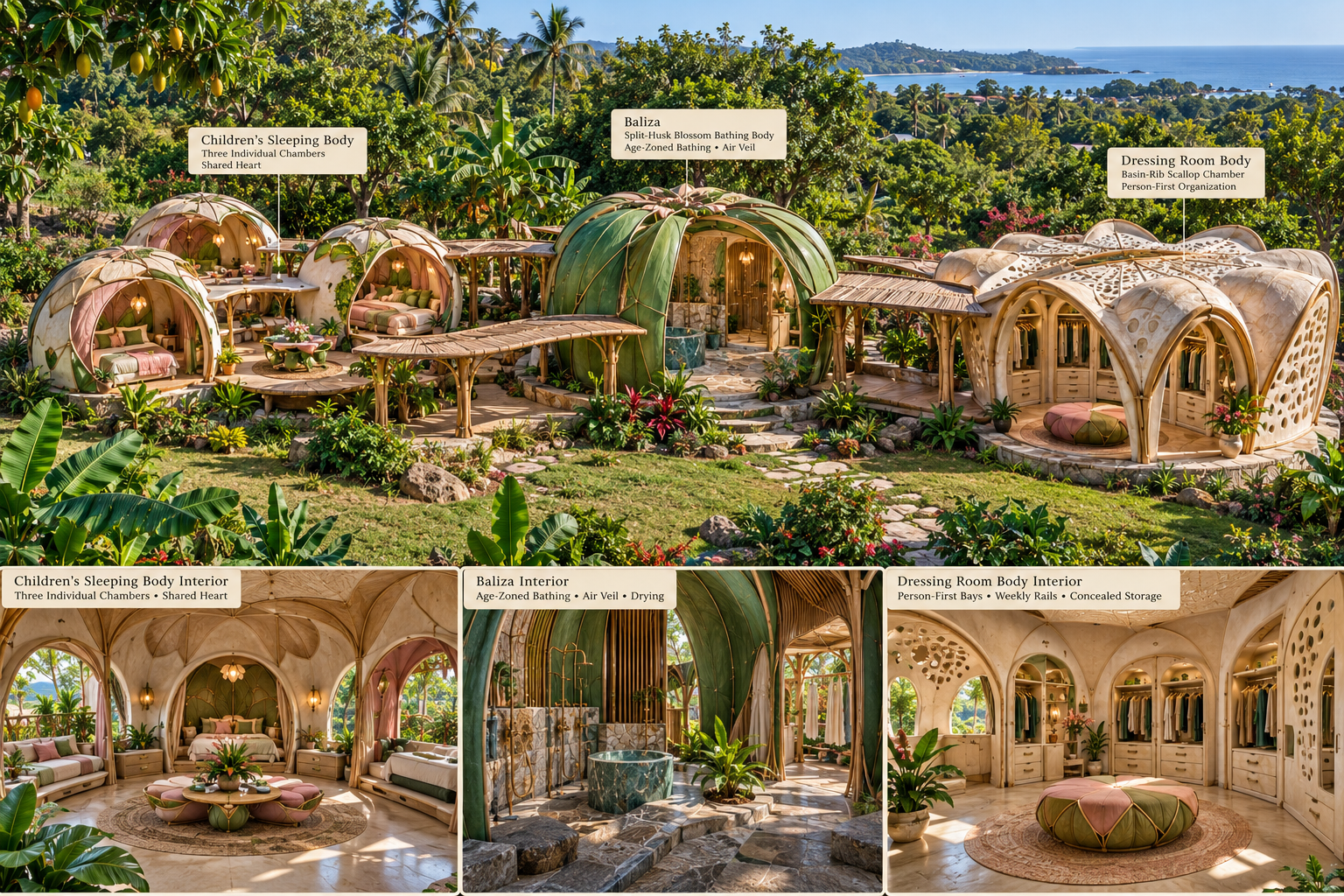
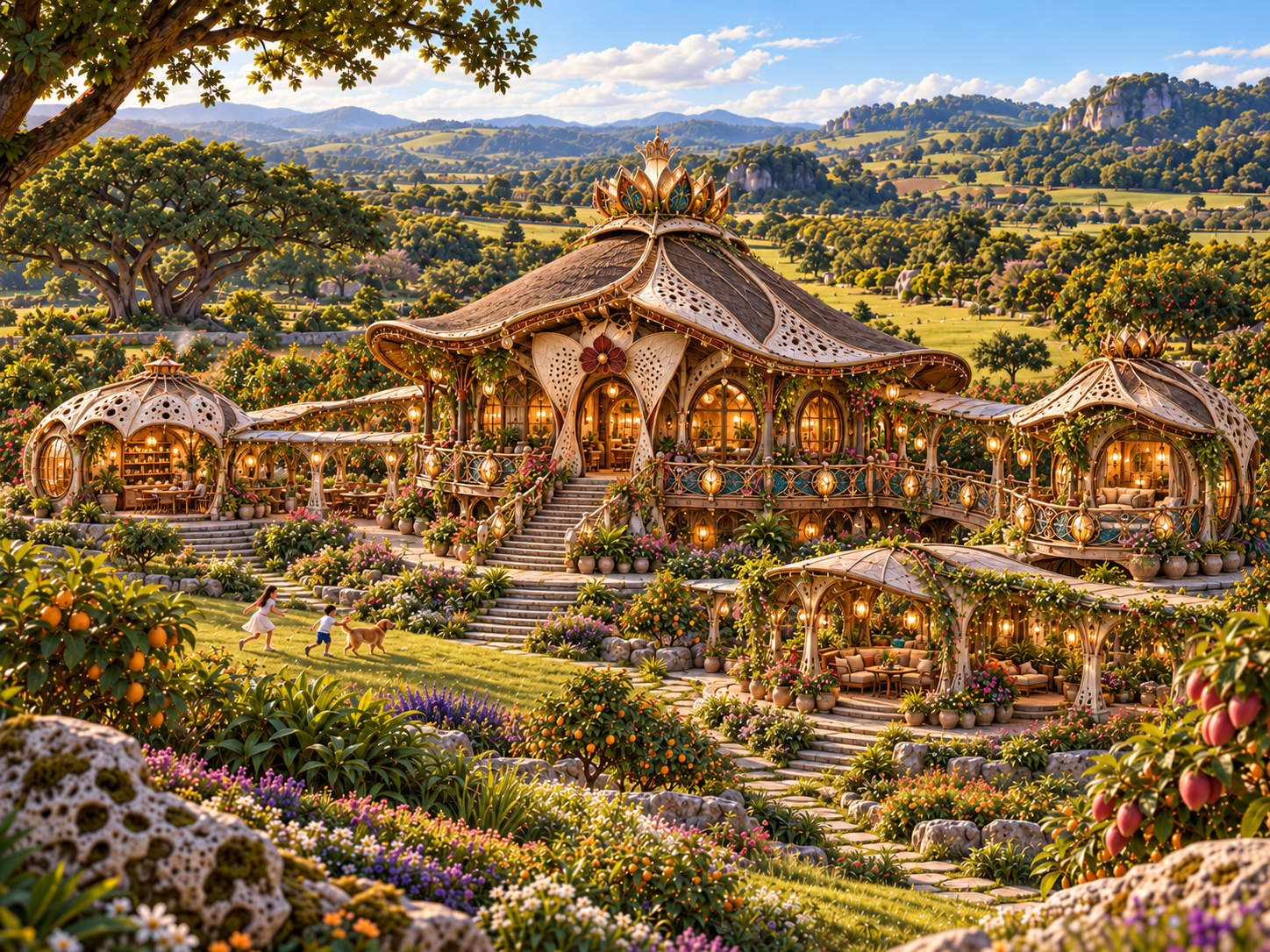
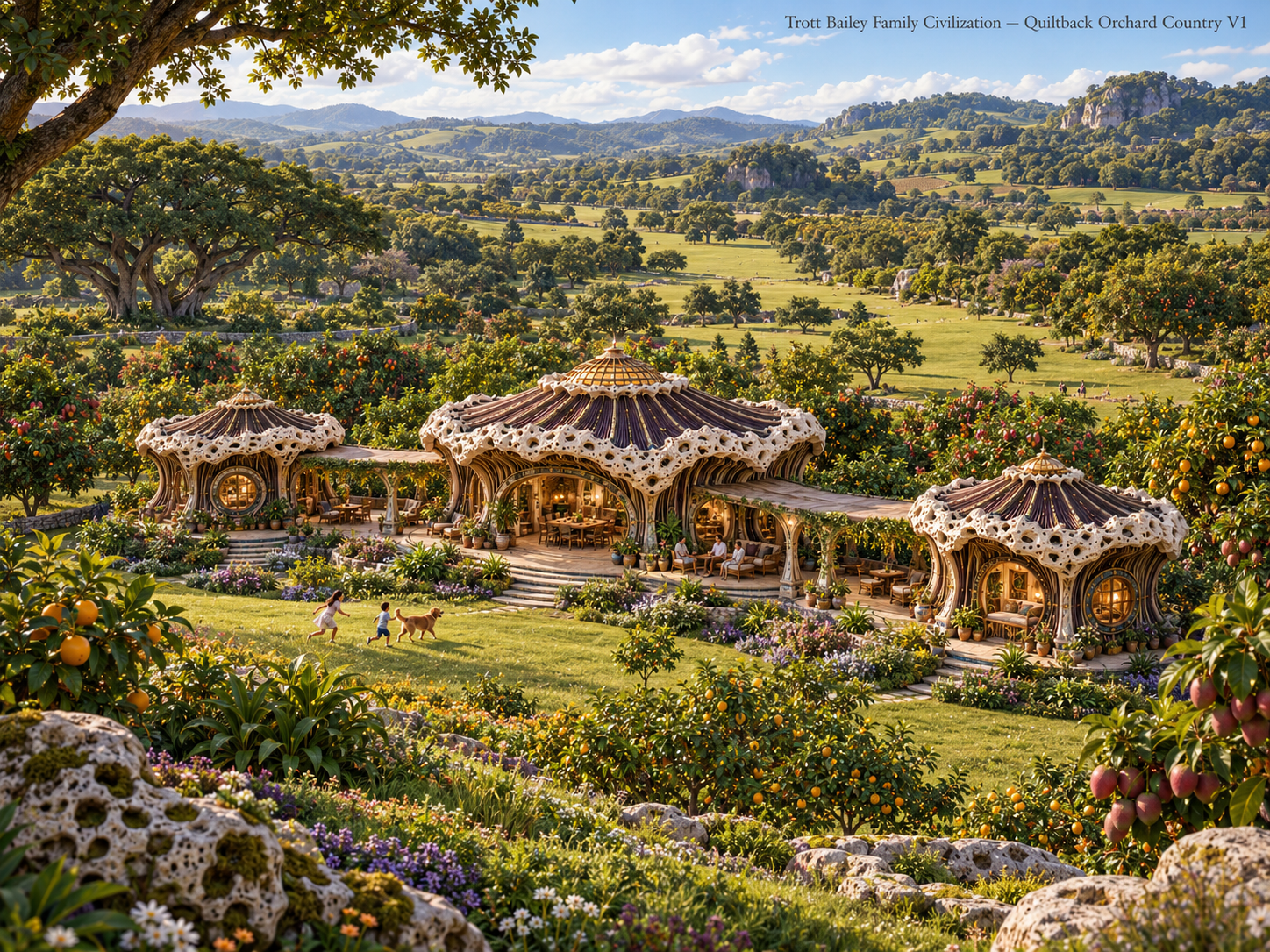
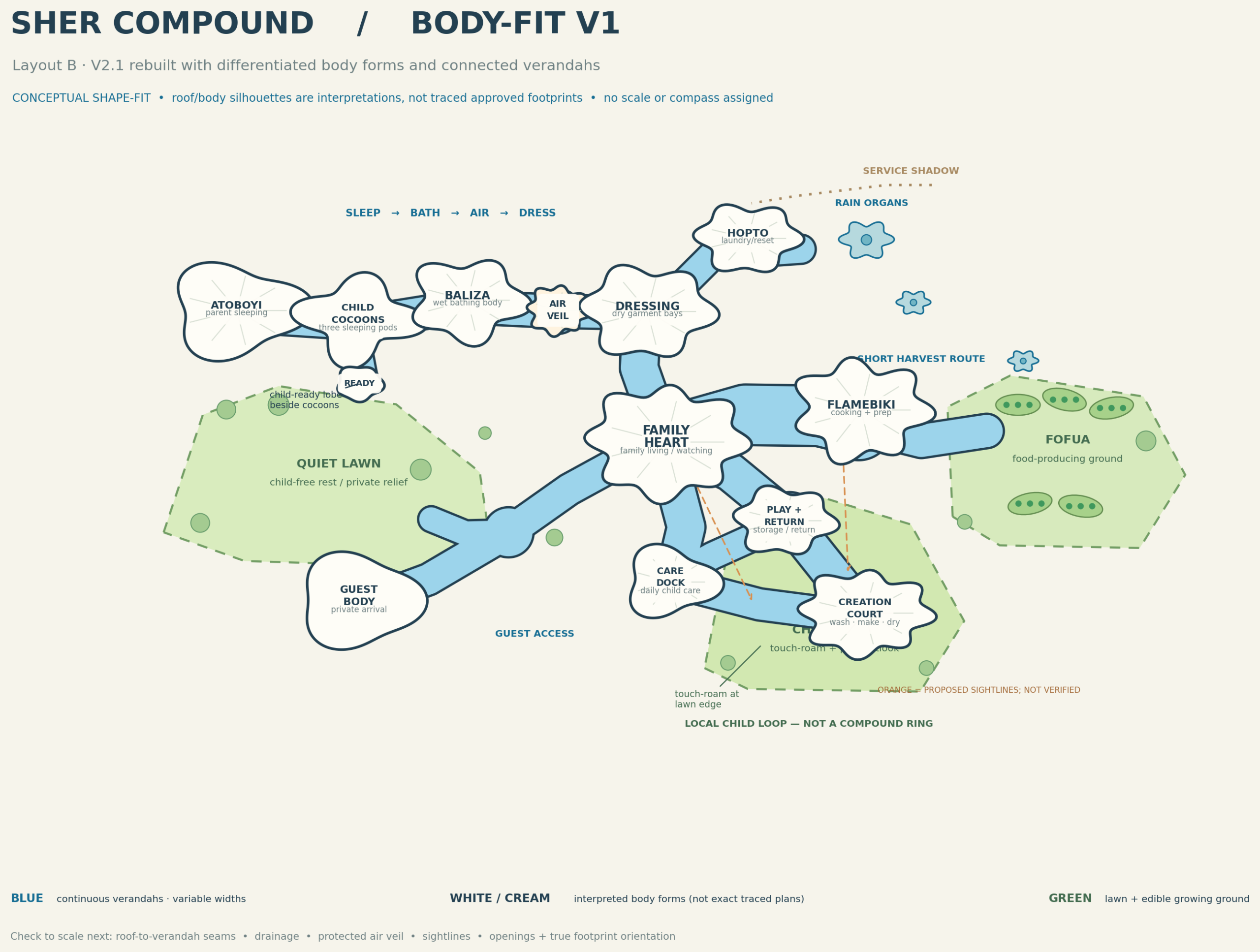
Sher drew the family compound as several charming building bodies joined by verandahs, living ground, water and food. A small sleeping body can be quiet and intimate. Bathing can have wet architecture designed for it. Dressing can remain orderly and dry. Food preparation can breathe. Children can circulate between sleeping, play, learning and orchards while remaining naturally known to the adults around them. The landscape becomes useful living space, with vines, shade, pools, stone and fruit instead of ornament alone.
I think about Emre whenever we work on hospitality. Imagine his family having a guest body ready, orchard food within reach and a service network that does not force him to weigh generosity against a looming electricity bill. A visitor could stay for weeks, months or longer when life called for it, and the host household would remain comfortable. We are designing the physical conditions in which kindness can become abundant.
This is not architecture for a photograph and then a return to difficult domestic life. It is a home that makes its residents want to stay, play, host, recover and love one another. Sher designs charming scale because closeness is delightful when every function has been thoughtfully placed.


 and then