TROTT BAILEY FAMILY CIVILIZATION · ABUNDANCE SCORECARD
America makes the money. Who gets the life?
A huge economy can have families juggling jobs, traffic, bills and time they cannot get back. An overlooked group of islands can give children stronger public services and safer daily life. Our scorecard asks what those systems actually deliver to people.
Sixteen scored categories. Five Money Gates. Three very different profiles. One published benchmark. Follow every point back to the evidence.
MATHEMATICS FIRST
The evidence score and the Money Gate do different jobs.
We score 16 categories on a −100 to +100 scale, then weight them to make the evidence score. The Money Gate checks whether five essential parts of daily life are available without money at the point of need. Every verified Money Gate point lifts the national ceiling by 2.5 points. Only 20/20 removes it.
Show the full headline calculation
When the gate is incomplete, the evidence score is mapped between −100 and the negative ceiling: headline = −100 + ((evidence + 100)/200) × (100 + ceiling). With a fully audited 20/20, the headline equals the evidence score directly. Missing Money Gate research keeps a conservative provisional score; it never clears the gate. Friction is counted in category beleshkies and is not deducted again.
POINT-BY-POINT · THE SIXTEEN LIFE TESTS
First the life we intend. Then the life the country delivers.
Each row starts with a distinct published Trott Bailey Family standard. The country scores follow with the public evidence and TBF reasoning used to award or withhold points. GDP and money rank do not award points.
Human Time Burden
9% weightTROTT BAILEY STANDARD · INTENDED +100
Work is organized into short shared Shubaka contributions, designed to release time for marriage, child care, rest and household authorship.
Read: Shubaka: six-hour weekly contribution targetUnited States
Assessed scoreFamily Time 3.1, 25/35/25/15. The BLS records 5.2% multiple jobholders in May 2026. A second job, patchy leave and expenses eat family evenings despite normal average hours. The two newly evaluated beleshkies reflect time used for paid and unpaid work, and real time left at home. Source https://www.bls.gov/news.release/archives/empsit_06052026.htm
Sources and four scoring beleshkies
Capacity / Reach / Friction / Return:
Åland Islands
Assessed scoreTime-use research finds uneven unpaid domestic and care work even in a smaller Nordic economy. Registered employment data cannot alone quantify every second job or after-hours duty.
Sources and four scoring beleshkies
Four-beleshky policy judgments; source facts are evidenced, not a causal estimate.
Distance from the TBFC intended standard: U.S. 103.75 points · Åland 43.95 points. These are differences from an authored benchmark, not measured deployment in TBFC.
Housing Shelter Reach
8% weightTROTT BAILEY STANDARD · INTENDED +100
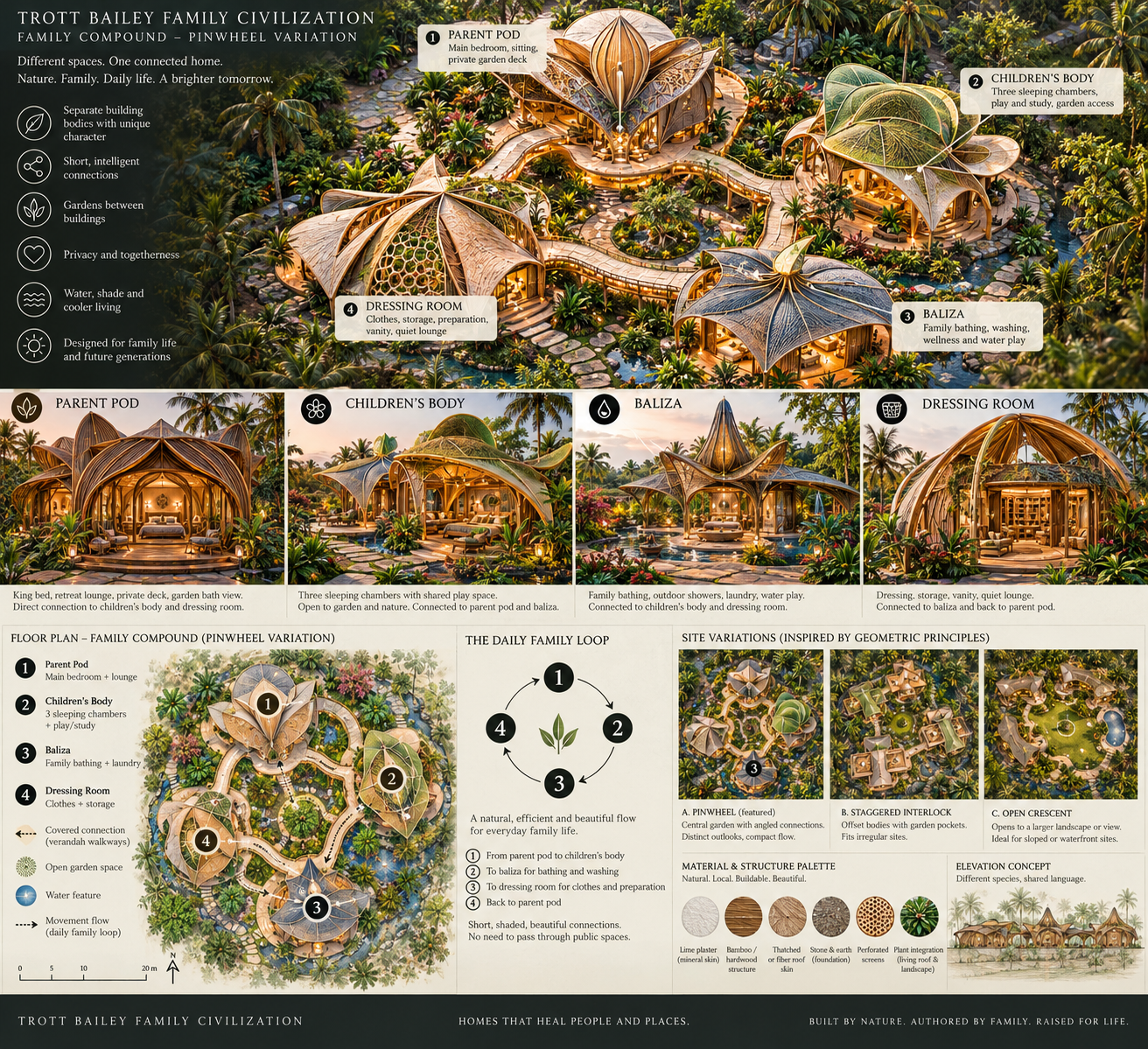
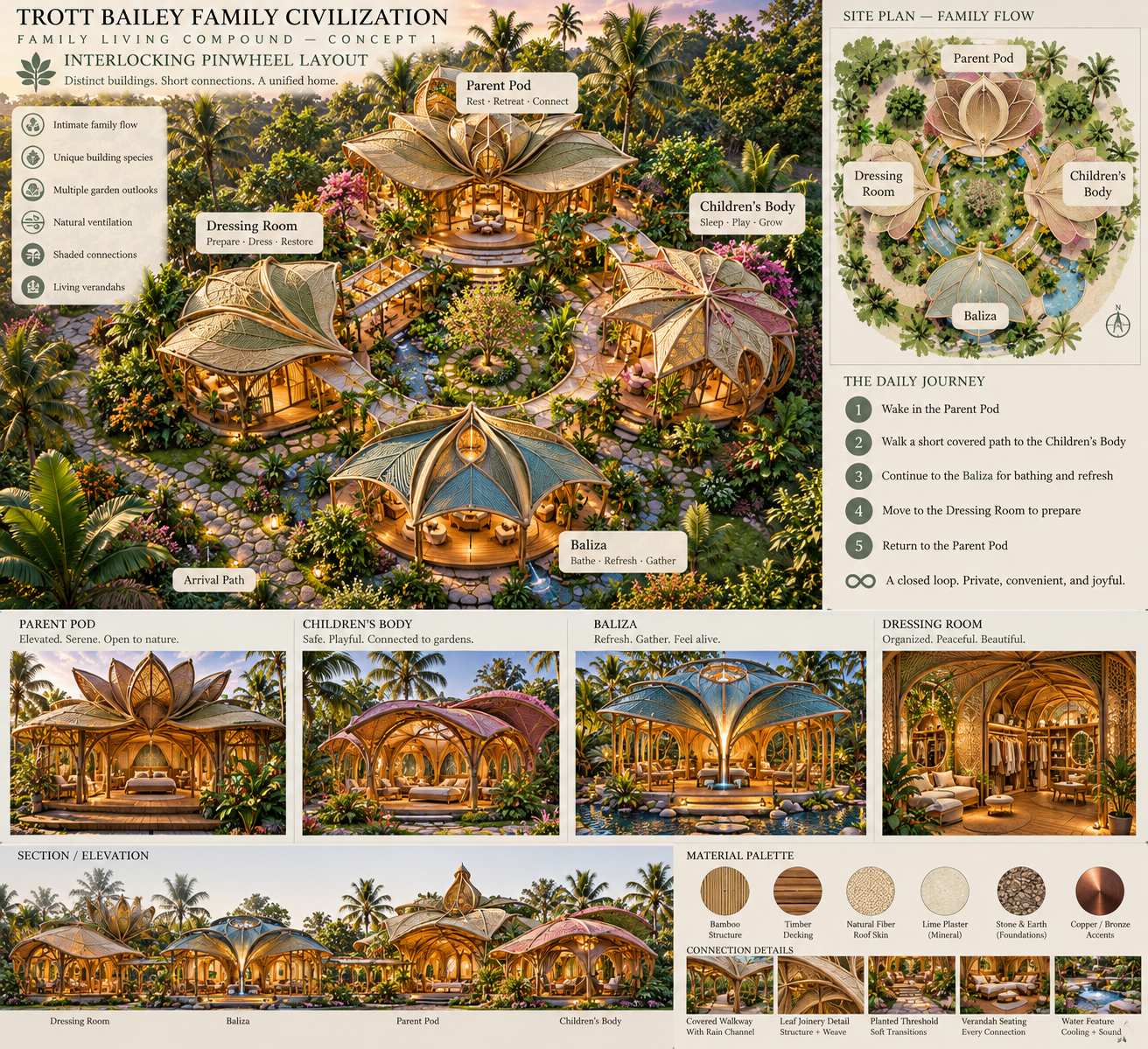
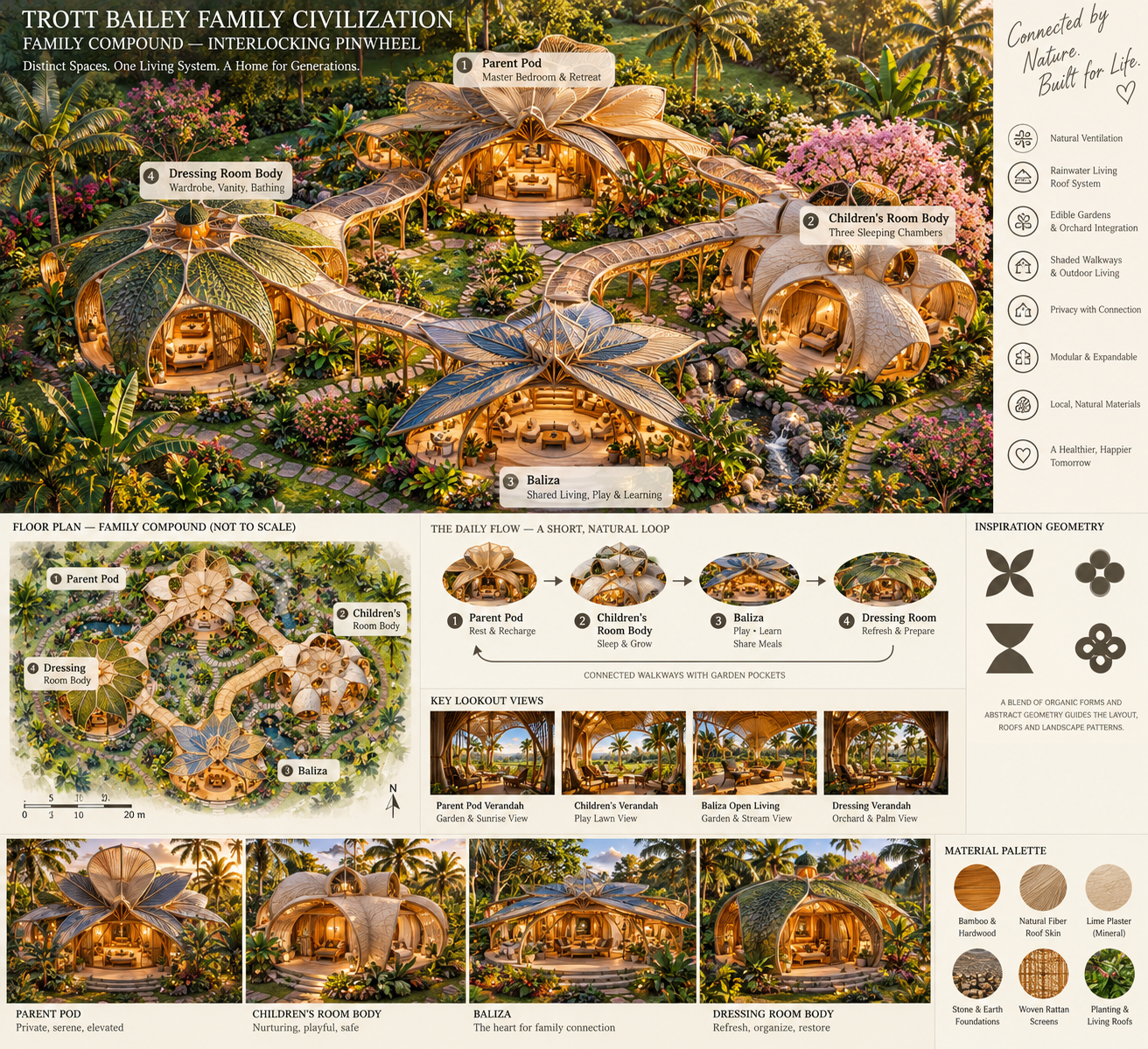
Family houses are designed as linked care, sleep, body-preparation, water, dressing and living-ground infrastructure with free access as the intended rule.
Read: Trott Bailey Family House MethodUnited States
Assessed scoreThe United States has enormous physical housing capacity and near-universal plumbing, but shelter reach is materially weaker than stock suggests. In 2024, 46.23% of renter households were cost-burdened, median gross rent reached $1,487 and the median renter spent 31% of income on rent and utilities. Homeownership was 65.0% in Q2 2026, while HUD counted 745,652 people homeless on one night in January 2025. GAO finds institutional investors are a real but limited part of the national picture—about 1–3% of all single-family homes in six studied metros in 2024—so the negative score is driven by affordability and reach, not a claim that large investors own most U.S. homes.
Sources and four scoring beleshkies
Capacity / Reach / Friction / Return:
Åland Islands
Assessed scoreAverage Åland rent was €12.74 per square metre in April 2026; housing costs and the limited island stock restrict reach despite functioning rental supply.
Sources and four scoring beleshkies
Four-beleshky policy judgments; source facts are evidenced, not a causal estimate.
Distance from the TBFC intended standard: U.S. 103.75 points · Åland 46.30 points. These are differences from an authored benchmark, not measured deployment in TBFC.
Food Nourishment Free Food
9% weightTROTT BAILEY STANDARD · INTENDED +100
Food-bearing routes, orchard layers, soil cover, multi-function plants and freely gathered ripe produce are authored and in early Prado trials.
Read: AgriGames FoodwayUnited States
Assessed scoreAmerica has extraordinary food-production capacity, but the category asks whether nourishment actually reaches people and whether abundance is multiplied rather than wasted. USDA reports 13.7% of households were food insecure in 2024 and 5.4% experienced very low food security; EPA states that 30–40% of the U.S. food supply is never eaten. Under the TBF standard, strong physical supply therefore no longer outweighs money-gated reach, food insecurity and large loss/waste.
Sources and four scoring beleshkies
Åland Islands
Assessed scoreFree school lunches are universal within basic education but do not supply ordinary adult household food without payment; island retail and farming provide physical supply.
Sources and four scoring beleshkies
Four-beleshky policy judgments; source facts are evidenced, not a causal estimate.
Distance from the TBFC intended standard: U.S. 85.00 points · Åland 35.95 points. These are differences from an authored benchmark, not measured deployment in TBFC.
Water Sanitation
6% weightTROTT BAILEY STANDARD · INTENDED +100
Water capture, directed drainage, clean movement, serviceable edges and safe reuse are designed as distributed household and public infrastructure.
Read: Prado water and mosquito-life observationUnited States
Assessed scoreHousehold plumbing reach remains very high and most public water systems reported no drinking-water violations in 2024. The deeper pass nevertheless counts the infrastructure burden directly: 31% of active public water systems reported at least one violation, 7% had a health-based violation, EPA estimates 9.2 million lead service lines, and the 20-year drinking-water infrastructure need is $625 billion. Under the TBF water-intelligence standard, high capacity therefore earns less credit when safe reach still depends on a large repair backlog.
Sources and four scoring beleshkies
Åland Islands
Assessed scoreÅland distributed over 2.4 million cubic metres of water in 2025; supply is substantial, while household provision remains billed and must be environmentally maintained.
Sources and four scoring beleshkies
Four-beleshky policy judgments; source facts are evidenced, not a causal estimate.
Distance from the TBFC intended standard: U.S. 76.25 points · Åland 20.40 points. These are differences from an authored benchmark, not measured deployment in TBFC.
Energy Household Capability
5% weightTROTT BAILEY STANDARD · INTENDED +100
Energy is authored as abundant household and public capability; Solar Moon remains an active research ambition rather than verified 24-hour output.
Read: Solar Moon Panel researchUnited States
Assessed scoreThe United States has exceptional energy capacity, but household reach and burden return are weaker than production totals suggest. EIA reports 13.4 million residential electricity disconnections for bill nonpayment in 2024, while fossil fuels still supplied about 58% of utility-scale electricity generation in 2025 and renewables were only about 9% of total U.S. energy consumption. The TBF standard therefore separates national production from dependable household capability.
Sources and four scoring beleshkies
Åland Islands
Assessed scoreWind supplied about 58% of electricity acquisition in 2024, while 36% was imported from Sweden. Households still pay electricity tariffs.
Sources and four scoring beleshkies
Four-beleshky policy judgments; source facts are evidenced, not a causal estimate.
Distance from the TBFC intended standard: U.S. 66.25 points · Åland 26.85 points. These are differences from an authored benchmark, not measured deployment in TBFC.
Health Care Reach
7% weightTROTT BAILEY STANDARD · INTENDED +100
Tideechi, maternity support, neighborhood care, child relief, dentistry and emergency response form the proposed care network.
Read: Trott Bailey public role systemsUnited States
Assessed scoreThe United States has deep clinical and medical capacity, and 92.1% of people had health insurance for at least part of 2025. Reach is nevertheless heavily friction-loaded: 7.9% were uninsured for the full year, CMS reports $15,474 in health spending per person and $556.6 billion in out-of-pocket spending in 2024, and maternal mortality remained 17.9 per 100,000 live births. CDC final data show life expectancy improved to 79.0 years in 2024, so the score keeps that positive outcome while sharply reducing the credit given to expensive capacity that does not translate cleanly into household reach.
Sources and four scoring beleshkies
Åland Islands
Assessed scoreÅHS delivers wide public healthcare and free maternal, child and school services; adult patient fees and an annual fee cap prevent an unrestricted no-money access claim.
Sources and four scoring beleshkies
Four-beleshky policy judgments; source facts are evidenced, not a causal estimate.
Distance from the TBFC intended standard: U.S. 91.25 points · Åland 21.20 points. These are differences from an authored benchmark, not measured deployment in TBFC.
Education Human Capability
6% weightTROTT BAILEY STANDARD · INTENDED +100
Whole-family lifelong education protects understanding, practical competence, apprenticeships and understanding-before-advancement.
Read: What Is NoDumbDumbs?United States
Assessed scoreFormal educational reach and adult attainment are broad, but foundational outcomes materially weaken the capability reading. In 2024 only 31% of fourth-graders were at or above NAEP Proficient in reading, 40% were below NAEP Basic, and only 28% of eighth-graders were at or above NAEP Proficient in mathematics. Under the NoDumbDumbs capability standard, institutional capacity cannot outweigh weak demonstrated foundational mastery.
Sources and four scoring beleshkies
Åland Islands
Assessed scorePrimary school is free, including materials, meals and school transport; post-compulsory pathways and apprenticeships broaden learning.
Sources and four scoring beleshkies
Four-beleshky policy judgments; source facts are evidenced, not a causal estimate.
Distance from the TBFC intended standard: U.S. 76.25 points · Åland 8.50 points. These are differences from an authored benchmark, not measured deployment in TBFC.
Mobility Reachability
4% weightTROTT BAILEY STANDARD · INTENDED +100
Care-Ports, family movement, garment provision and luggage-free transfers define intended fare-free life mobility.
Read: LuvYou Care-Port System RecordUnited States
Assessed scoreAmerica has enormous road, aviation and vehicle capacity, but everyday movement remains strongly car-dependent and time-consuming. Census reports a 27.2-minute mean one-way commute in 2024, 9.3% of workers travelling 60 minutes or more one way, only 3.7% using public transportation and 69.2% driving alone. NHTSA estimates 36,640 road deaths in 2025. Under the TBF reach-and-time standard, physical transport capacity therefore receives much less credit when ordinary movement still requires substantial household time, vehicle dependence and safety exposure.
Sources and four scoring beleshkies
Capacity / Reach / Friction / Return:
Åland Islands
Assessed scoreIsland buses and ferries provide essential connections. Regular adult bus tickets are fare-based; school journeys are free under education rules.
Sources and four scoring beleshkies
Four-beleshky policy judgments; source facts are evidenced, not a causal estimate.
Distance from the TBFC intended standard: U.S. 103.75 points · Åland 41.95 points. These are differences from an authored benchmark, not measured deployment in TBFC.
Family Formation Stability
8% weightTROTT BAILEY STANDARD · INTENDED +100
Family continuity, marriage, children, birth care and daily relationship time are central design objects, with authored fertility target 5.0.
Read: Courtship, Marriage & Married LifeUnited States
Assessed scoreFamily households remain common and most family households are married-couple households, which is positive evidence. The continuity picture is nevertheless materially strained under the TBF family-centered standard: one-person households are 29%, fertility is at a record low, paid-family-leave reach is incomplete, and 39.5% of 2024 births were to unmarried women. These indicators do not prove the quality of any individual household; they are used as national family-formation and continuity signals alongside the Trott Bailey Family authored standard.
Sources and four scoring beleshkies
Åland Islands
Assessed scoreFamily services and schooling support households but Åland fertility was 1.291 in 2024, below the TBF 2.1 floor and 5.0 target; younger births improved in 2025.
Sources and four scoring beleshkies
Four-beleshky policy judgments; source facts are evidenced, not a causal estimate.
Distance from the TBFC intended standard: U.S. 160.00 points · Åland 71.13 points. These are differences from an authored benchmark, not measured deployment in TBFC.
Land Spatial Freedom
5% weightTROTT BAILEY STANDARD · INTENDED +100
Free land, gardens, orchards and family settlement nuclei are designed to provide productive spatial freedom.
Read: Distributed Founding Nuclei StrategyUnited States
Assessed scoreAmerica has enormous physical acreage and low average population density, but this category measures ordinary access to productive ground and settlement freedom. USDA reports average farm real estate at $4,500 per acre in 2026 and a 6.8% nominal annualized rise from 2020 to 2025. Under the TBF spatial-freedom standard, abundant national land no longer receives a strong positive score when practical acquisition and family settlement remain heavily price-gated.
Sources and four scoring beleshkies
Åland Islands
Assessed scoreÅland domicile rights protect local land holding, but non-domiciled persons normally need a permit; paid property remains the prevailing route into settlement.
Sources and four scoring beleshkies
Four-beleshky policy judgments; source facts are evidenced, not a causal estimate.
Distance from the TBFC intended standard: U.S. 100.00 points · Åland 57.80 points. These are differences from an authored benchmark, not measured deployment in TBFC.
Peace Beauty Delight
6% weightTROTT BAILEY STANDARD · INTENDED +100
Joyful and usable public life, childhood play, beauty, elderly presence and family gathering are designed as shared infrastructure.
Read: Balushu: Public Life Without ChaosUnited States
Assessed scoreThe United States has enormous recreational and cultural capacity, including 433 National Park Service areas and more than 323 million recreation visits in 2025. The household-life reading is much weaker: CDC reports 12.5% of adults regularly experiencing worry, nervousness or anxiety in 2025 and a final 2024 age-adjusted suicide rate of 13.7 per 100,000. The category therefore keeps credit for accessible public nature while sharply reducing the assumption that national amenity capacity equals everyday peace of mind.
Sources and four scoring beleshkies
Åland Islands
Assessed scoreA demilitarised, neutralised island setting, living coast and public life offer uncommon peaceful surroundings; service access varies across the archipelago.
Sources and four scoring beleshkies
Four-beleshky policy judgments; source facts are evidenced, not a causal estimate.
Distance from the TBFC intended standard: U.S. 81.25 points · Åland 11.30 points. These are differences from an authored benchmark, not measured deployment in TBFC.
Living Ground Resilience
6% weightTROTT BAILEY STANDARD · INTENDED +100
Living ground, pioneer biomass, soil cover, roots and water-holding landscape recovery are already being observed and tested in Prado.
Read: Prado Bahia Lesson about Planting on Sandy SoilUnited States
Assessed scoreThe United States retains vast forests and its net greenhouse-gas emissions are below 2005 levels, but absolute ecological pressure remains large. The latest national wetland status report estimates a net loss of 221,000 acres from 2009 to 2019 and a 670,000-acre loss of vegetated wetlands. Under the TBF living-ground standard, retained natural capacity therefore does not outweigh continuing habitat loss and high material/emissions pressure.
Sources and four scoring beleshkies
Åland Islands
Assessed scoreEnvironmental and water monitoring and conservation exist; the Baltic setting and continuing material generation show resilience is an active task, not a completed state.
Sources and four scoring beleshkies
Four-beleshky policy judgments; source facts are evidenced, not a causal estimate.
Distance from the TBFC intended standard: U.S. 110.00 points · Åland 30.75 points. These are differences from an authored benchmark, not measured deployment in TBFC.
Justice Safety Friction
5% weightTROTT BAILEY STANDARD · INTENDED +100
Safety and rapid response are intended to secure life; ability to challenge public failure and protect families is a constitutional design claim.
Read: Official Trott Bailey Family Core World ViewUnited States
Assessed scorePhysical safety improved materially in 2025: the FBI final release reports a 9.3% decline in the violent-crime rate and an 18.1% decline in murder and nonnegligent manslaughter. Institutional friction remains substantial in the latest BJS jail series: 658,700 people were held in local jails at midyear 2024 and 68% were unconvicted. The TBF reading therefore preserves the safety improvement while sharply reducing credit for a justice system with large pretrial-custody and administrative burdens.
Sources and four scoring beleshkies
Åland Islands
Assessed scoreLongstanding autonomy, parliament and demilitarisation support local administration; residence and land permissions create distinct procedural gates for newcomers.
Sources and four scoring beleshkies
Four-beleshky policy judgments; source facts are evidenced, not a causal estimate.
Distance from the TBFC intended standard: U.S. 91.25 points · Åland 19.05 points. These are differences from an authored benchmark, not measured deployment in TBFC.
Durability Material Return
4% weightTROTT BAILEY STANDARD · INTENDED +100
Garment species meant to endure generations, repair infrastructure, Krubaro sorting and material returns seek to reduce recurring discard.
Read: The End of Fashion: Why Clothing Needs a CivilizationUnited States
Assessed scoreThe United States has major manufacturing, maintenance and recycling capacity, but national material-return evidence remains weak and dated. EPA’s latest national municipal-waste series reports 292.4 million tons of waste, 4.9 pounds per person per day, a 32.1% recycling/composting rate and only about 9% plastics recycling in 2018. FTC repair findings document multiple forms of repair restriction. The score therefore treats high material throughput and repair friction as substantial losses while keeping coverage at 90% because the national waste series is stale.
Sources and four scoring beleshkies
Capacity / Reach / Friction / Return:
Åland Islands
Assessed scoreÅland generated around 53,600 tonnes of waste in 2024. About 27,300 tonnes were treated locally and 19,100 transported off-island for treatment or reuse, mainly to Sweden and mainland Finland.
Sources and four scoring beleshkies
Four-beleshky policy judgments; source facts are evidenced, not a causal estimate.
Distance from the TBFC intended standard: U.S. 110.00 points · Åland 40.10 points. These are differences from an authored benchmark, not measured deployment in TBFC.
International Access Human Welcome
6% weightTROTT BAILEY STANDARD · INTENDED +100
Visitors and future citizens are intended to receive practical no-charge travel, rest and care, with family grouping and service continuity.
Read: Passion Carona Care-PortUnited States
Assessed scoreThe US retains pathways for many visitors, migrants and family members but 2026 nationality-based visa restrictions now cover 39 countries. Refugee and family-entry continuity are constrained. Under the four published welcome beleshkies, capacity does not establish accessible entry, and restrictions receive a negative reach/continuity judgment. Immigration impacts vary by nationality and visa type; the review does not treat a denied visa as an observed fertility effect.
Sources and four scoring beleshkies
Capacity / Reach / Friction / Return:
Åland Islands
Assessed scoreÅland receives migrants and benefits from Finnish/EU entry routes, but local domicile for full land/civic rights requires Finnish citizenship, Swedish language and residence.
Sources and four scoring beleshkies
Four-beleshky policy judgments; source facts are evidenced, not a causal estimate.
Distance from the TBFC intended standard: U.S. 128.75 points · Åland 43.80 points. These are differences from an authored benchmark, not measured deployment in TBFC.
External Footprint Non Extractive
6% weightTROTT BAILEY STANDARD · INTENDED +100
The authored goal is useful outward contribution with waste prevented, sorted and handled near source rather than burden shifted between territories.
Read: Krubaro SystemUnited States
Assessed scoreFootprint 3.1 weights 25/25/20/30. Export -60 (15%), import -25 (15%). Large outward used-clothing tonnage (673.7 million kg) and plastic scrap exports; receiving-country processing burden materially exported, while some plastic is recoverable. Plastic scrap imports of US$385.66m also expose national collection/reprocessing pressure; recycling usefulness not assumed. BASEL reference https://www.basel.int/Default.aspx?tabid=8427
Sources and four scoring beleshkies
Capacity / Reach / Friction / Return:
Åland Islands
Assessed scoreRegional peace and autonomy are a documented useful outward example. Yet 19,100 tonnes of waste left Åland in 2024 for processing/reuse; role judgment export −40, import 0 due no matched inbound flow figure.
Sources and four scoring beleshkies
Export role -40, import role 0; inbound material volumes not established, zero means mixed/unresolved, not no import or no harm.
Distance from the TBFC intended standard: U.S. 95.00 points · Åland 74.75 points. These are differences from an authored benchmark, not measured deployment in TBFC.
FIVE NON-NEGOTIABLE CONDITIONS · 4 POINTS EACH
The Money Gate: where does ordinary life still ask for payment?
A strong school meal programme can earn food points. It cannot disguise an ordinary household that still has to buy meals. Five domains are visible separately so nobody can conceal one closed gate behind four partially open ones.
Food
TBFC intended standard: Ordinary no-payment food access Published design
National School Lunch Program provides eligible free school meals; routine household food is purchased. Institutional school food is limited to the TBF 0.5/4 allowance.
Public programme sourceFree school lunches provide age-specific nourishment; ordinary household food still requires purchase.
Info Norden, Åland basic education Åland education lawHousing / Land
TBFC intended standard: Ordinary no-payment housing land access Published design
HUD housing vouchers are subsidized rent; families ordinarily pay about 30% of adjusted income. This is not universal free housing or free land.
Public programme sourceRent and purchase remain ordinary access requirements; protected local tenure rights are not free housing or land.
ÅSUB, 2026 rents Info Norden, Åland domicile rightHealthcare
TBFC intended standard: Ordinary no-payment healthcare access Published design
EMTALA mandates emergency screening and stabilization without prior payment. Medicaid and other targeted coverage exist, but services may be billed and routine universal no-pay care is absent.
Public programme sourceMaternal, child and school services are free; fees for other ÅHS care and a capped annual payment prevent full no-money health access.
ÅHS, patient-fee handbook ÅHS, public healthcareTransportation
TBFC intended standard: Ordinary no-payment transportation access Published design
Regular local and intercity travel is generally fare-based. No nationwide ordinary zero-fare baseline documented.
Public programme sourceSchool transport is free within education entitlements, but adult buses charge fares.
Ålandstrafiken, bus ticket rules Info Norden, school transportWater / Energy
TBFC intended standard: Ordinary no-payment water energy access Published design
Targeted assistance or moratoria may protect some households; EIA reports residential disconnections for bill nonpayment. No nationwide no-pay utility continuity.
Public programme sourceWater infrastructure is extensive and wind generation considerable, but household service and electricity prices remain.
ÅSUB, Åland 2025 water supply Ålands Elandelslag, 2026 price listsTHE BLIND SPOT IN GDP AND MONEY
Traffic can rise. Sales can rise. What happened to the children walking to school?
More cars, roads, paid journeys and replacement goods may all generate measurable economic activity. That does not tell us whether a child can travel safely and independently, whether parents have a free evening together, or whether a home can grow some of its own food.
American time-use research puts a number on the pressure: full-time workers averaged about 8.1 hours on days they worked in 2025, and many also worked on weekends. Safer walking routes are worth measuring because children's daily independence is part of how a neighbourhood functions. BLS: American time use National Center for Safe Routes to School
TBFC has published alternatives: neighbourhoods with children's circulation in mind, free Care-Ports, durable garments worth passing down, repair and return routes, food brought near the household and work arranged to return time to families. The linked designs above explain what those standards mean. They remain targets to be tested in lived operation.
A country's money can multiply while its people lose time. The scorecard keeps its eyes on the people.
Research basis: published TBF Scorecard country evidence and public agency sources, reviewed October 2026. Åland is assessed as an autonomous Finnish territory. Comparative TBFC +100 readings are design targets, not observed country results. Revisions to installed scores are reflected when the live database is available; archived country-source findings remain identifiable.

 and then